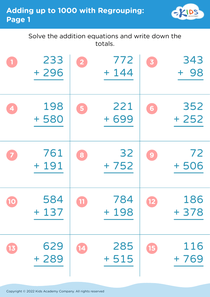
Understanding fractions Adding up to 1000 Without Regrouping Worksheets for Ages 5-8
13 filtered results
-
From - To
Welcome to our "Understanding Fractions: Adding Up to 1000 Without Regrouping" worksheets designed for children ages 5-8! Our engaging and interactive resources help young learners grasp the concept of fractions in a fun way, blending essential math skills with practical exercises. These worksheets focus on adding fractions without the need for regrouping, ensuring a straightforward approach to mathematical operations. Children will enhance their numeric understanding, develop problem-solving abilities, and build confidence in their math skills. Perfect for classroom settings or at-home learning, these worksheets are a valuable tool for fostering a love of mathematics in early learners. Start exploring today!
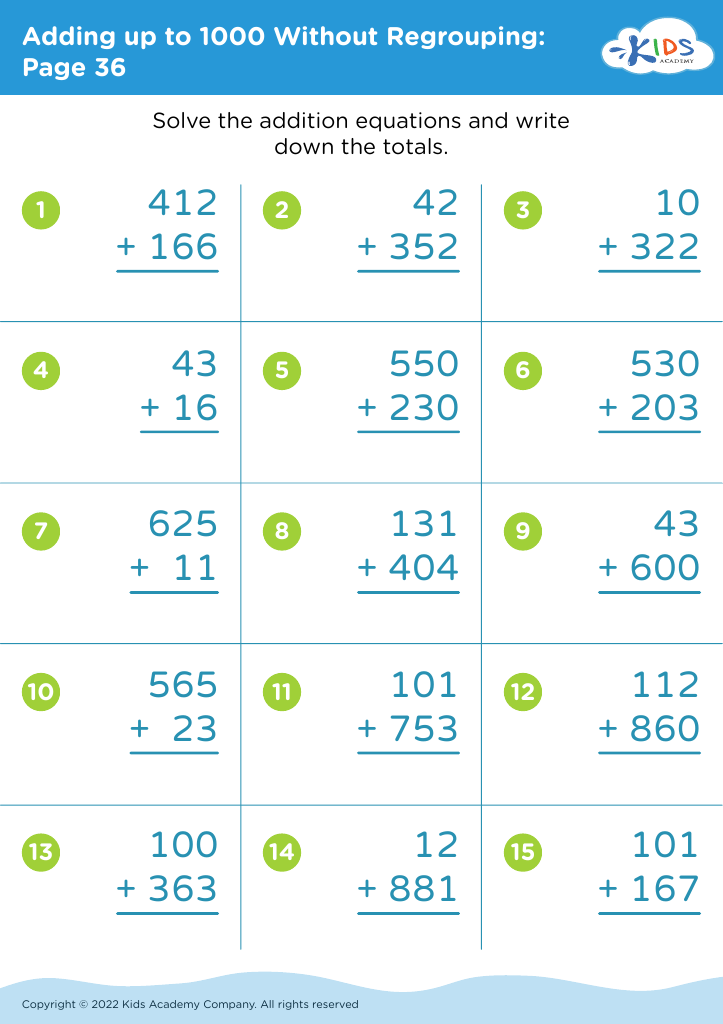
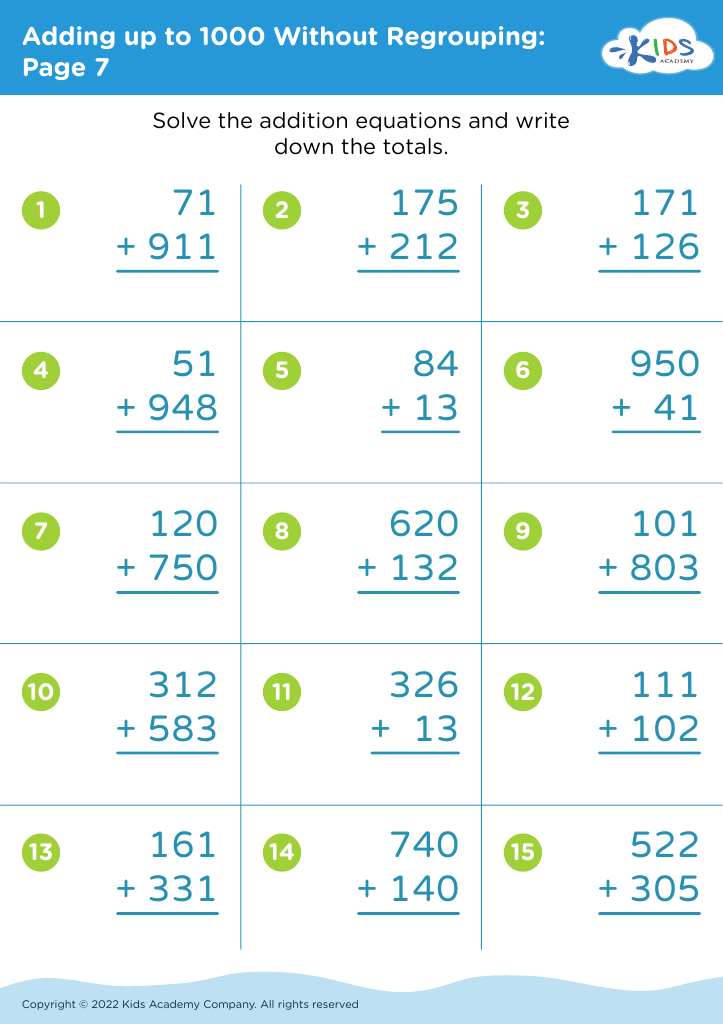
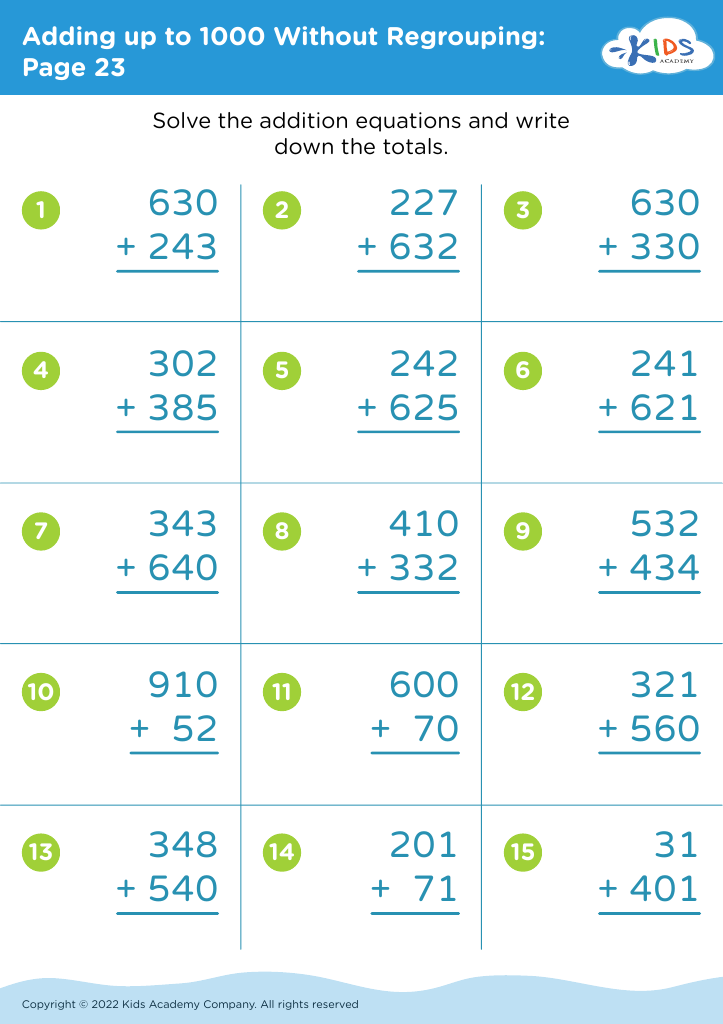
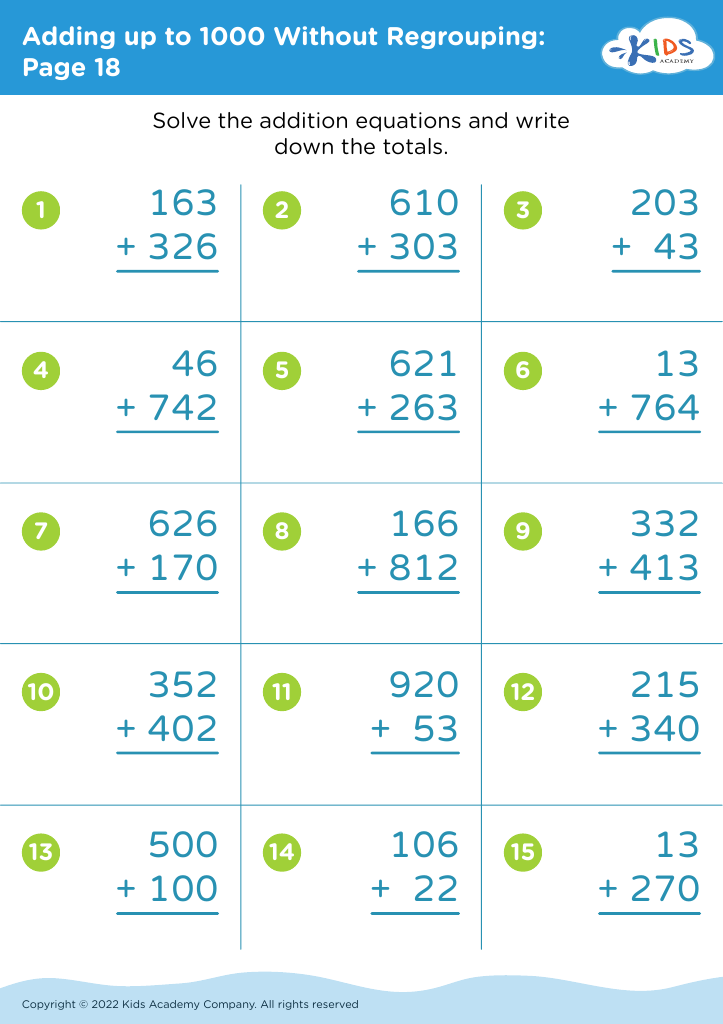
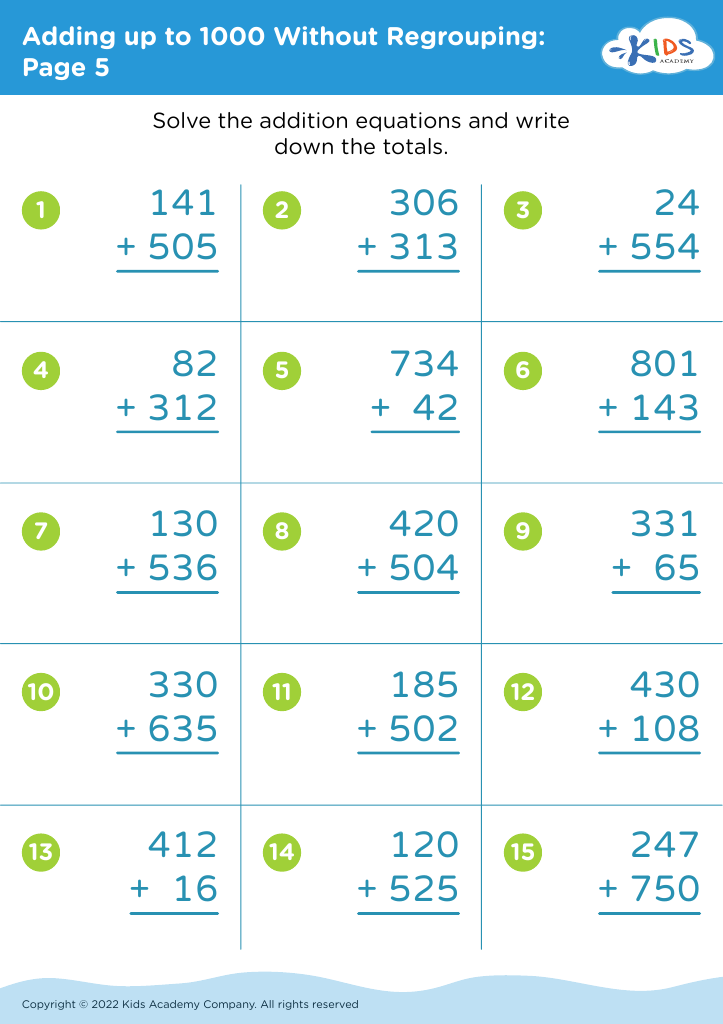
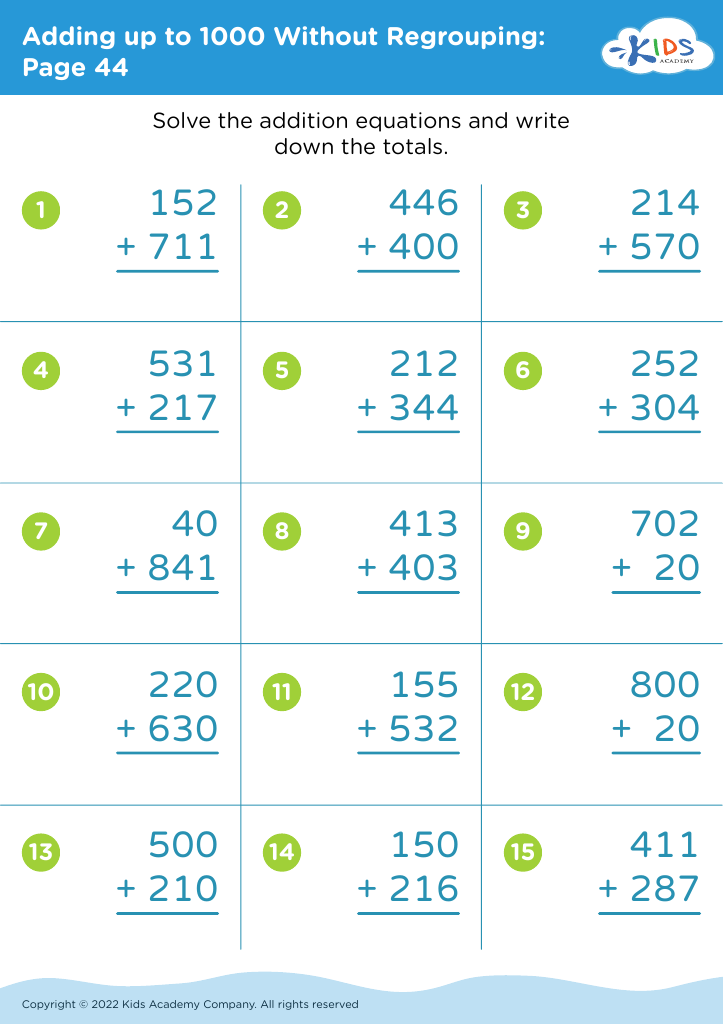
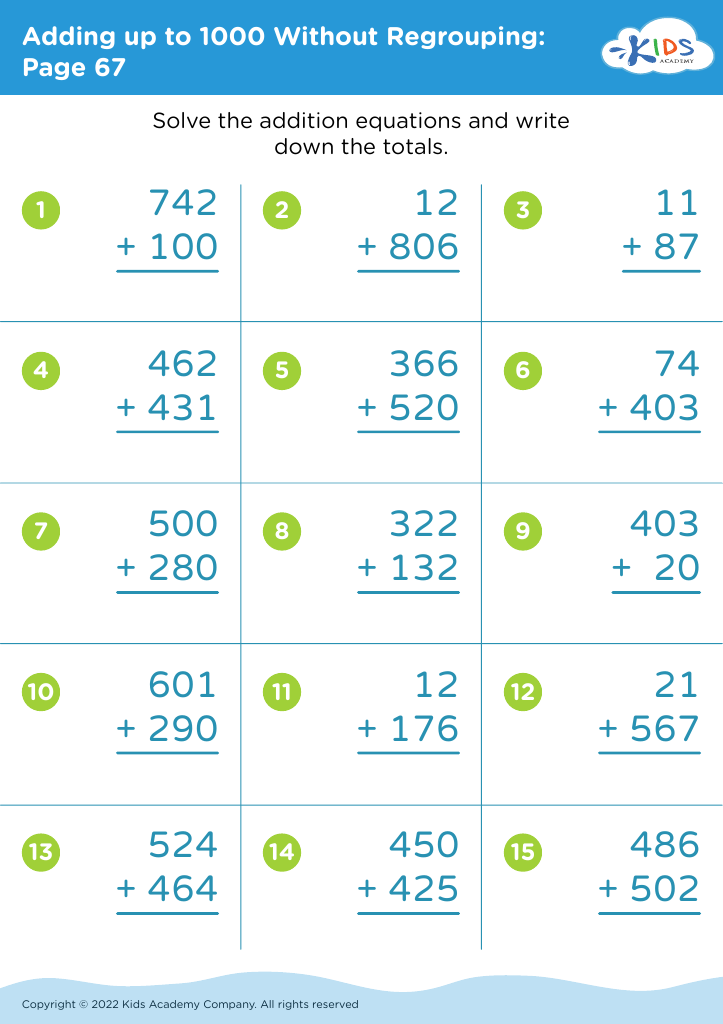
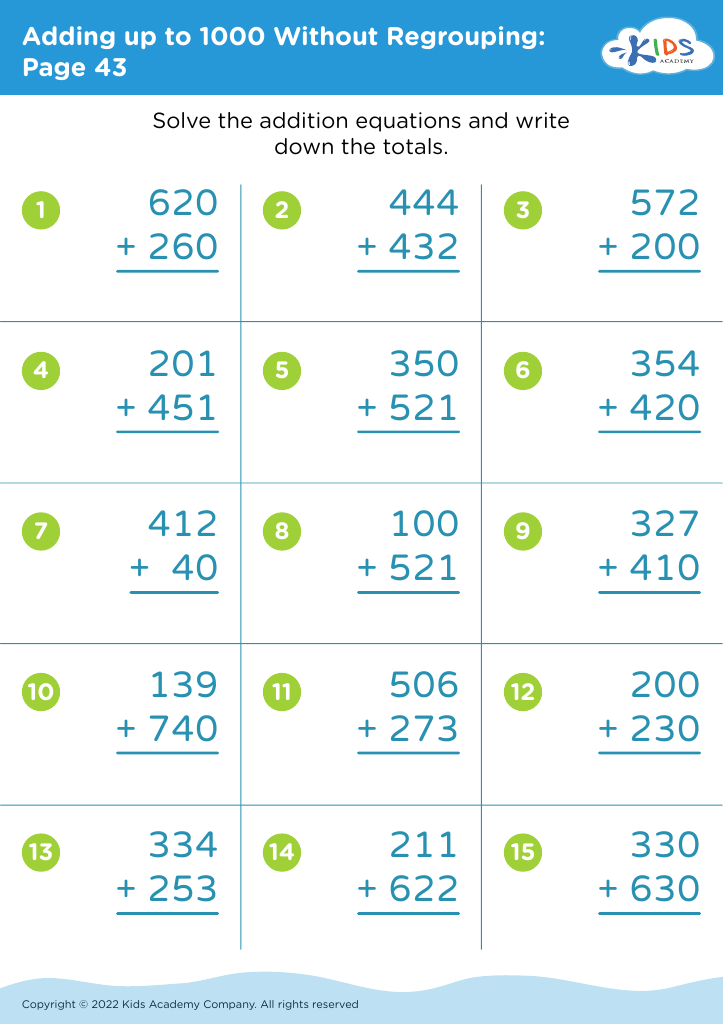
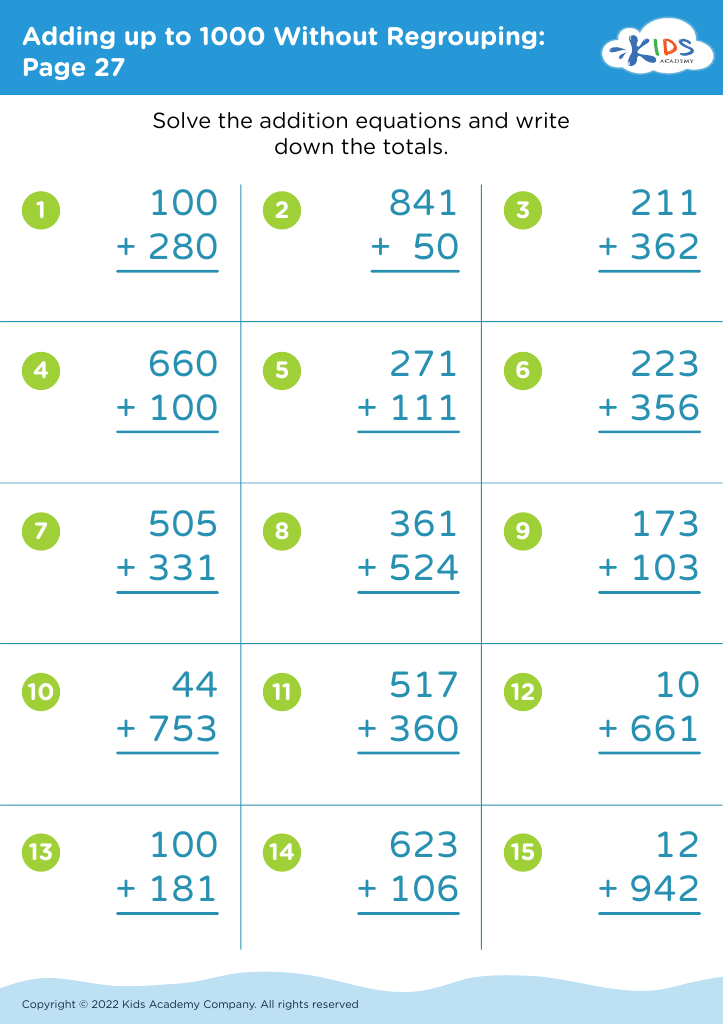
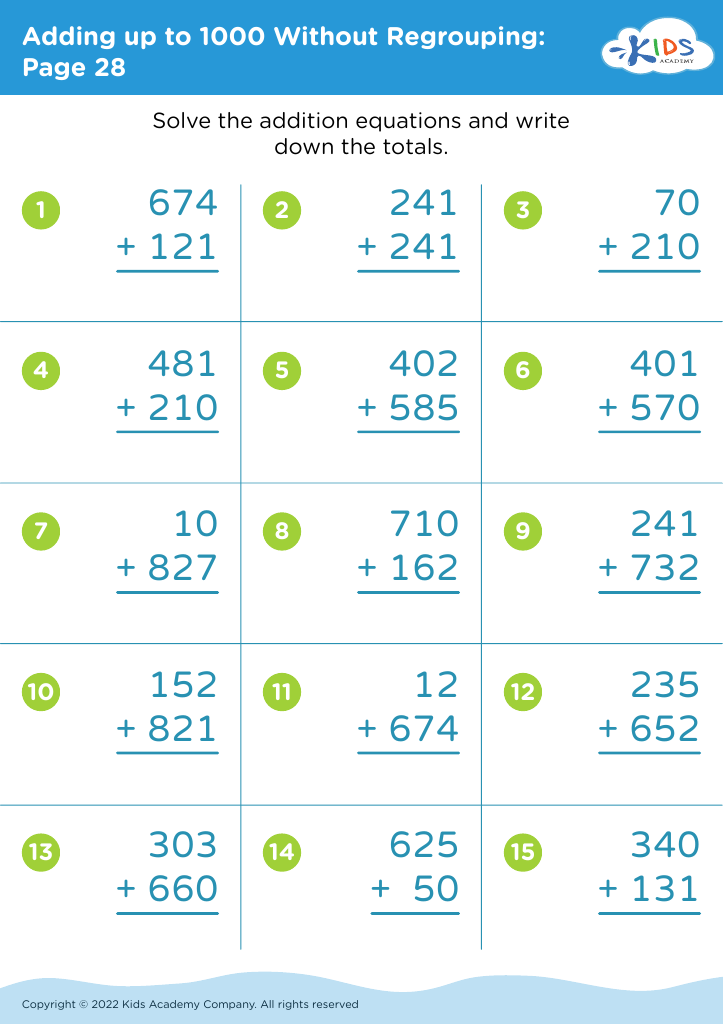
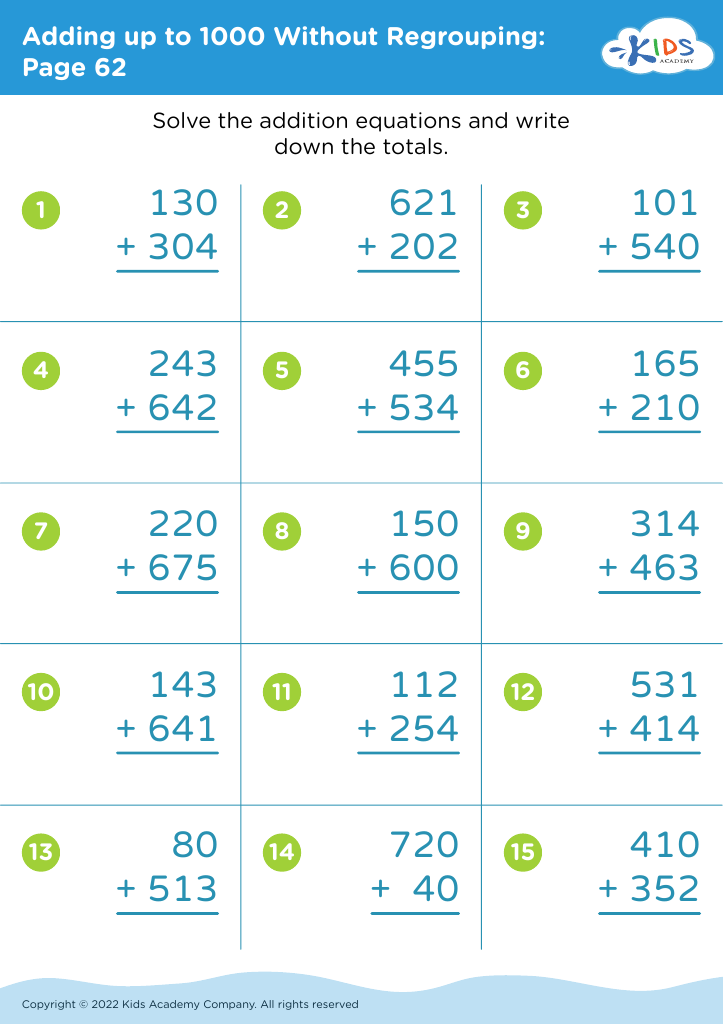
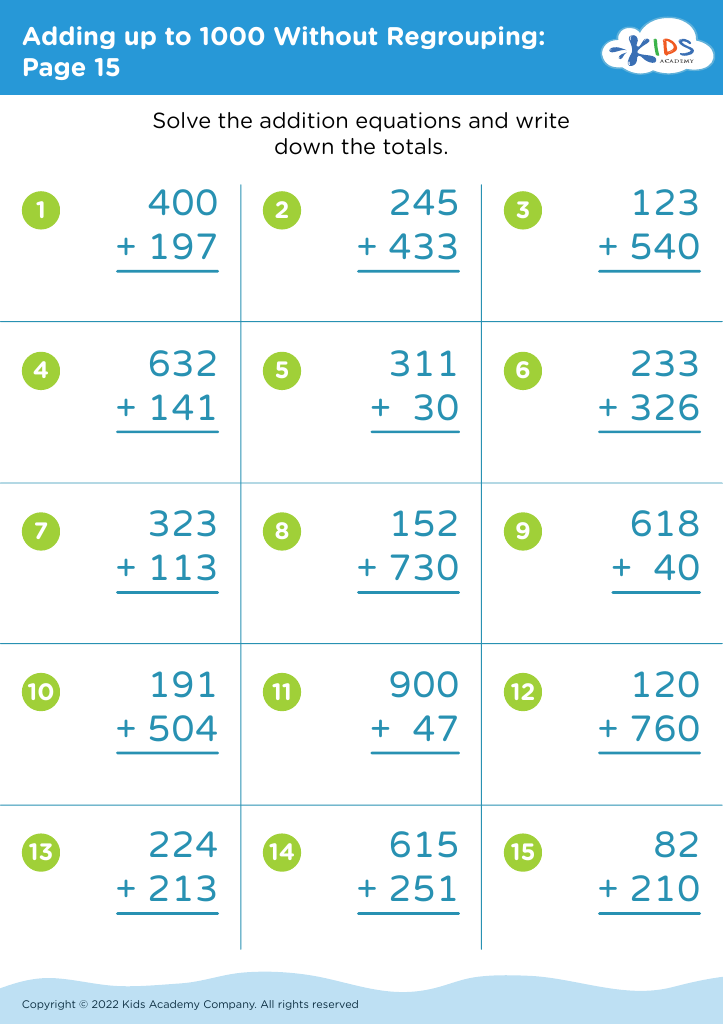
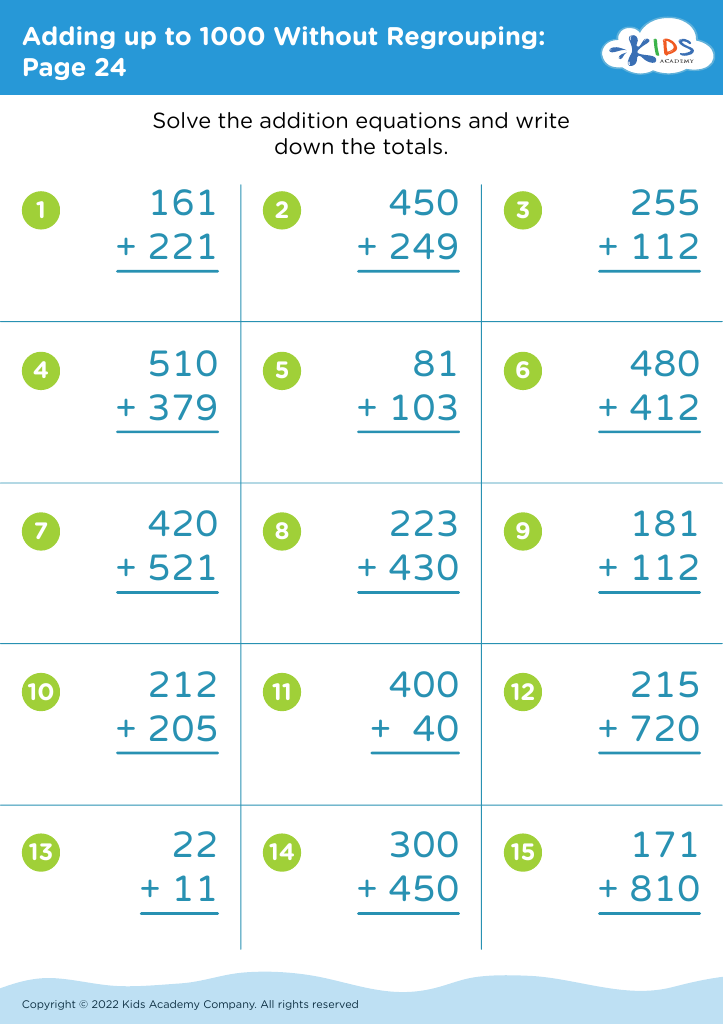


Understanding fractions and their relationship to whole numbers is a foundational skill in mathematics, especially for children aged 5-8. Introducing the concept of adding fractions that sum to 1000 without regrouping allows young learners to develop a strong number sense and build confidence in their mathematical abilities.
For parents and teachers, it’s crucial to emphasize that fractions represent parts of a whole; mastering this concept lays the groundwork for more complex mathematical principles in later grades. By learning to add fractions without regrouping, children enhance their ability to visualize and conceptualize numerical relationships, facilitating problem-solving skills and higher-order thinking. Moreover, this knowledge helps to strengthen cognitive skills such as logical reasoning and critical thinking.
Additionally, early mathematics achievement is strongly linked to long-term academic success. Engaging with fractions through interactive and hands-on activities makes learning enjoyable and helps children retain concepts more effectively. When parents and teachers prioritize understanding fractions, they empower children to progress confidently, not only through mathematics but throughout their educational journeys. By fostering a solid mathematical foundation, we nurture lifelong learners equipped with the skills necessary for future academic challenges.