Basic Addition Adding up to 1000 Worksheets for Ages 5-8
6 filtered results
-
From - To
Welcome to our "Basic Addition Adding Up to 1000 Worksheets" designed specifically for children aged 5-8! Our engaging worksheets help young learners build a solid foundation in addition, enhancing their math skills while nurturing a love for learning. With vibrant illustrations and age-appropriate exercises, kids will actively practice adding numbers up to 1000 in a fun and interactive way. These worksheets support multiple learning styles, promoting both independent and guided practice. Perfect for home, classroom, or tutoring sessions, our resources ensure that children not only master basic addition but also gain confidence in their math abilities. Explore and help your child succeed!
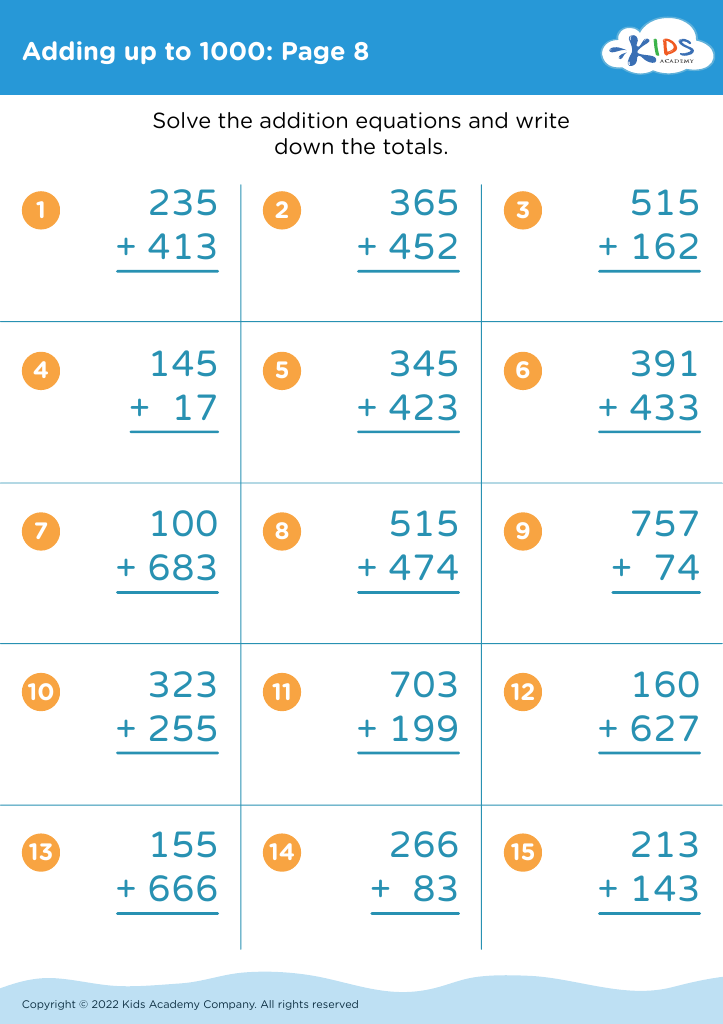
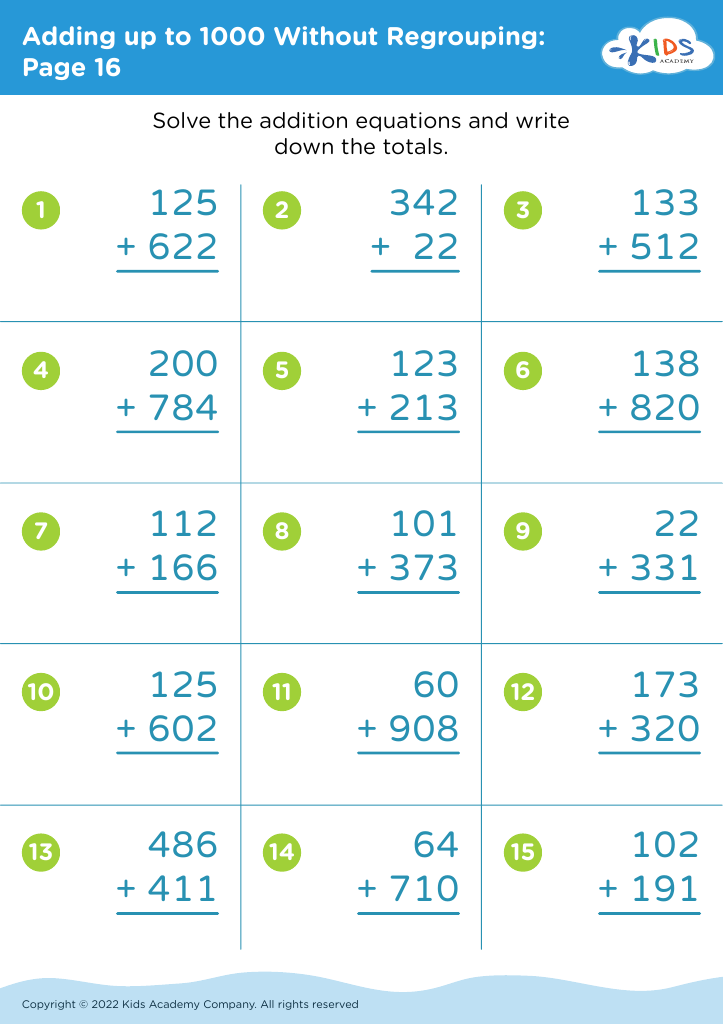
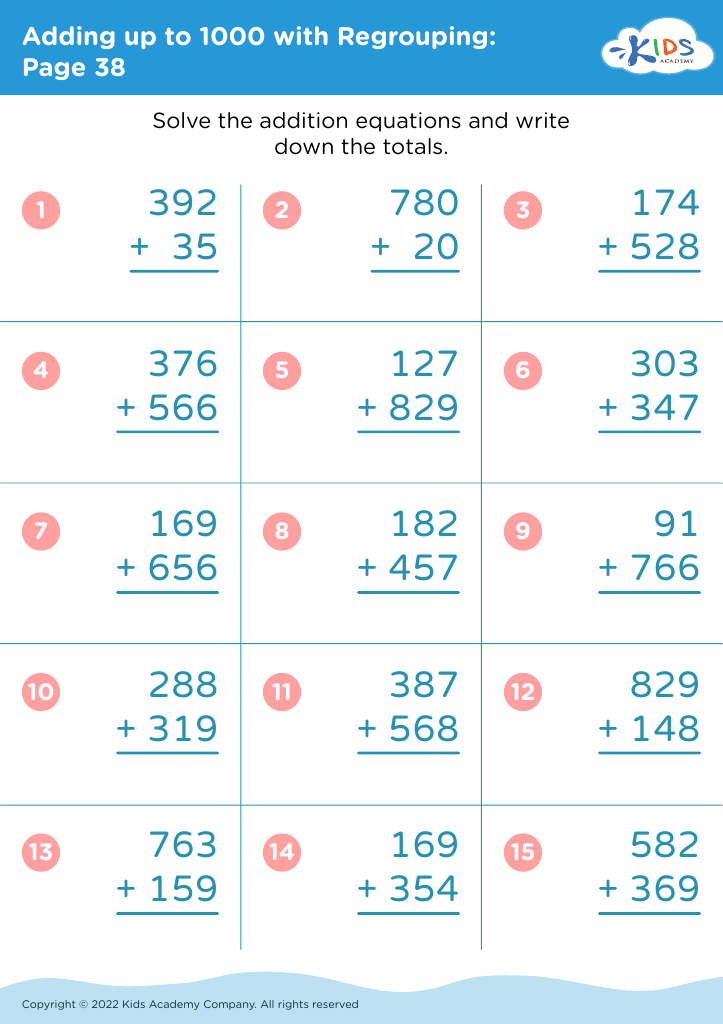
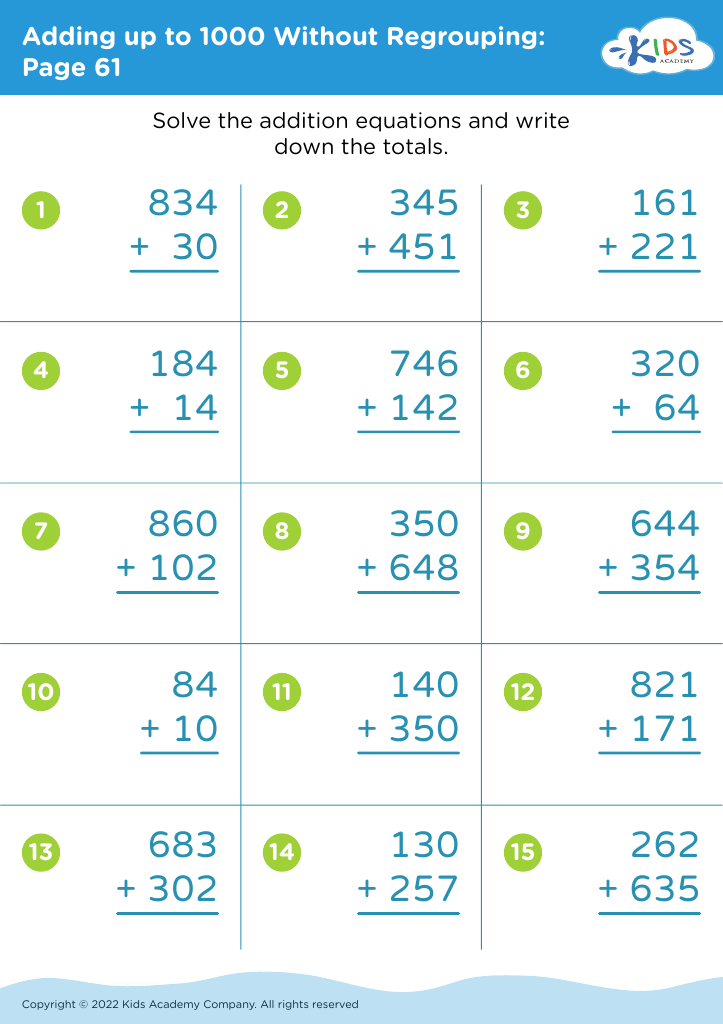
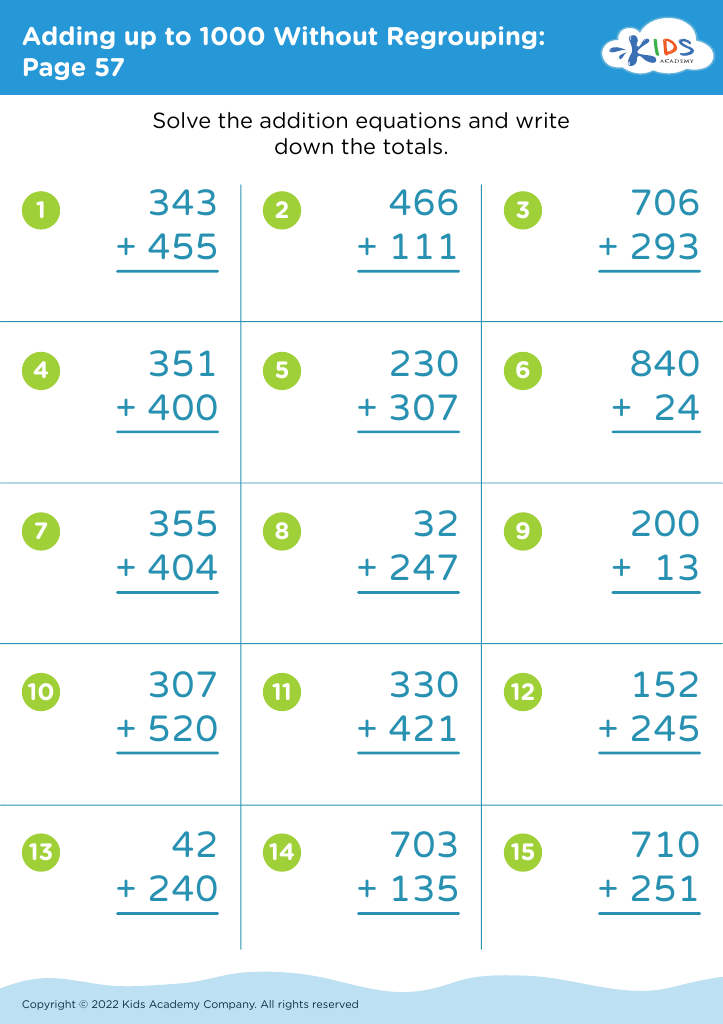
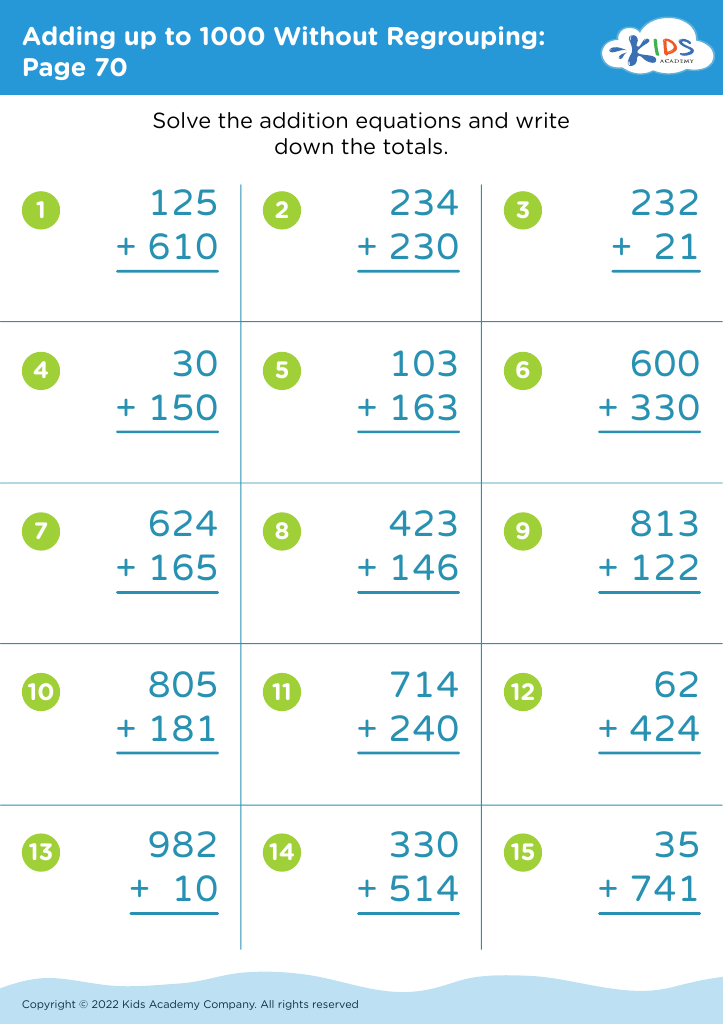



Basic addition, especially involving sums up to 1000, is crucial for children aged 5-8 as it serves as the foundation for their overall mathematical development. At this stage, children are not just memorizing numbers; they are beginning to understand concepts such as number relationships, patterns, and problem-solving skills. Mastering addition fosters critical thinking and lays the groundwork for more advanced topics, such as subtraction and later, multiplication and division.
Parents and teachers play a vital role in this learning process by providing support, encouragement, and resources. An understanding of basic addition helps children build confidence, which is essential for fostering a positive attitude toward math. It prepares them for real-world situations, like budgeting and measuring, making math both relevant and practical in everyday life.
Moreover, proficiency in addition boosts performance in standardized tests and assessments. By investing time in teaching and reinforcing addition, adults can help children develop not only mathematical skills but also perseverance and resilience. The skills acquired at this age are not just academic; they promote logical reasoning and decision-making that can benefit children in all areas of their lives. Thus, prioritizing addition lays a strong foundation for future learning and lifelong mathematical literacy.








