Fine Motor Skills Adding up to 1000 Worksheets for Ages 5-8
12 filtered results
-
From - To
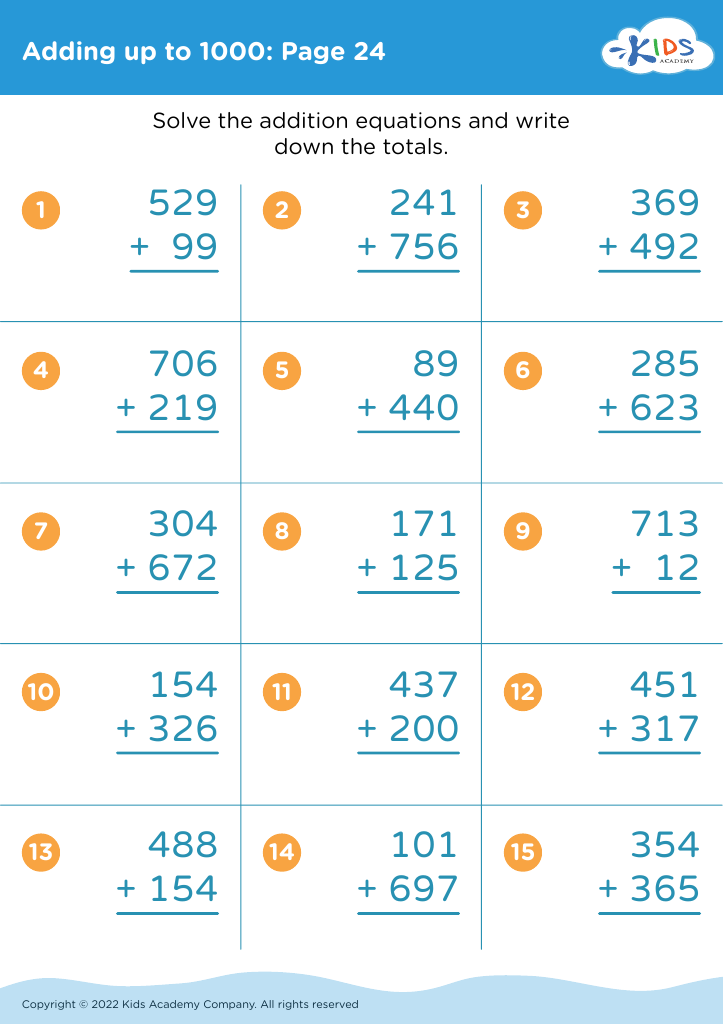
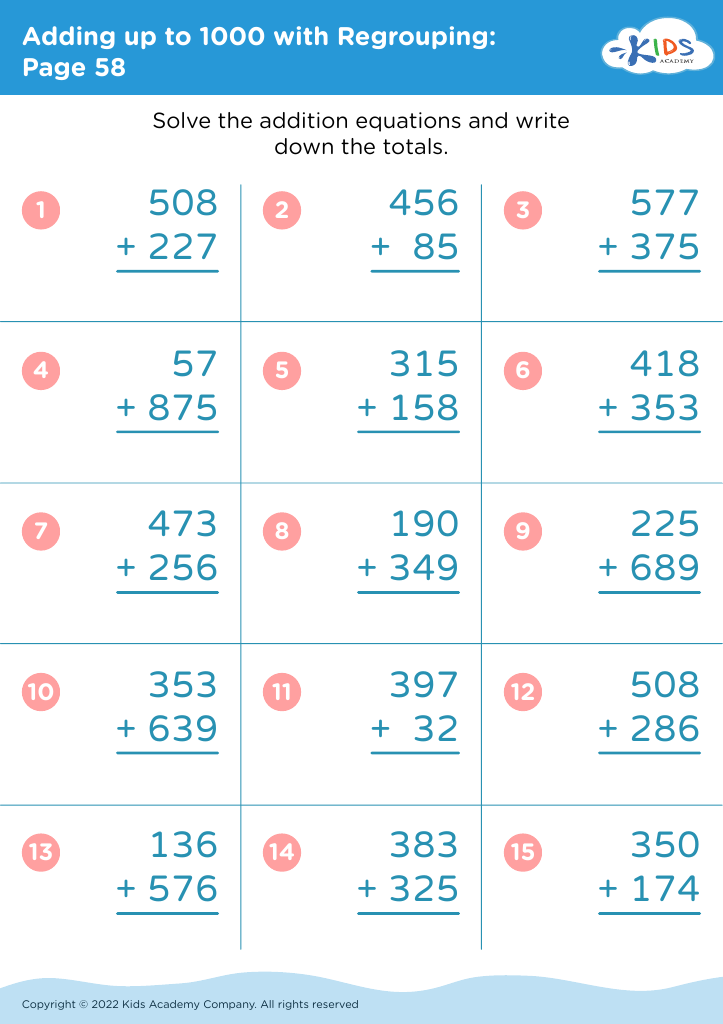
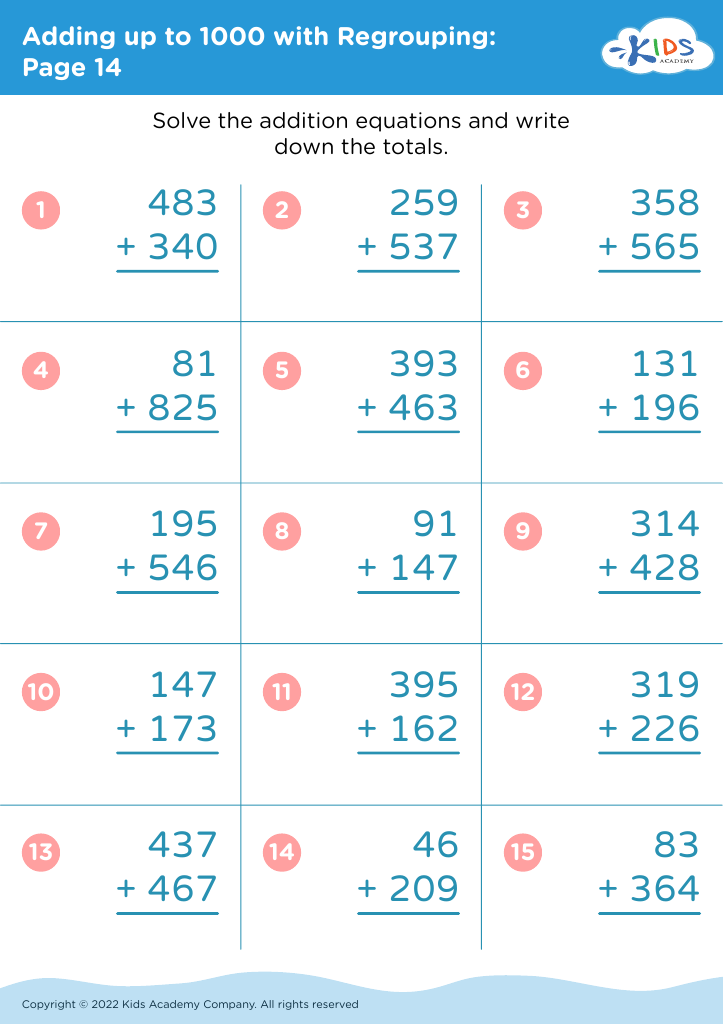
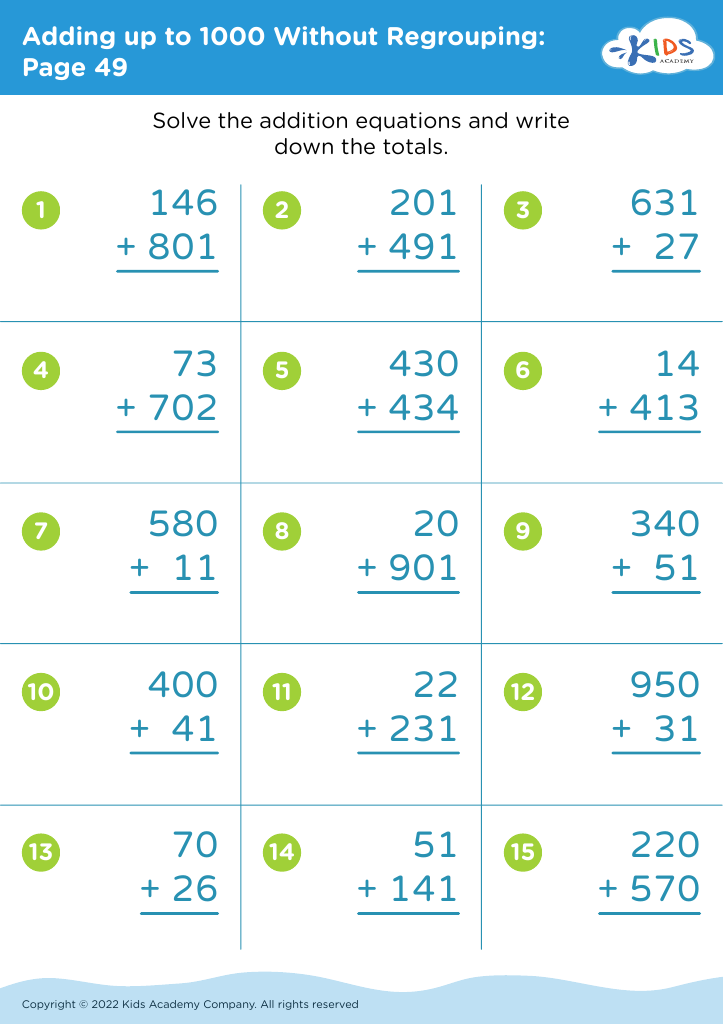
Explore our "Fine Motor Skills Adding up to 1000 Worksheets" tailored for children aged 5-8. These meticulously designed worksheets engage young learners in adding up to 1000 while enhancing crucial fine motor skills. As kids work through these educational activities, they not only master essential arithmetic but also hone their hand-eye coordination, dexterity, and writing precision. Ideal for home or classroom use, our resources make foundational math both fun and interactive, ensuring a comprehensive learning experience. Discover how our math worksheets can support your child's educational journey by combining cognitive growth with fine motor skill development.
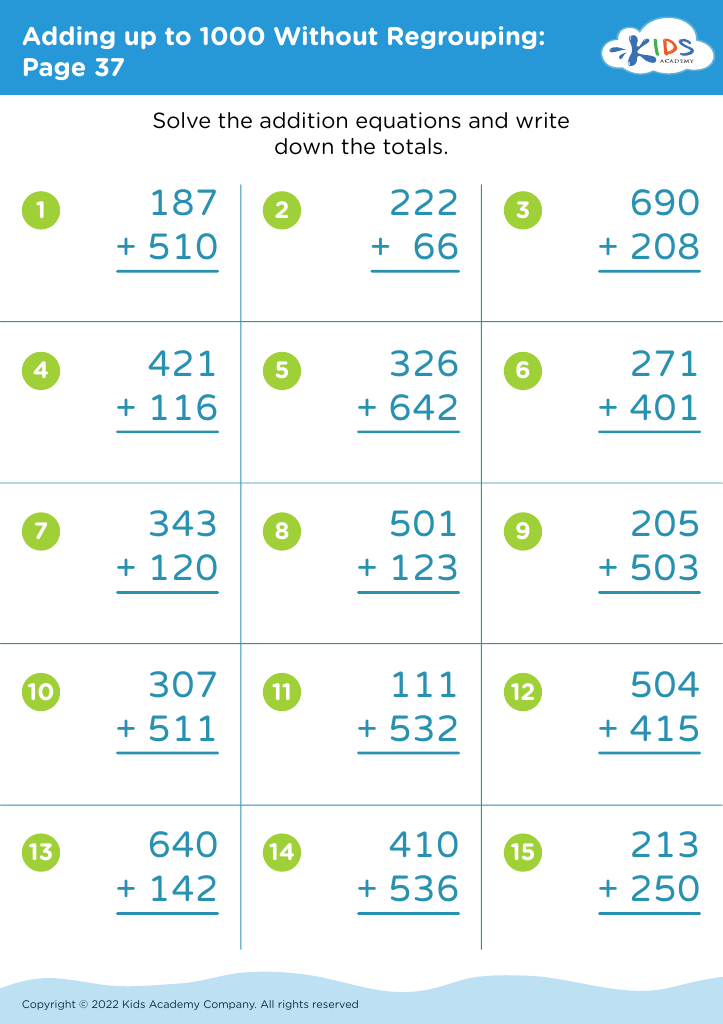
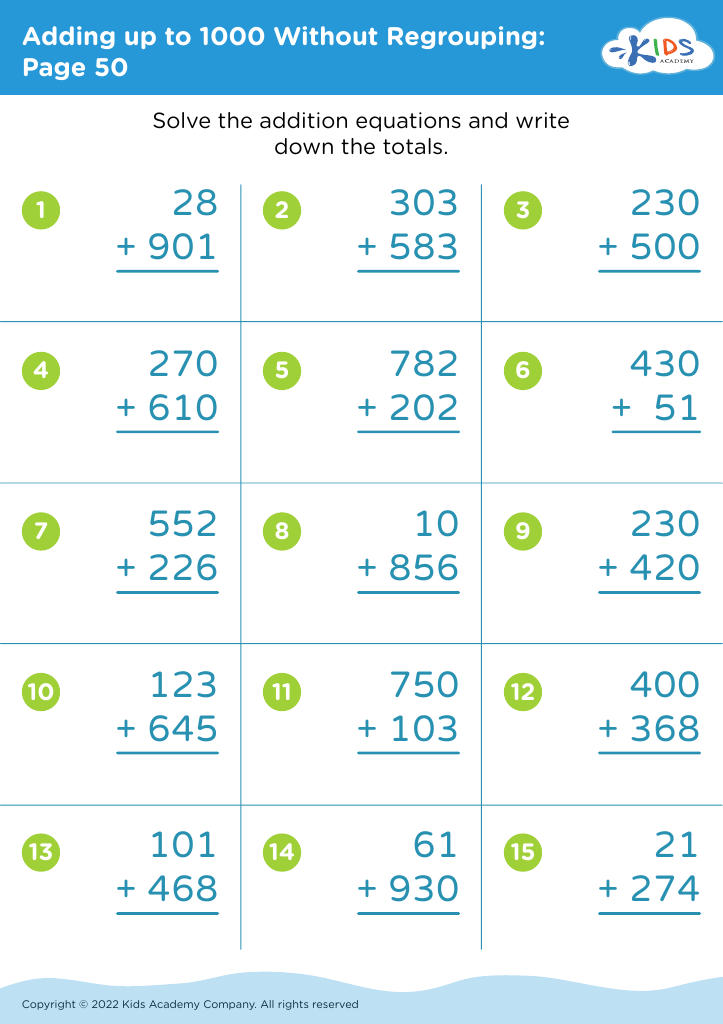
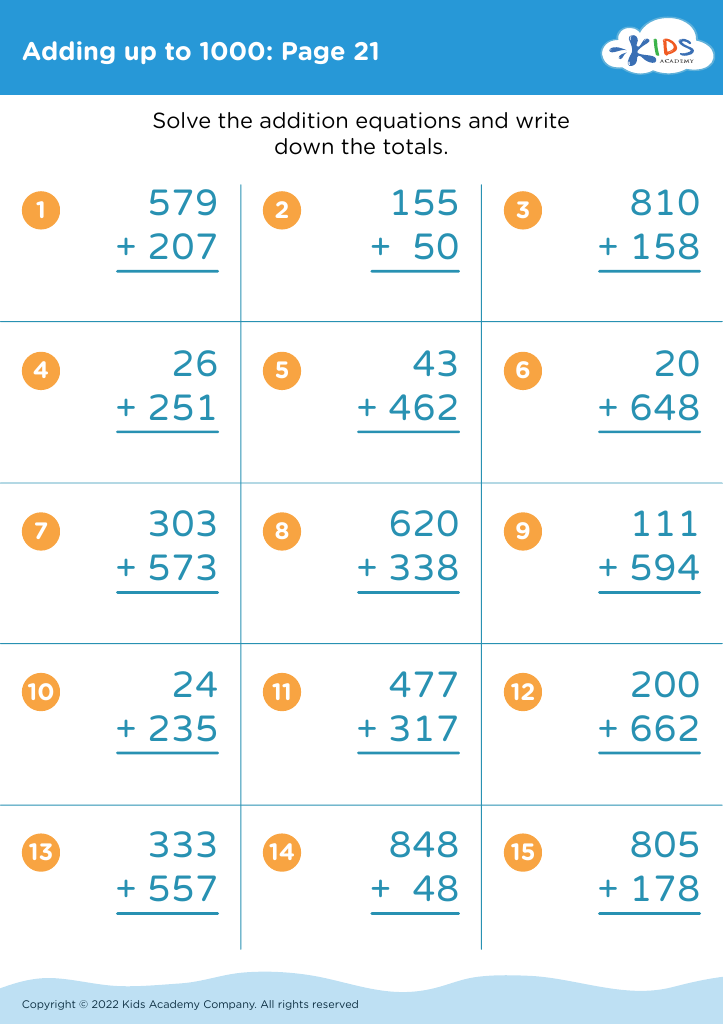
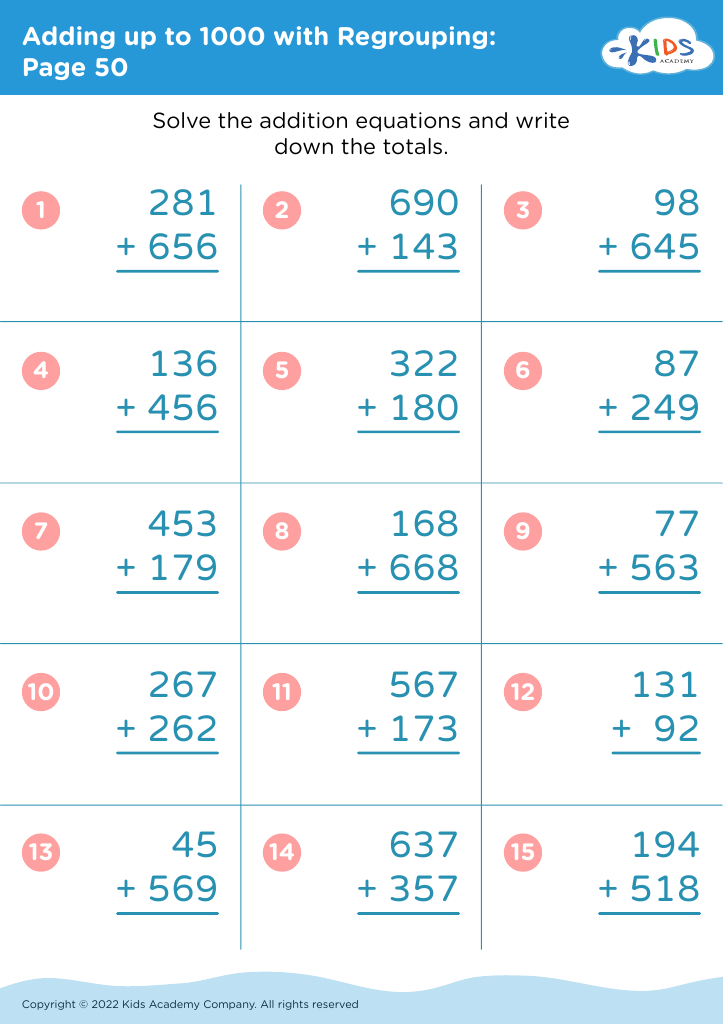
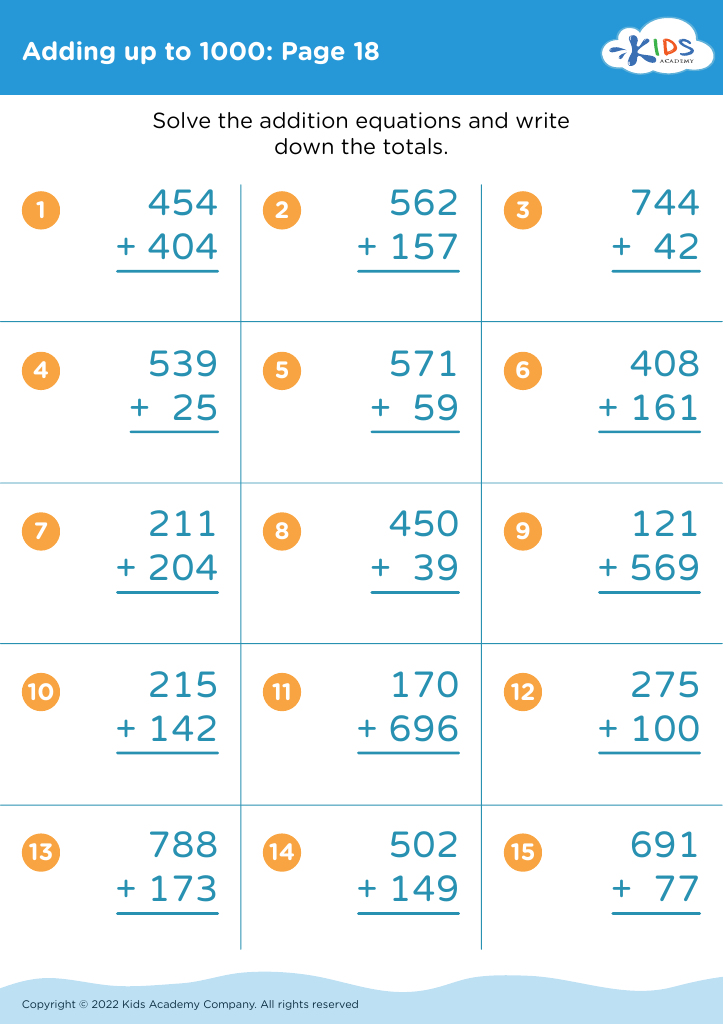
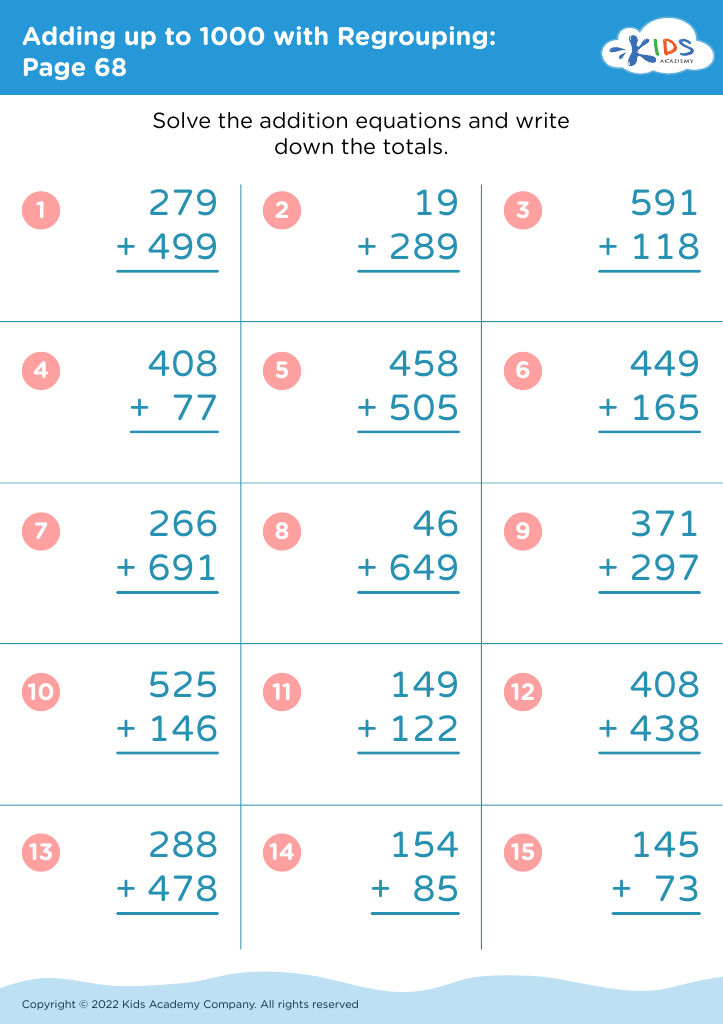
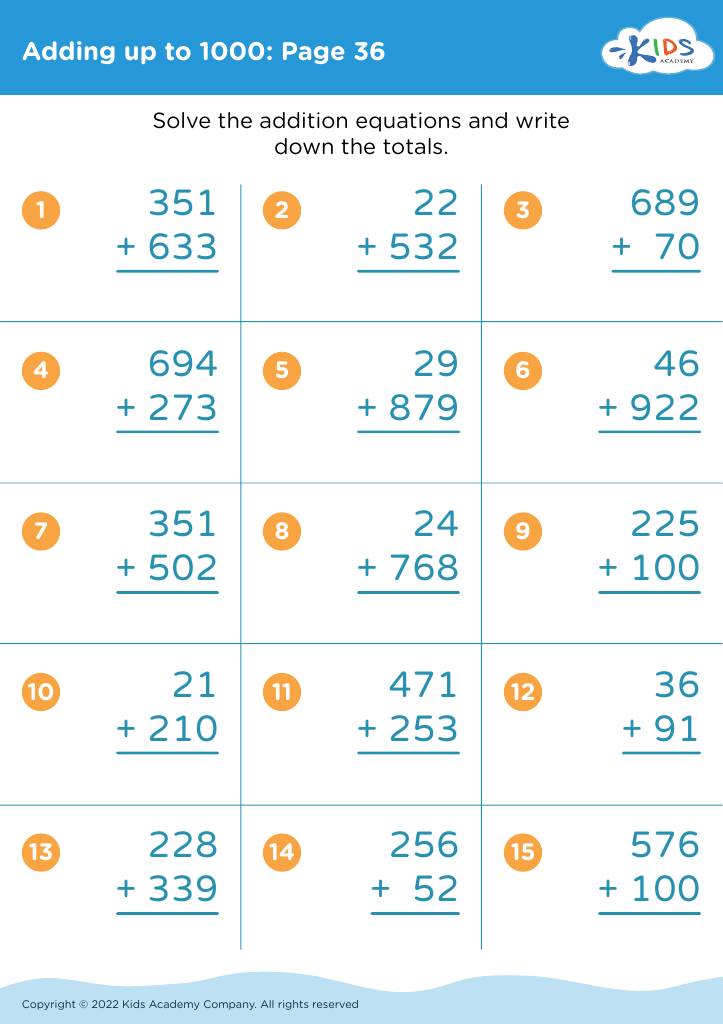
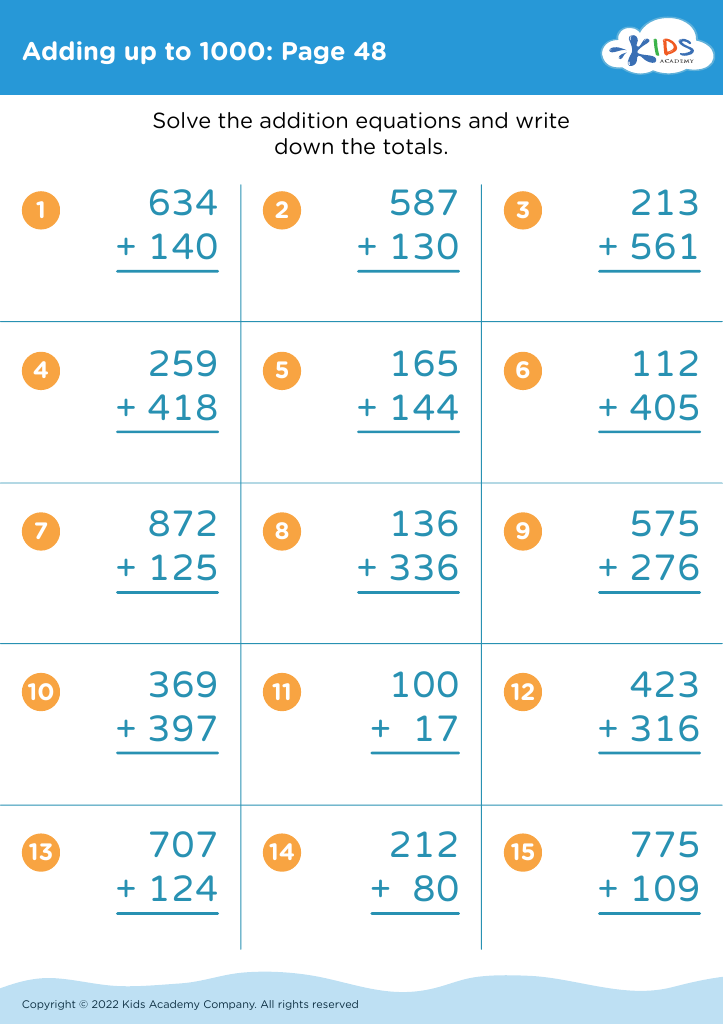



Fine motor skills are crucial for children's development, particularly for ages 5-8, when they are rapidly growing and acquiring new abilities. Fine motor skills involve the coordination of small muscles, particularly in the hands and fingers, allowing children to perform tasks like writing, cutting with scissors, buttoning clothes, and manipulating small objects. One important aspect where fine motor skills play a vital role is in numeracy skills like adding up to 1000.
For children in this age range, learning to add large numbers is a fundamental arithmetic skill that lays the foundation for more advanced mathematical concepts. Good fine motor control enables children to neatly write numbers, draw clear lines, and accurately place digits in the correct columns for addition. This precision helps minimize errors and build confidence in their arithmetic abilities.
Furthermore, engaging children in activities that strengthen these skills can support their overall academic performance and independence. Encouraging the development of fine motor skills can be integrated into play and daily routines, making the learning process enjoyable and less strenuous. For parents and teachers, investing time in activities like puzzles, drawing, and interactive games can significantly enhance children's dexterity, thereby empowering them to handle complex math tasks such as adding up to 1000 with greater ease and accuracy.








