Identifying shapes Adding up to 1000 Worksheets for Ages 5-8
3 filtered results
-
From - To
Unlock your child’s potential with our "Identifying Shapes Adding Up to 1000" worksheets, tailored for ages 5-8! These engaging worksheets merge foundational math skills with fun shape-recognition activities, perfect for young learners. Through interactive exercises, kids will practice addition up to 1000 while identifying various shapes, honing both numerical and geometric understanding simultaneously. Ideal for parents and teachers, our handpicked resources foster critical thinking, problem-solving abilities, and a love for math from an early age. Jumpstart your child’s educational journey with activities that make learning enjoyable and effective. Download today to inspire little mathematicians!
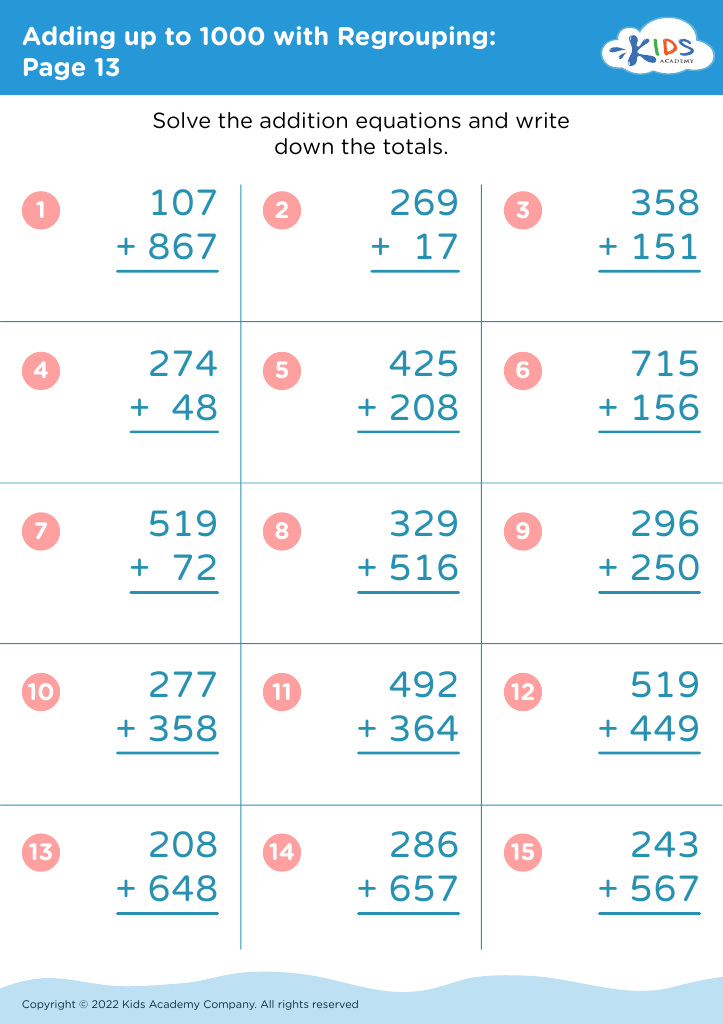
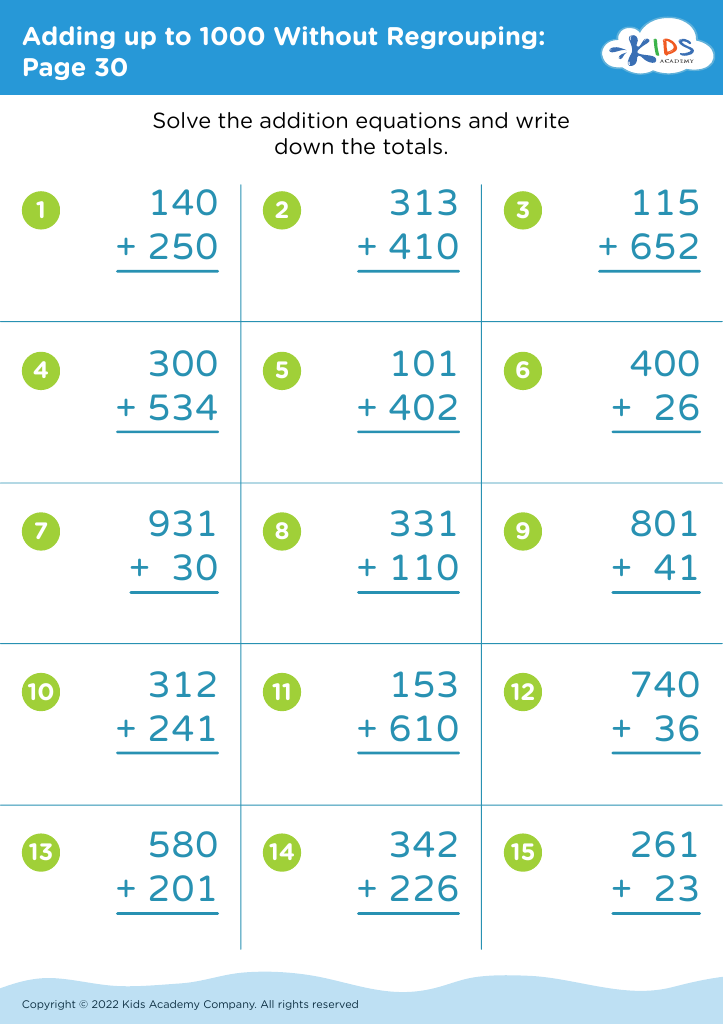
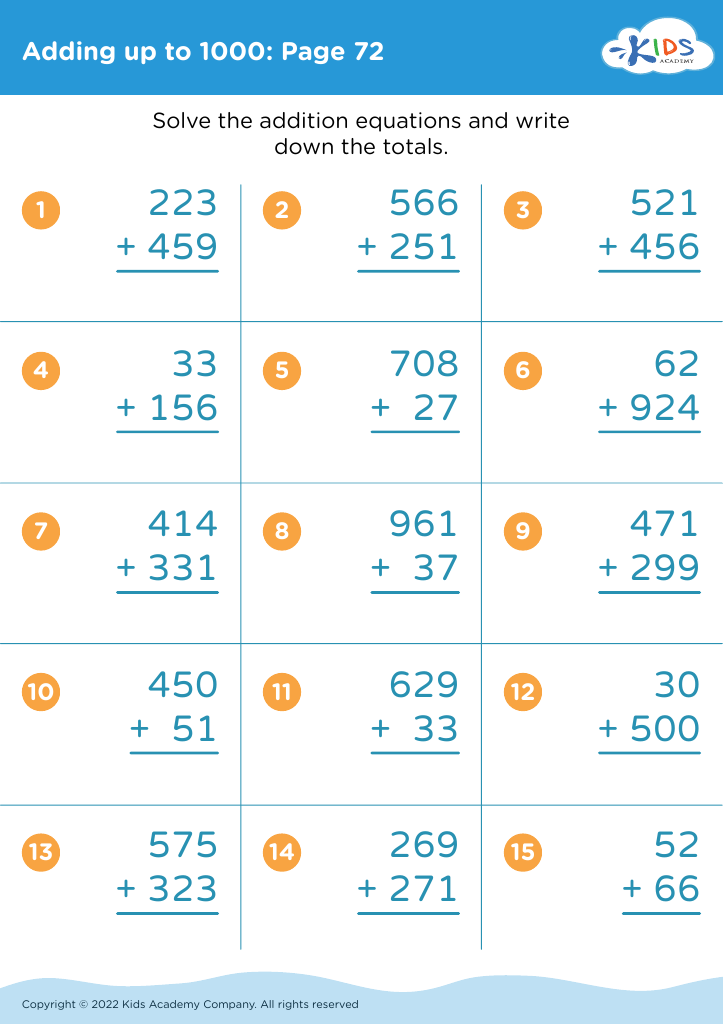



Identifying shapes and mastering addition up to 1000 are fundamental skills critical for children aged 5-8. Learning about shapes lays a strong foundation for geometry, enhancing spatial awareness and problem-solving abilities. When children recognize circles, squares, triangles, and other shapes, they develop visual discrimination skills important for reading and writing. Identifying shapes also promotes mathematical thinking, enabling kids to grasp patterns and make connections between objects.
Adding up to 1000, on the other hand, is pivotal for numeracy development. Proficiency in addition fosters a deeper understanding of arithmetic operations, which are the backbone of more complex math concepts. When young learners can comfortably add large numbers, they build confidence and are better prepared for advanced topics like multiplication and division.
These skills jointly improve cognitive abilities, setting a strong academic foundation. Beyond academics, they are practical for daily activities. Whether it’s identifying shapes in traffic signs or calculating totals during shopping, the real-world applicability aids children in becoming self-reliant and competent. For parents and teachers, nurturing these skills ensures children develop a balanced, well-rounded brain, supporting both intellectual growth and everyday proficiency. Engaging children in these exercises through interactive games or practical experiences can be both fun and highly educational.








