Understand fractions Adding up to 1000 Worksheets for Ages 5-8
4 filtered results
-
From - To
Help young learners grasp the concept of fractions with our "Understand Fractions Adding up to 1000 Worksheets" designed for children ages 5-8. These engaging worksheets provide a fun and interactive way for kids to deepen their understanding of fractions as part of their early math education. With a variety of activities, students will explore simple fraction concepts and how they relate to whole numbers, all while adding up to 1000. Perfect for classroom use or at-home learning, these worksheets will enhance critical thinking skills and build a strong mathematical foundation for your child. Start fostering a love for math today!
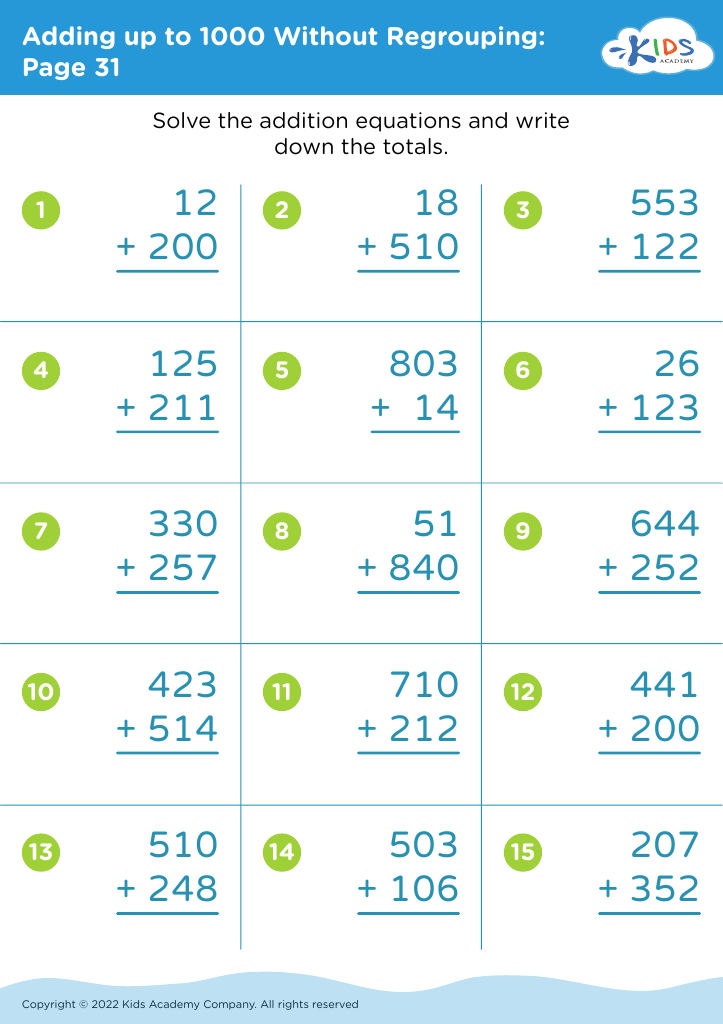
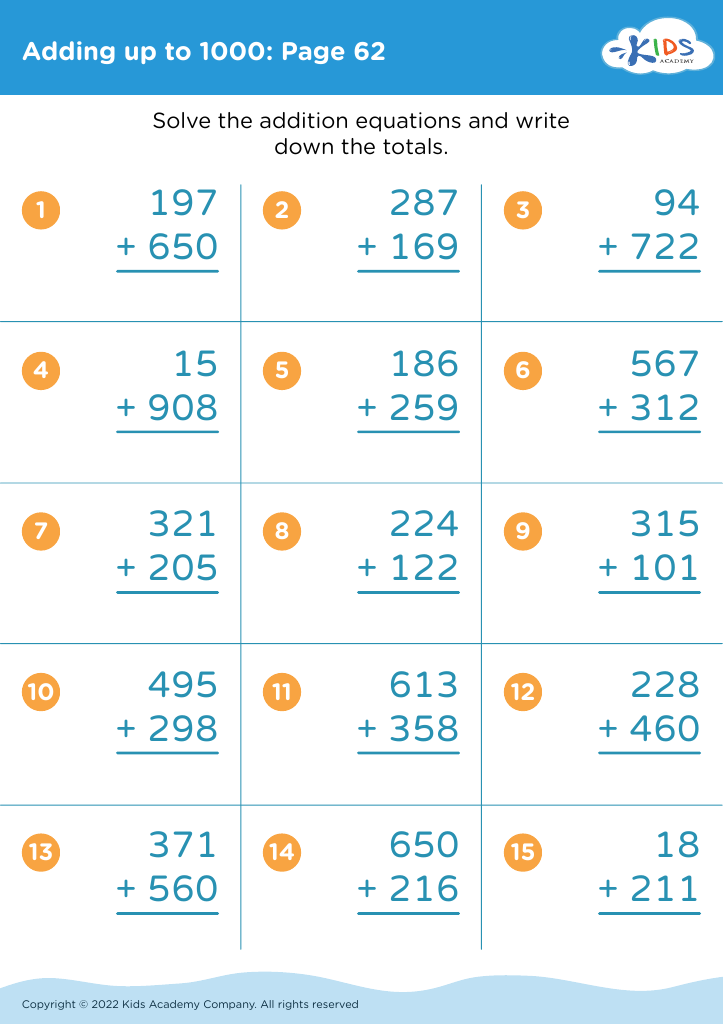
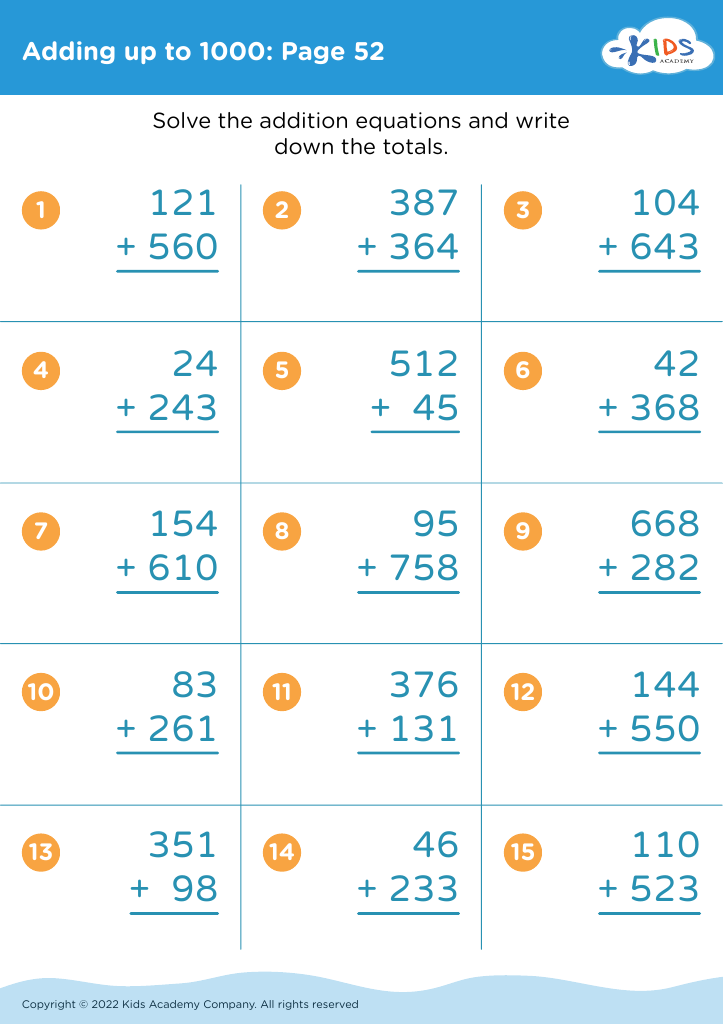
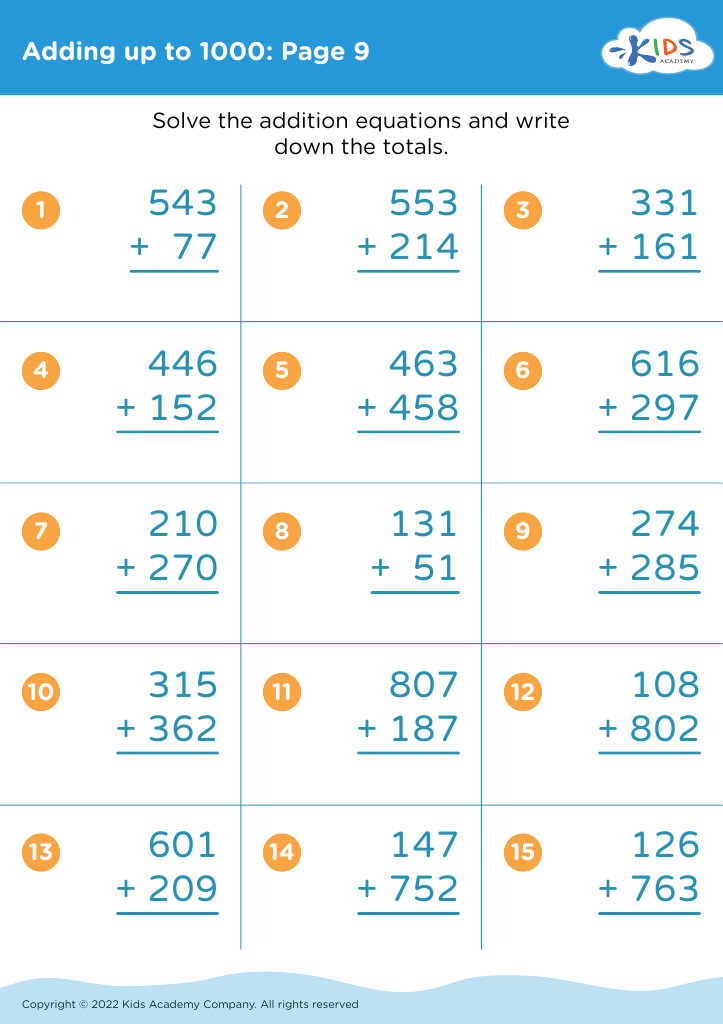



Understanding fractions is crucial for children aged 5-8 as it lays the foundation for their future math skills and everyday problem-solving abilities. Mastering fractions helps kids grasp the concept of part-to-whole relationships, which is essential in various life situations, from sharing food to measuring ingredients in cooking. When parents or teachers prioritize understanding fractions, they help children develop critical thinking skills and promote a more profound understanding of numbers.
Additionally, grasping how fractions are related to the whole number system is integral to understanding more complex mathematical concepts, like decimals and percentages, later on. For instance, when children learn to add fractions that sum to 1000, they gain insight into partitioning numbers, a vital aspect of both arithmetic and algebra.
Teaching kids about fractions can also enhance their self-confidence in math, making them more engaged and less intimidated by mathematical concepts as they progress in school. Furthermore, a solid understanding of fractions supports other academic subjects, such as science and economics, where statistical data and measurements often require this knowledge. Overall, prioritizing fraction education for young learners creates a more robust foundation for their academic journey and fosters lifelong skills essential for everyday decision-making.








