Understanding fractions Adding up to 1000 Worksheets for Ages 5-8 - Page 2
44 filtered results
-
From - To
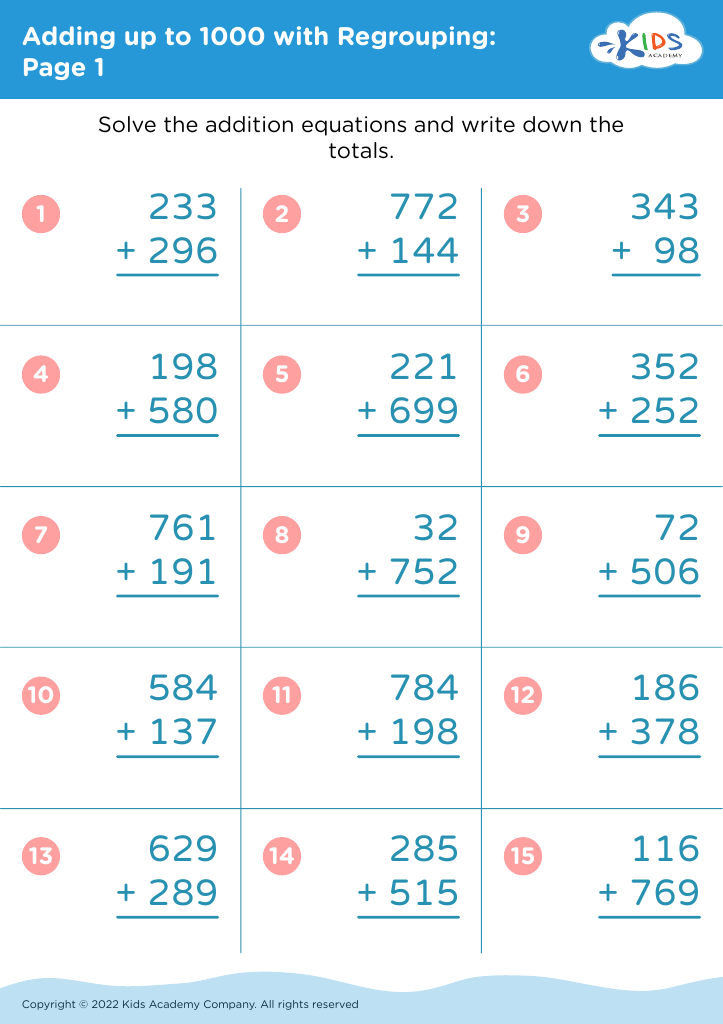
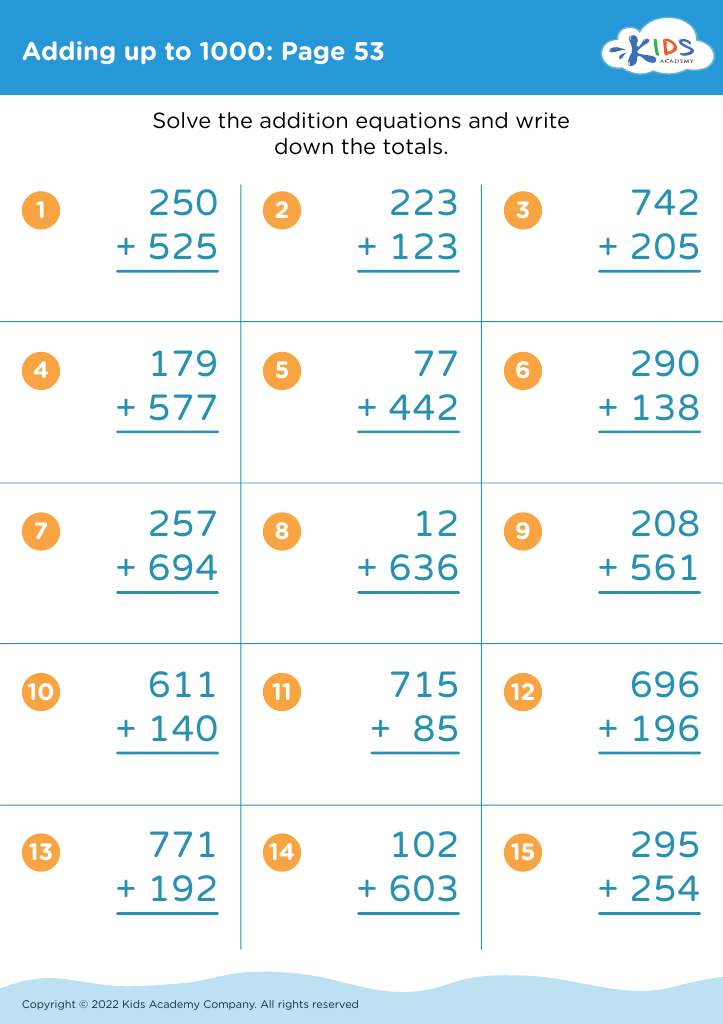
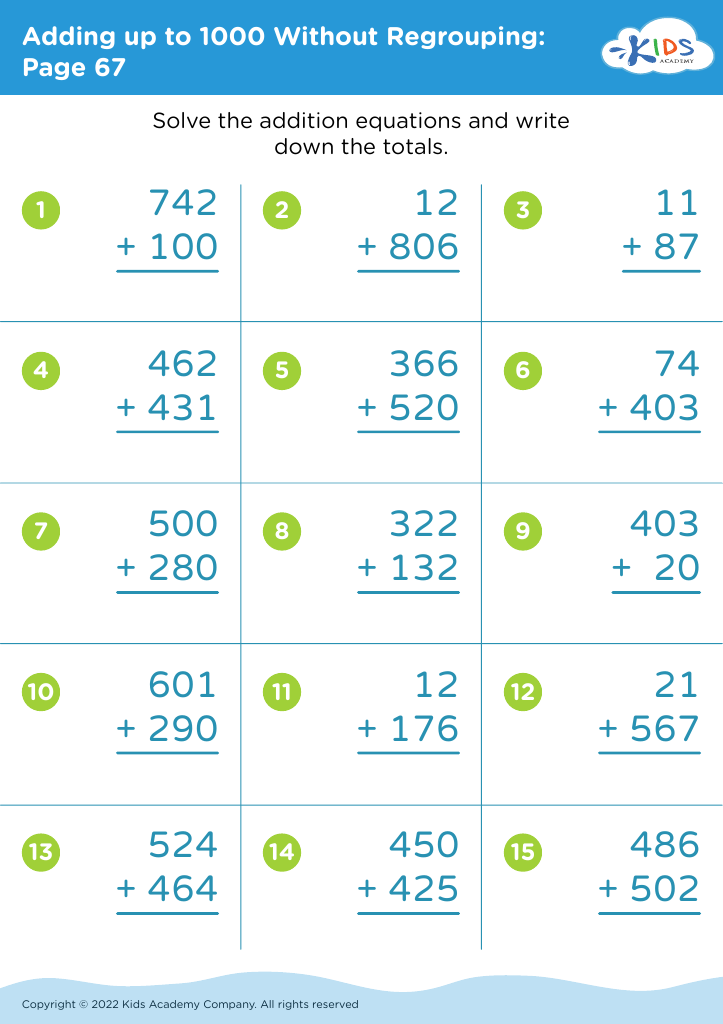
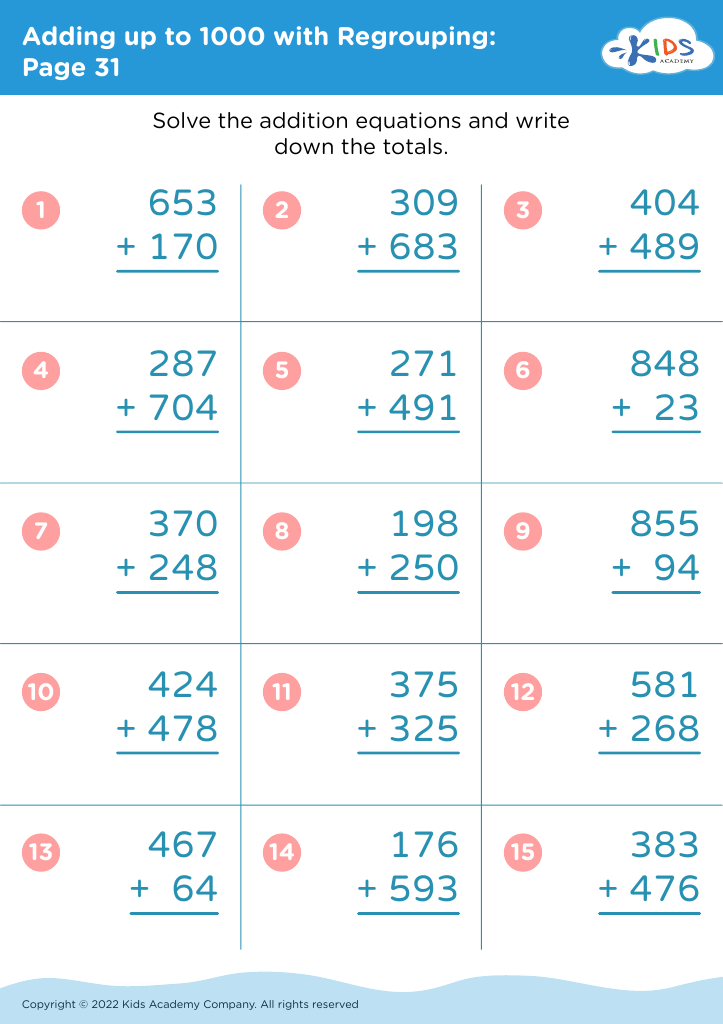
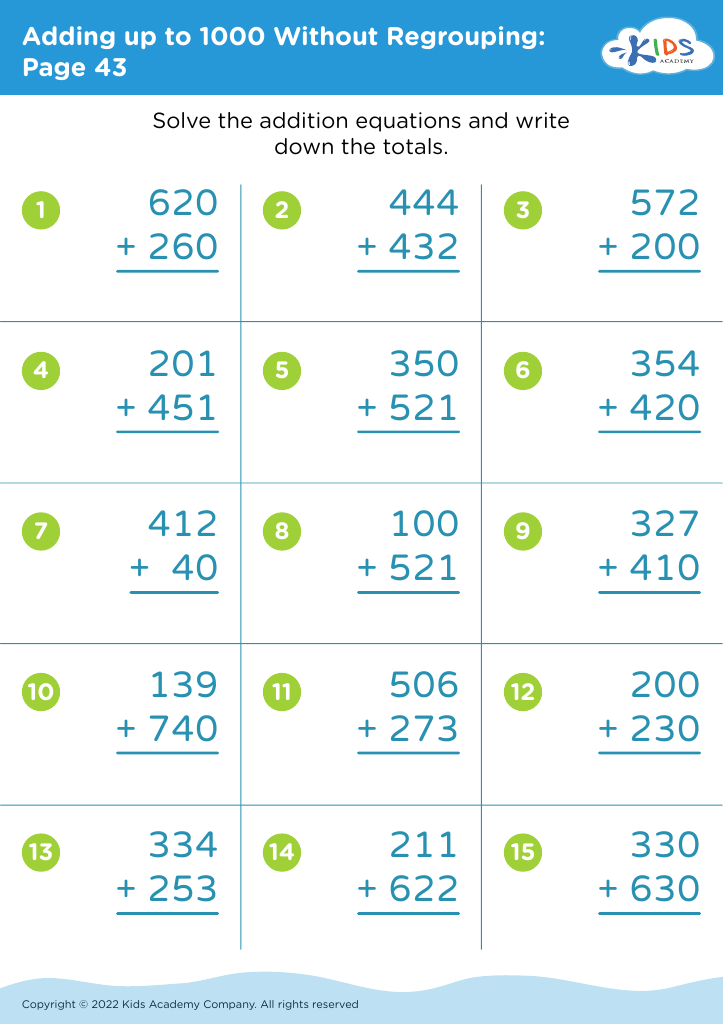
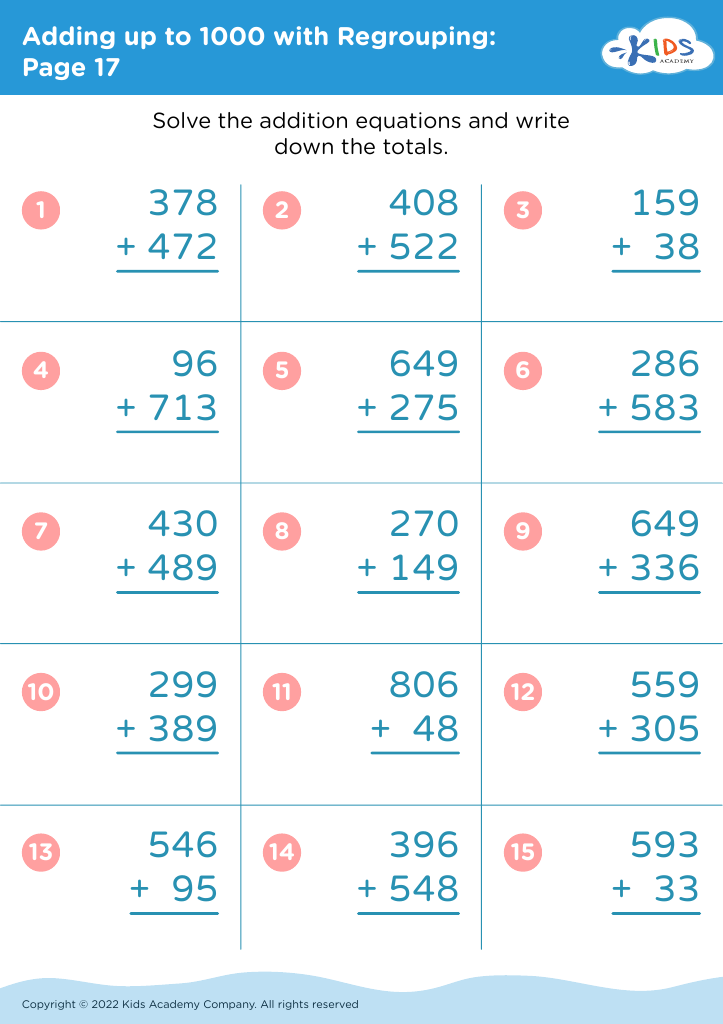
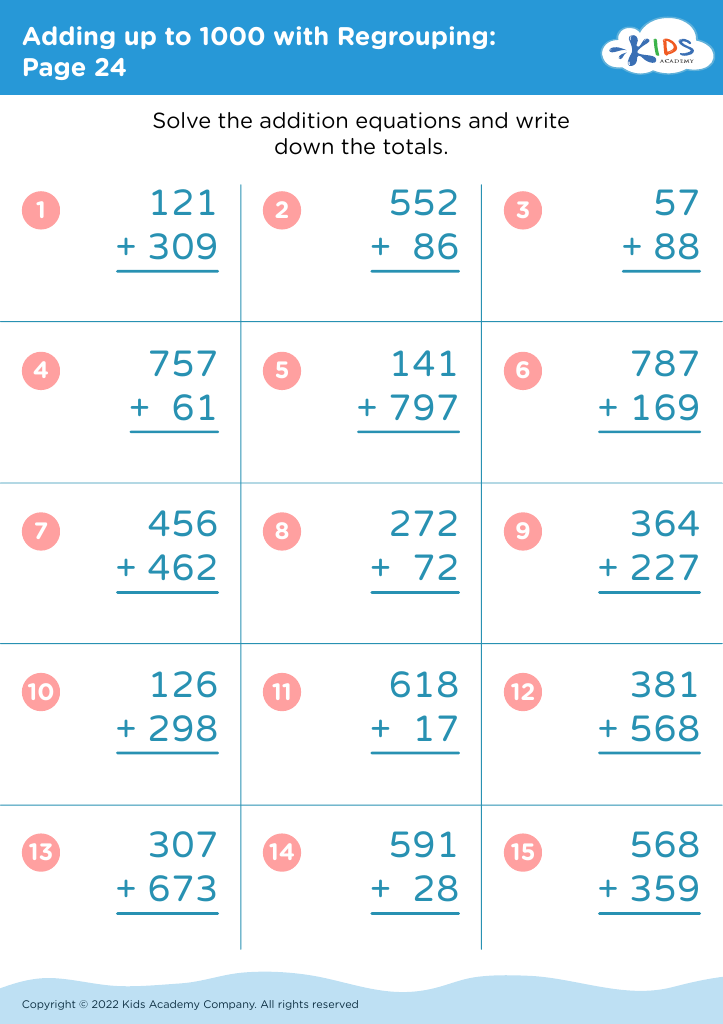
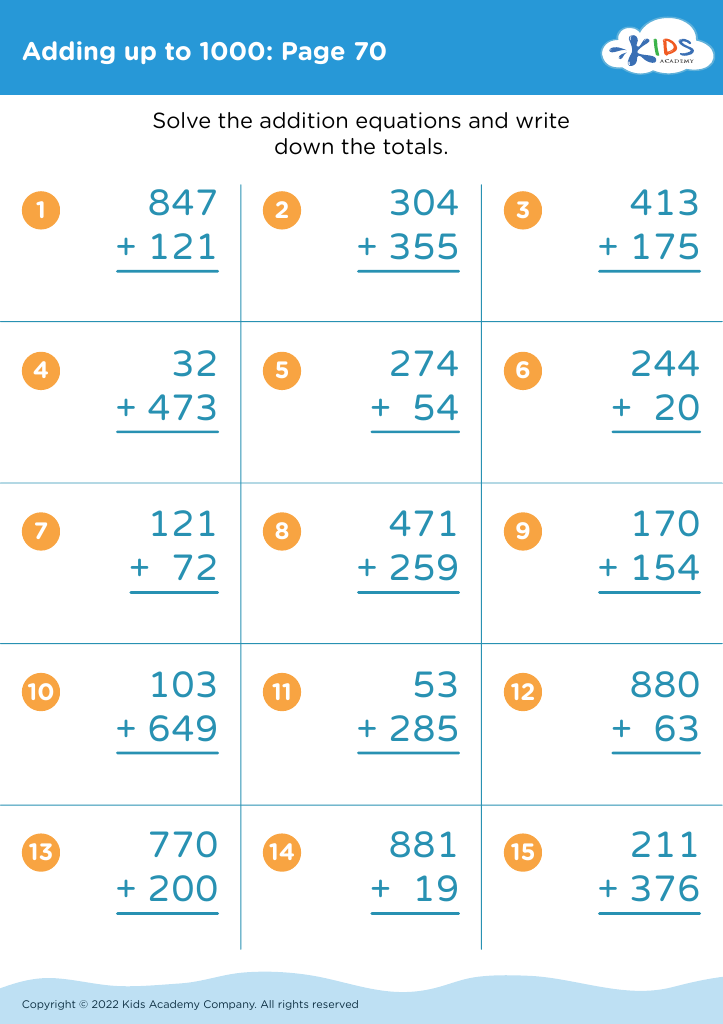
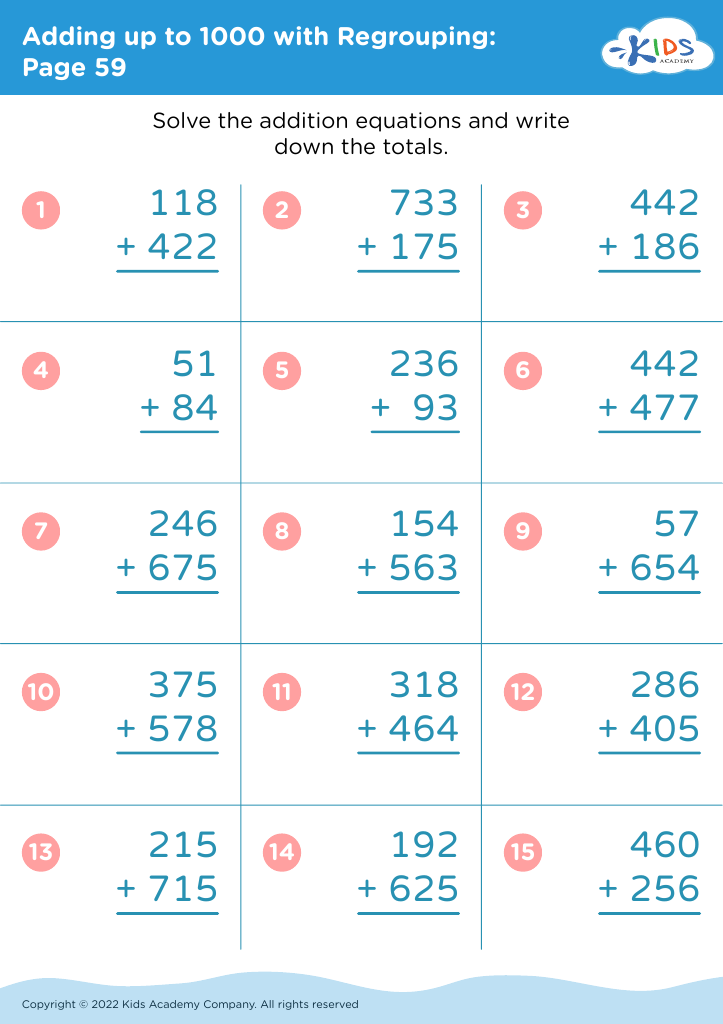
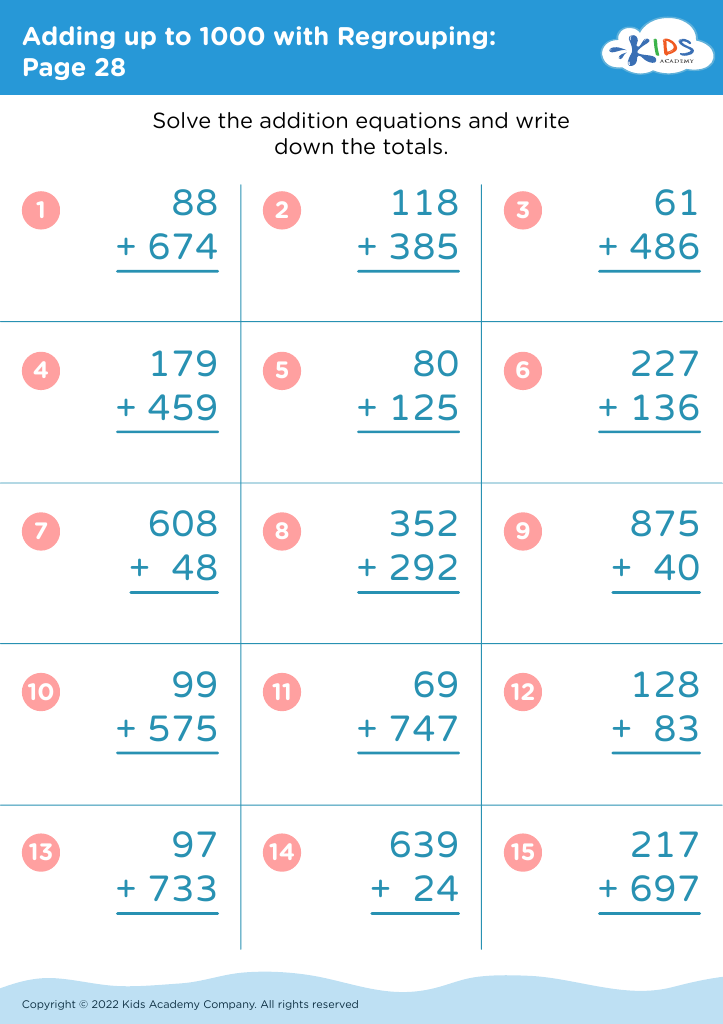
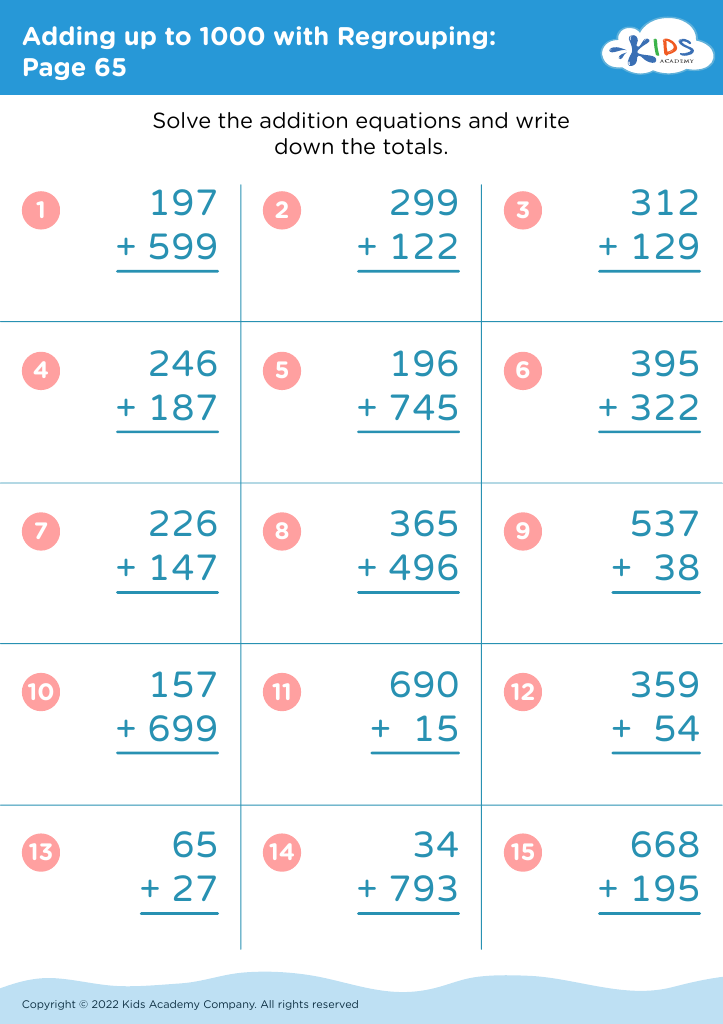
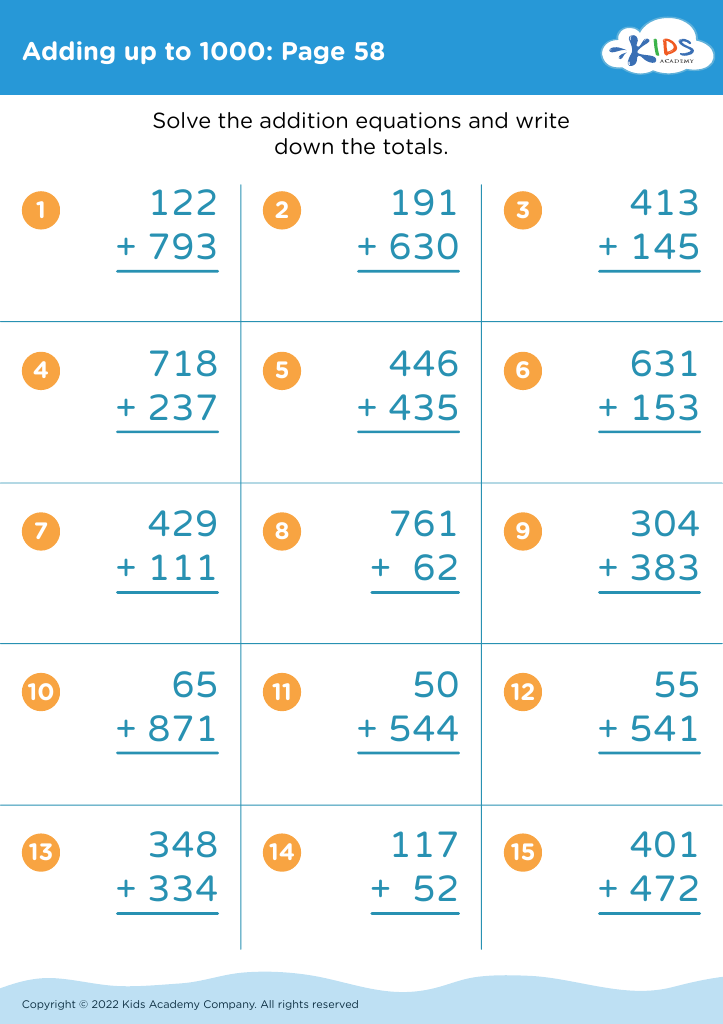




Understanding fractions and adding up to 1000 are fundamental skills that serve as building blocks for higher-level math concepts. For ages 5-8, establishing a concrete grasp of these topics aids in cognitive development and problem-solving skills, essential for later educational success.
Fractions introduce children to the idea of parts of a whole, a concept useful in everyday life, whether in dividing food, sharing items, or understanding dimensions. They also lay the foundation for more advanced topics like ratios, decimals, and percentages. At a young age, grasping these ideas can enhance their numerical literacy, making future mathematical concepts easier to understand.
Mastering addition up to 1000 is equally crucial. It enhances computational fluency—the speed and accuracy with which basic operations are performed. This competence is necessary for tackling more complex problems and performing multi-digit arithmetic, which becomes standard in higher grades.
Moreover, these skills Stoney ordinary experiences such as counting money, telling time, or measuring elements in a personalized context like cooking or crafting. Therefore, ensuring that children comprehend fractions and addition up to 1000 isn’t just about meeting curriculum standards; it’s about empowering them with practical life skills and fostering confidence in their mathematical abilities.








