Addition skills Adding Up to 5 Worksheets for Ages 5-8 - Page 3
78 filtered results
-
From - To



%20(1).jpg)




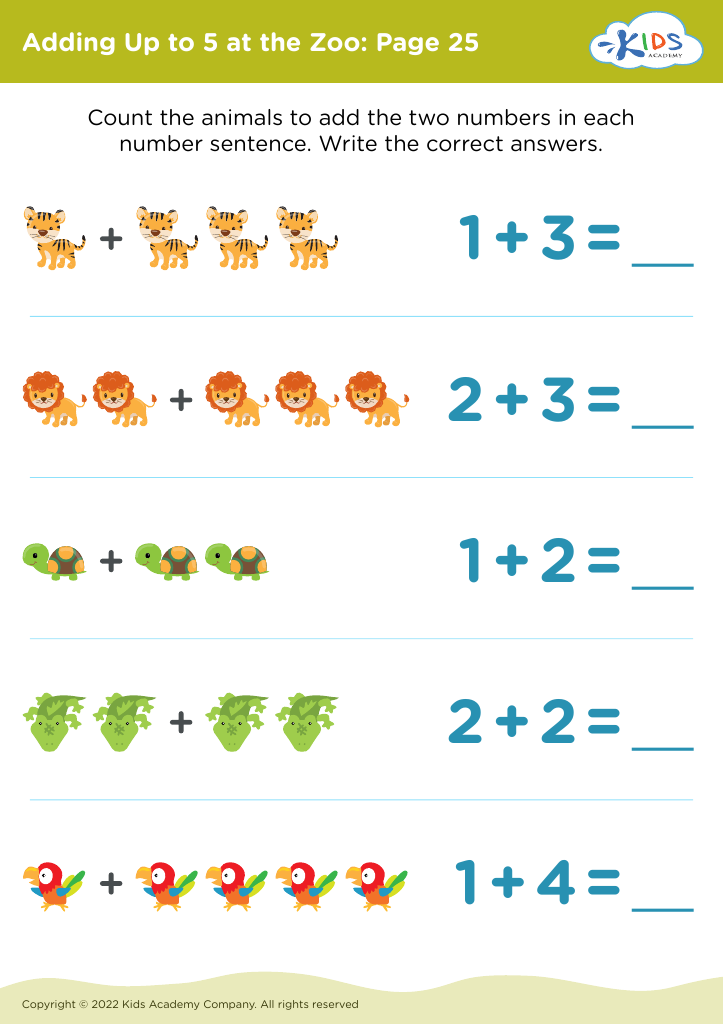
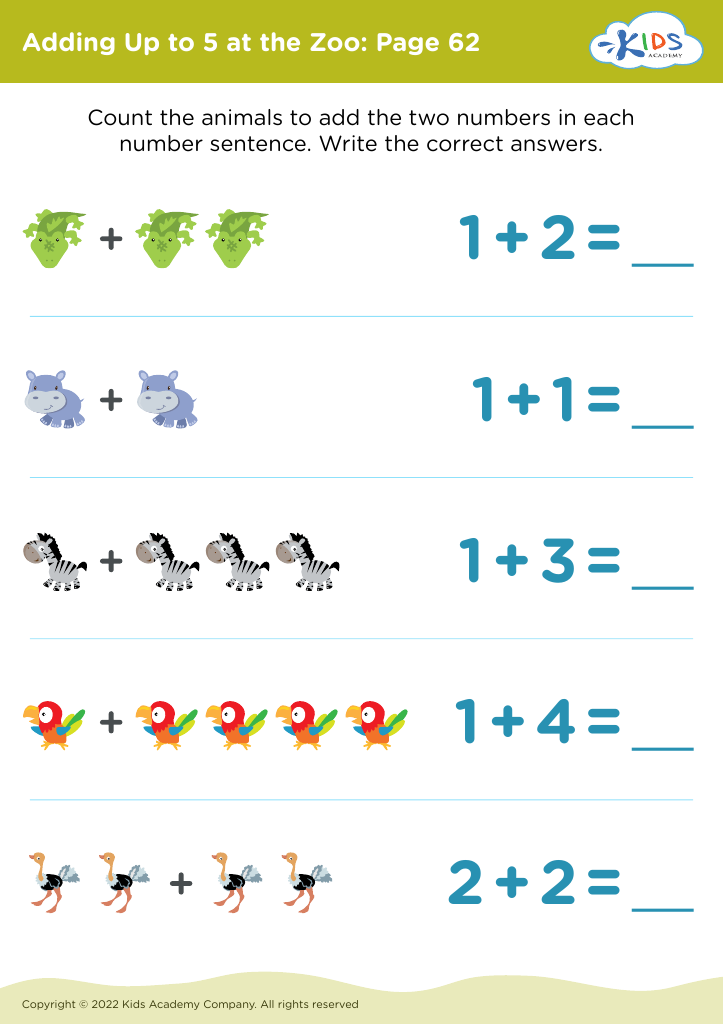
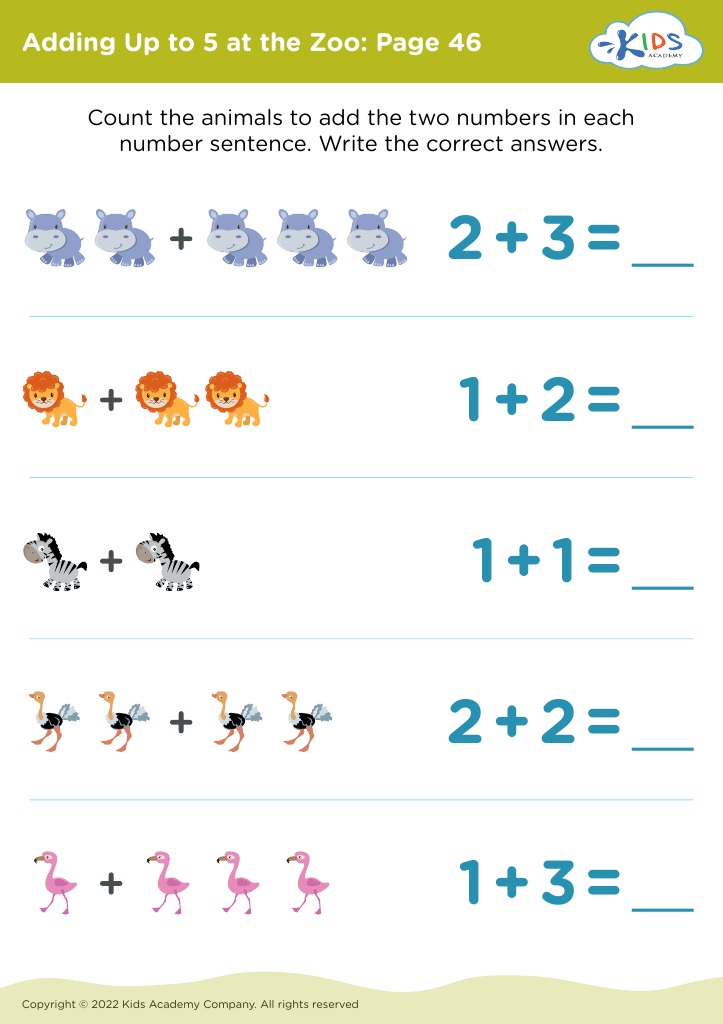
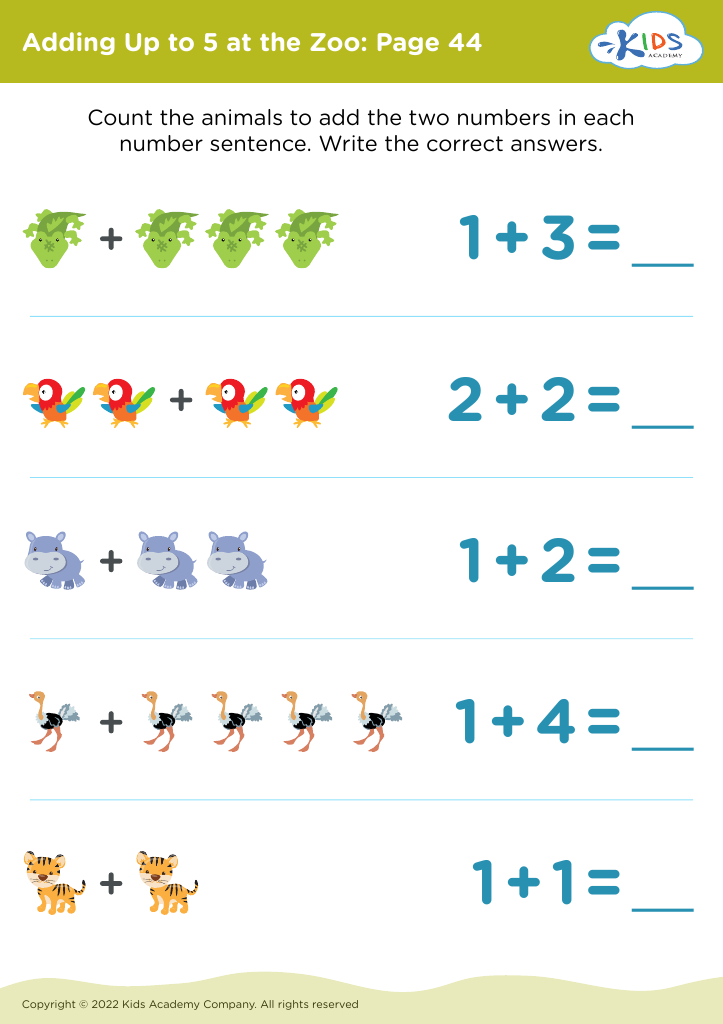
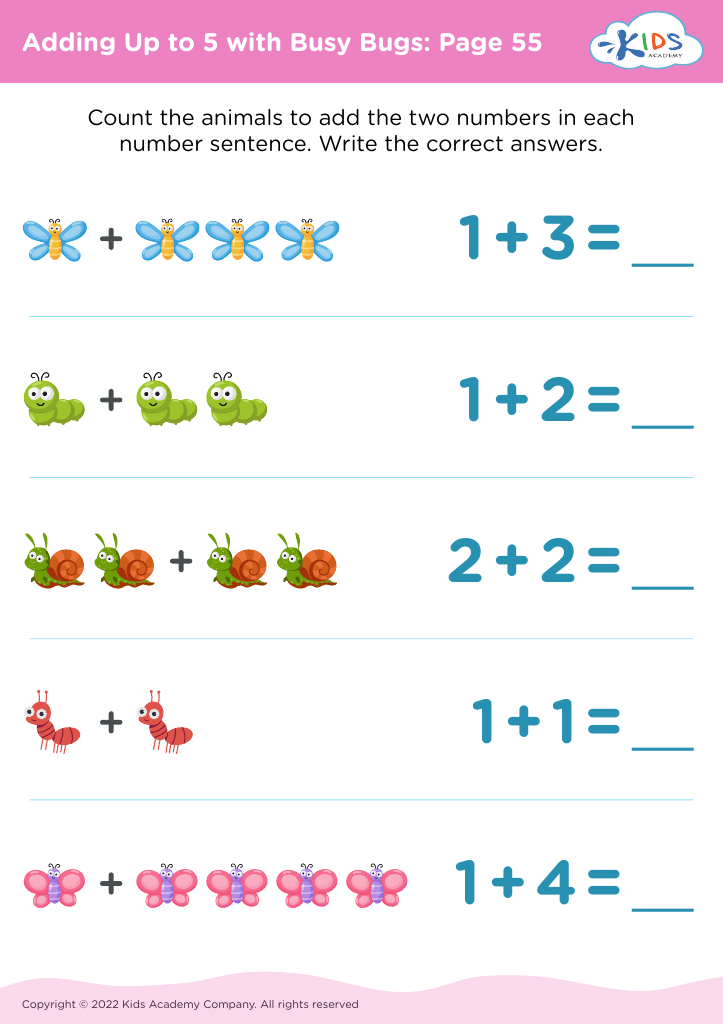
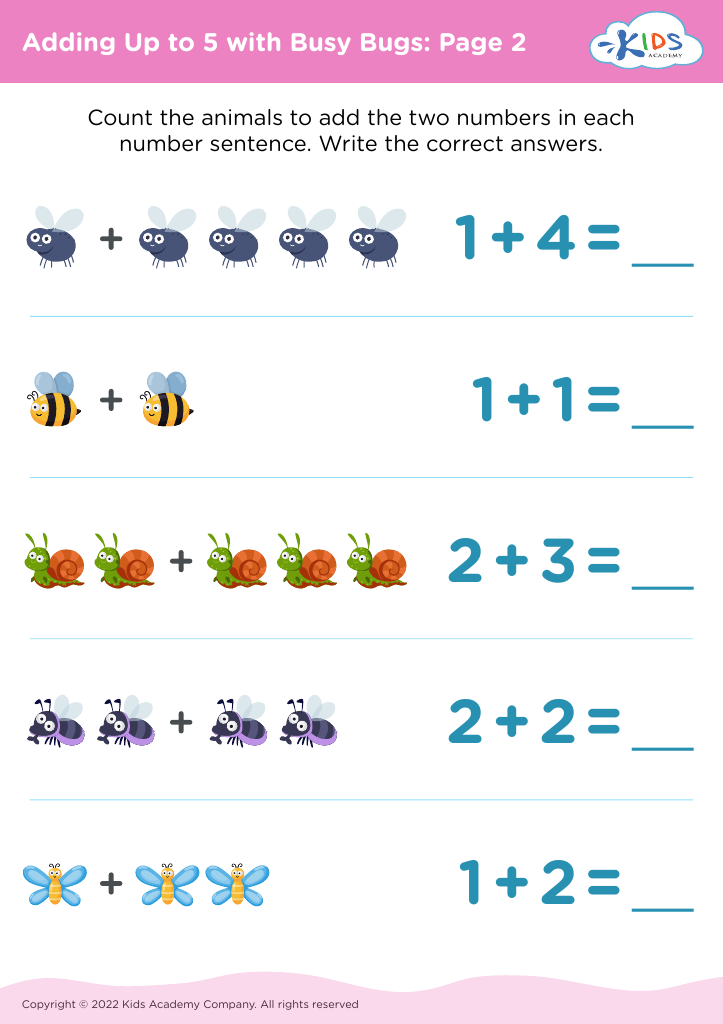
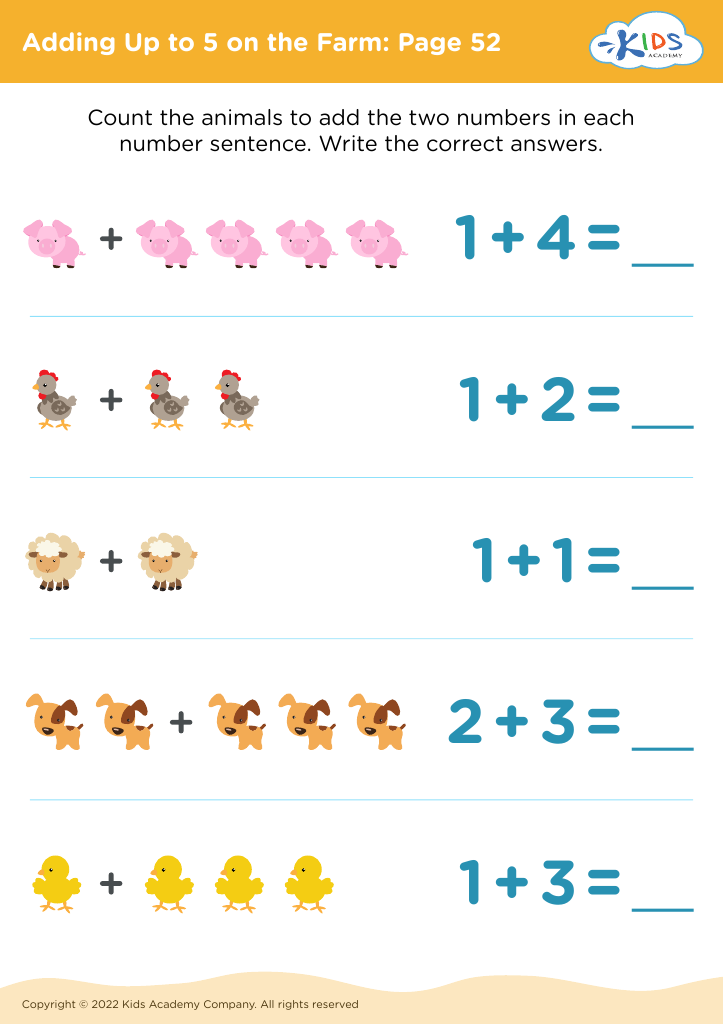
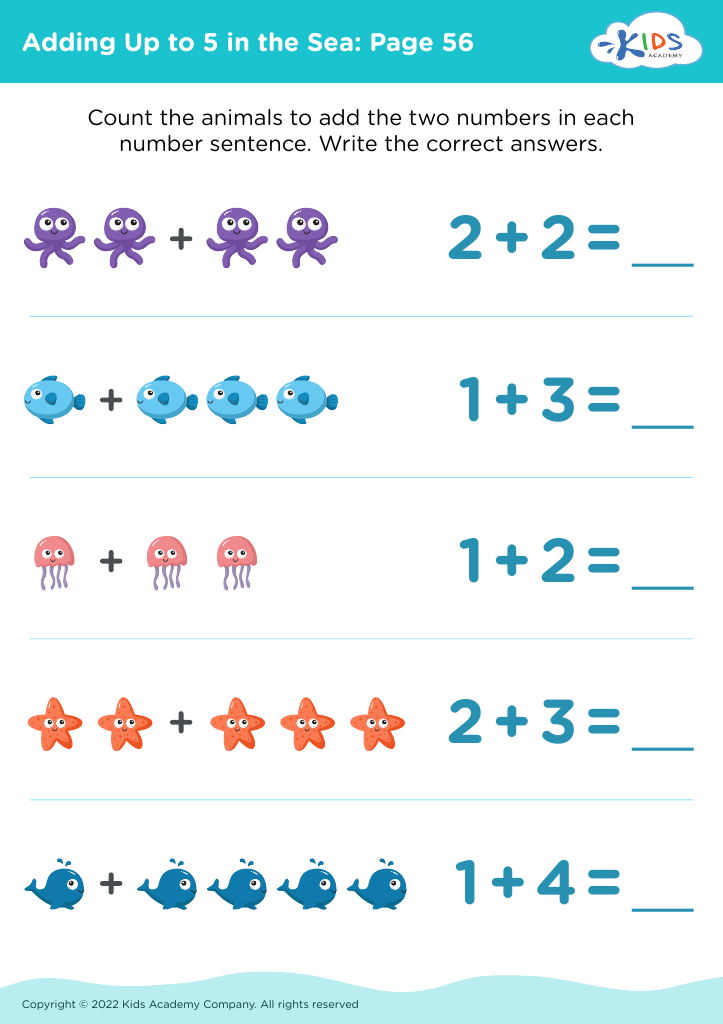
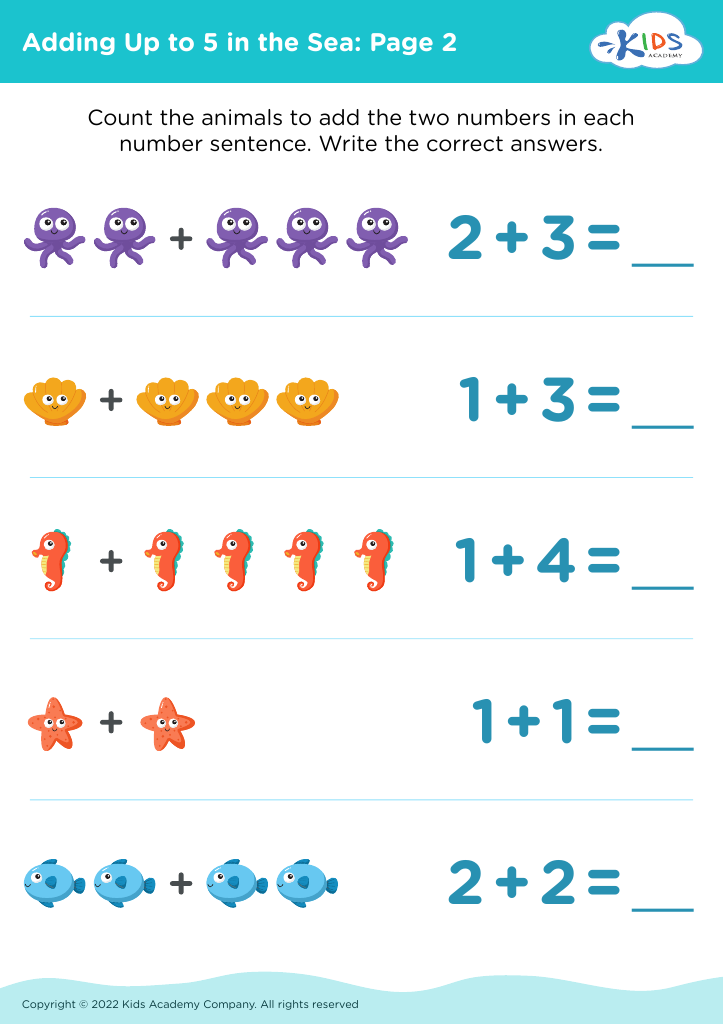
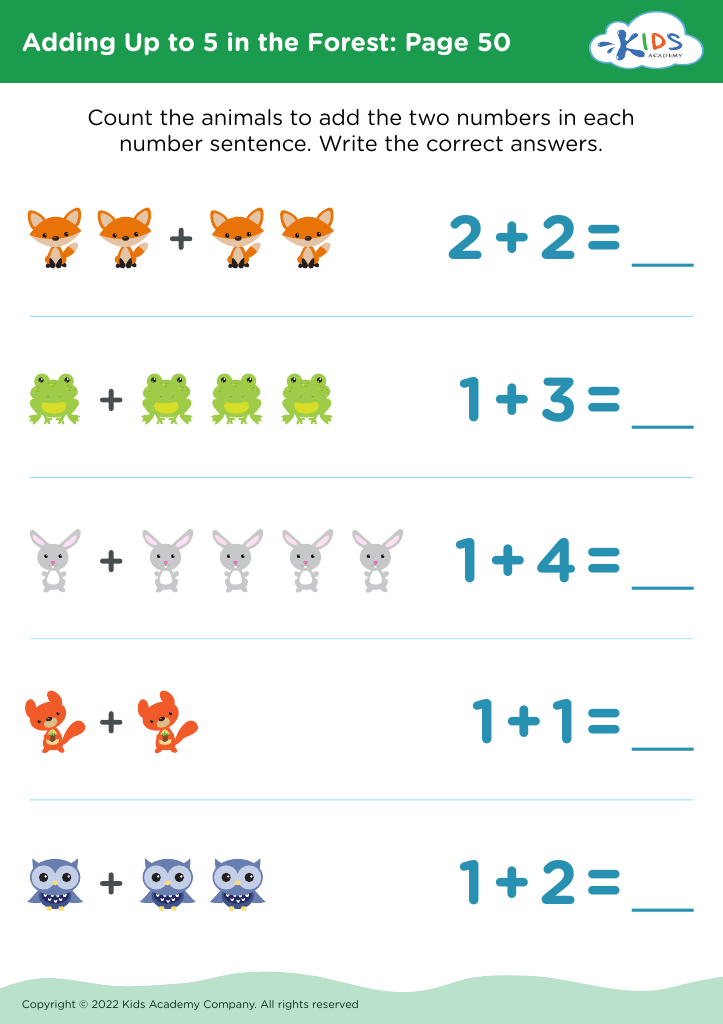
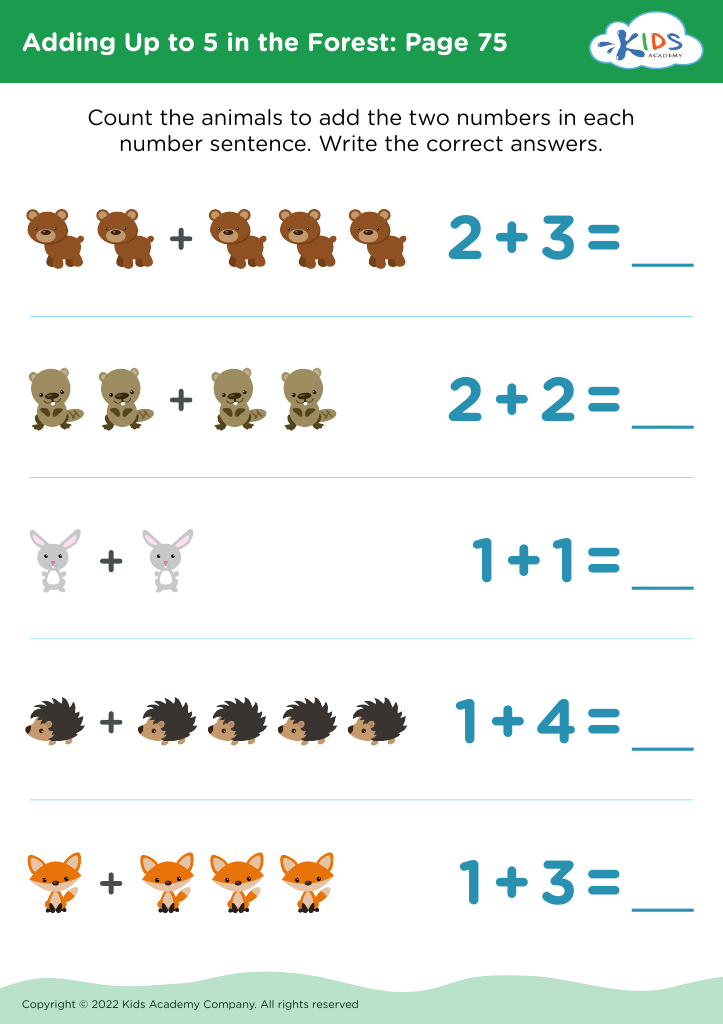
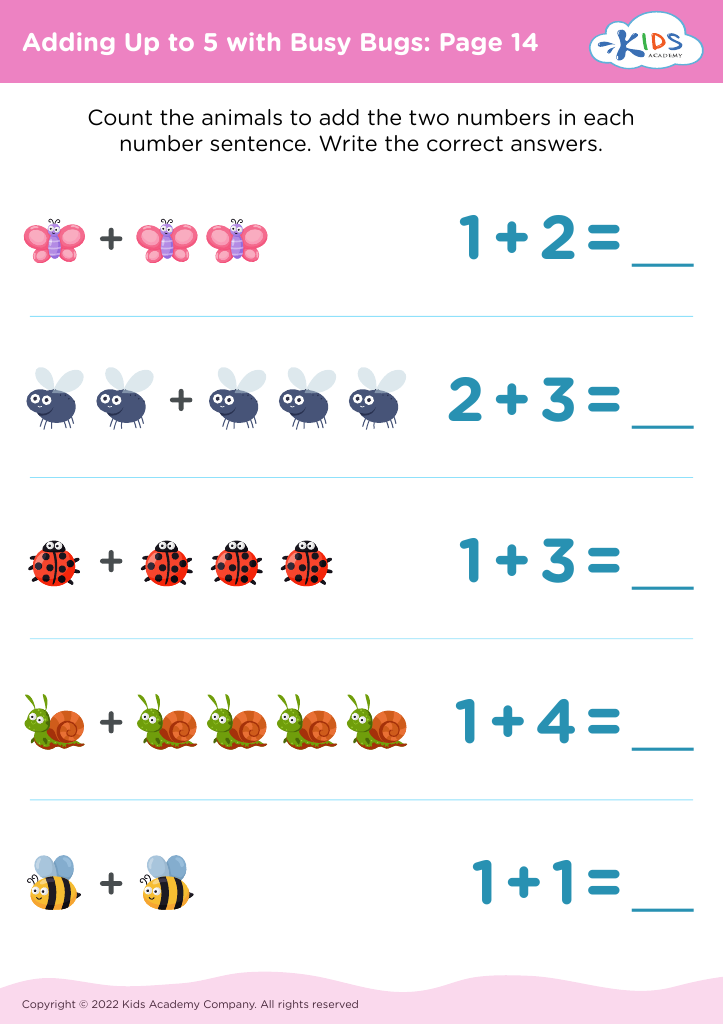
Developing addition skills, particularly for basic sums up to 5, is crucial for young children aged 5-8. Firstly, these foundational skills foster cognitive development. By practicing simple addition, children enhance their problem-solving abilities and logical thinking, setting the stage for more complex mathematical concepts in the future.
Moreover, mastering the addition of small numbers builds a sense of accomplishment and confidence in young learners. When children can confidently calculate sums within 5, they are more likely to engage in mathematical activities, further enriching their learning experiences. This foundational knowledge is essential, as it helps them recognize and understand patterns in numbers, which intrinsically links to everyday experiences, like counting objects, managing time, or sharing resources.
Additionally, these addition skills promote individual autonomy. As children learn to calculate independently, they become more capable of making choices and solving simple problems in their daily lives, from budgeting their allowances to dividing snacks among friends.
In collaborative settings at school, quick addition skills support group work and interactive learning, enabling students to contribute effectively to discussions and tasks. Therefore, parents and teachers should prioritize the teaching of addition skills up to 5 to ensure a well-rounded and impactful early education.








