Animal identification Adding Up to 5 Worksheets for Ages 5-8 - Page 2
27 filtered results
-
From - To
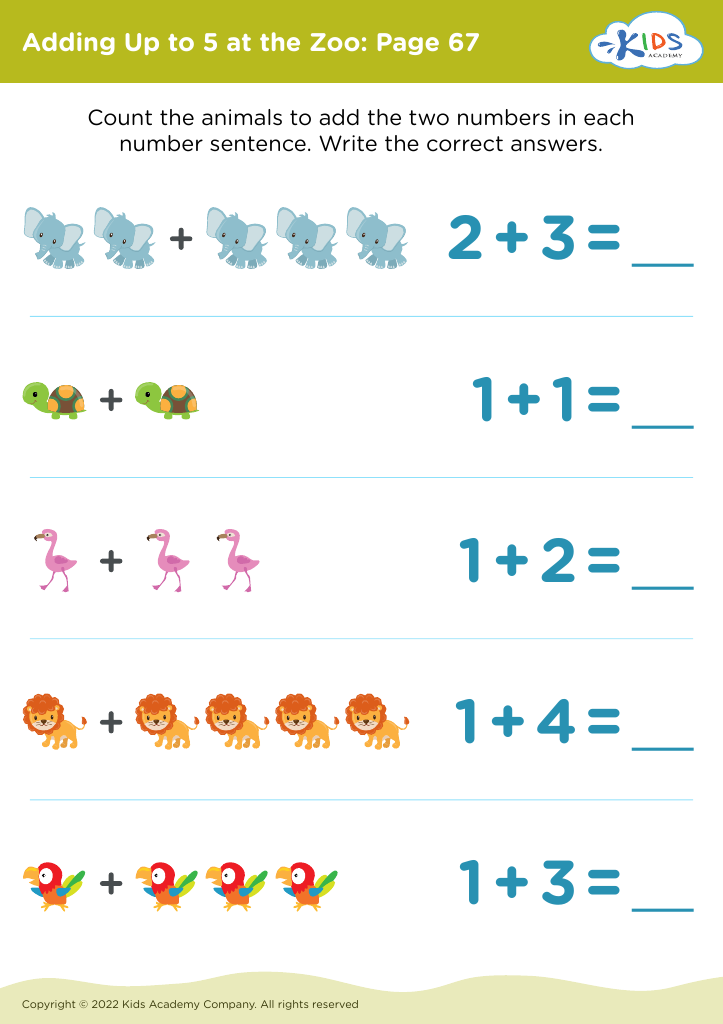
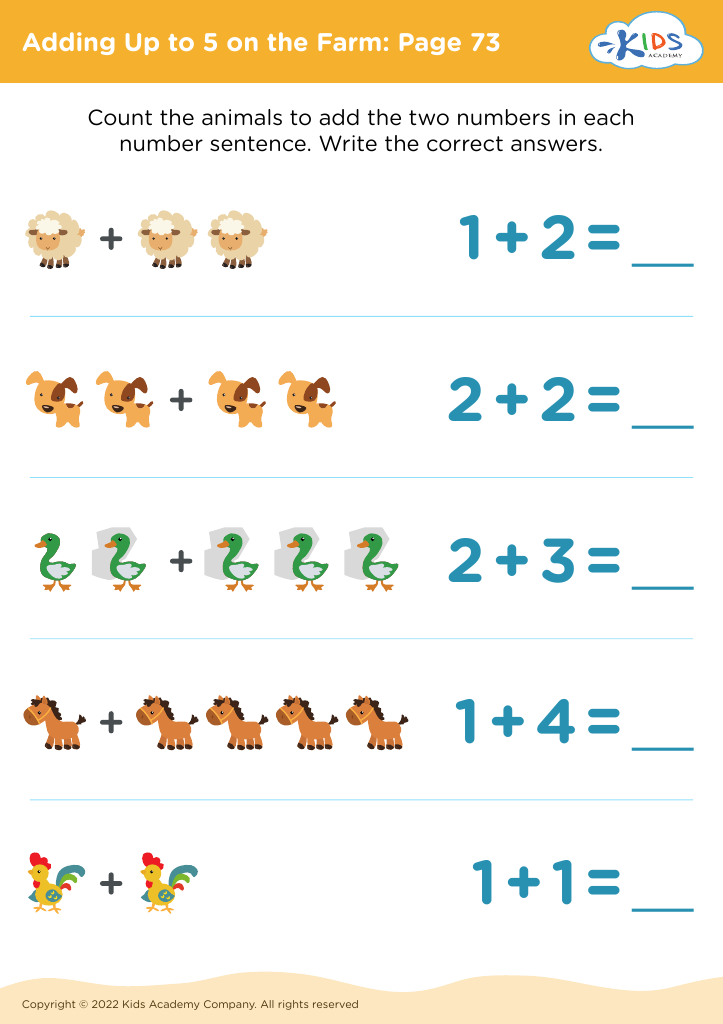
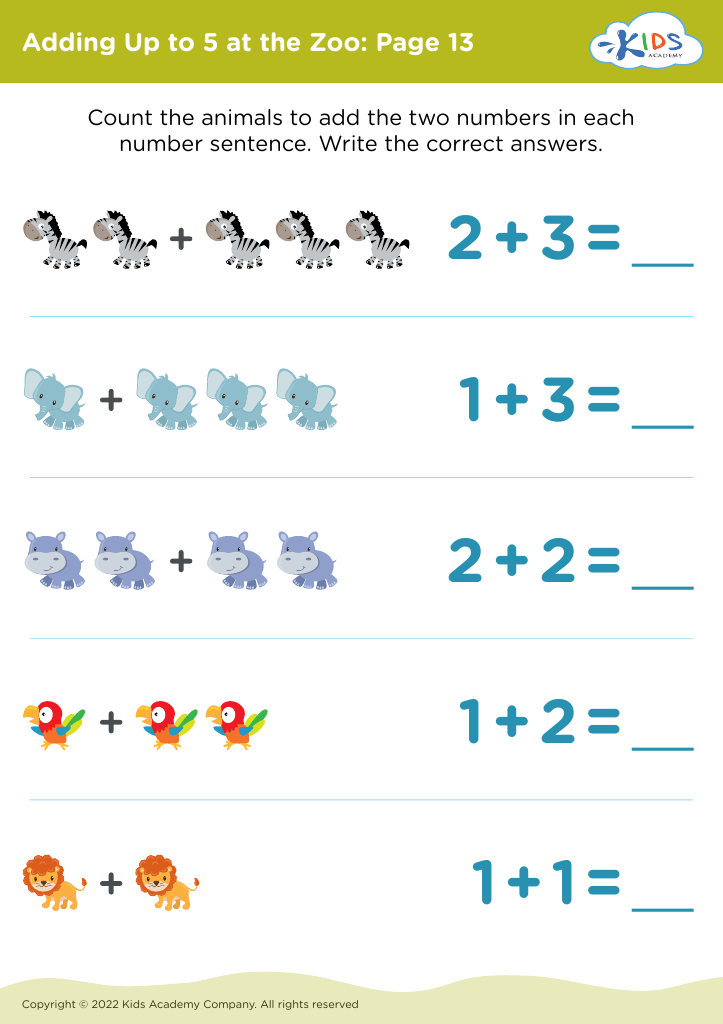





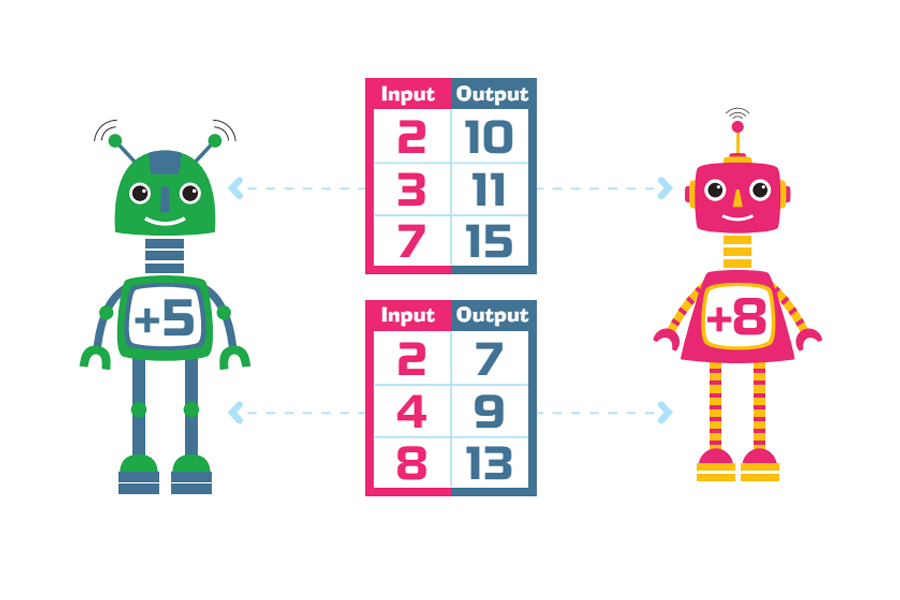


Animal identification is crucial for young children, as it fosters a sense of curiosity and connection to the natural world. For parents and teachers of kids aged 5-8, engaging in this topic can enhance learning in multiple ways. First, it teaches children how to differentiate between various animals, which promotes observation skills and critical thinking. By identifying animals, children begin to understand their characteristics and habitats, encouraging a sense of responsibility and respect for nature.
Moreover, incorporating animal identification into the educational experience adds an element of fun through games and activities that combine learning with play. Activities like matching animals to their names or homes reinforce numbers and counting through identification. For example, children can engage in exercises that involve counting the number of each type of animal, leading to foundational math skills—like addition—via hands-on practice.
Additionally, learning about animals collectively can enhance social interaction among peers as kids can share insights and engage in discussions. Emphasizing animal identification and counting can foster empathy towards animals and support broader concepts that contribute to a well-rounded education. Overall, integrating animal identification into early education can promote intellectual growth while nurturing a caring attitude towards all living things.








