Filters

90 filtered results

Clear all filters
Favorites
With answer key
Interactive

90 filtered results

Difficulty Level

Grade


Check out this FREE Trial Lesson on Adding Up to 5 for age 5-8!

Exactly the Same, or Not

Favorites
With answer key
Interactive
  • 5-8
  • Animal recognition
  • Adding Up to 5
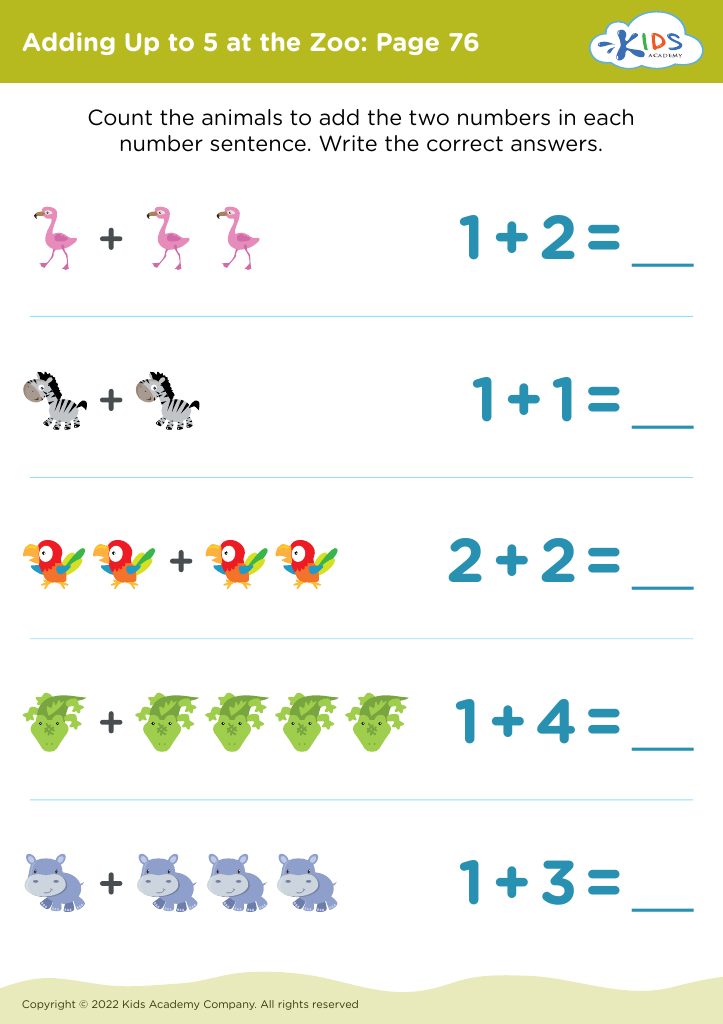
Adding Up to 5 at the Zoo: Page 76
Worksheet
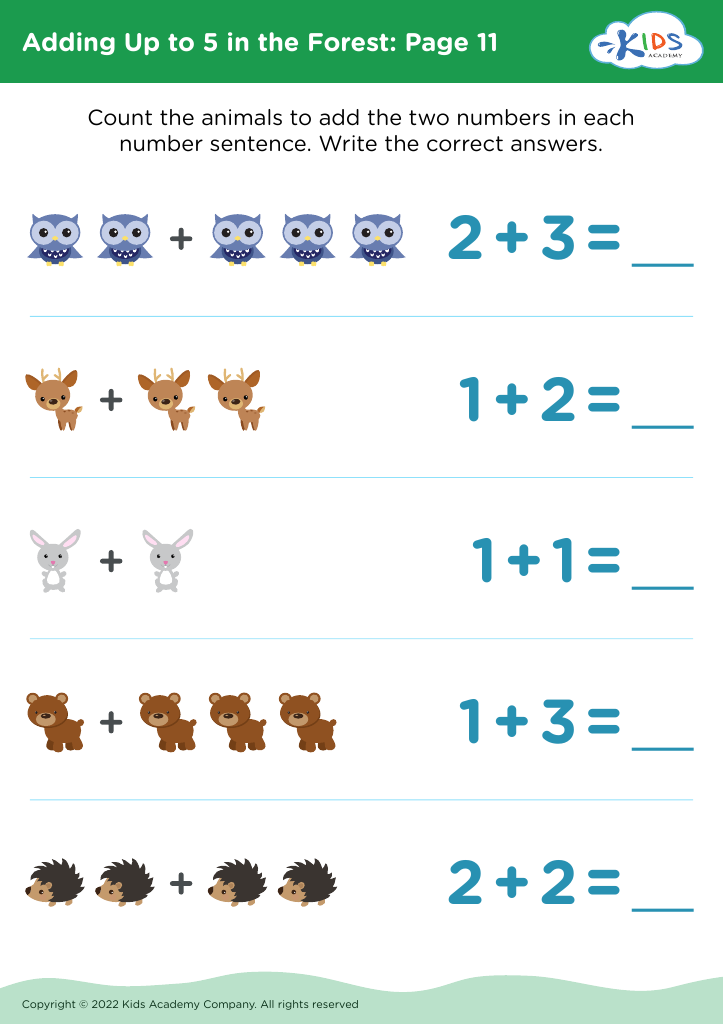
Adding Up to 5 in the Forest: Page 11
Worksheet
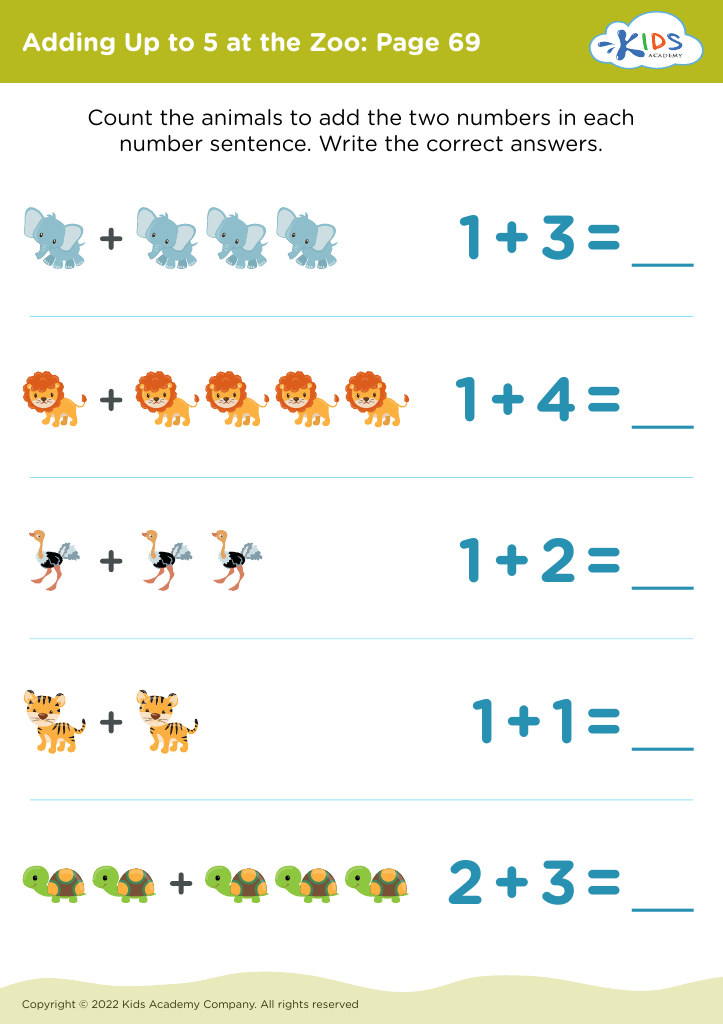
Adding Up to 5 at the Zoo: Page 69
Worksheet
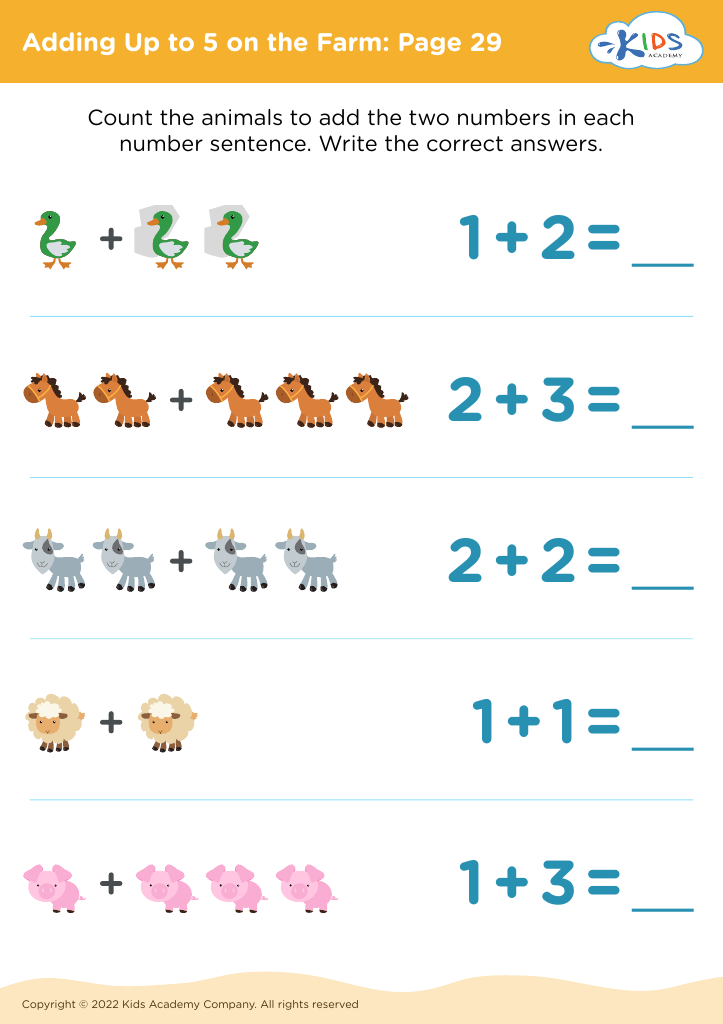
Adding Up to 5 on the Farm: Page 29
Worksheet
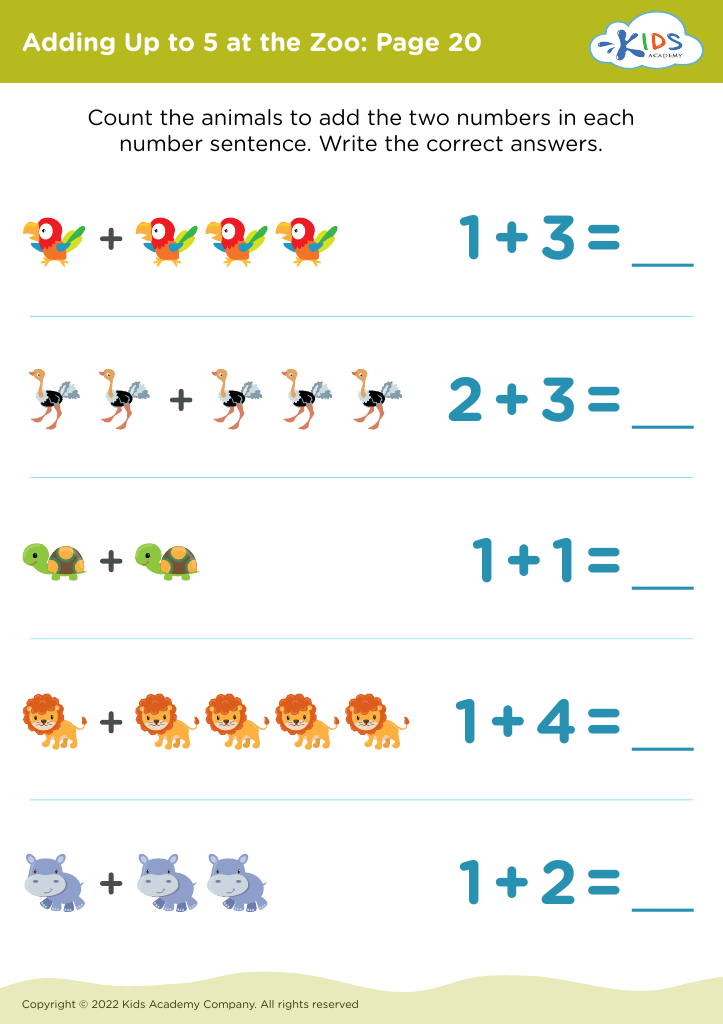
Adding Up to 5 at the Zoo: Page 20
Worksheet
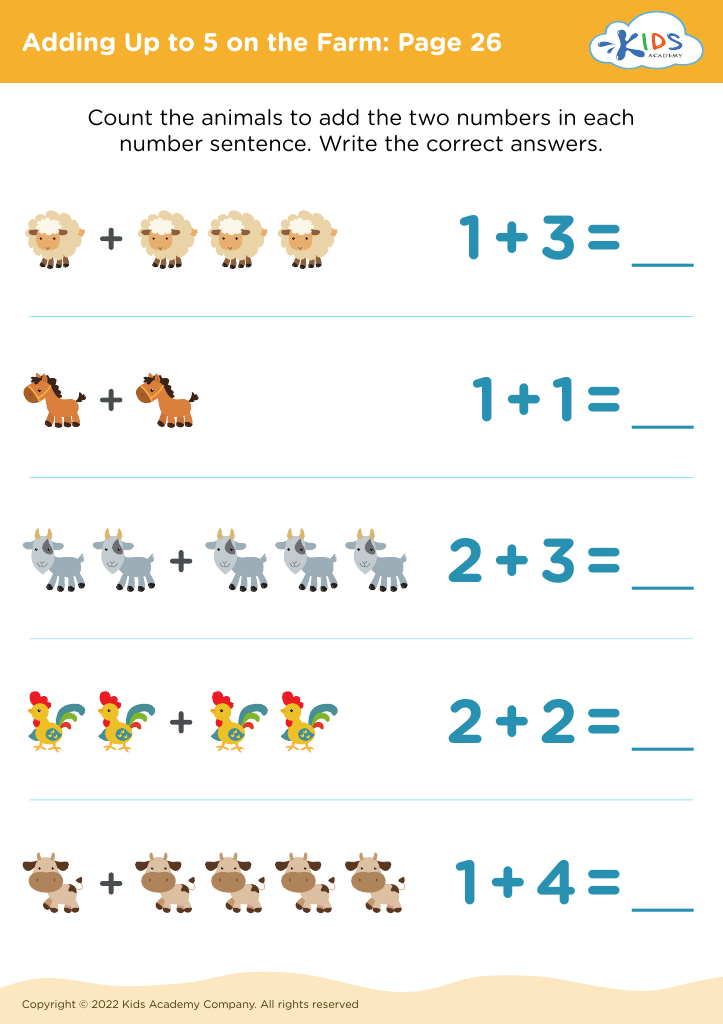
Adding Up to 5 on the Farm: Page 26
Worksheet
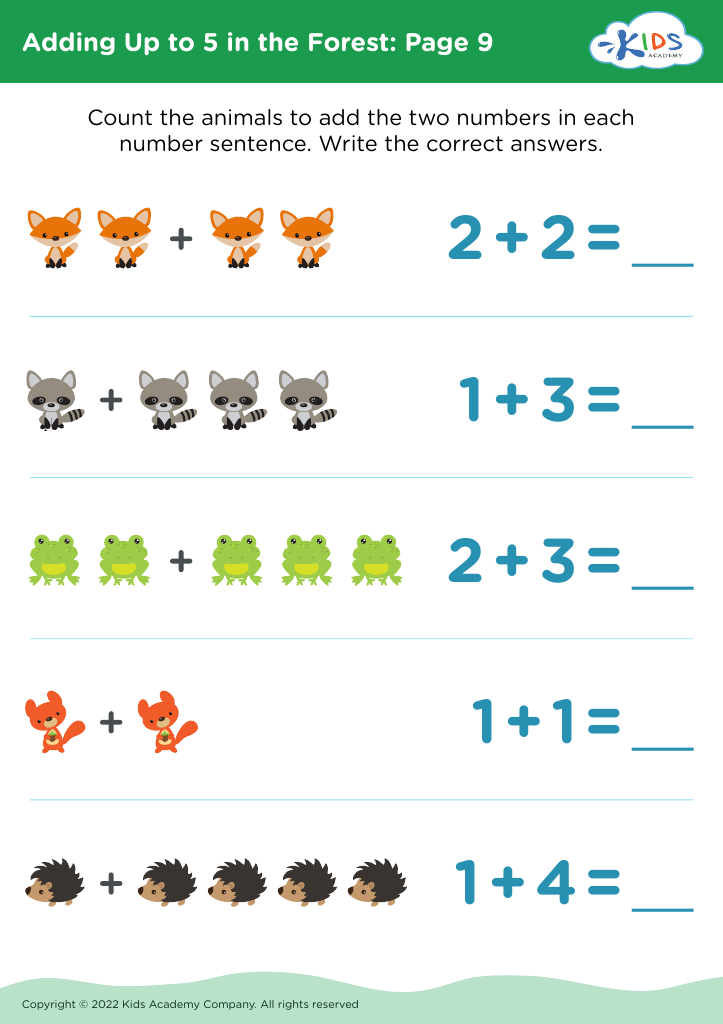
Adding Up to 5 in the Forest: Page 9
Worksheet
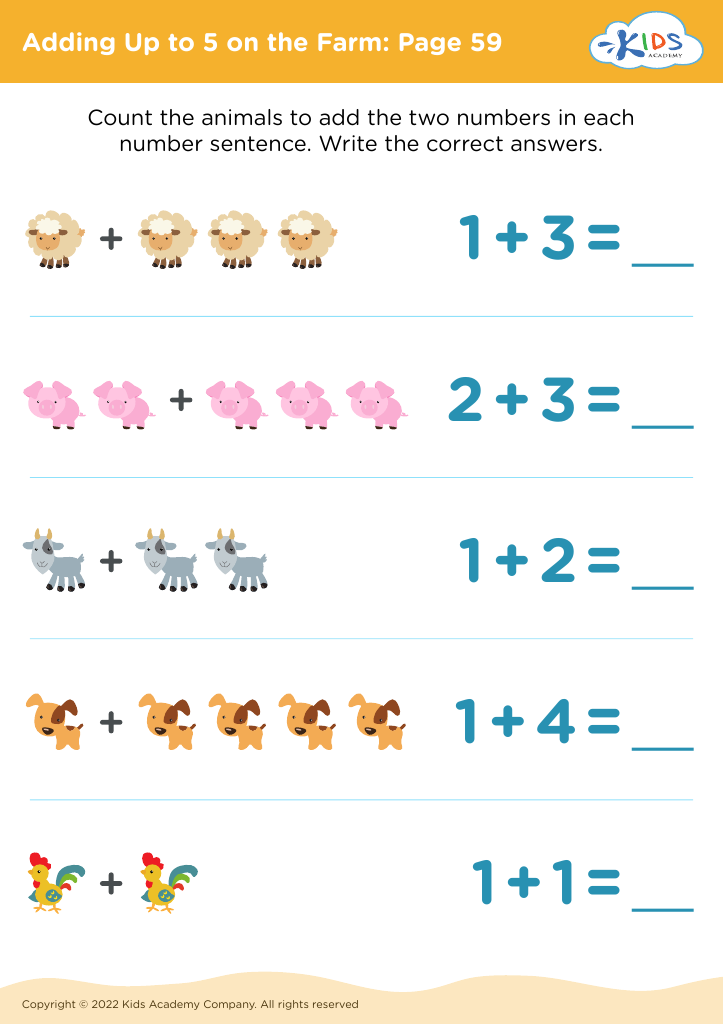
Adding Up to 5 on the Farm: Page 59
Worksheet
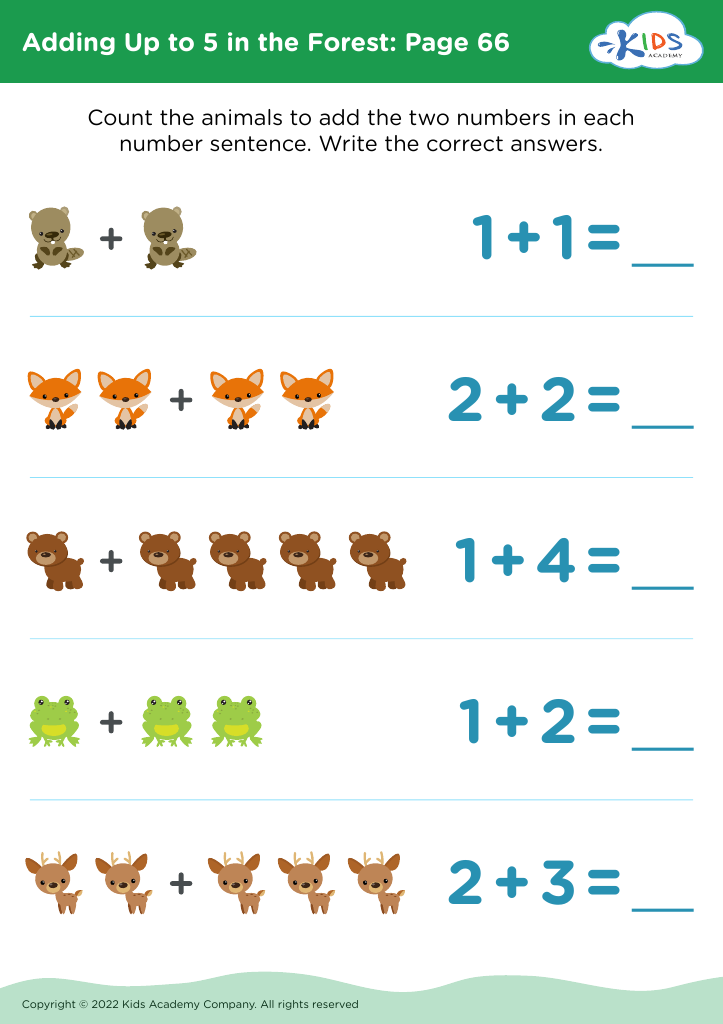
Adding Up to 5 in the Forest: Page 66
Worksheet
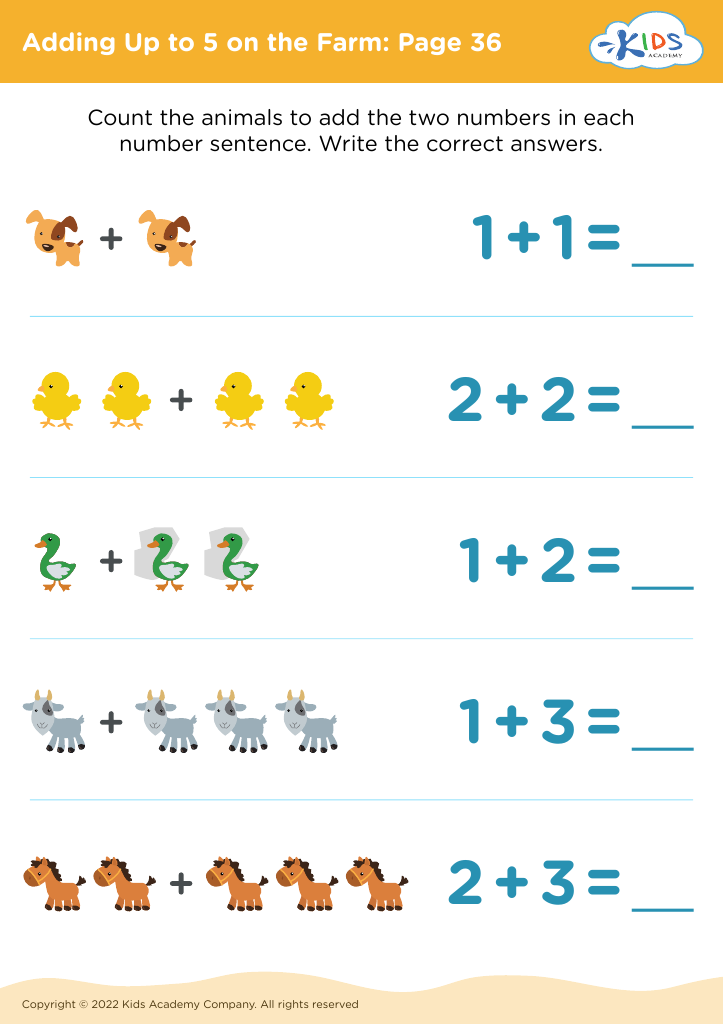
Adding Up to 5 on the Farm: Page 36
Worksheet
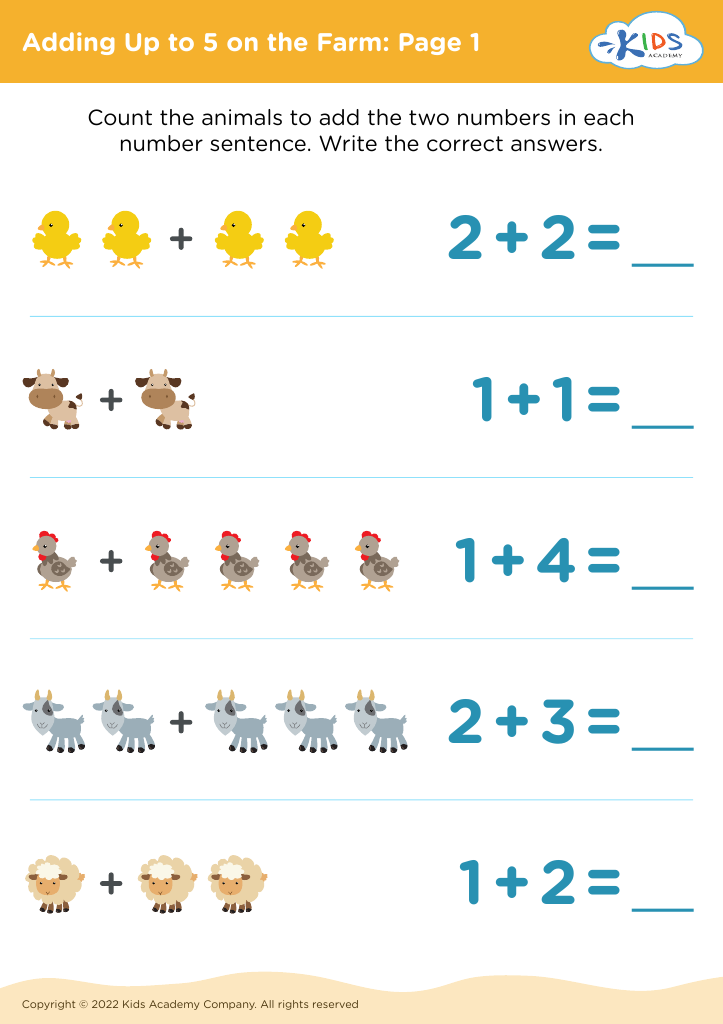
Adding Up to 5 on the Farm: Page 1
Worksheet
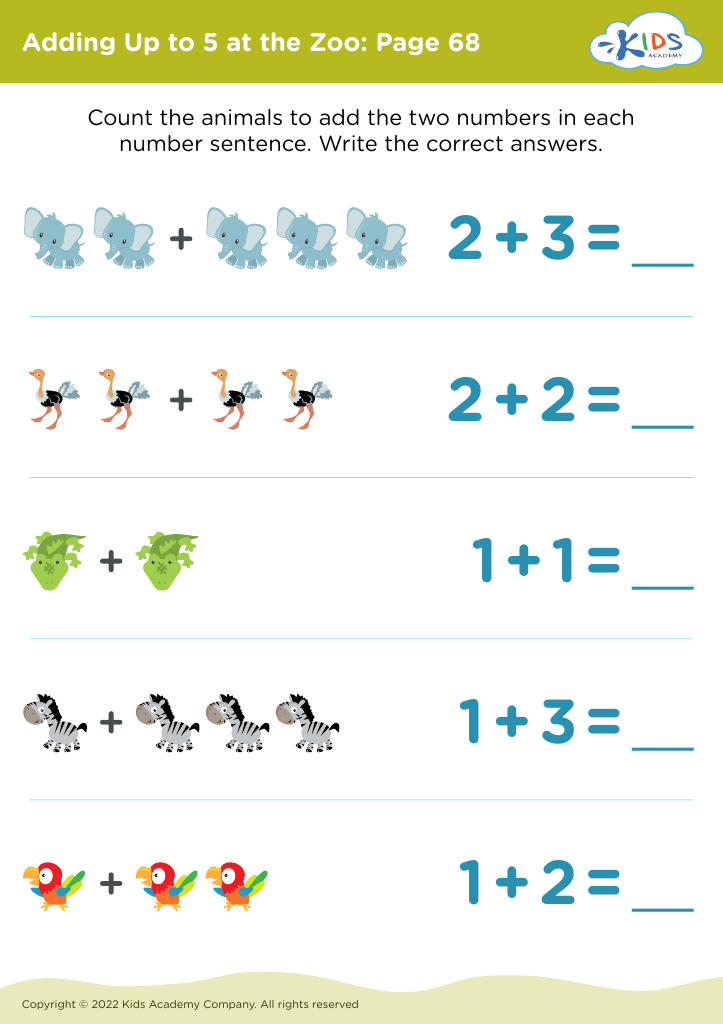
Adding Up to 5 at the Zoo: Page 68
Worksheet
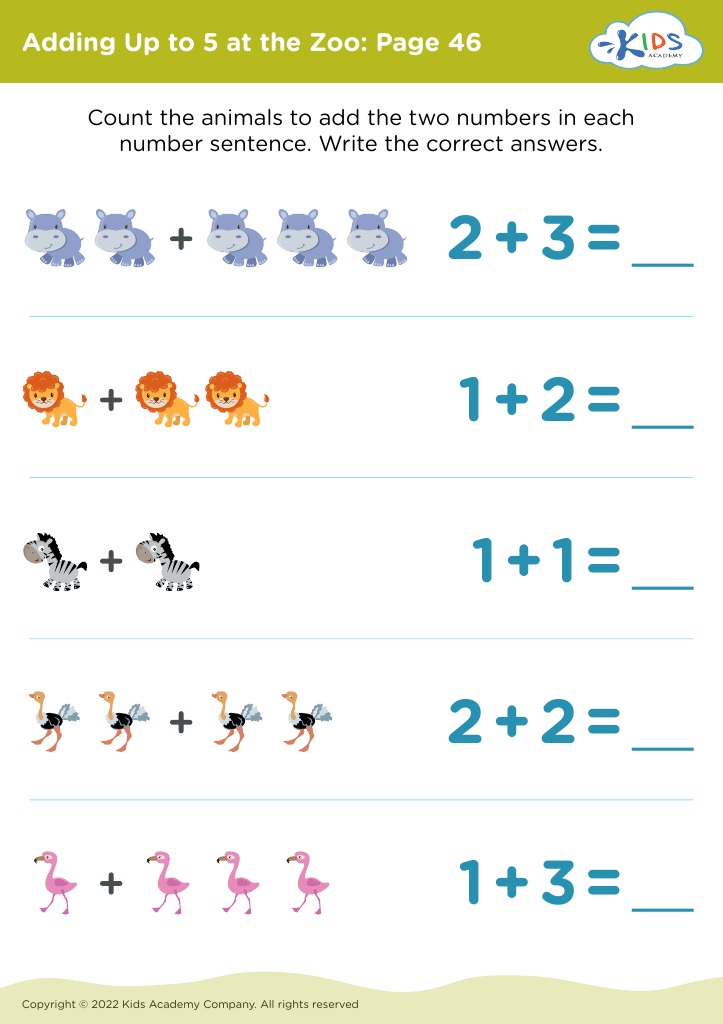
Adding Up to 5 at the Zoo: Page 46
Worksheet
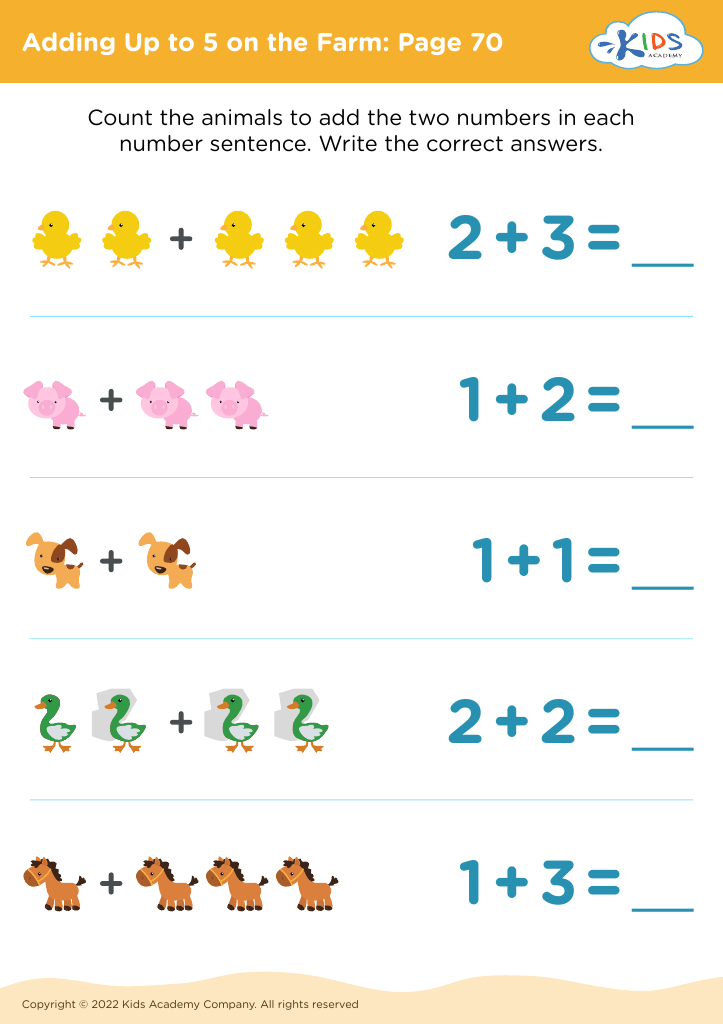
Adding Up to 5 on the Farm: Page 70
Worksheet
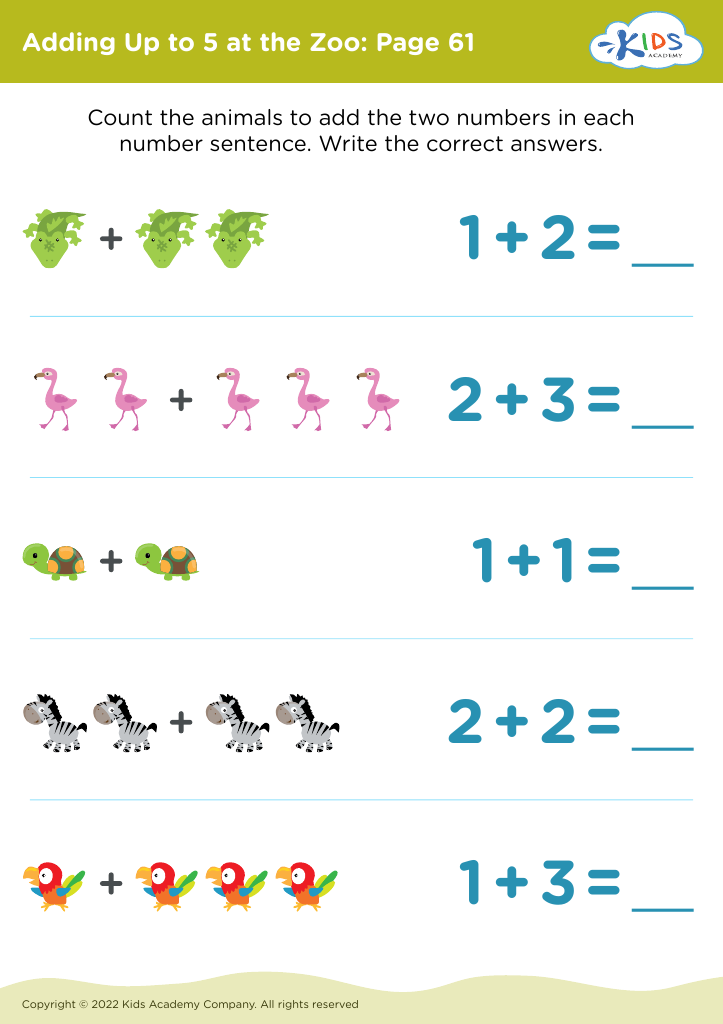
Adding Up to 5 at the Zoo: Page 61
Worksheet
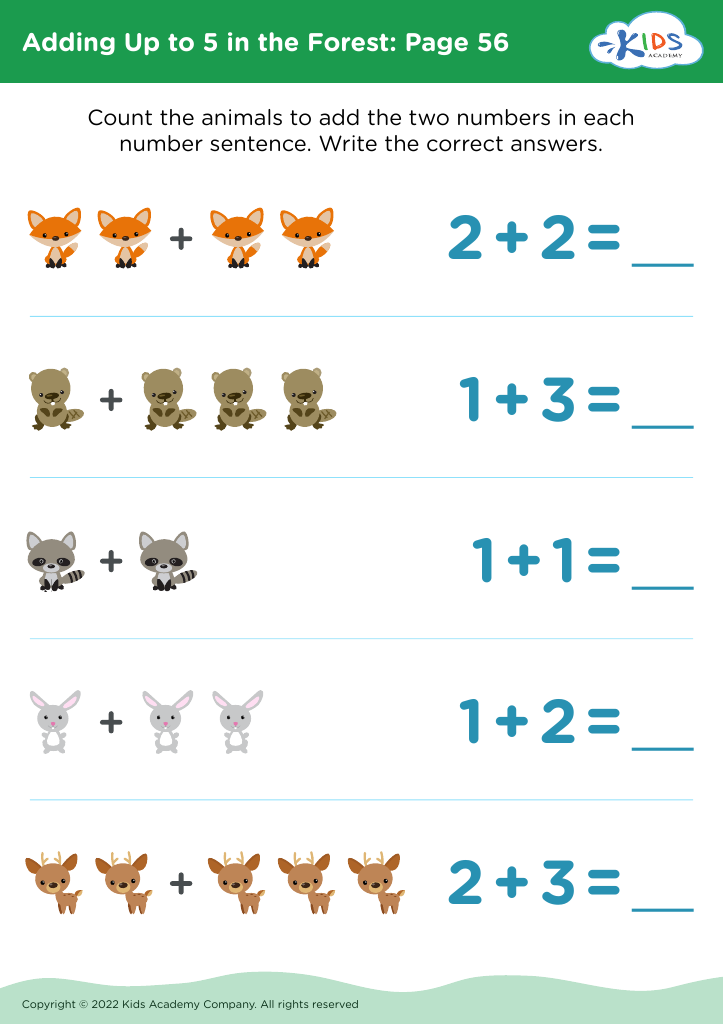
Adding Up to 5 in the Forest: Page 56
Worksheet
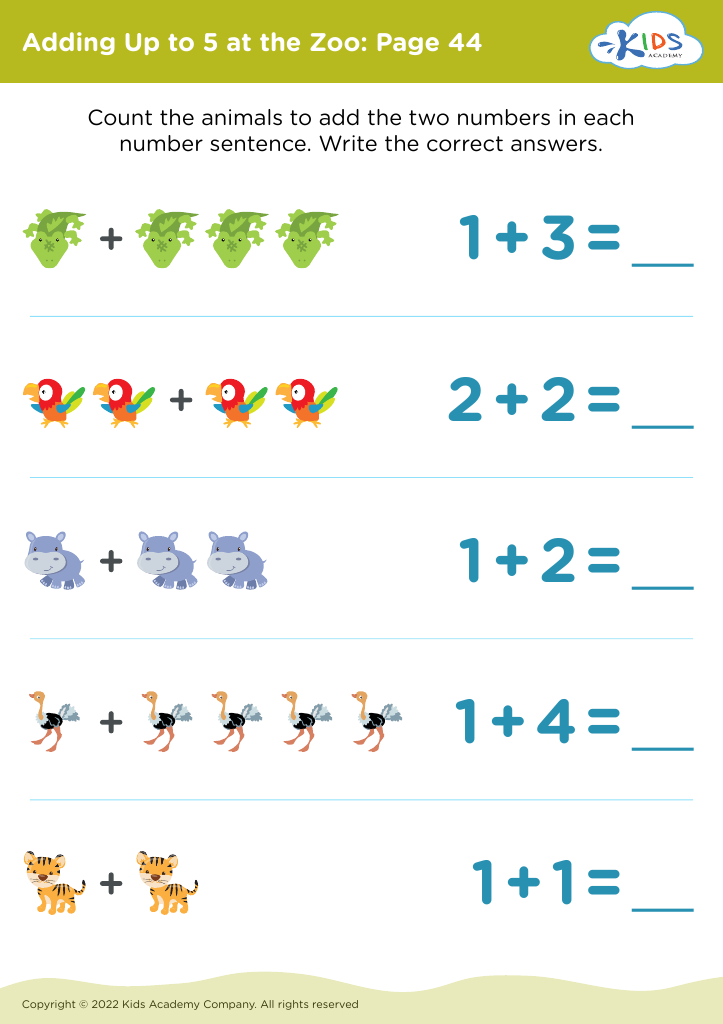
Adding Up to 5 at the Zoo: Page 44
Worksheet
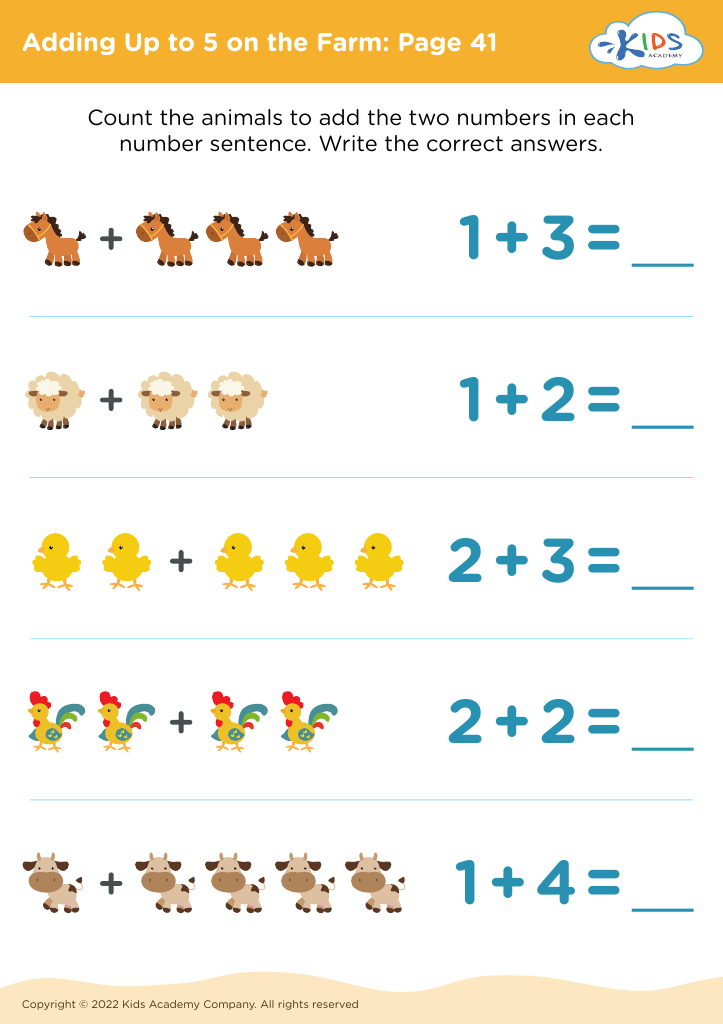
Adding Up to 5 on the Farm: Page 41
Worksheet
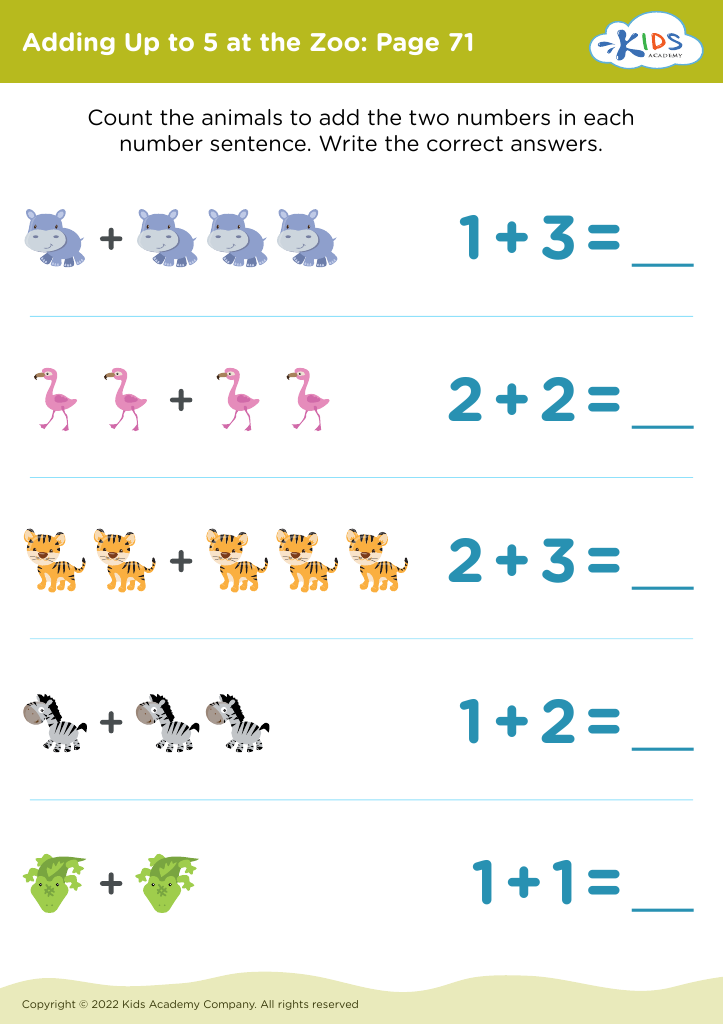
Adding Up to 5 at the Zoo: Page 71
Worksheet
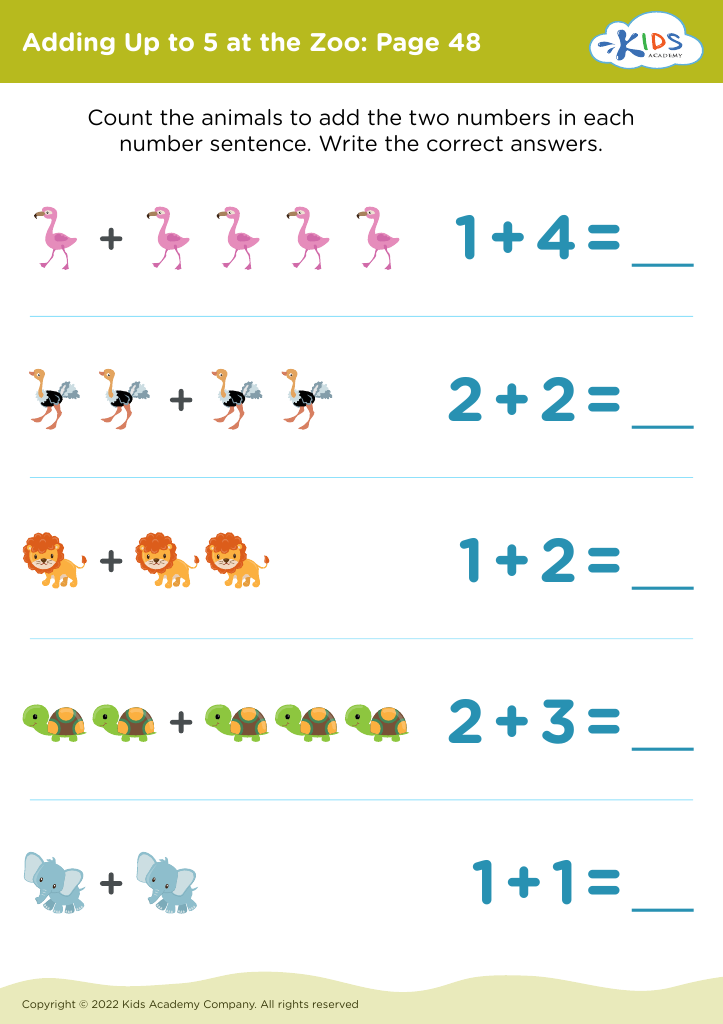
Adding Up to 5 at the Zoo: Page 48
Worksheet
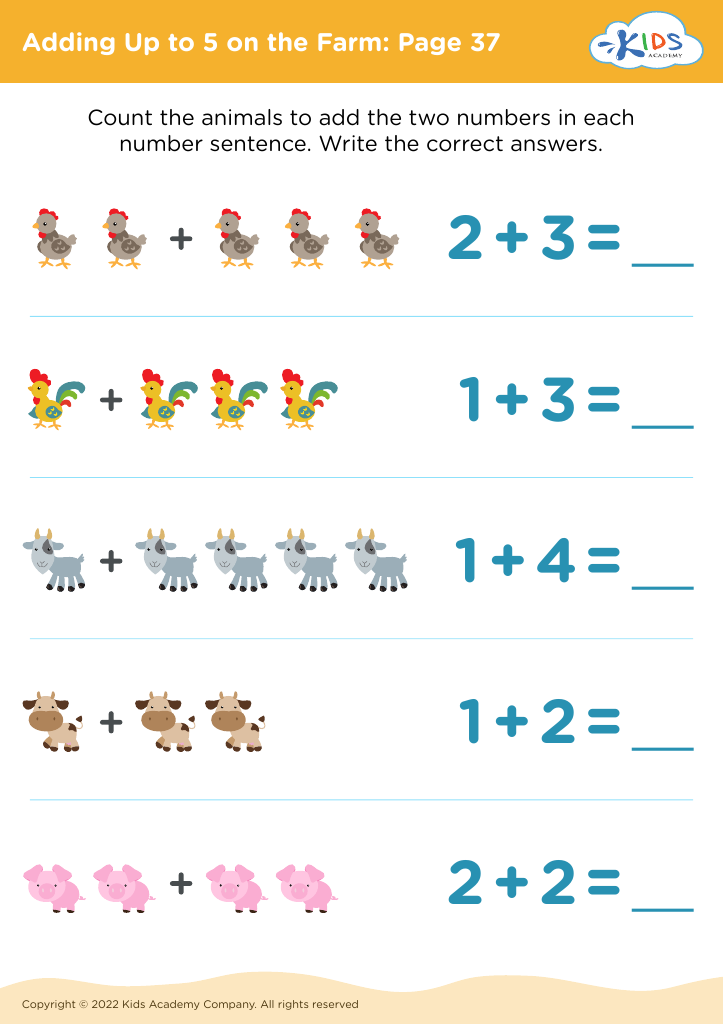
Adding Up to 5 on the Farm: Page 37
Worksheet
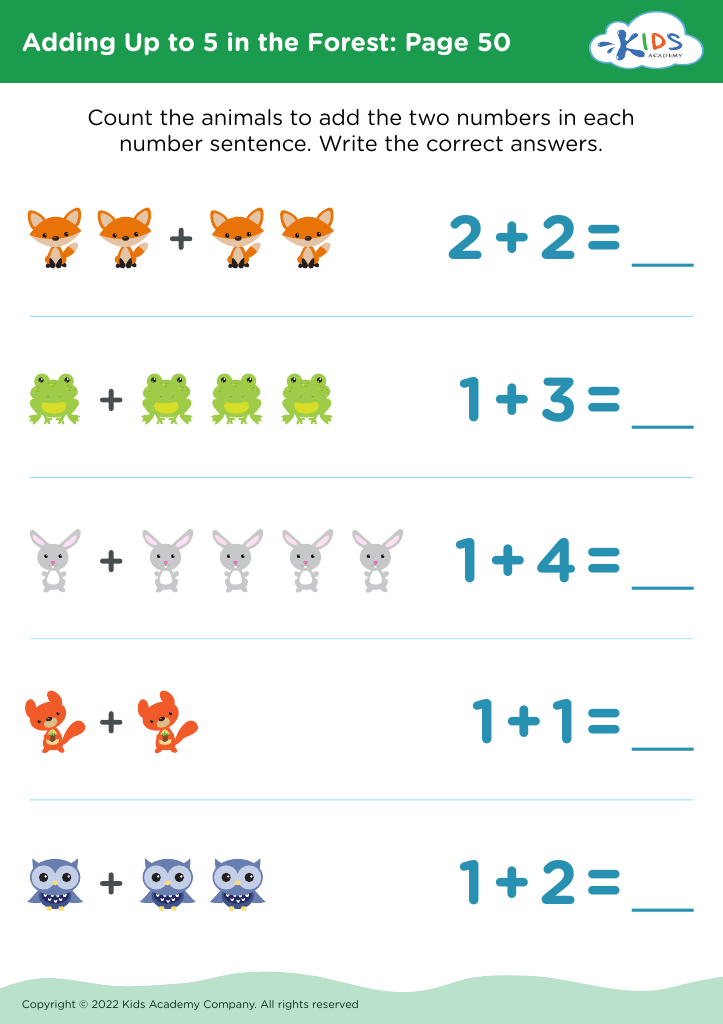
Adding Up to 5 in the Forest: Page 50
Worksheet
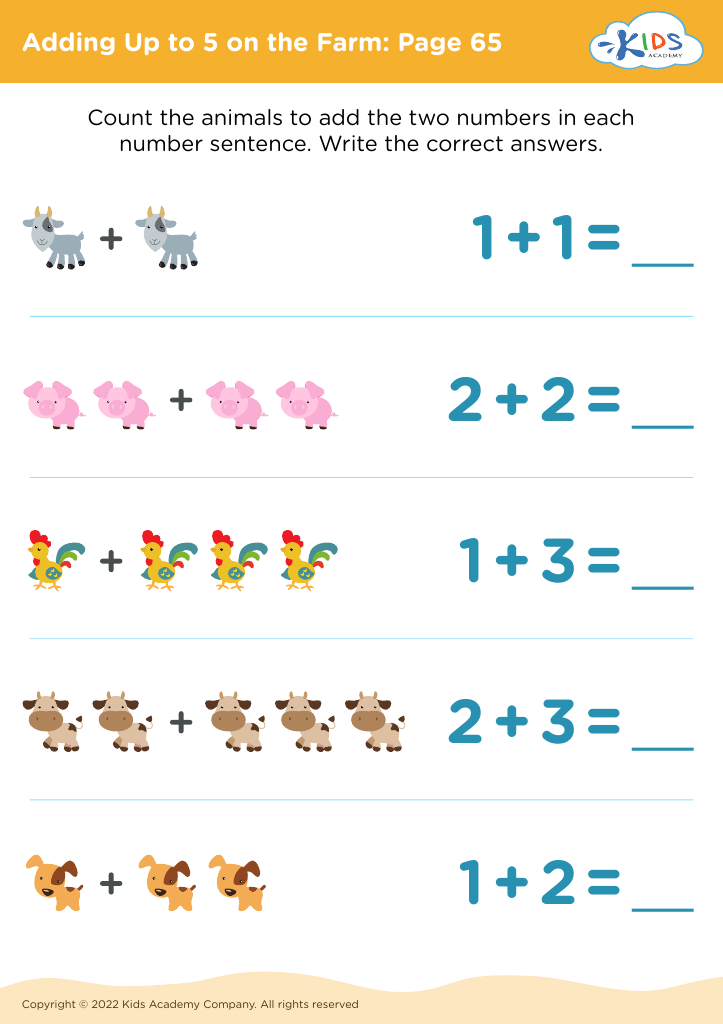
Adding Up to 5 on the Farm: Page 65
Worksheet
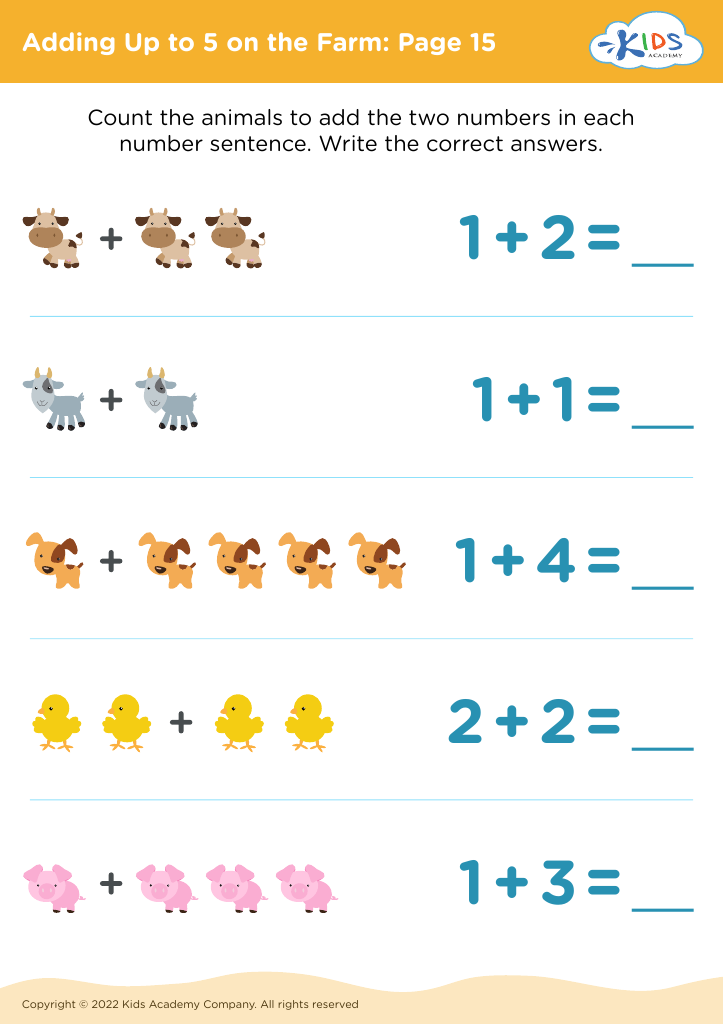
Adding Up to 5 on the Farm: Page 15
Worksheet


Understanding animal recognition and basic arithmetic, like adding up to 5, for children aged 5-8 is crucial for several developmental reasons. Combining these activities fosters cognitive, social, and emotional growth. When students learn to recognize animals, they expand their vocabulary and develop observational skills by noting differences and similarities between various species. This process also enriches their encyclopedic knowledge, which serves as a strong foundation for future learning.

Integrating basic math skills such as addition introduces children to fundamental numeracy concepts in a relatable and enjoyable way. Using animals in math problems, like counting puppies or adding the number of birds in two trees, makes abstract concepts concrete and graspable for young minds. This method can ignite a child's interest in both mathematics and biology, making learning multidimensional and fun.

Moreover, learning through playful activities spent on animal recognition and simple math can emphasize problem-solving and critical-thinking skills. It helps establish important traits such as patience, focus, and the ability to work through simple problems logically. For parents and educators, investing in these integrated learning experiences equips children with essential tools that extend beyond the classroom, helping them become curious, informed, and confident individuals.