Filters

95 filtered results

Clear all filters
Favorites
With answer key
Interactive

95 filtered results

Difficulty Level

Grade


Subject

    Check out this FREE Trial Lesson on Adding Up to 5 for age 5-8!

    X

    Favorites
    With answer key
    Interactive
    • 5-8
    • Cognitive Development
    • Adding Up to 5
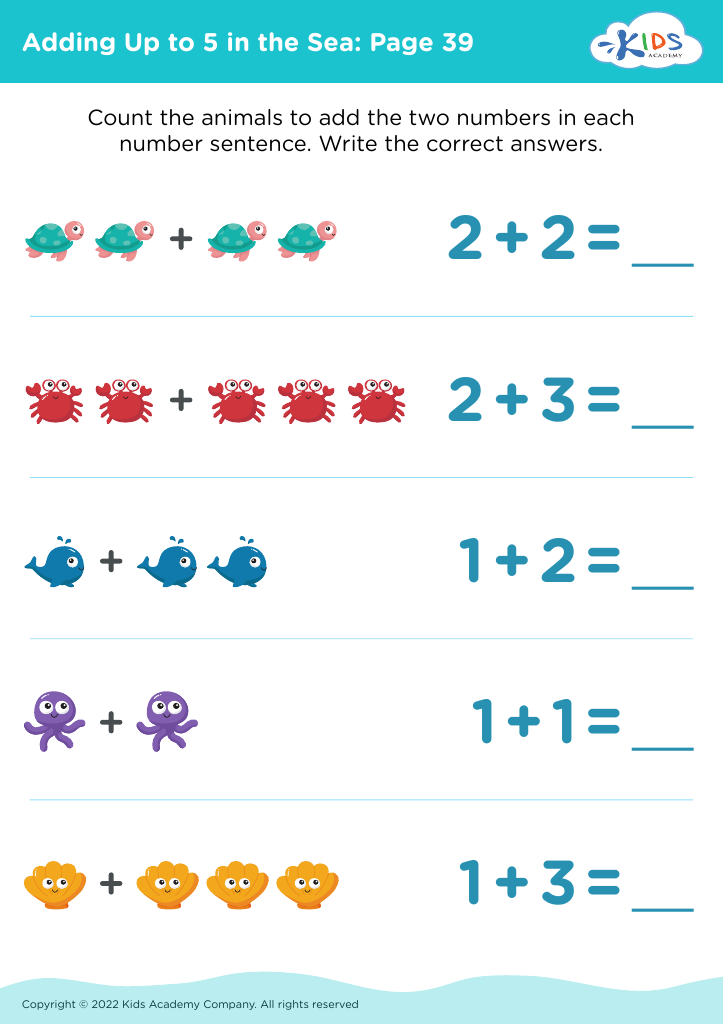
    Adding Up to 5 in the Sea: Page 39
    Adding Up to 5 in the Sea: Page 39
    Adding Up to 5 in the Sea: Page 39
    Worksheet
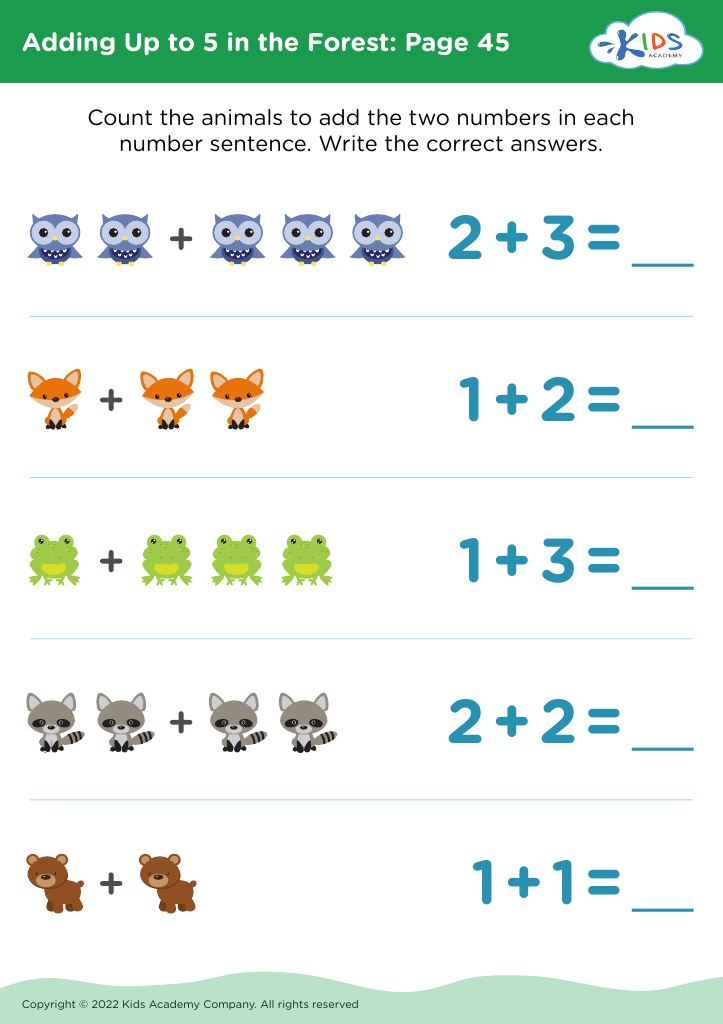
    Adding Up to 5 in the Forest: Page 45
    Adding Up to 5 in the Forest: Page 45
    Adding Up to 5 in the Forest: Page 45
    Worksheet
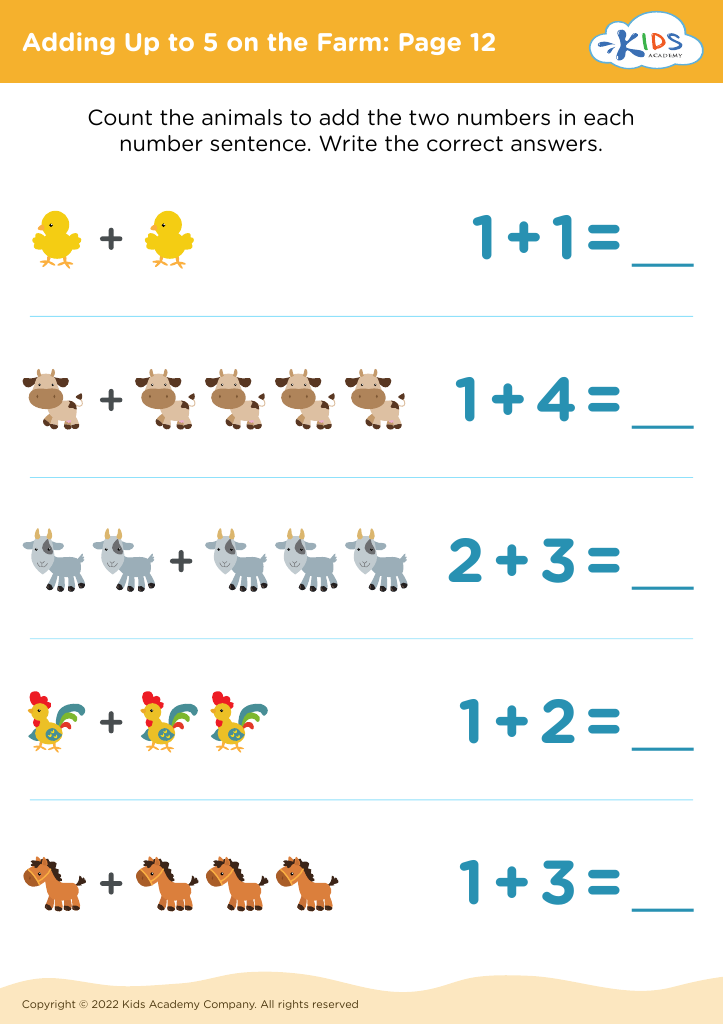
    Adding Up to 5 on the Farm: Page 12
    Adding Up to 5 on the Farm: Page 12
    Adding Up to 5 on the Farm: Page 12
    Worksheet
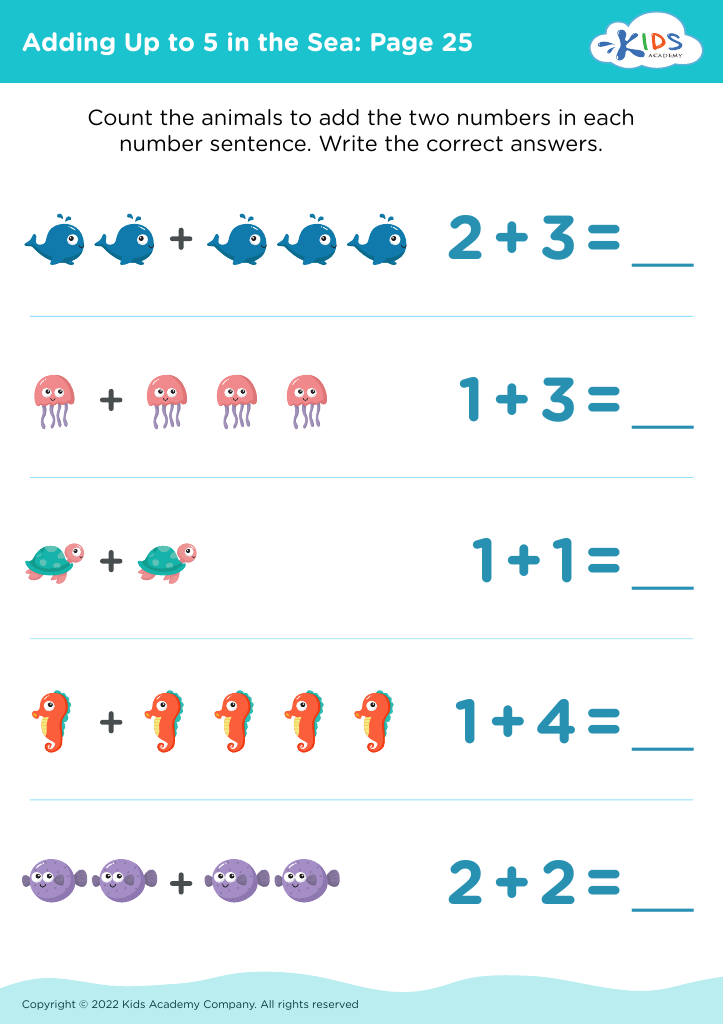
    Adding Up to 5 in the Sea: Page 25
    Adding Up to 5 in the Sea: Page 25
    Adding Up to 5 in the Sea: Page 25
    Worksheet
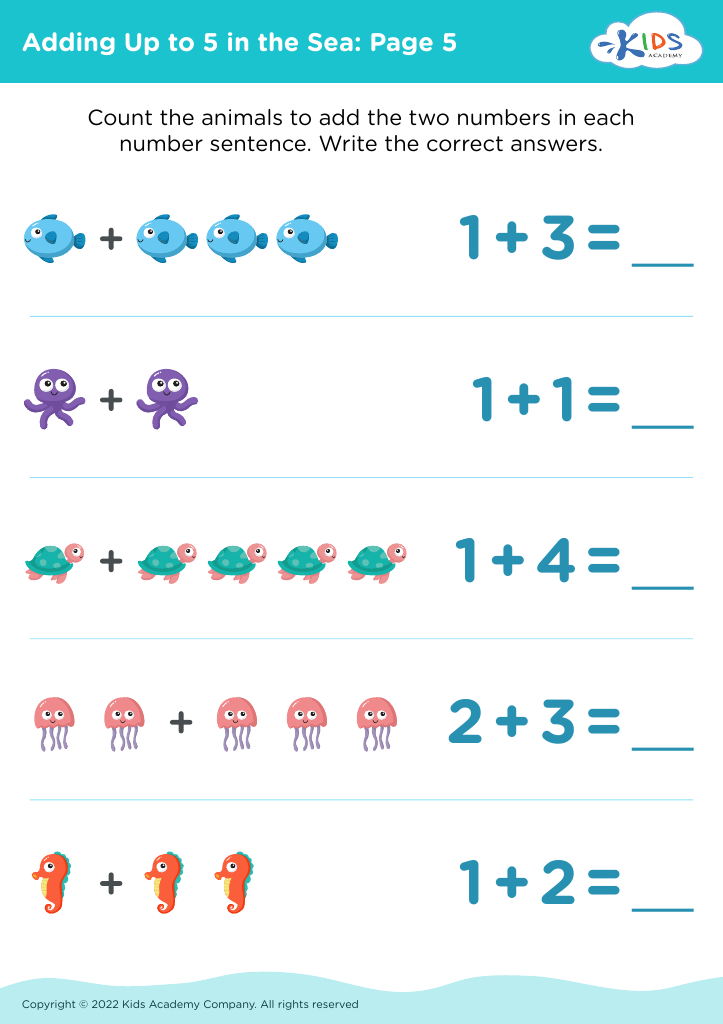
    Adding Up to 5 in the Sea: Page 5
    Adding Up to 5 in the Sea: Page 5

    Adding Up to 5 in the Sea: Page 5

    Adding Up to 5 in the Sea: Page 5
    Worksheet
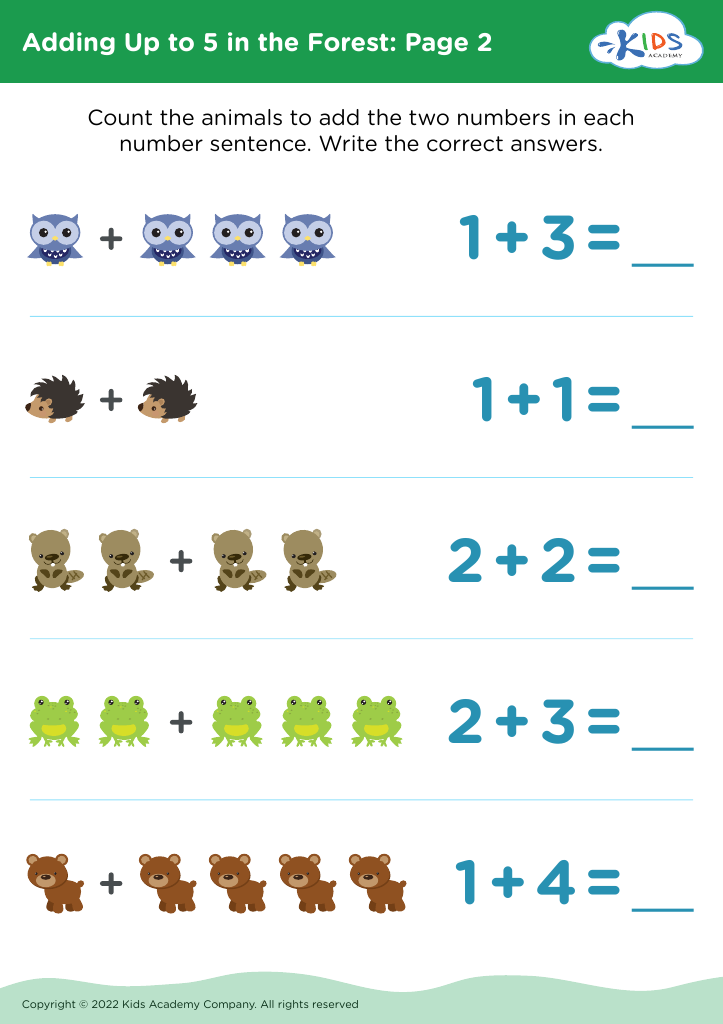
    Adding Up to 5 in the Forest: Page 2
    Adding Up to 5 in the Forest: Page 2
    Adding Up to 5 in the Forest: Page 2
    Worksheet
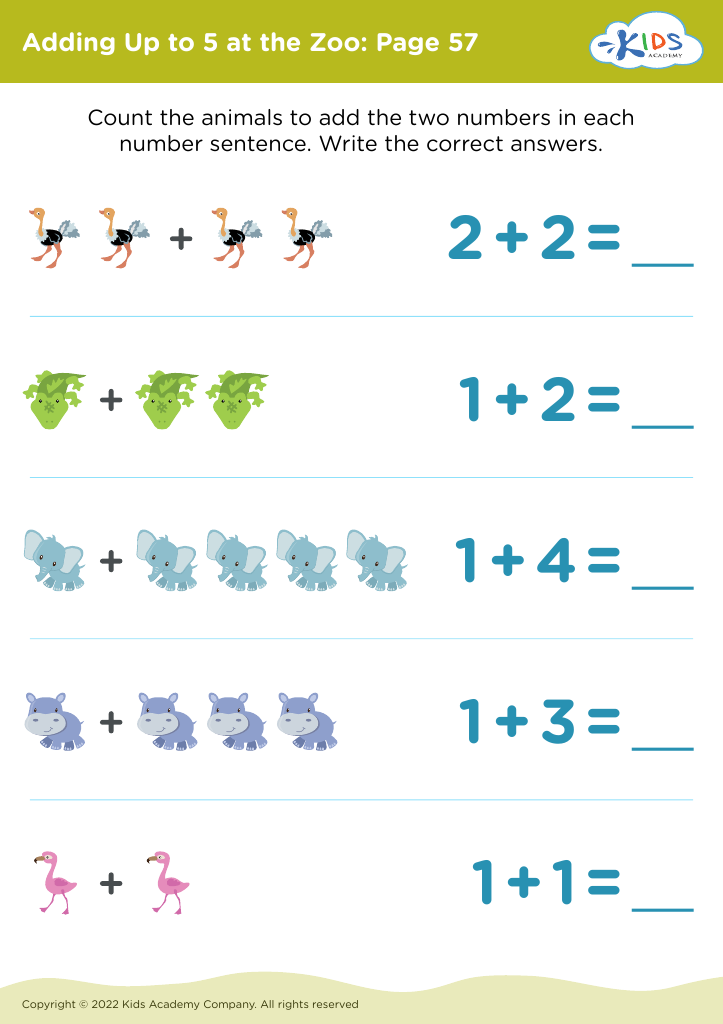
    Adding Up to 5 at the Zoo: Page 57
    Adding Up to 5 at the Zoo: Page 57
    Adding Up to 5 at the Zoo: Page 57
    Worksheet
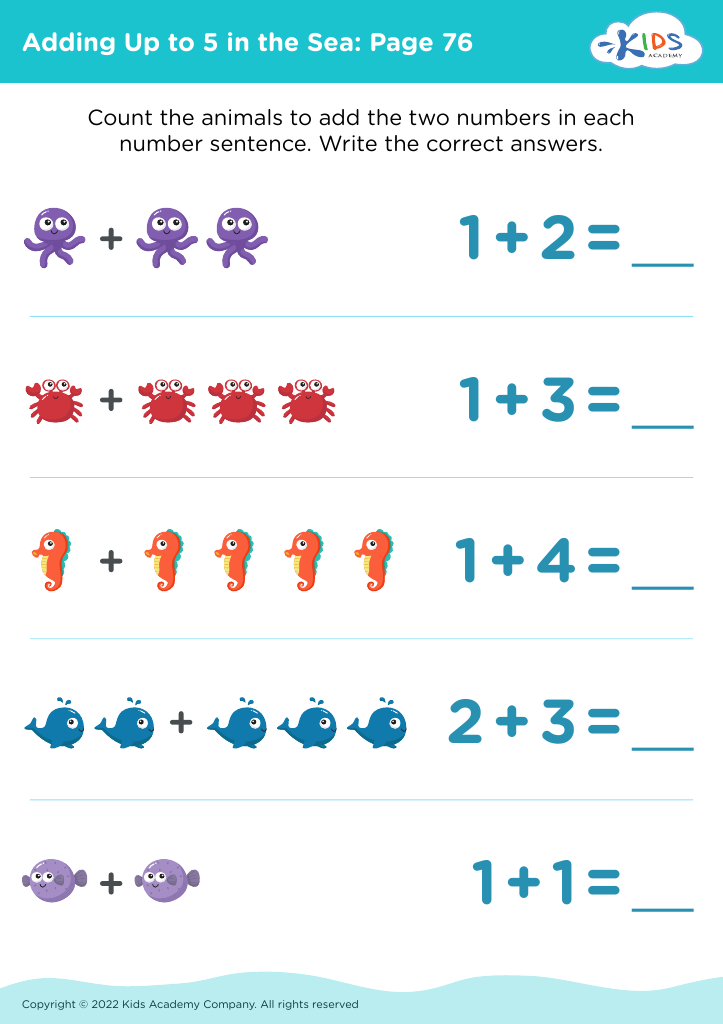
    Adding Up to 5 in the Sea: Page 76
    Adding Up to 5 in the Sea: Page 76
    Adding Up to 5 in the Sea: Page 76
    Worksheet
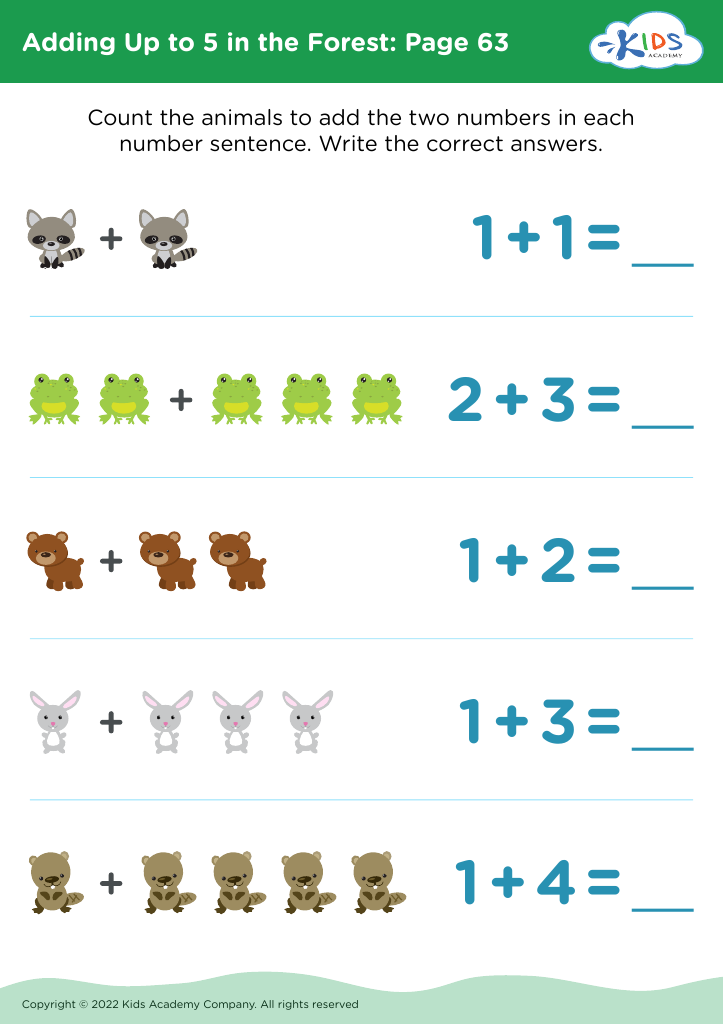
    Adding Up to 5 in the Forest: Page 63
    Adding Up to 5 in the Forest: Page 63
    Adding Up to 5 in the Forest: Page 63
    Worksheet
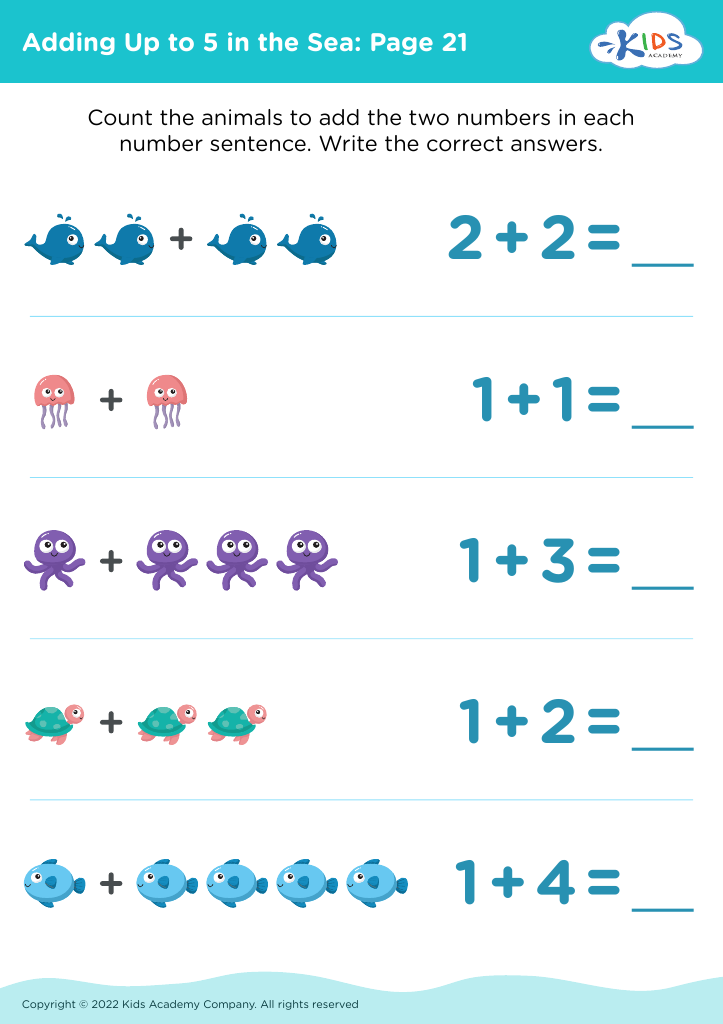
    Adding Up to 5 in the Sea: Page 21
    Adding Up to 5 in the Sea: Page 21
    Adding Up to 5 in the Sea: Page 21
    Worksheet
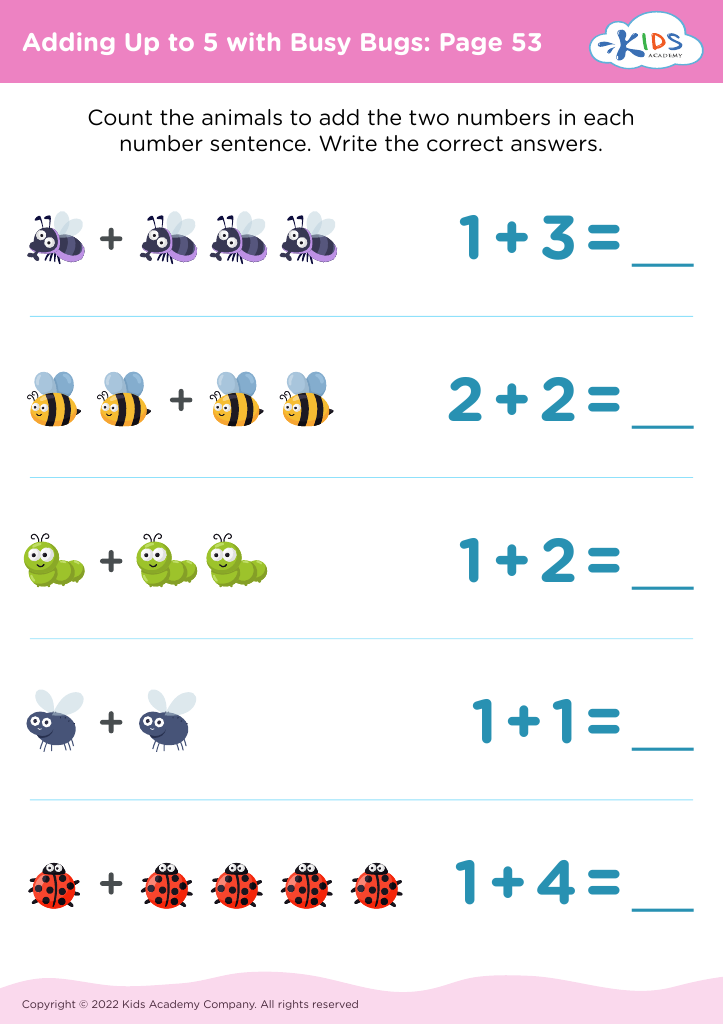
    Adding Up to 5 with Busy Bugs: Page 53
    Adding Up to 5 with Busy Bugs: Page 53
    Adding Up to 5 with Busy Bugs: Page 53
    Worksheet
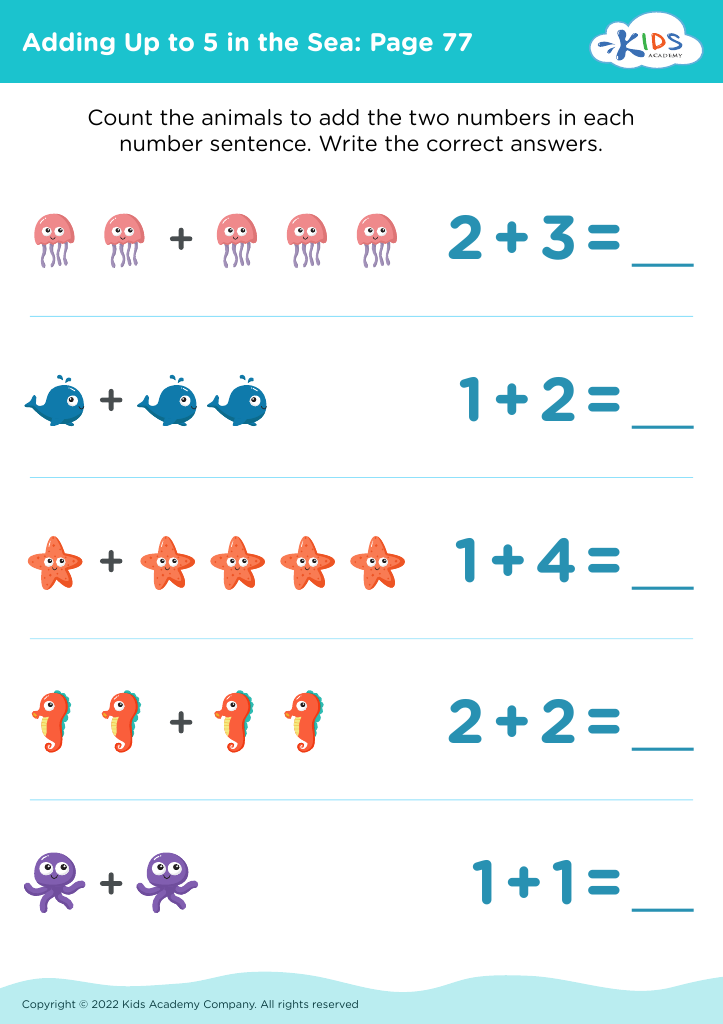
    Adding Up to 5 in the Sea: Page 77
    Adding Up to 5 in the Sea: Page 77
    Adding Up to 5 in the Sea: Page 77
    Worksheet
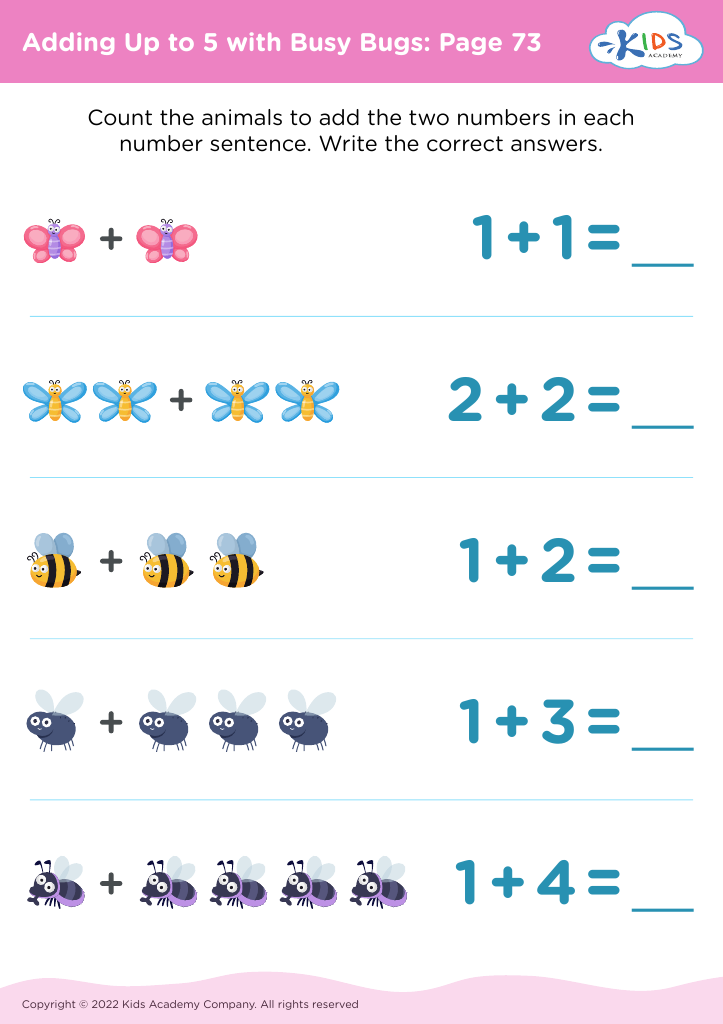
    Adding Up to 5 with Busy Bugs: Page 73
    Adding Up to 5 with Busy Bugs: Page 73
    Adding Up to 5 with Busy Bugs: Page 73
    Worksheet
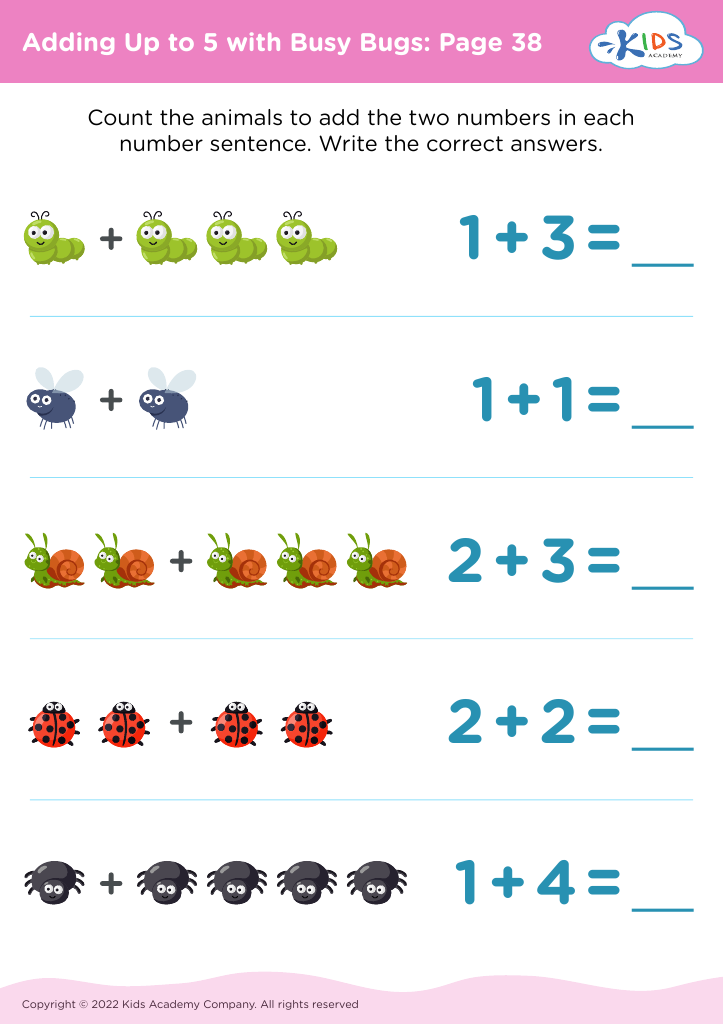
    Adding Up to 5 with Busy Bugs: Page 38
    Adding Up to 5 with Busy Bugs: Page 38
    Adding Up to 5 with Busy Bugs: Page 38
    Worksheet
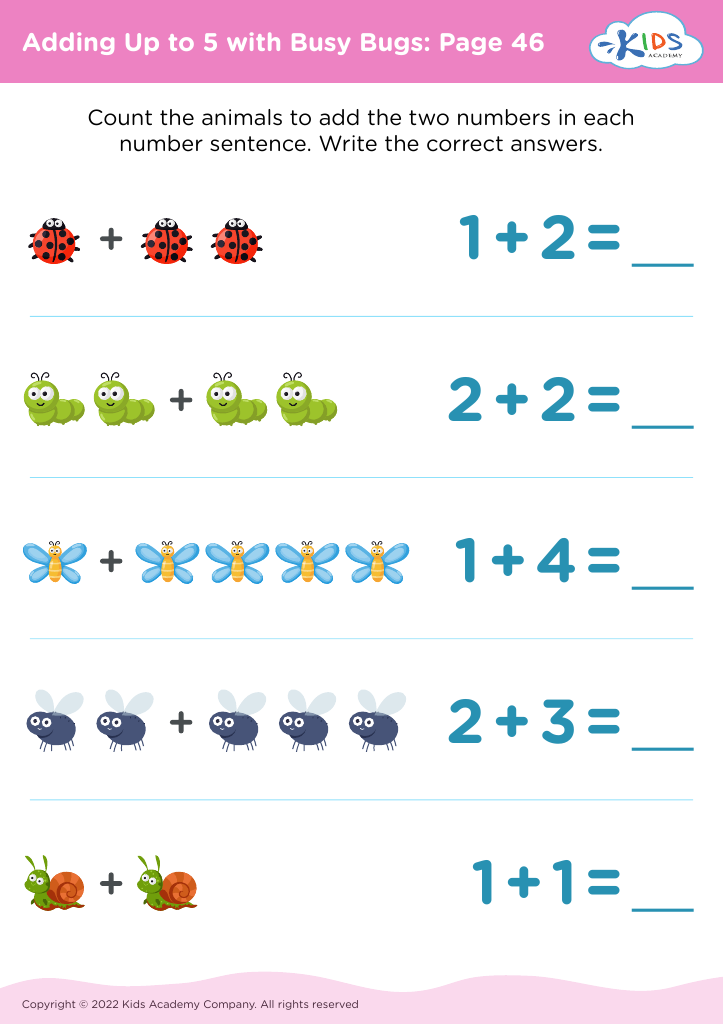
    Adding Up to 5 with Busy Bugs: Page 46
    Adding Up to 5 with Busy Bugs: Page 46
    Adding Up to 5 with Busy Bugs: Page 46
    Worksheet
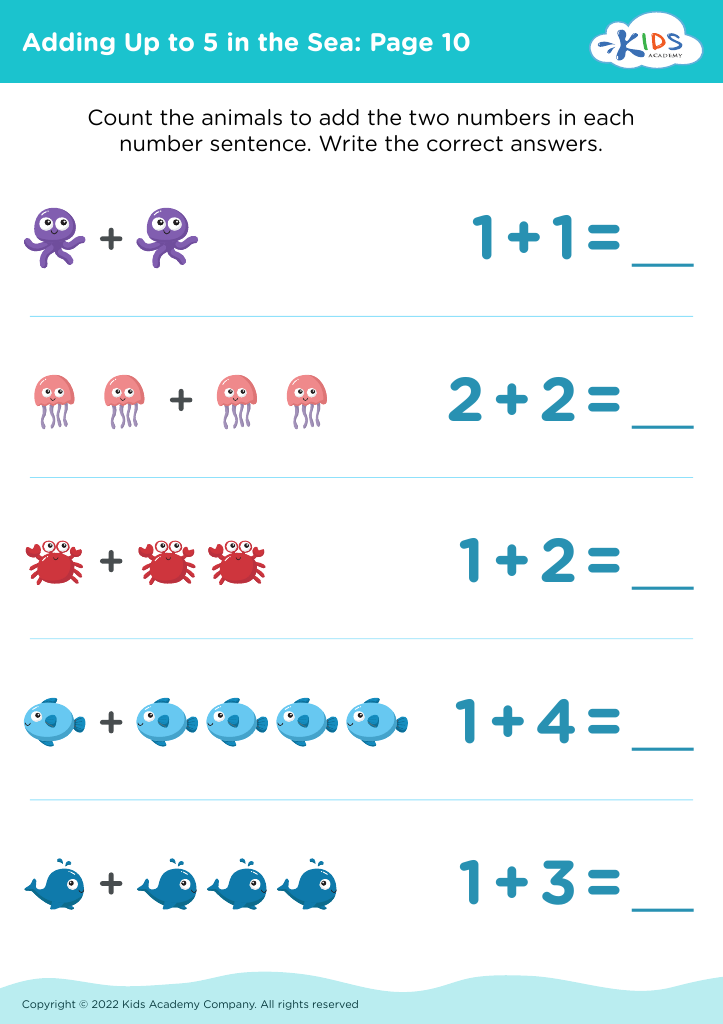
    Adding Up to 5 in the Sea: Page 10
    Adding Up to 5 in the Sea: Page 10
    Adding Up to 5 in the Sea: Page 10
    Worksheet
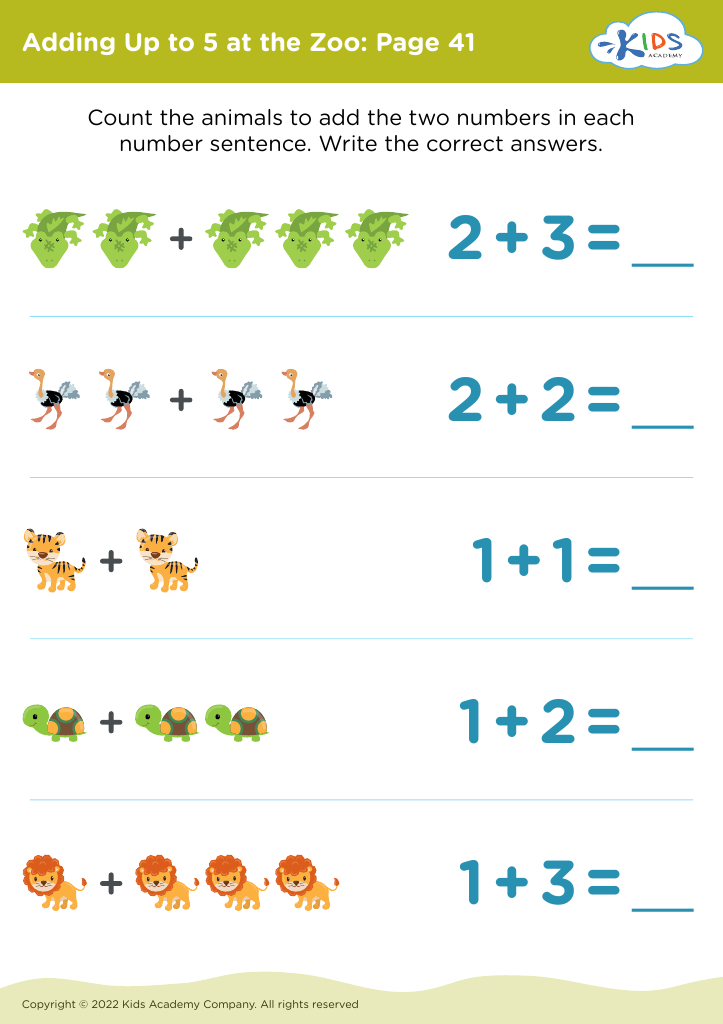
    Adding Up to 5 at the Zoo: Page 41
    Adding Up to 5 at the Zoo: Page 41
    Adding Up to 5 at the Zoo: Page 41
    Worksheet
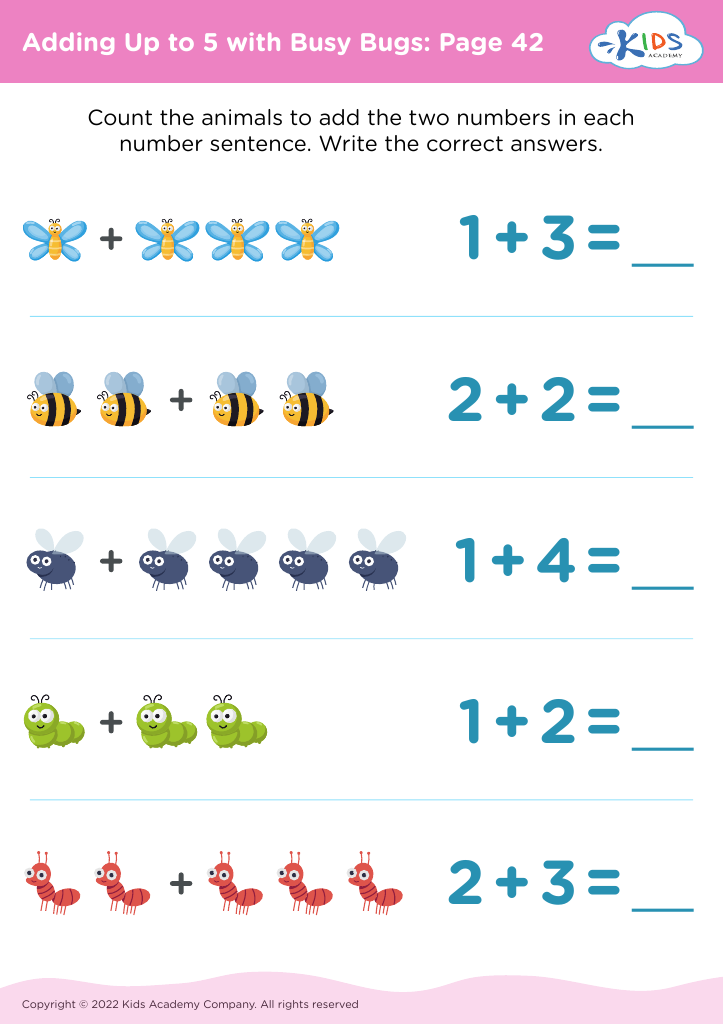
    Adding Up to 5 with Busy Bugs: Page 42
    Adding Up to 5 with Busy Bugs: Page 42
    Adding Up to 5 with Busy Bugs: Page 42
    Worksheet
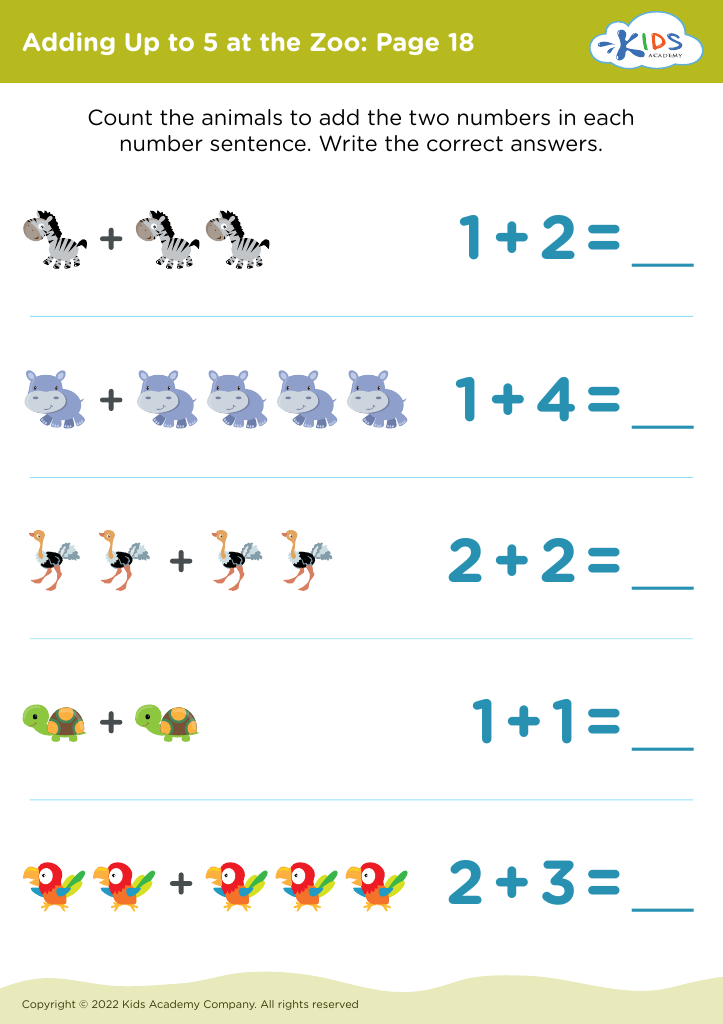
    Adding Up to 5 at the Zoo: Page 18
    Adding Up to 5 at the Zoo: Page 18
    Adding Up to 5 at the Zoo: Page 18
    Worksheet
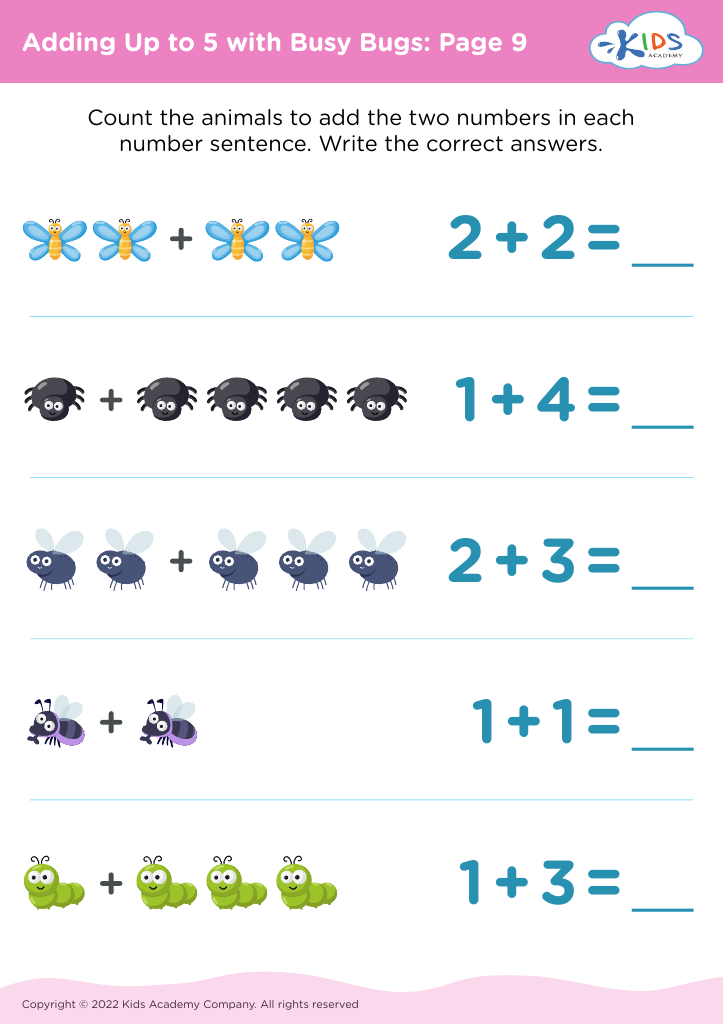
    Adding Up to 5 with Busy Bugs: Page 9
    Adding Up to 5 with Busy Bugs: Page 9
    Adding Up to 5 with Busy Bugs: Page 9
    Worksheet
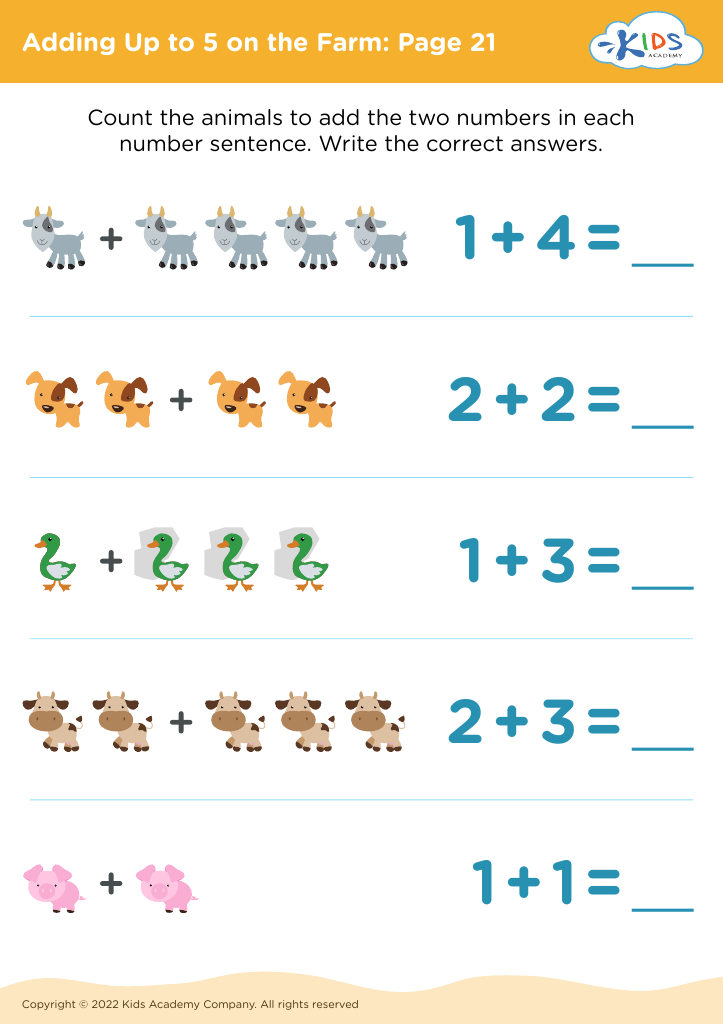
    Adding Up to 5 on the Farm: Page 21
    Adding Up to 5 on the Farm: Page 21
    Adding Up to 5 on the Farm: Page 21
    Worksheet
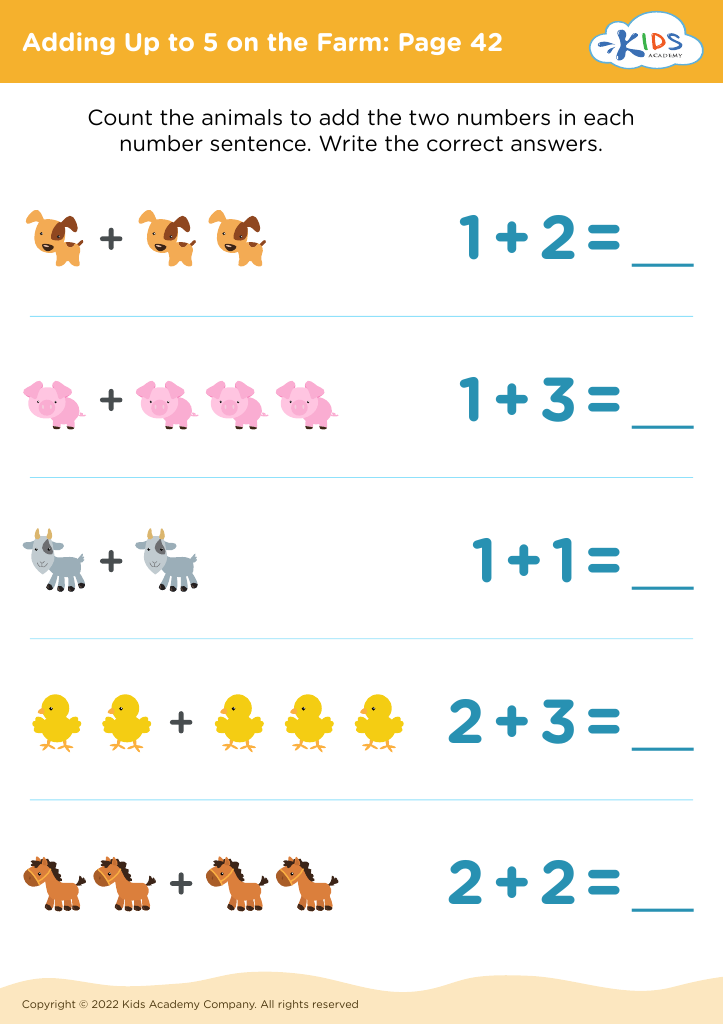
    Adding Up to 5 on the Farm: Page 42
    Adding Up to 5 on the Farm: Page 42
    Adding Up to 5 on the Farm: Page 42
    Worksheet
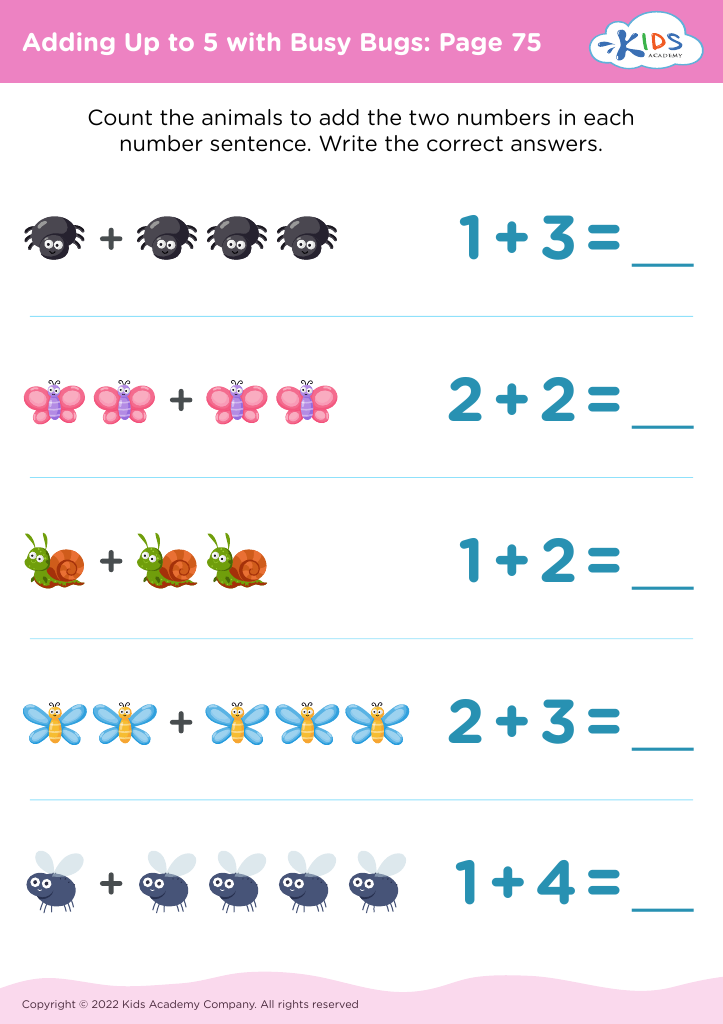
    Adding Up to 5 with Busy Bugs: Page 75
    Adding Up to 5 with Busy Bugs: Page 75
    Adding Up to 5 with Busy Bugs: Page 75
    Worksheet
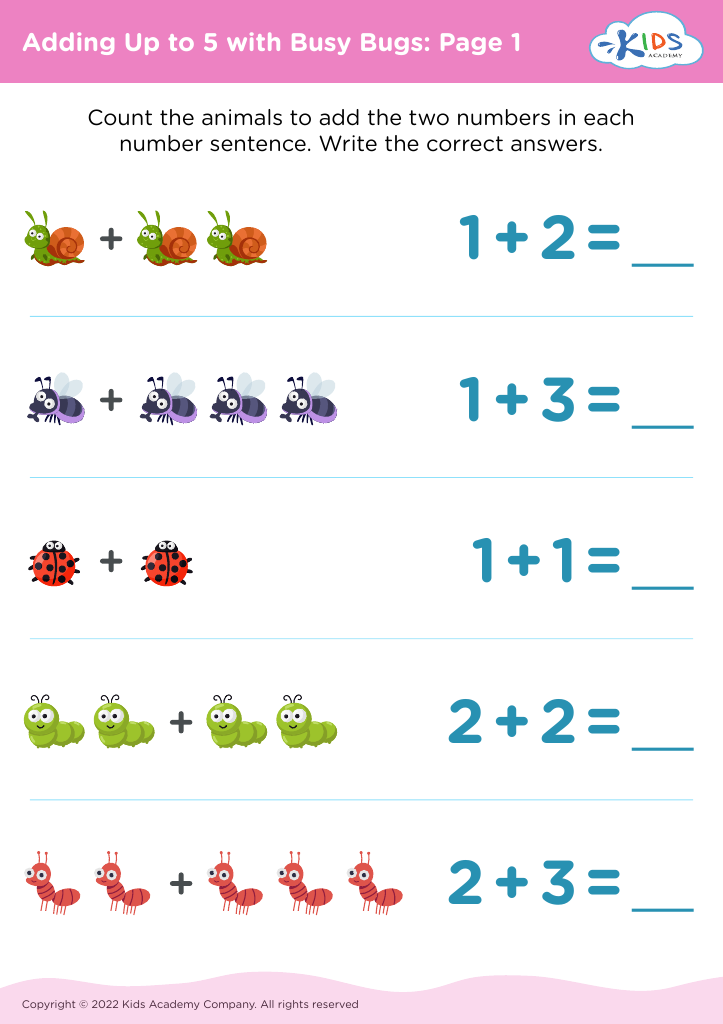
    Adding Up to 5 with Busy Bugs: Page 1
    Adding Up to 5 with Busy Bugs: Page 1
    Adding Up to 5 with Busy Bugs: Page 1
    Worksheet


    Parents and teachers play a crucial role in nurturing cognitive development in young children, particularly in foundational math skills like adding up to 5. During the ages of 5-8, children's brains are highly malleable, making this an optimal time for learning basic arithmetic. Mastering addition up to 5 builds essential skills such as number sense, problem-solving, and the ability to understand relationships between quantities.

    Strong early math skills are predictive of later academic success, not only in mathematics but across various subjects. Children who grasp addition early are more confident and better prepared to tackle more complex math concepts as they progress through school. Early math competency also promotes better working memory, attention, and logical thinking—all critical cognitive functions that support broader learning and daily life activities.

    Moreover, early achievements in math contribute to a child's self-esteem and motivation to learn. When parents and teachers invest time in interactive math activities, they foster a positive attitude towards learning, enhancing the child’s cognitive and emotional development. Interactive, fun ways to practice adding up to 5—such as with educational games or daily life examples—can make learning enjoyable and effective, setting a strong foundation for future mathematical understanding and a lifelong love of learning.