Fine motor skills (writing) Adding Up to 5 Worksheets for Ages 5-8 - Page 2
32 filtered results
-
From - To
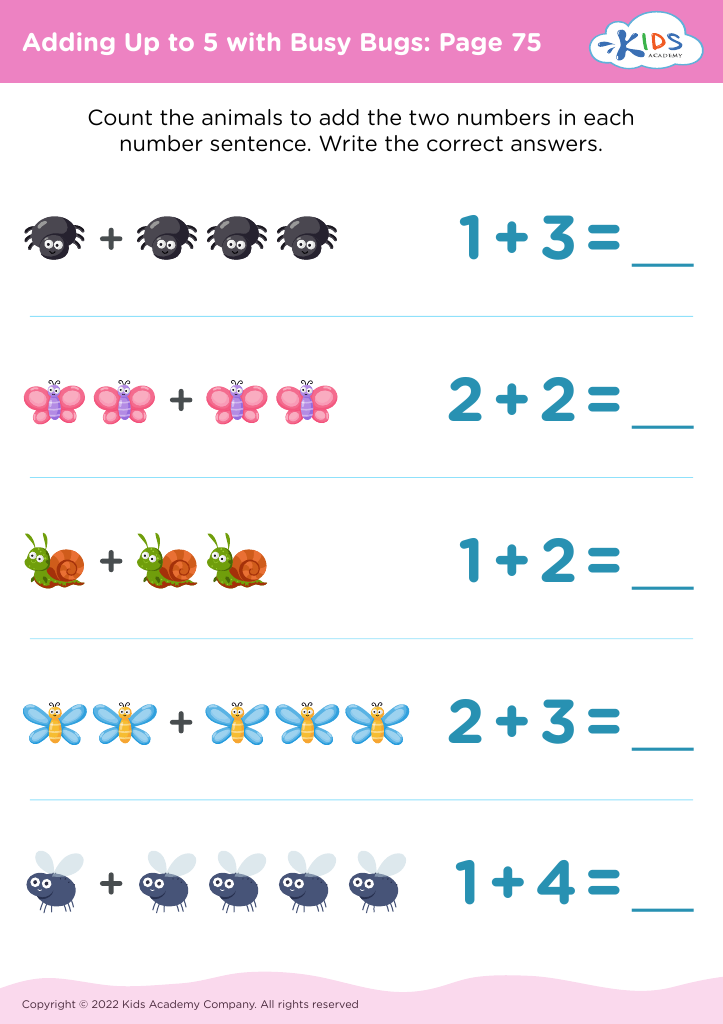
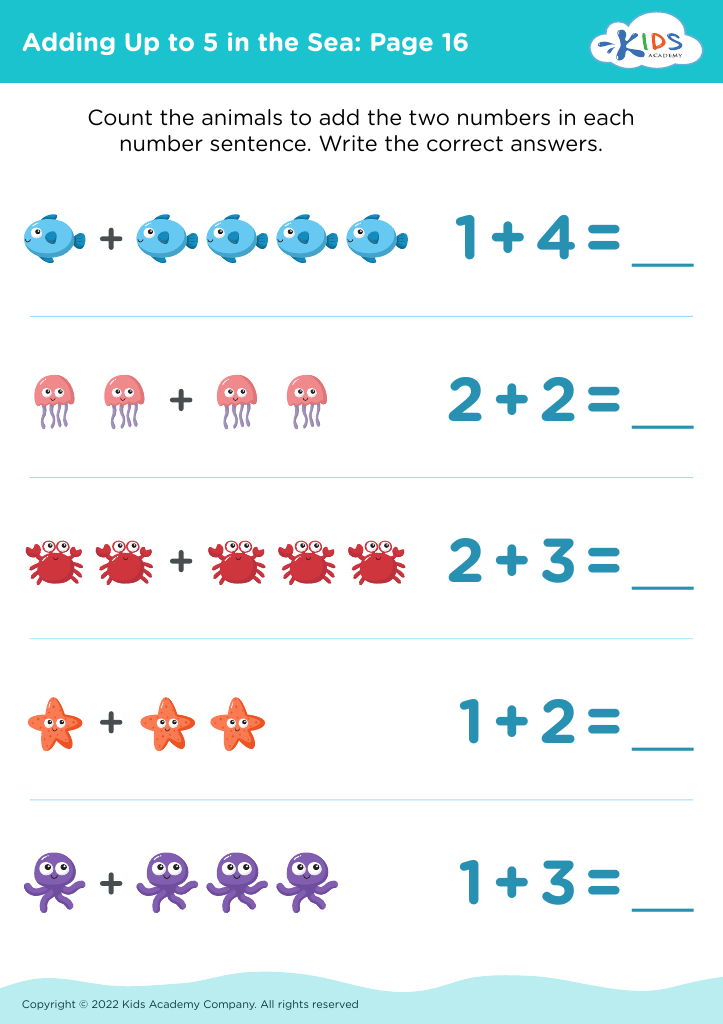
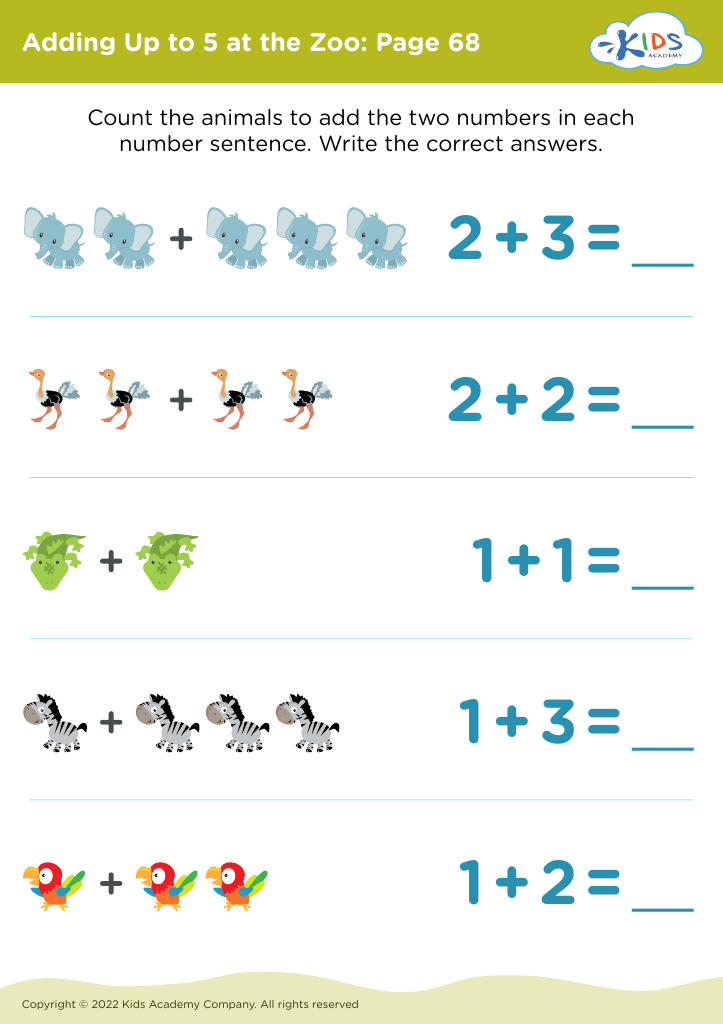
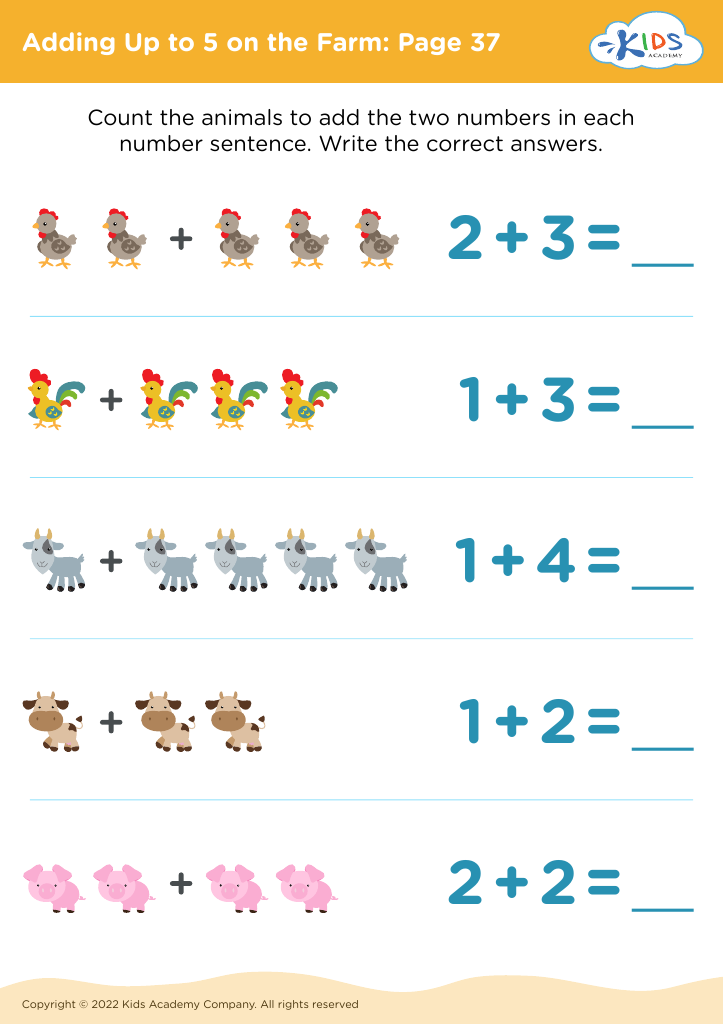
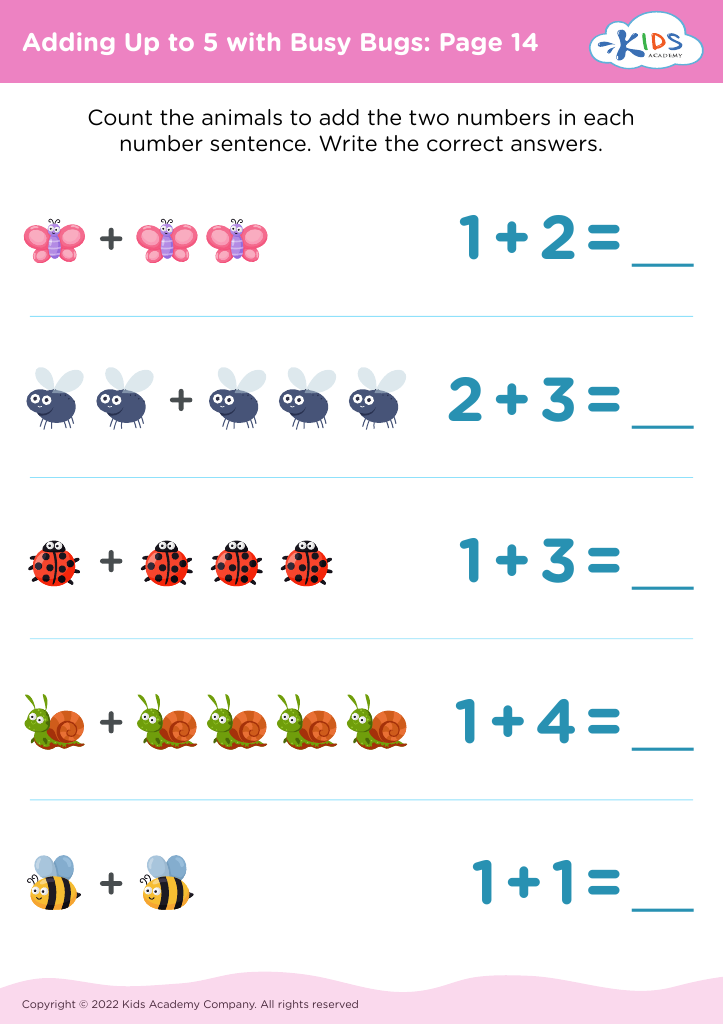
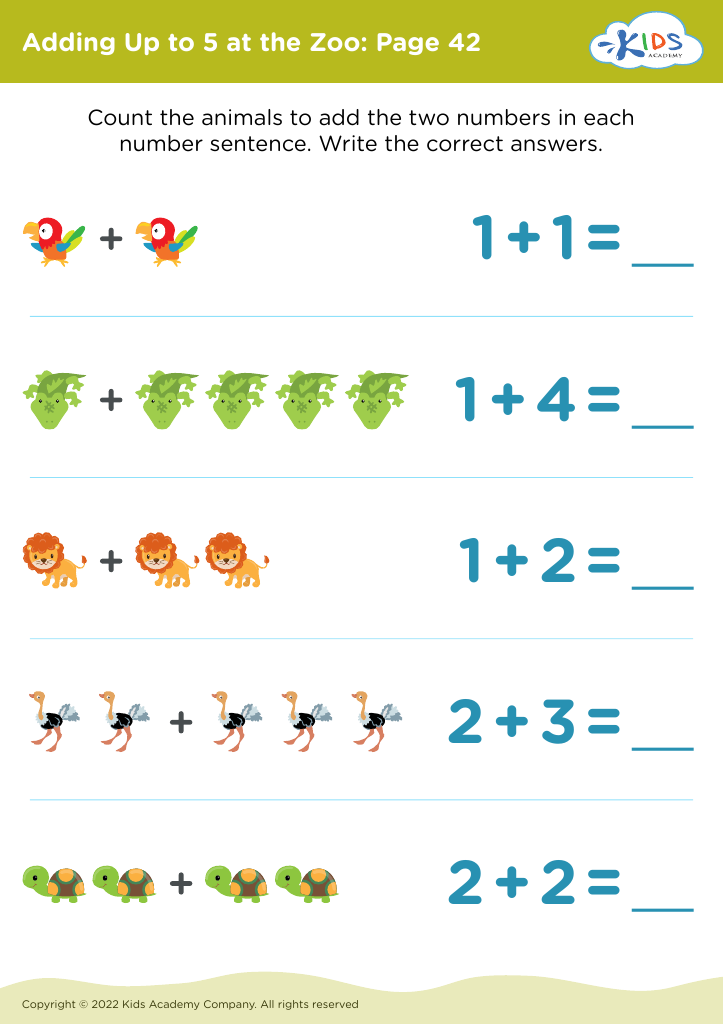
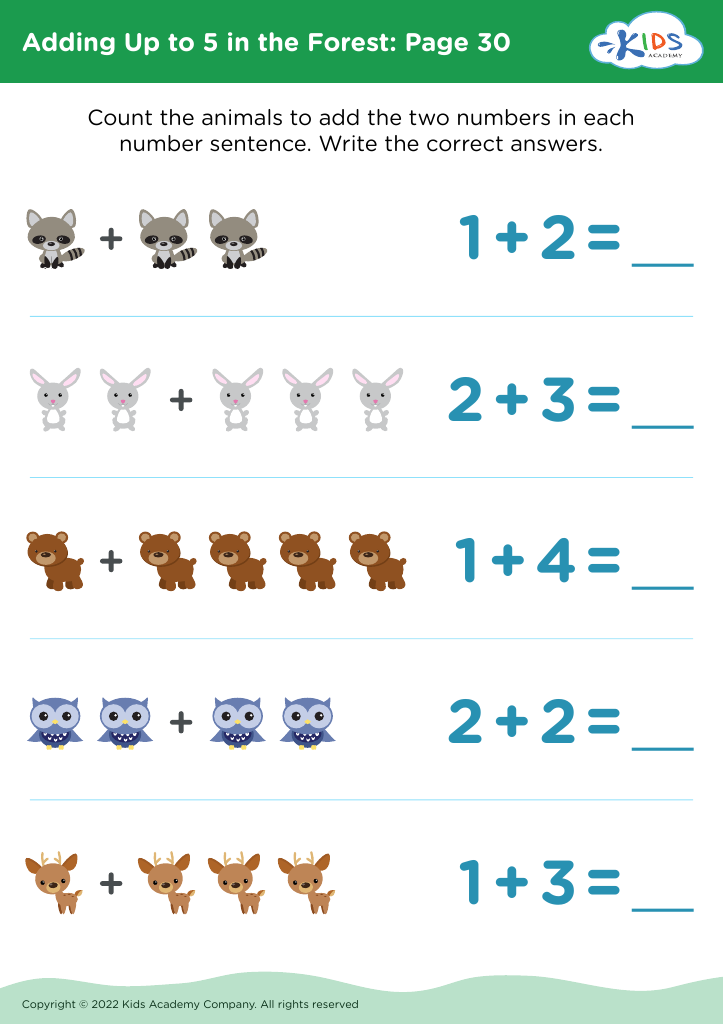
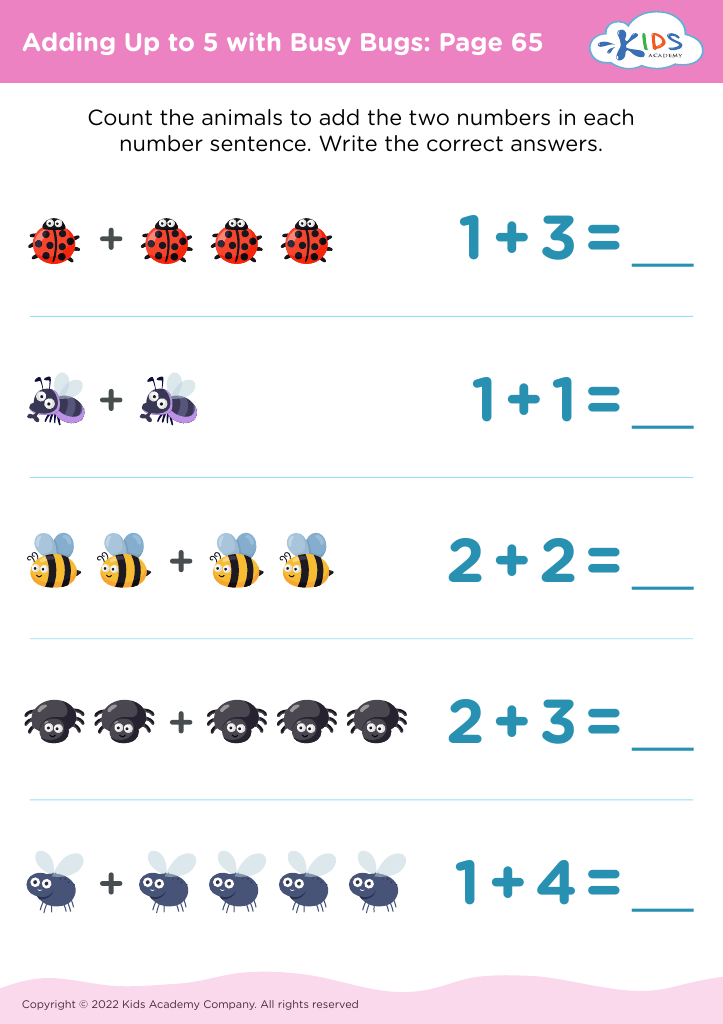








Fine motor skills are crucial for children aged 5-8, especially in writing and basic mathematical tasks like adding up to 5. These skills involve the coordination of small muscles in the hands and fingers, which are essential for grasping writing tools, manipulating objects, and ultimately developing confidence in academic work.
For parents and teachers, fostering fine motor skills not only enhances children's ability to write legibly but also plays a significant role in their overall cognitive development. As children learn to write and perform basic calculations, they are sharpening their hand-eye coordination and dexterity, essential skills for future tasks in school and daily life.
Moreover, having strong fine motor skills contributes to children's self-esteem and independence. Activities like forming letters and solving simple math problems empower them to express themselves and tackle challenges effectively. An early emphasis on these skills can lead to improved concentration, persistence, and a positive attitude towards learning.
In essence, supporting fine motor skill development in writing and basic math contributes to a well-rounded educational foundation, setting the stage for future academic success and personal growth. Therefore, both parents and teachers should prioritize and nurture these crucial abilities in young children.








