Math problem-solving Adding Up to 5 Worksheets for Ages 5-8
3 filtered results
-
From - To
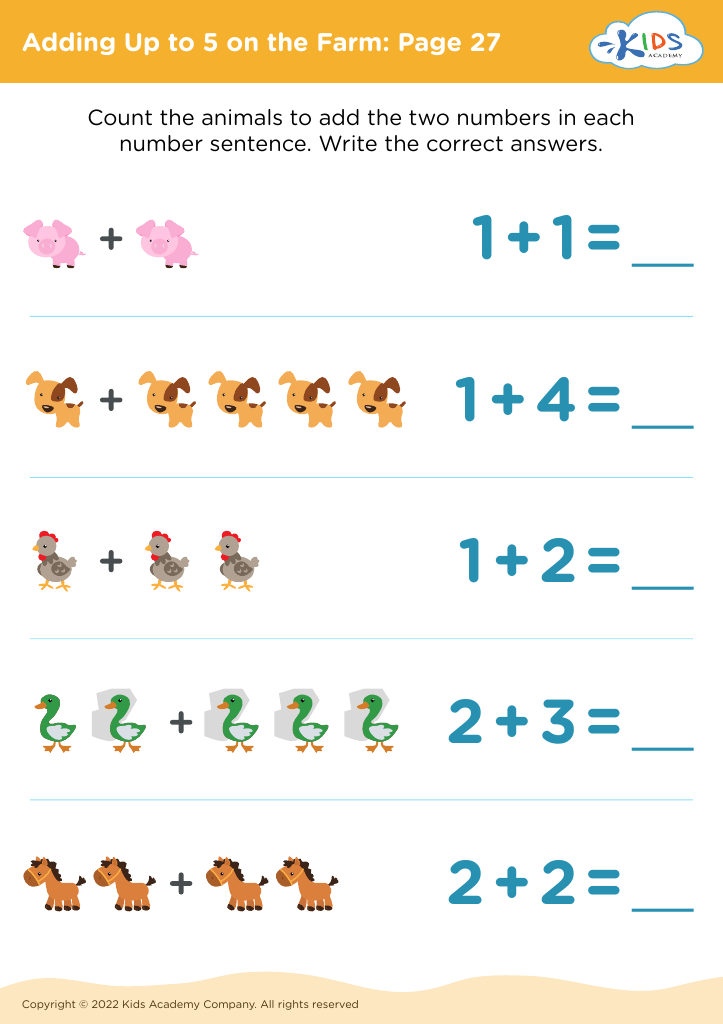
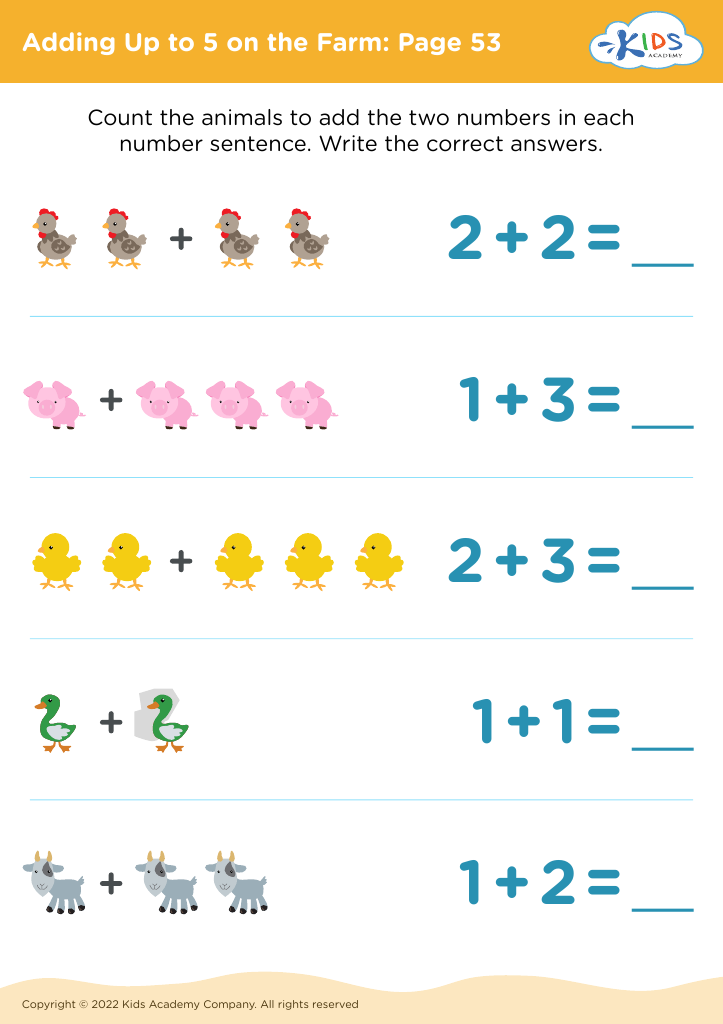
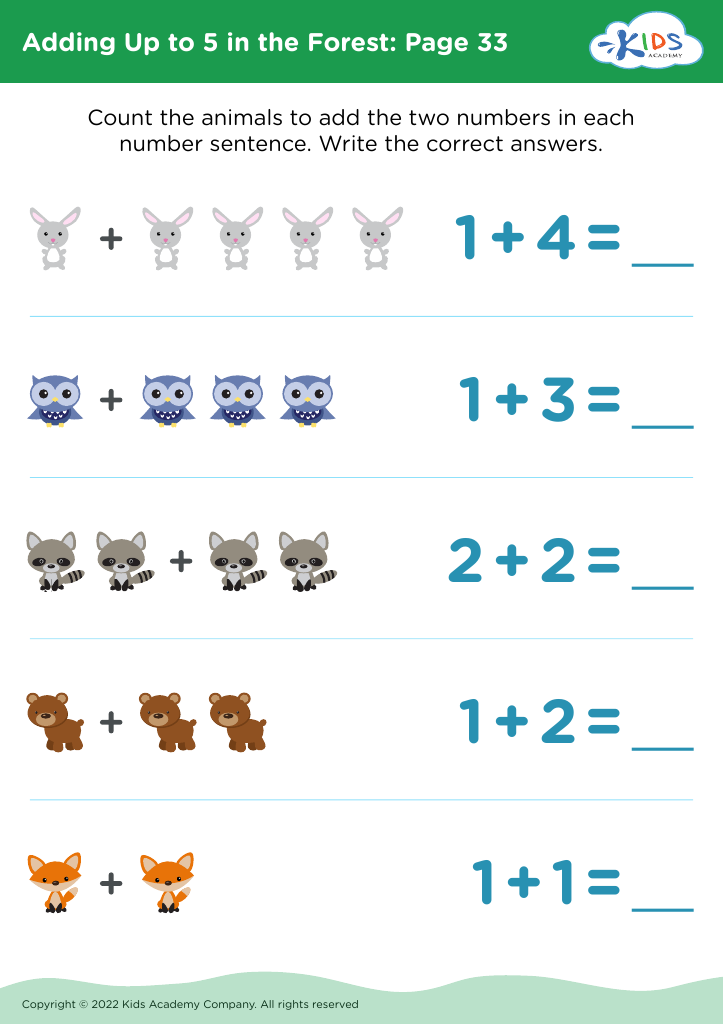
Discover our "Math Problem-Solving Adding Up to 5 Worksheets" designed for children ages 5-8! These engaging resources help young learners develop foundational math skills through fun and interactive exercises. Our worksheets emphasize problem-solving and critical thinking, allowing kids to practice addition by solving captivating scenarios. Each worksheet features colorful illustrations and relatable contexts that inspire learners to explore and enjoy math. These activities not only enhance numerical understanding but also build confidence in young mathematicians. Perfect for classroom or home use, these worksheets are an essential tool for nurturing a love for learning. Start adding up the fun today!







.jpg)
Parents and teachers should prioritize Math problem-solving focused on Adding Up to 5 for children aged 5-8 for several important reasons. First, this foundational skill in arithmetic is crucial as it lays the groundwork for more complex mathematical concepts later. At this age, children are developing number sense, and learning to add small numbers helps them understand quantities and improve their ability to visualize numbers.
Second, engaging young learners with math challenges like Adding Up to 5 promotes critical thinking and problem-solving skills. Instead of rote memorization, children learn to think strategically about potentially multiple combinations to reach a sum of five, which is integral in developing a resilient mindset when tackling bigger challenges.
Furthermore, early proficiency in addition boosts children’s confidence, fostering a positive attitude toward math that can last a lifetime. It prevents future math anxiety and promotes a growth mindset, as children learn that with practice they can improve their skills.
Finally, by involving parents and teachers in these activities, it nurtures cooperation and communication around learning, reinforcing the importance of math in everyday life and encouraging a love for learning that transcends the classroom.








