Nature appreciation Adding Up to 5 Worksheets for Ages 5-8
5 filtered results
-
From - To
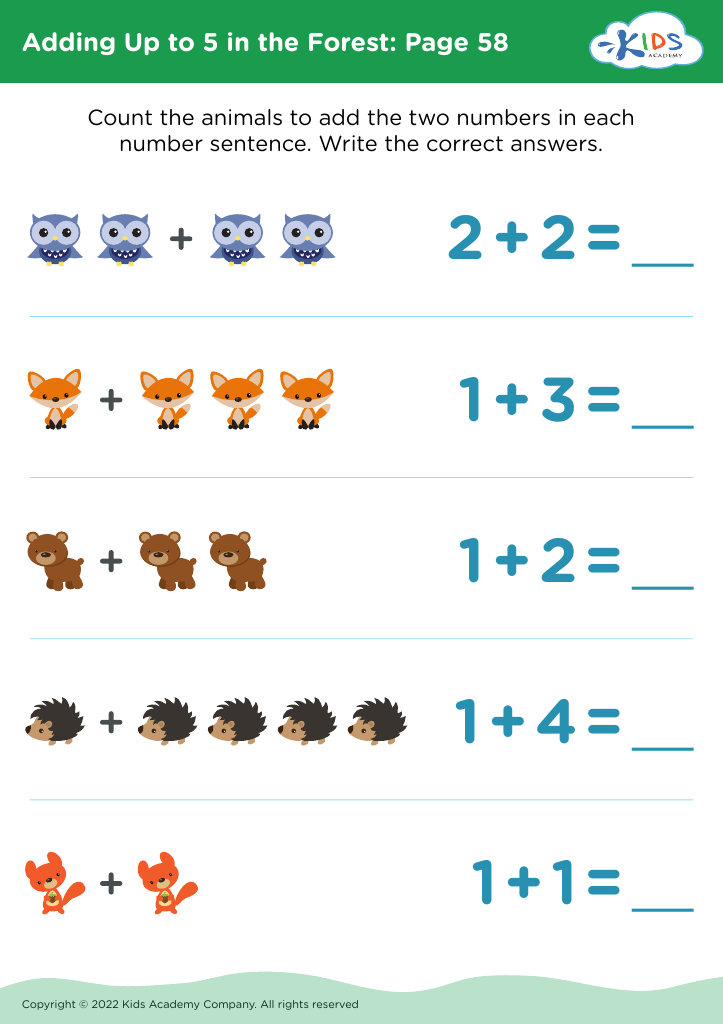
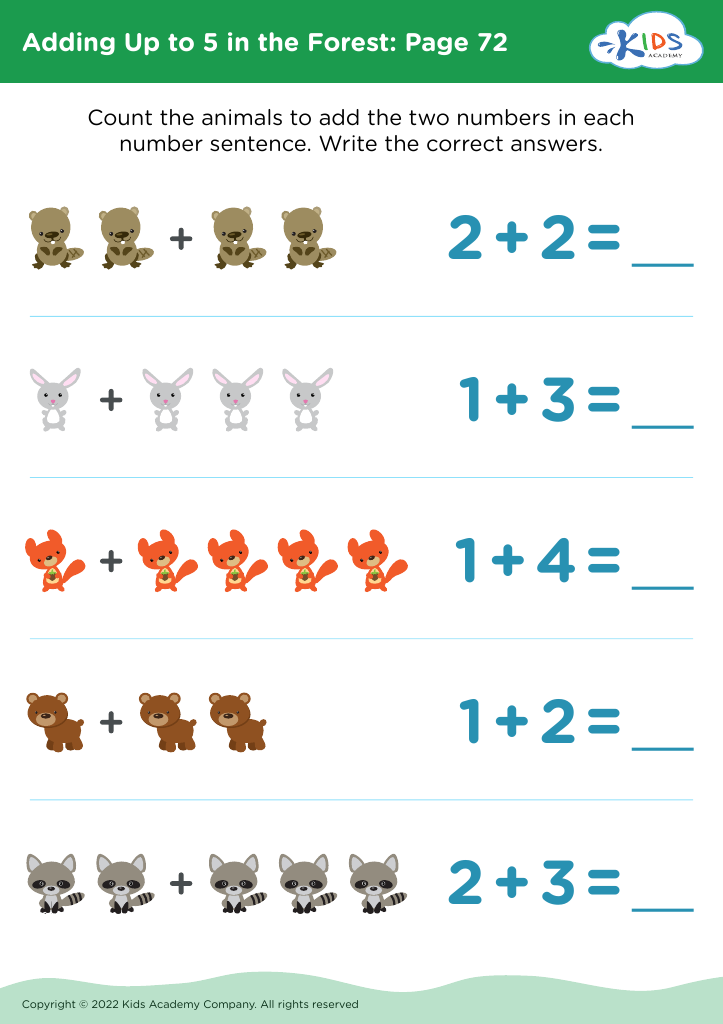
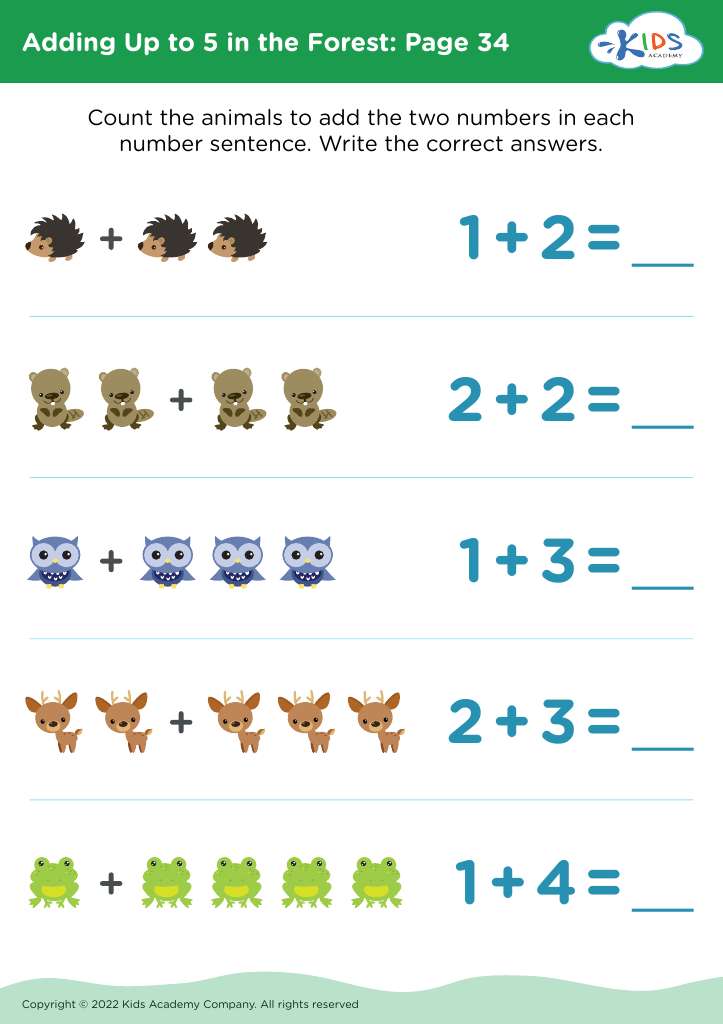
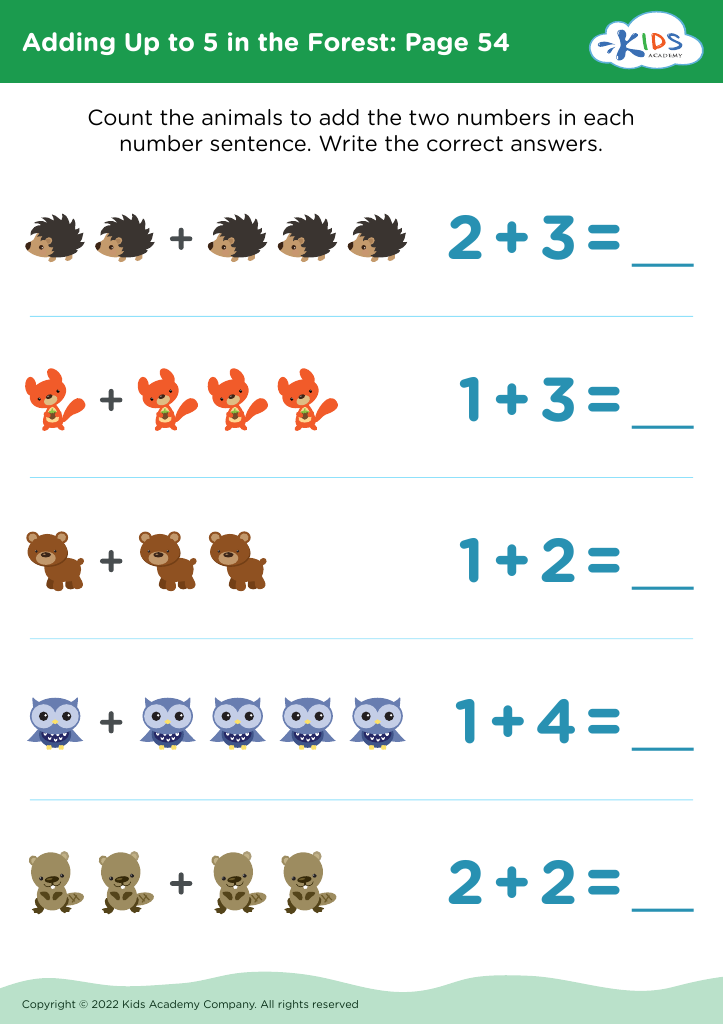
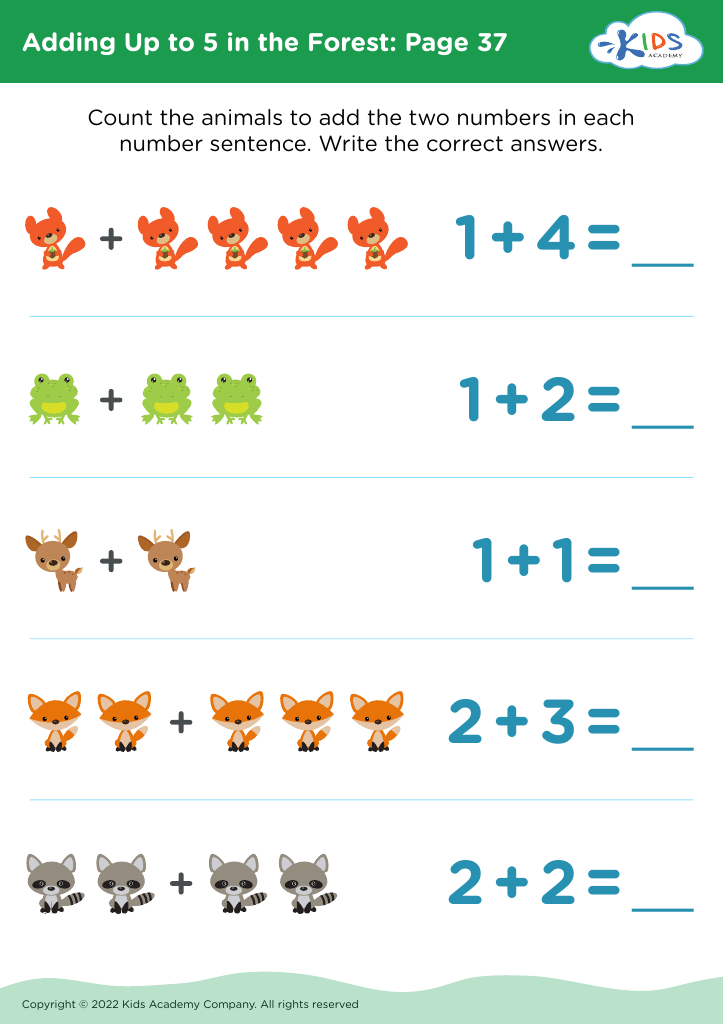
Discover the "Nature Appreciation Adding Up to 5 Worksheets," designed for children ages 5-8 to blend learning and environmental awareness. These engaging worksheets provide a fun way to practice basic addition skills while exploring the beauty of nature. Each worksheet features vibrant illustrations and nature-themed problems, encouraging kids to appreciate the outdoors while reinforcing early math concepts. Ideal for classrooms and at-home learning, these activities promote observational skills, creativity, and a sense of responsibility towards the environment. Spark curiosity and foster a love for nature in your little ones as they enhance their math skills with this interactive learning experience!






.jpg)
%20(1).jpg)
Nature appreciation is vital for young children, especially those aged 5-8, as it fosters a deep connection with the world around them while enhancing their learning experiences. First, being outdoors stimulates curiosity, encouraging children to explore their environment, which directly supports cognitive development. This exploration introduces them to basic scientific concepts, such as ecosystems and wildlife.
Additionally, nature appreciation often promotes emotional well-being. Spending time outside can reduce stress and anxiety, fostering feelings of happiness and contentment. Animals and plants can become a source of interest, encouraging children to ask questions and seek knowledge, enriching their understanding of life.
Furthermore, experiencing nature cultivates a sense of responsibility and respect for the environment. By learning about ecosystems, children can develop a desire to protect their surroundings, nurturing future generations of environmentally conscious adults.
Lastly, outdoor activities encourage physical health by promoting exercise and motor skills, essential components of a child’s development. Incorporating nature into education teaches valuable lessons about balance, respect, and teamwork.
Overall, for parents and teachers, emphasizing nature appreciation is not just about fostering a love for the outdoors—it's about nurturing well-rounded, inquisitive, and compassionate individuals ready to engage with the world.








