Problem-Solving Skills Adding Up to 5 Worksheets for Ages 5-8 - Page 2
37 filtered results
-
From - To
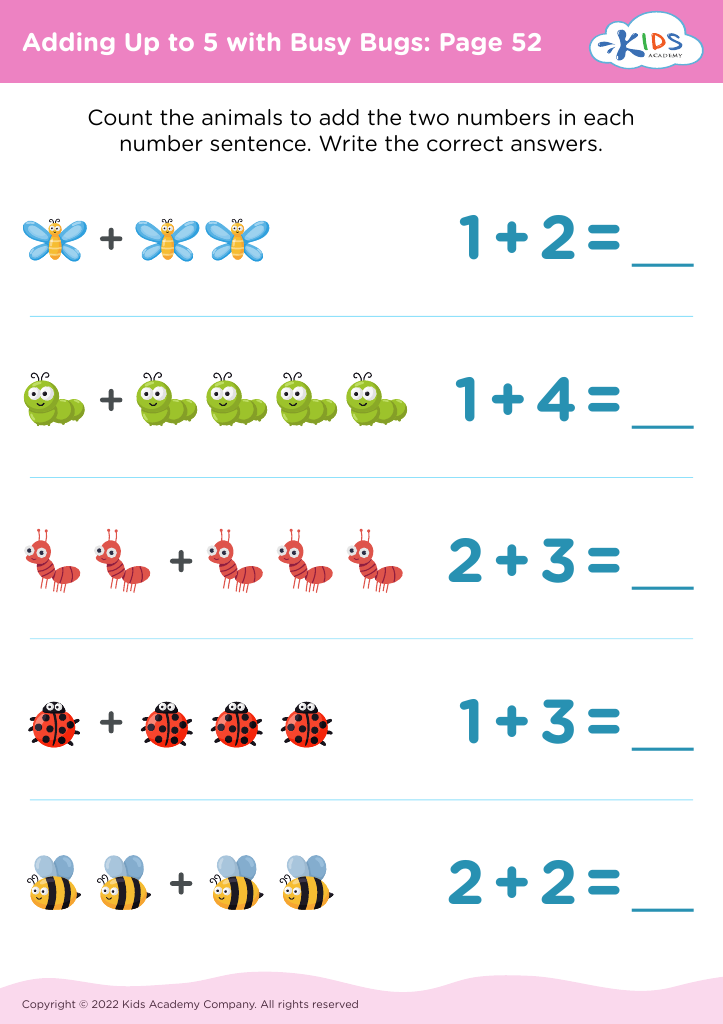






.jpg)

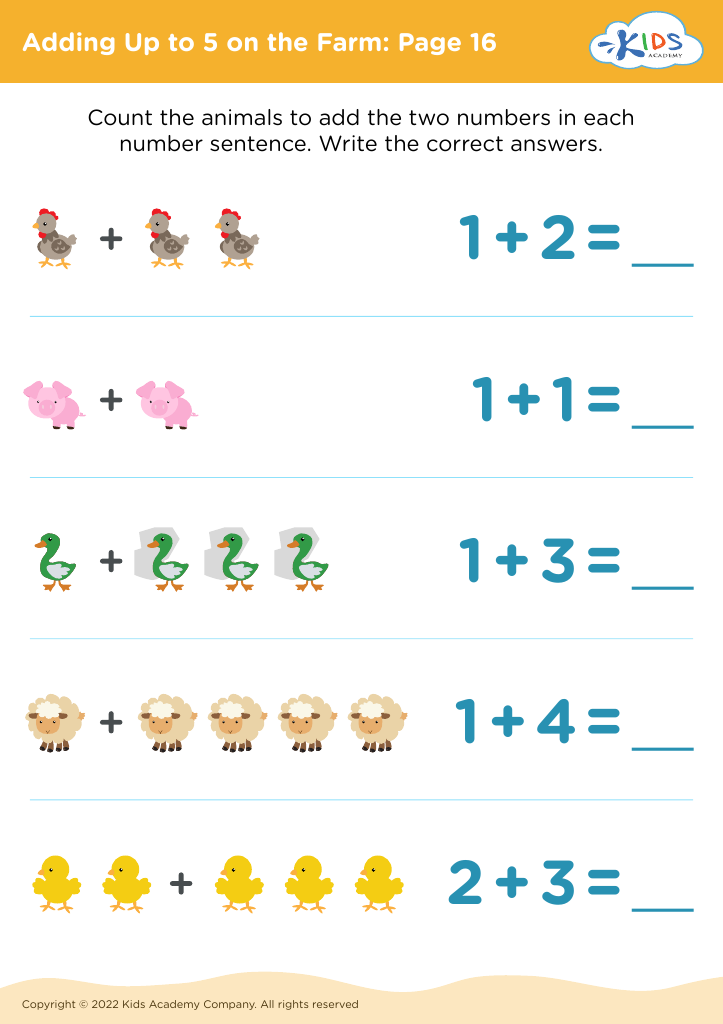
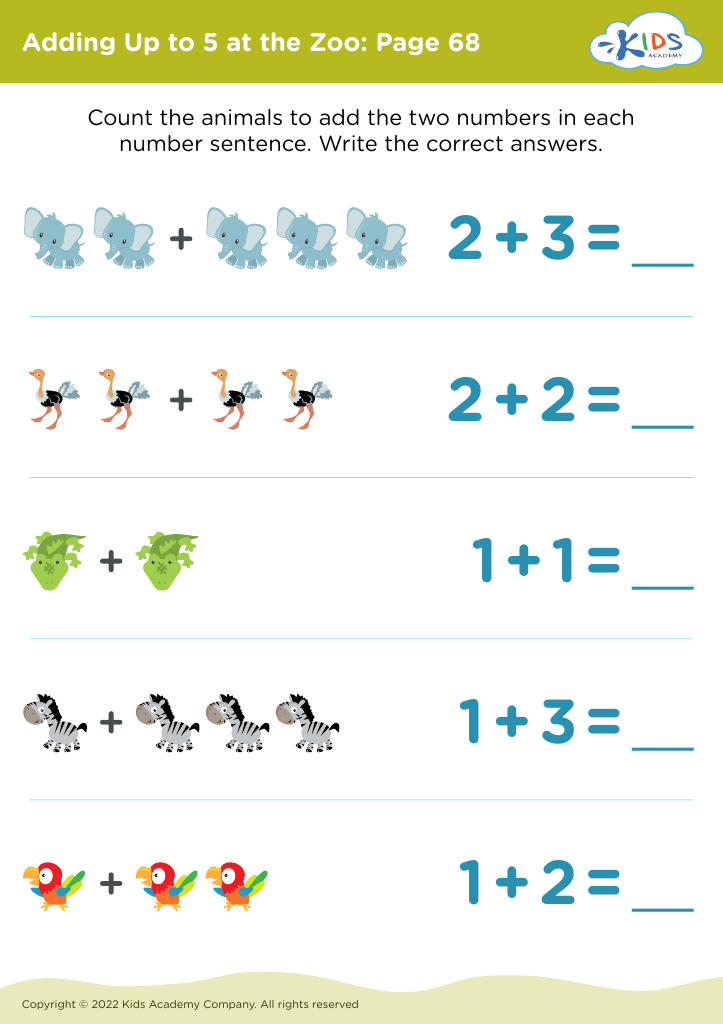
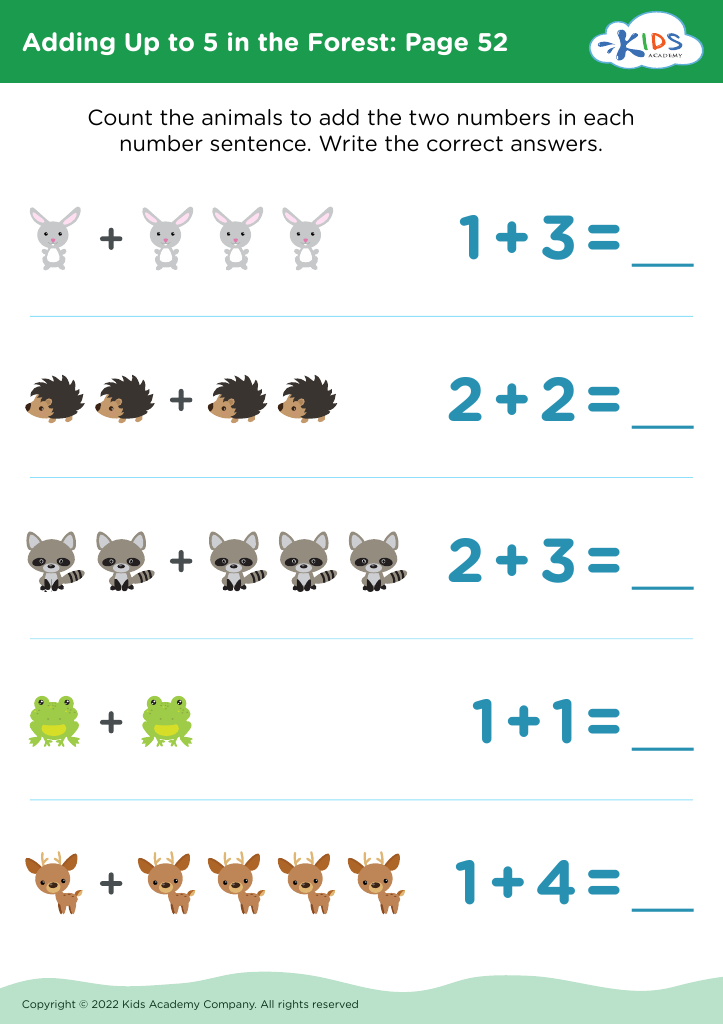
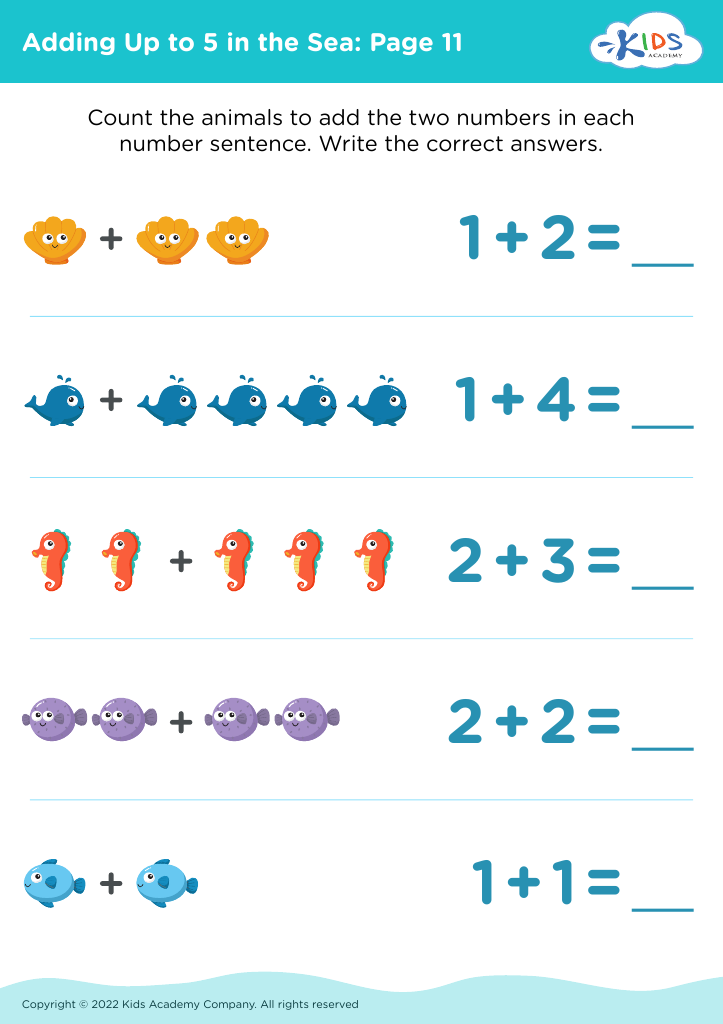
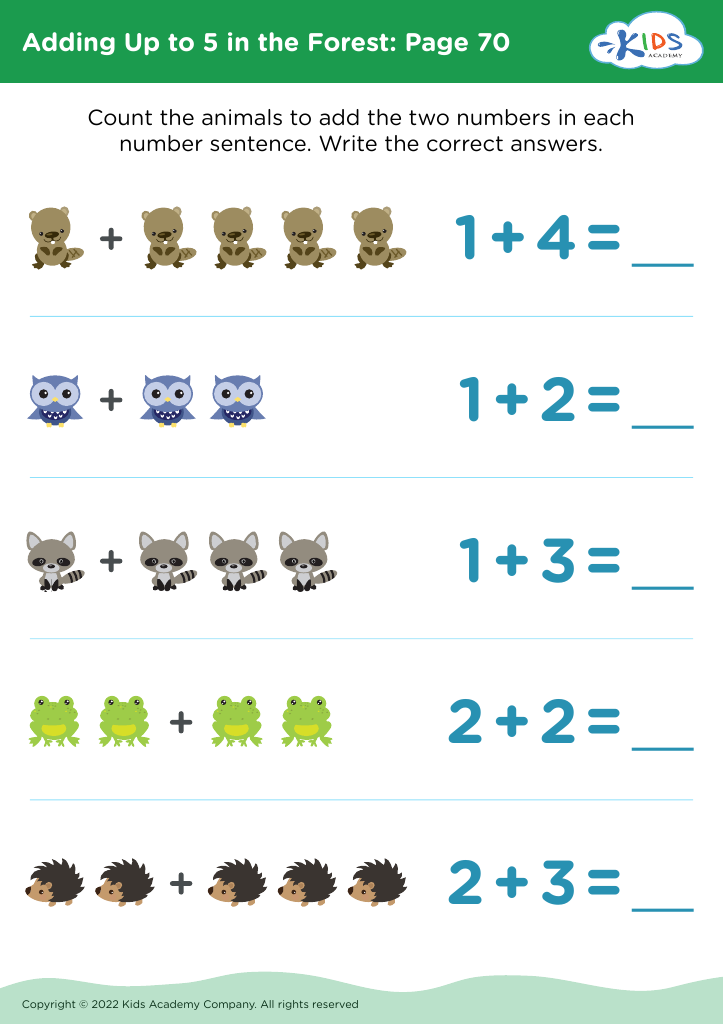
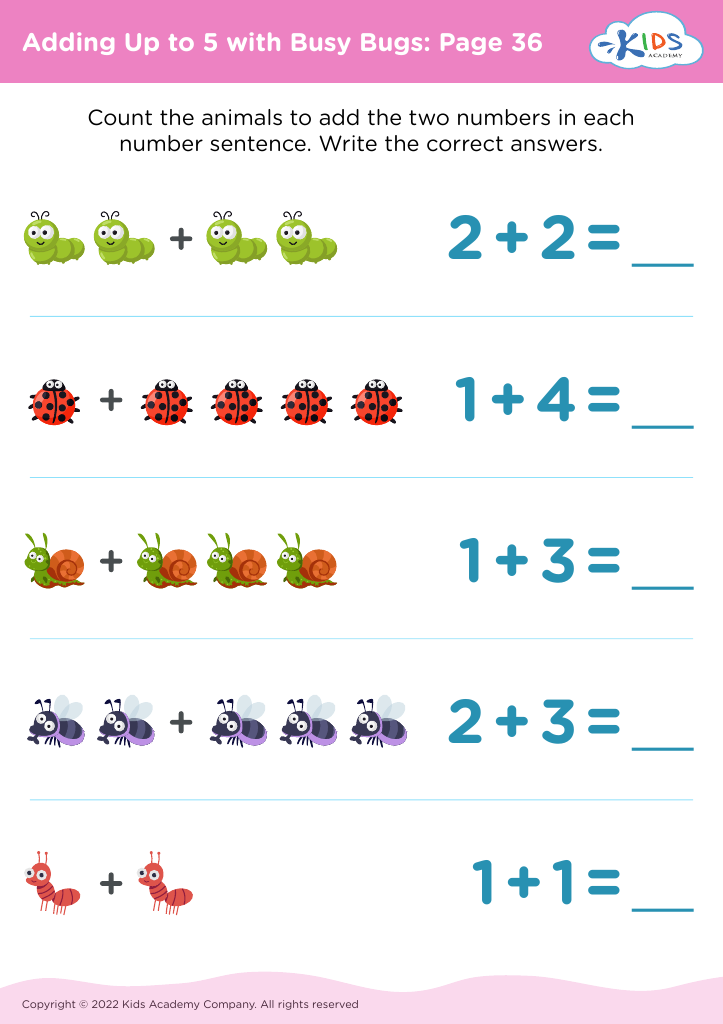
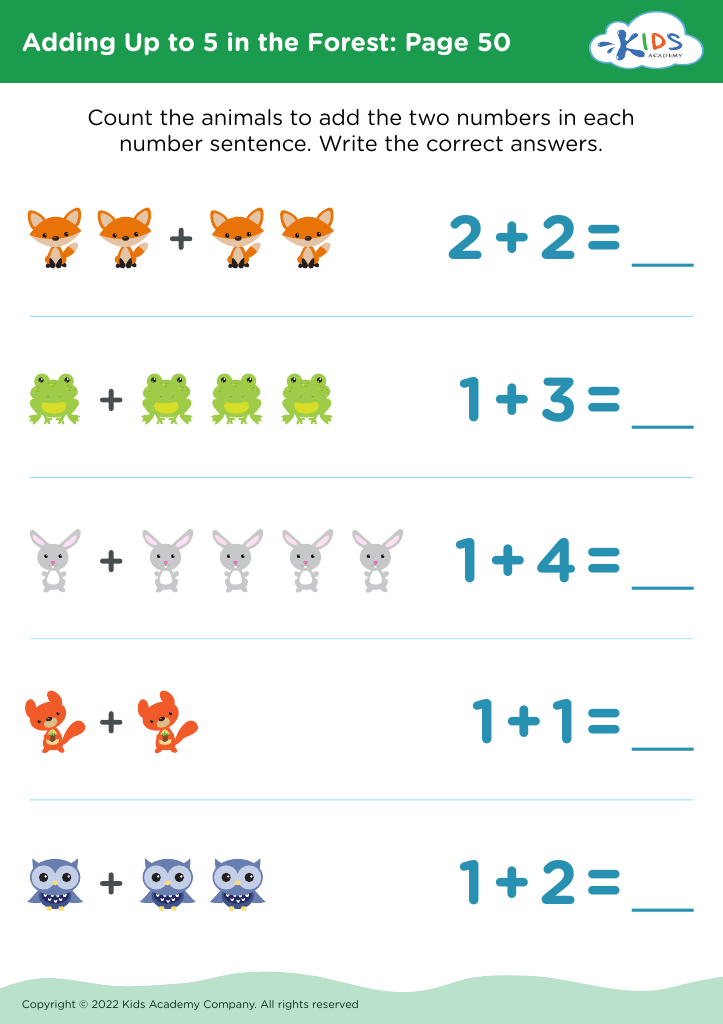
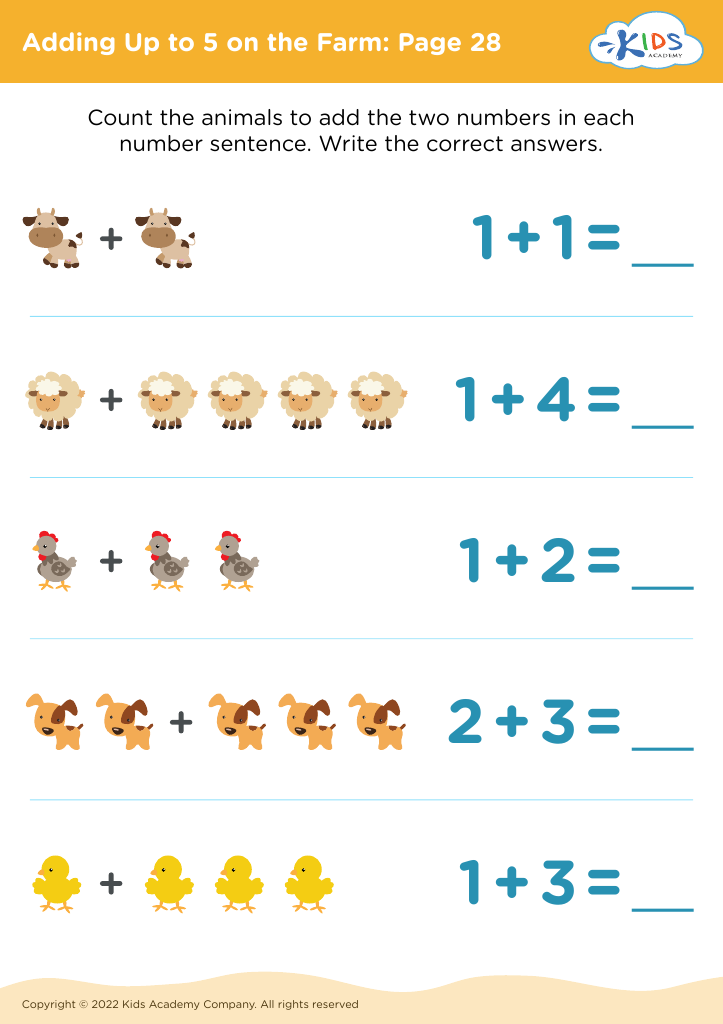
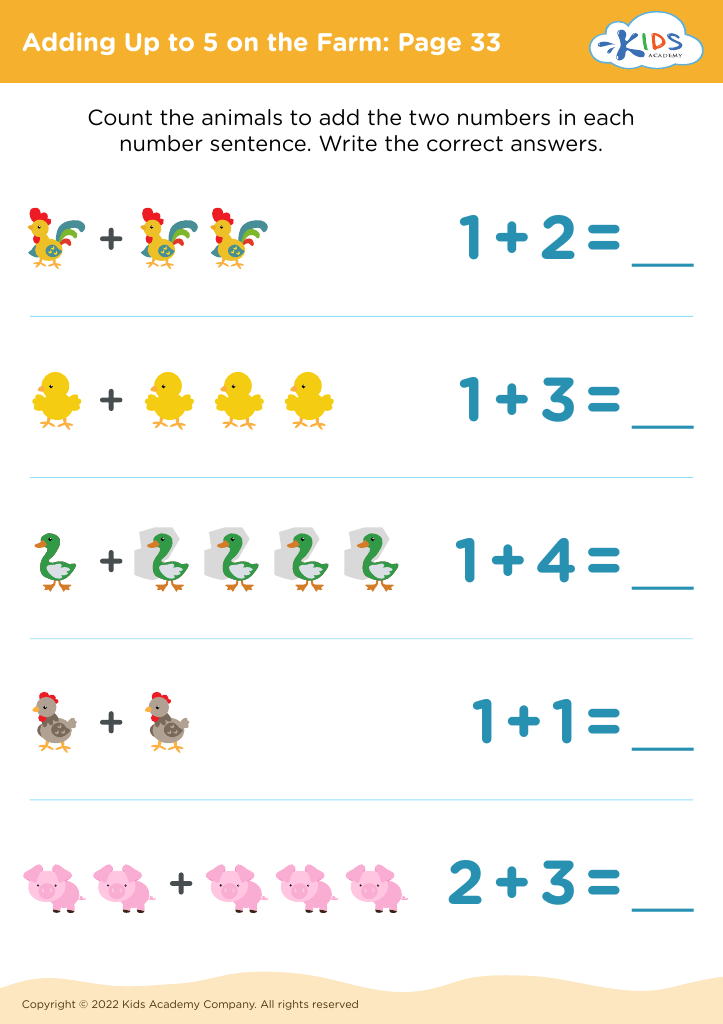
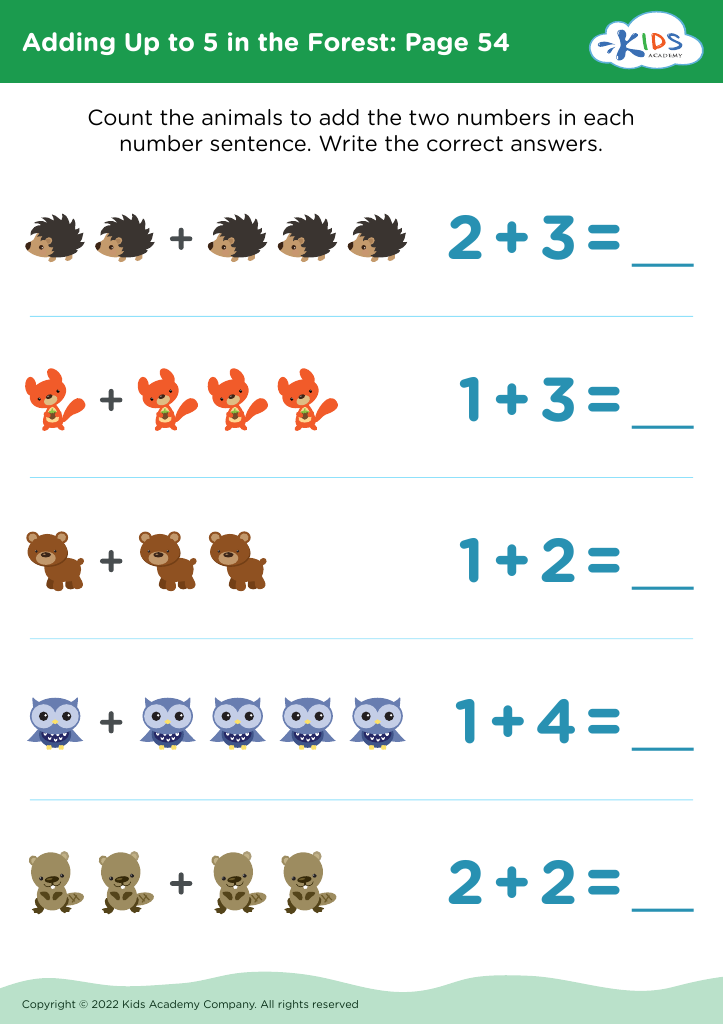
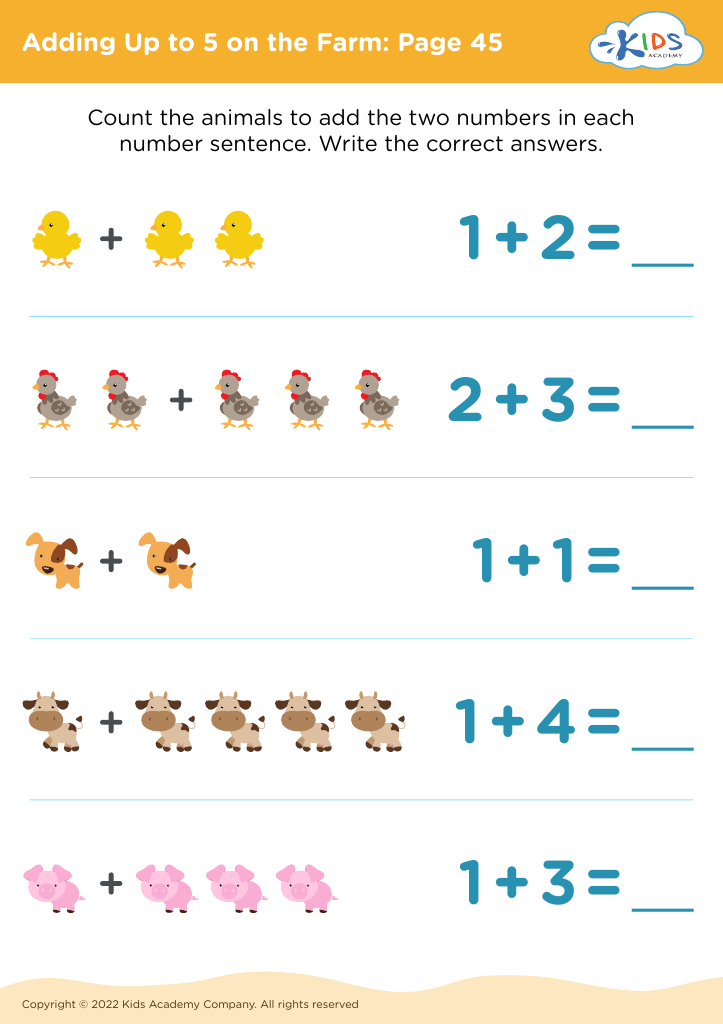
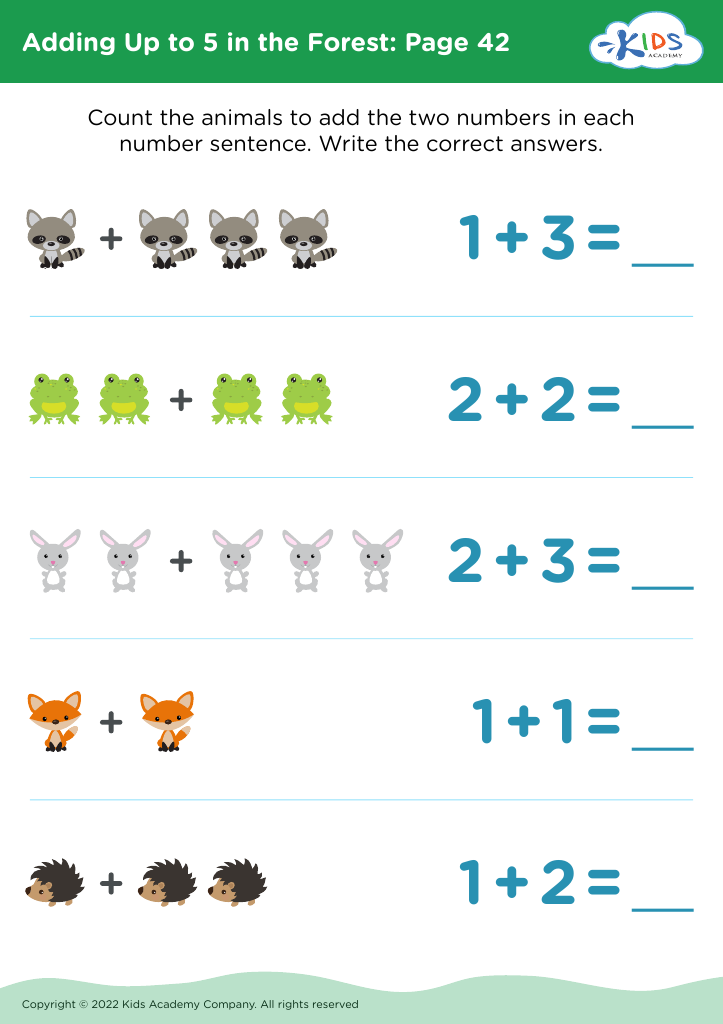
Developing problem-solving skills in young children, particularly activities that focus on adding up to 5, is essential for several reasons. At ages 5-8, children's cognitive development is at a stage where they are beginning to understand the concepts of numbers and operations, laying the foundational groundwork for future mathematical learning. Engaging them in problem-solving activities that involve simple addition helps reinforce these basic arithmetic principles in a way that is engaging and manageable.
Parents and teachers should care because problem-solving skills promote critical thinking and creativity. When children tackle problems like adding up to 5, they learn to think logically and understand numerical relationships. This builds confidence in their math abilities and fosters a positive attitude toward learning new concepts. Early mastery of these foundational skills can ease the transition to more complex mathematics they will encounter later.
Moreover, problem-solving skills extend beyond math; they teach perseverance, attention to detail, and resilience. It's important for educators and parents to support and nurture these skills early on as they are integral to intellectual development and problem-solving in everyday life. Fun, interactive, and age-appropriate activities focused on adding small numbers provide a rewarding and enriching developmental experience for young learners.








