Visual learning reinforcement Adding Up to 5 Worksheets for Ages 5-8
5 filtered results
-
From - To
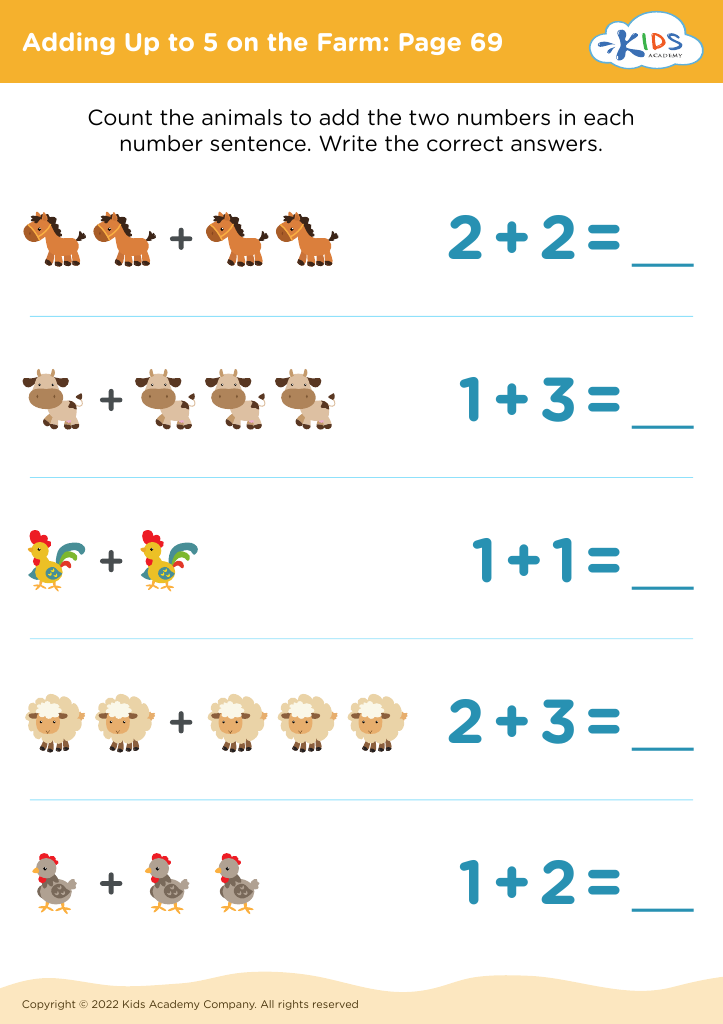
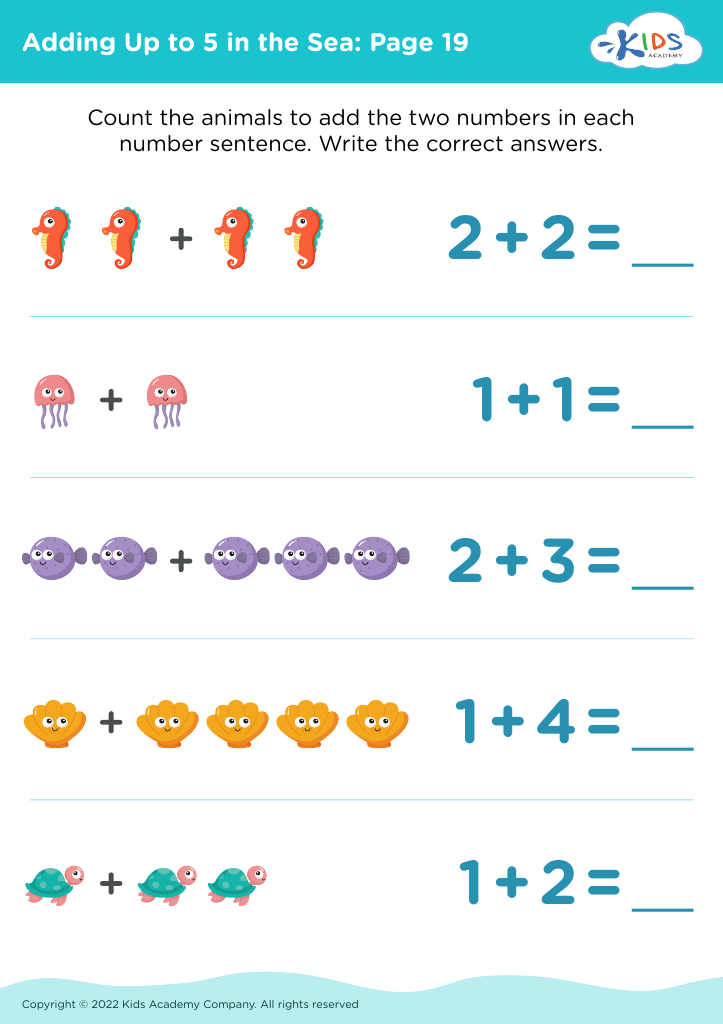
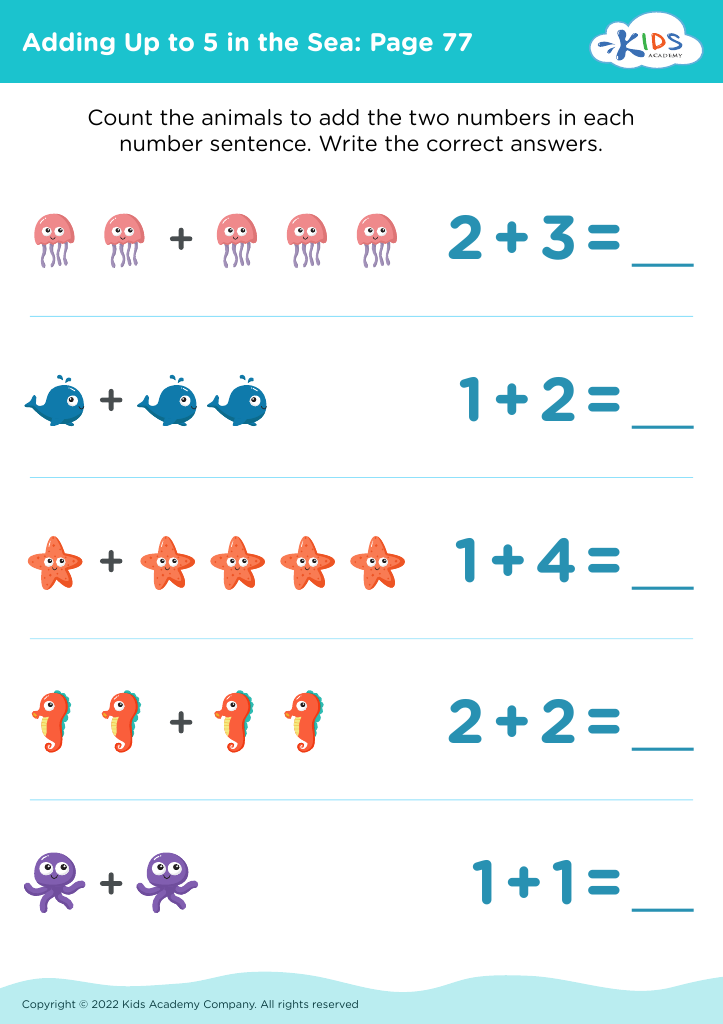
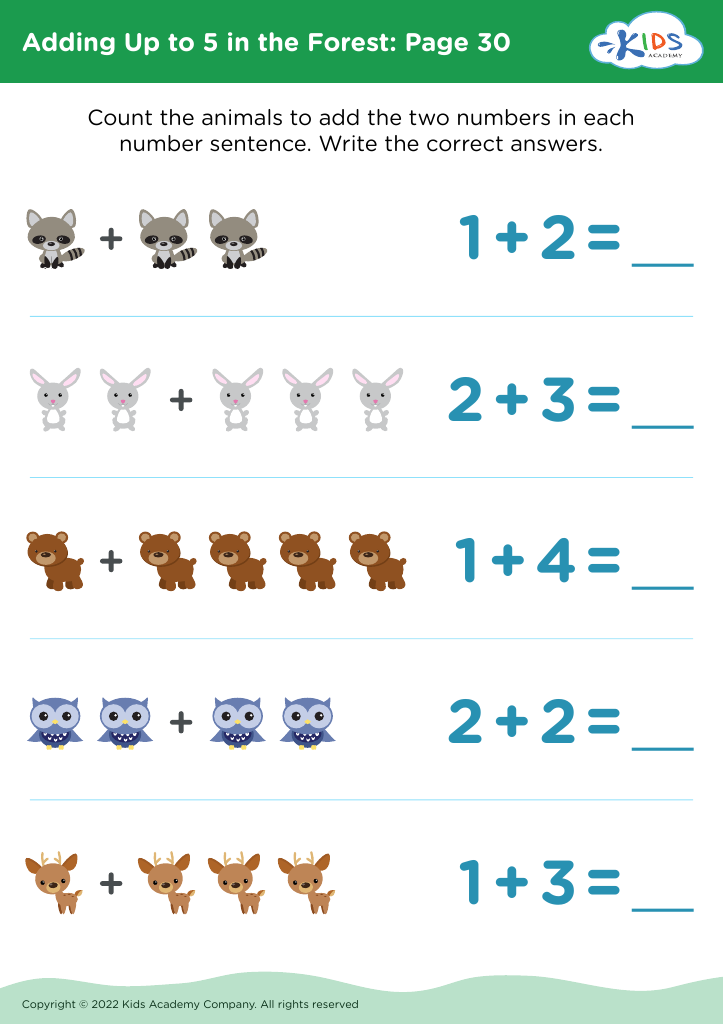
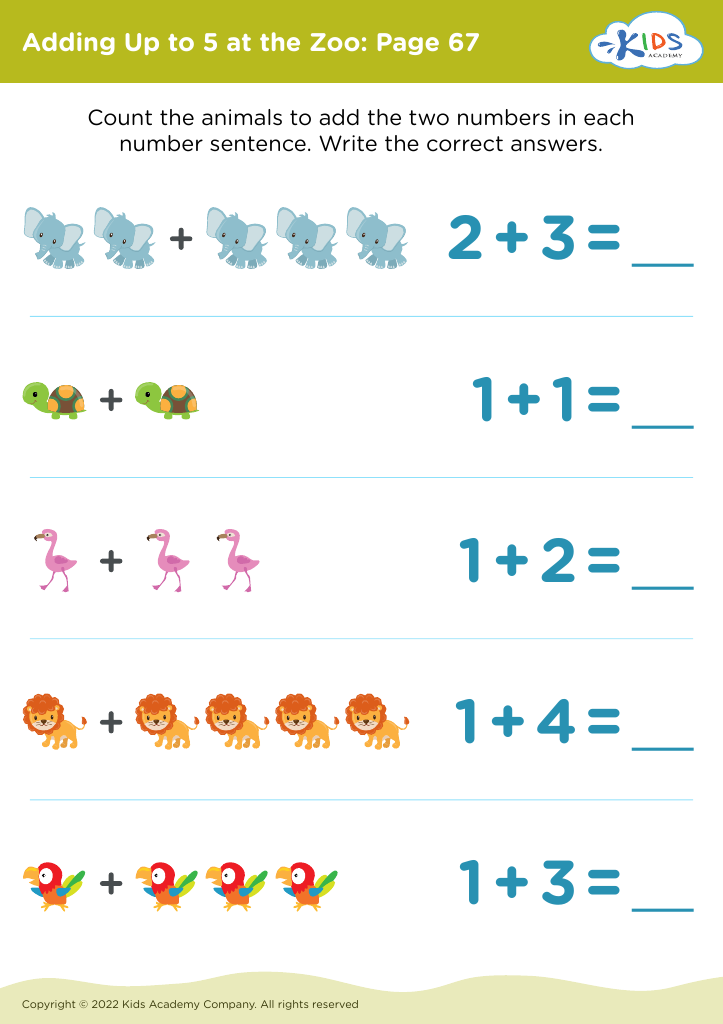
Enhance your child's arithmetic skills with our "Visual Learning Reinforcement Adding Up to 5 Worksheets" designed for ages 5-8. These engaging worksheets leverage vibrant visuals and interactive exercises to make learning addition up to 5 both effective and fun. With a focus on visual learning, children can develop their math abilities through hands-on practice and captivating illustrations. Tailored for young learners, these printables help build a solid foundation in math, ensuring your child gains confidence and proficiency in adding small sums. Perfect for use at home or in the classroom, these worksheets make math practice a delightful experience.







.jpg)
Visual learning reinforcement for adding up to 5 is crucial for children aged 5-8 as it capitalizes on the natural way young minds process information. At this developmental stage, children are more likely to retain information presented visually, as they tend to be predominantly visual learners. This type of learning, which includes pictures, diagrams, and illustrated activities, enables them to understand abstract concepts and relationships between numbers more concretely.
When parents and teachers employ visual aids like number lines, counters, or colorful illustrations to teach addition, it helps in creating a strong foundational understanding of basic arithmetic. Visual reinforcement simplifies complex ideas, making them more accessible and less intimidating. For instance, using images of apples or blocks to demonstrate addition problems makes the process engaging and relatable.
Moreover, visual learning tools also cater to children with different learning styles and those who might struggle with traditional, text-based methods. They encourage active participation and interactive learning, which boosts memory retention and cognitive skills. Investing in visual learning aids not only enhances mathematical proficiency but also fosters a positive attitude towards math, which can translate into long-term academic success. For all these reasons, integrating visual learning reinforcement in early math education is an invaluable strategy parents and teachers should prioritize.








