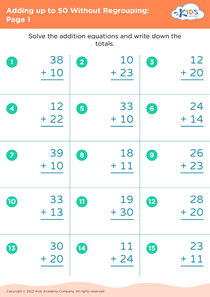
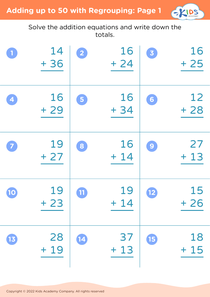
Number Recognition Adding up to 50 Misc Worksheets for Ages 5-8
14 filtered results
-
From - To
Boost your child's number recognition skills with our engaging "Number Recognition Adding Up to 50 Misc Worksheets," designed for ages 5-8. This collection of worksheets offers a fun and interactive way for young learners to explore numbers through various activities, including counting, matching, and simple addition. With vibrant illustrations and kid-friendly layouts, these worksheets encourage children to practice their math skills while keeping them entertained. Ideal for homeschooling or supplemental practice at school, these resources help lay a strong foundation for future math concepts. Get started today and watch your child's confidence in number recognition grow as they master adding up to 50!
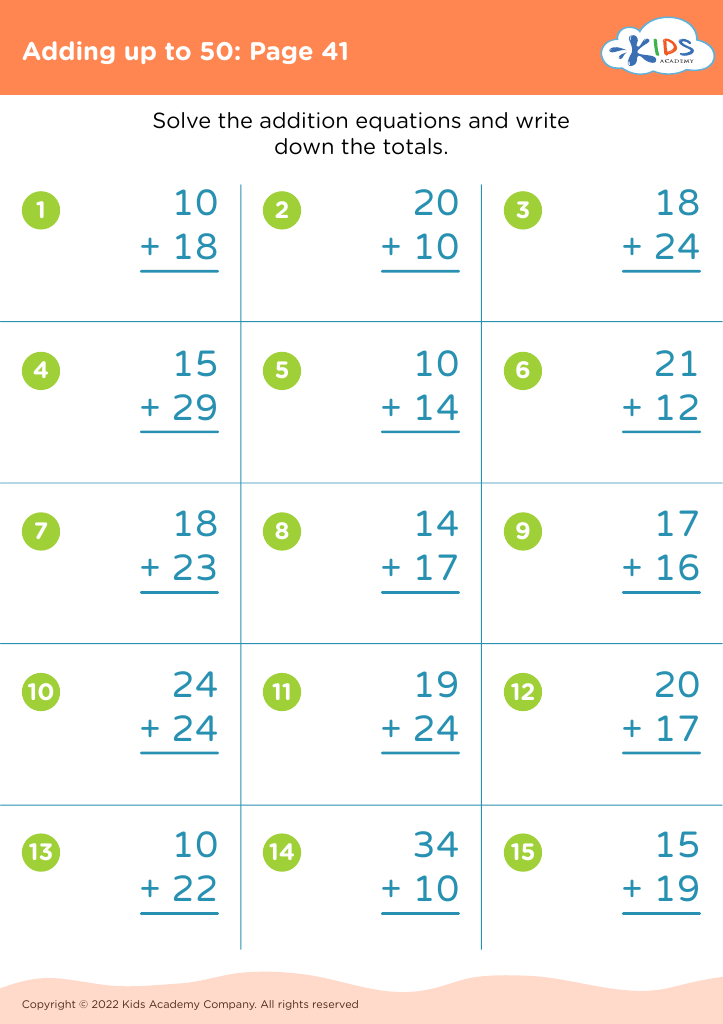
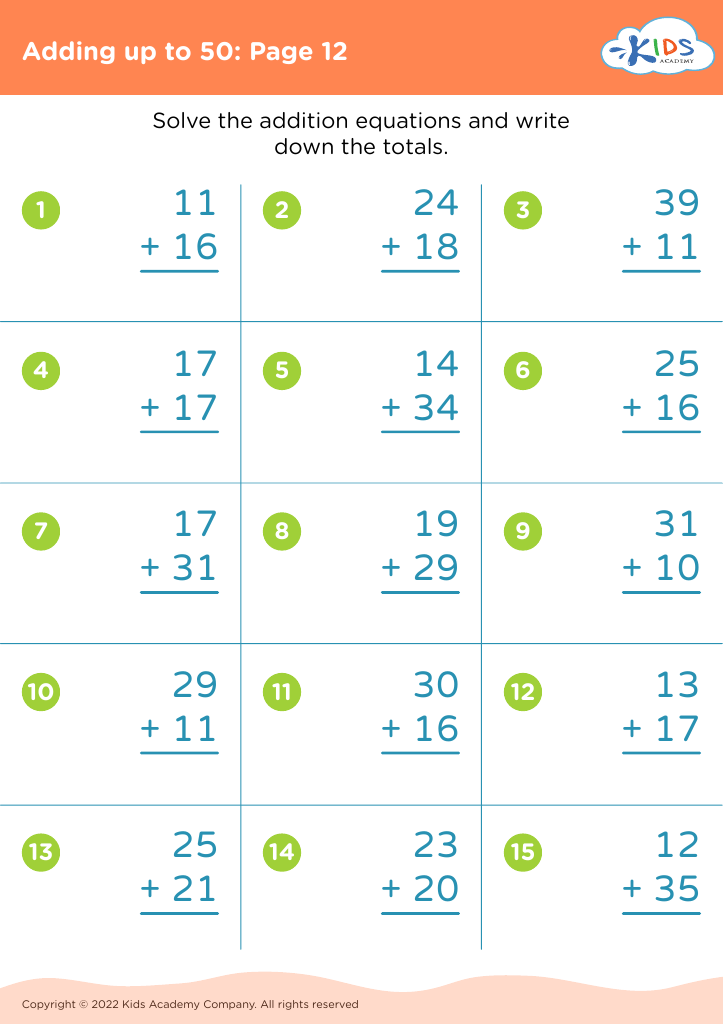
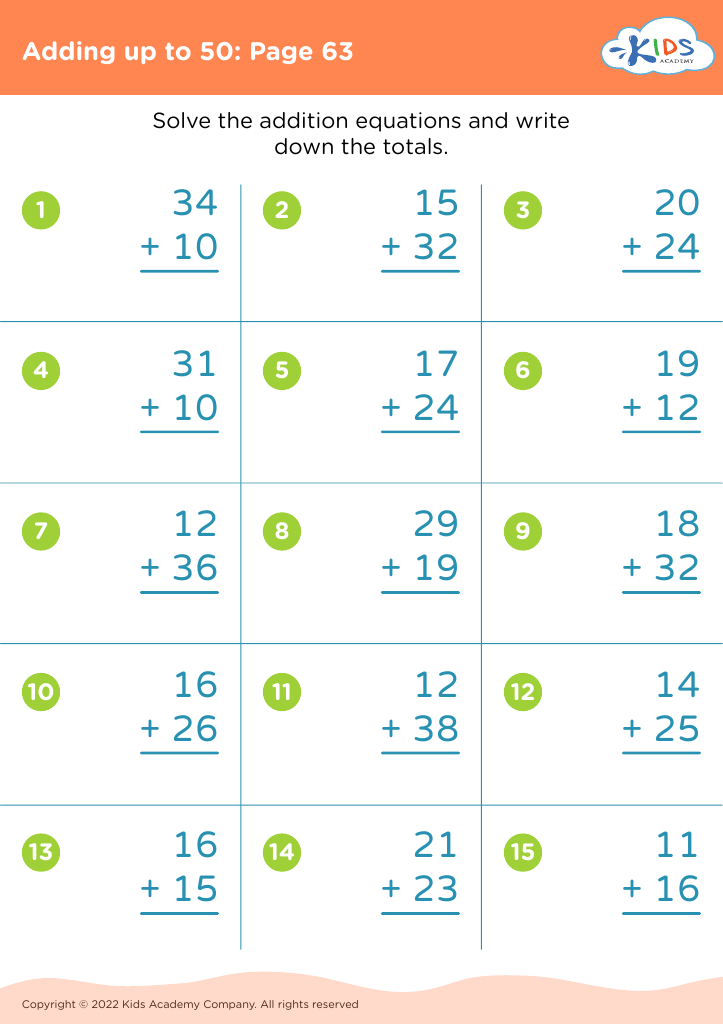
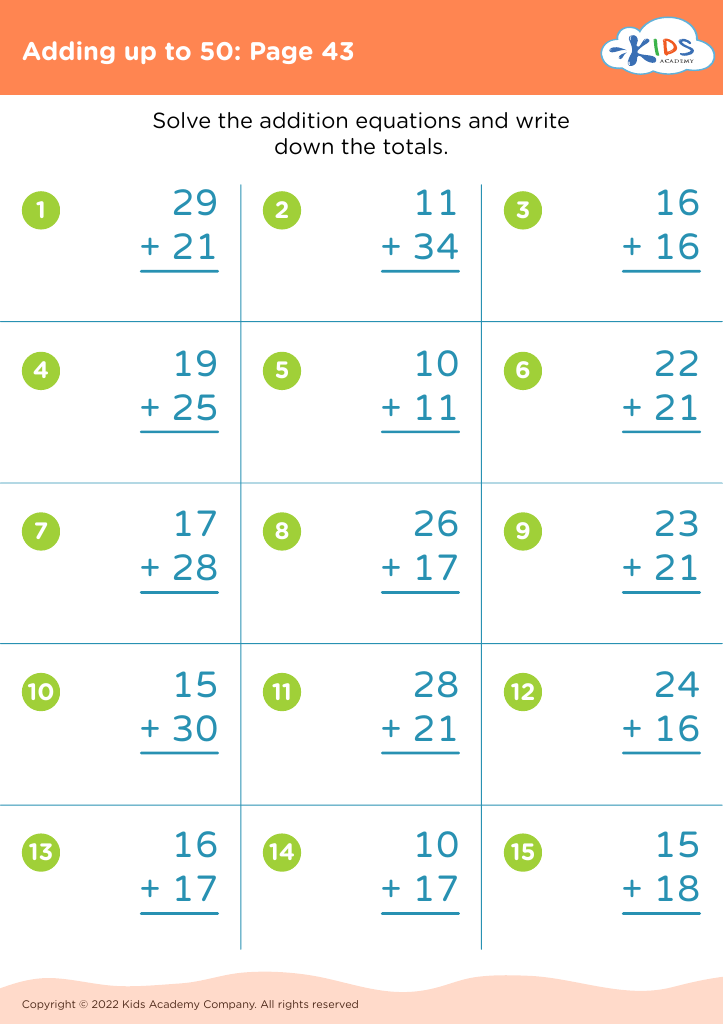
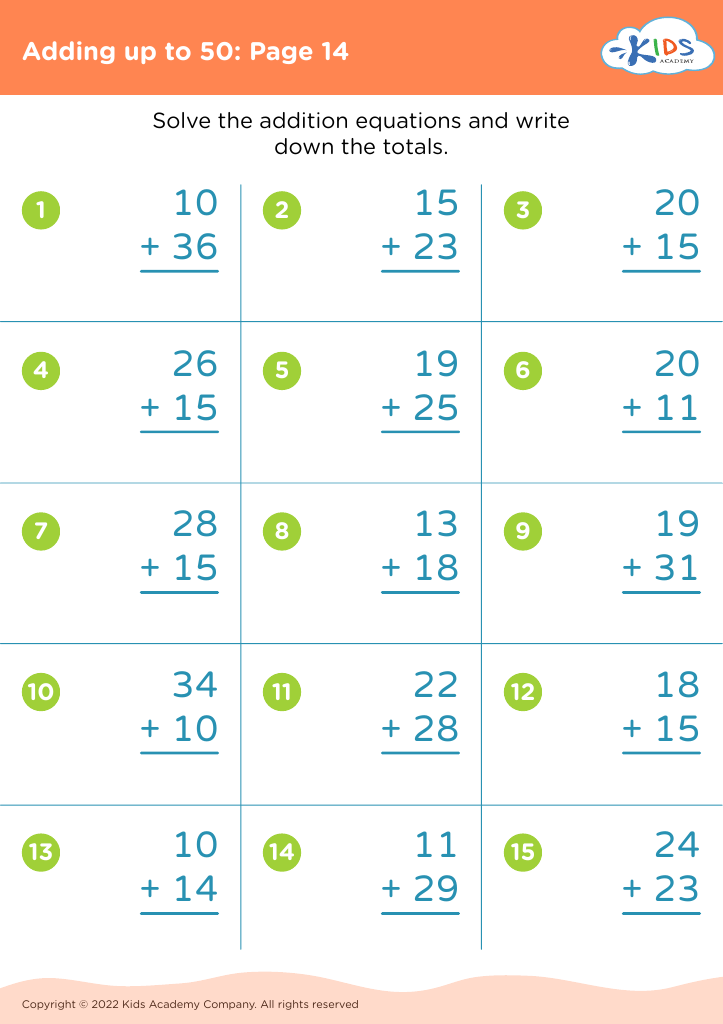
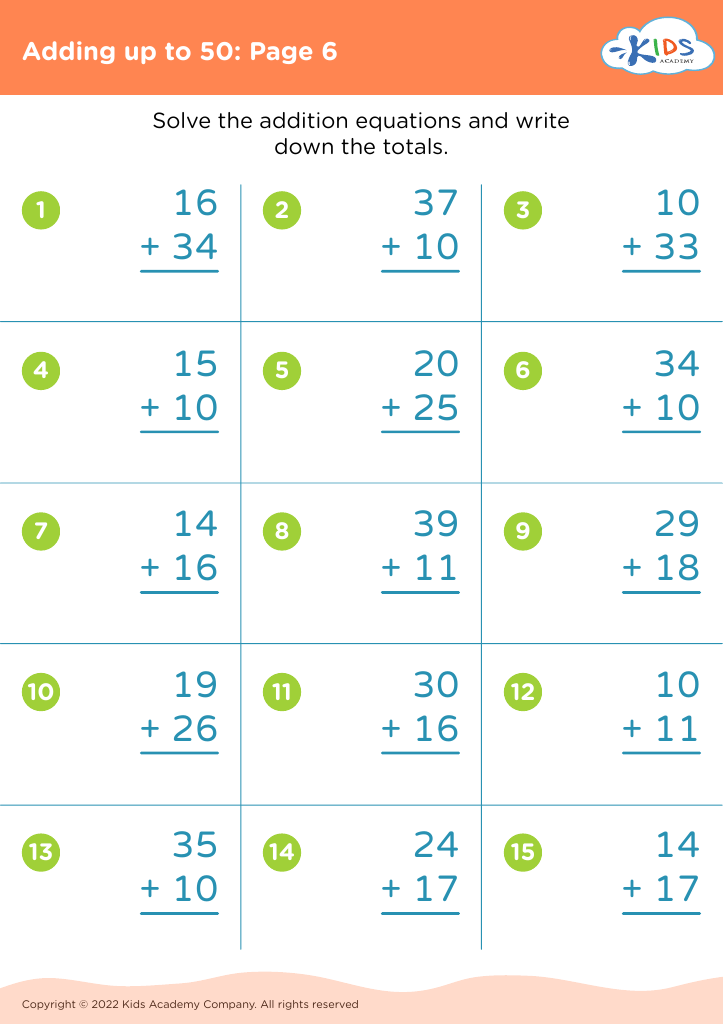
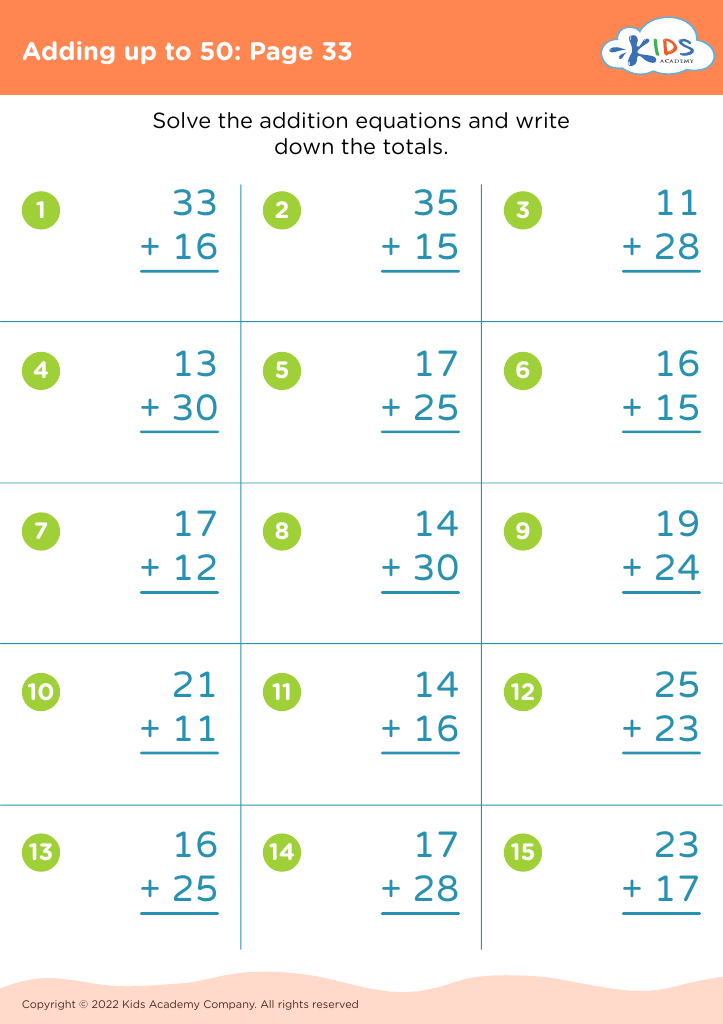
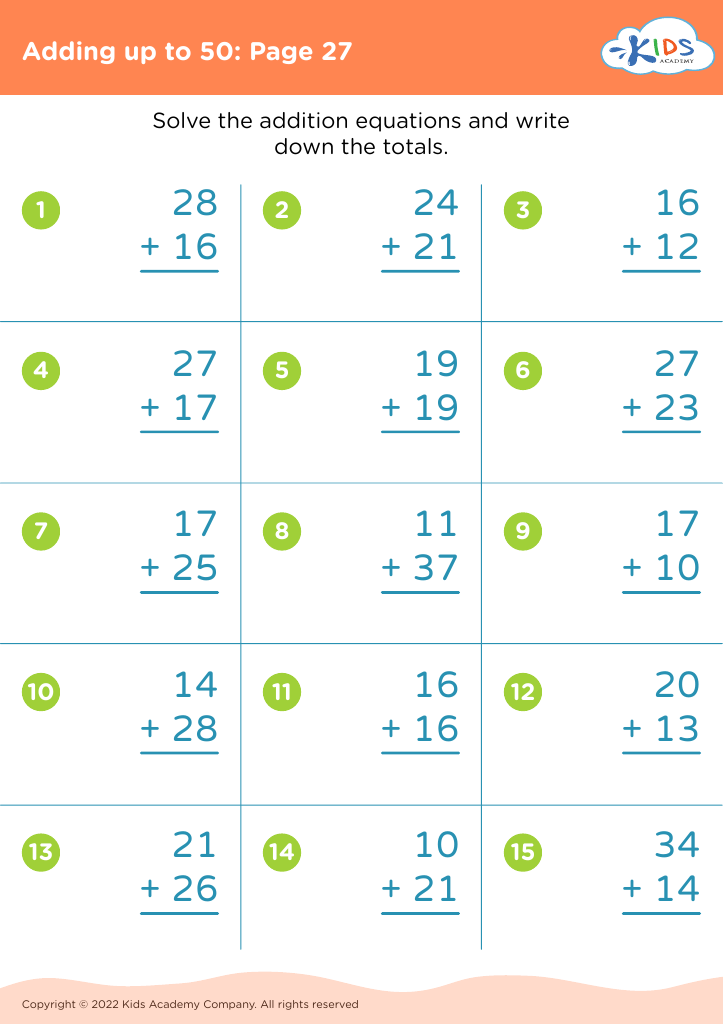
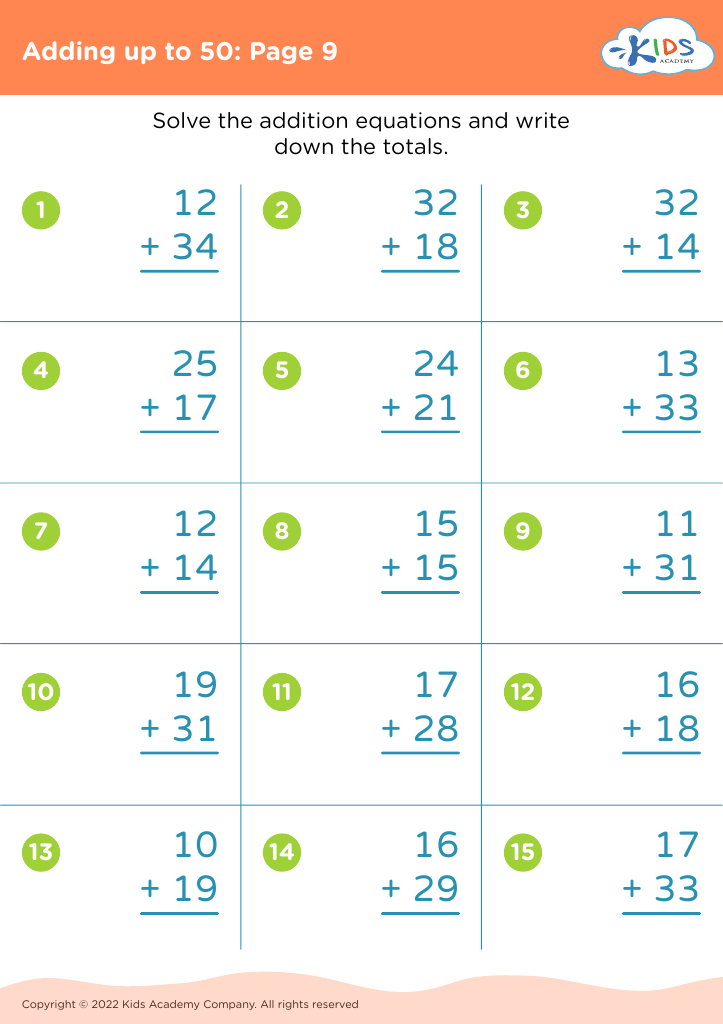
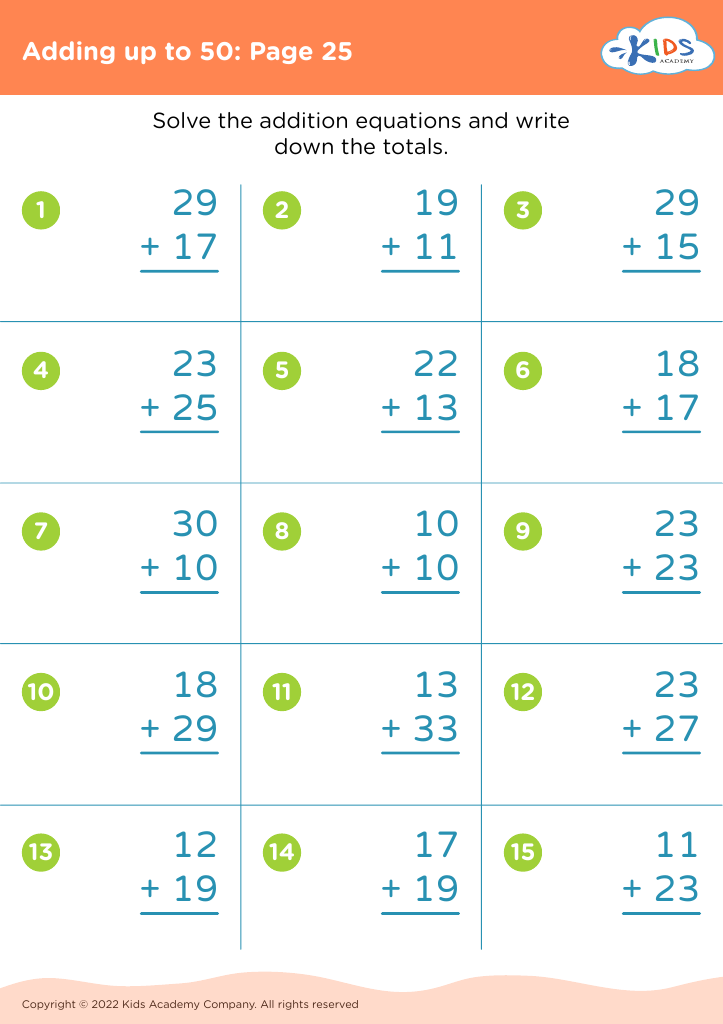
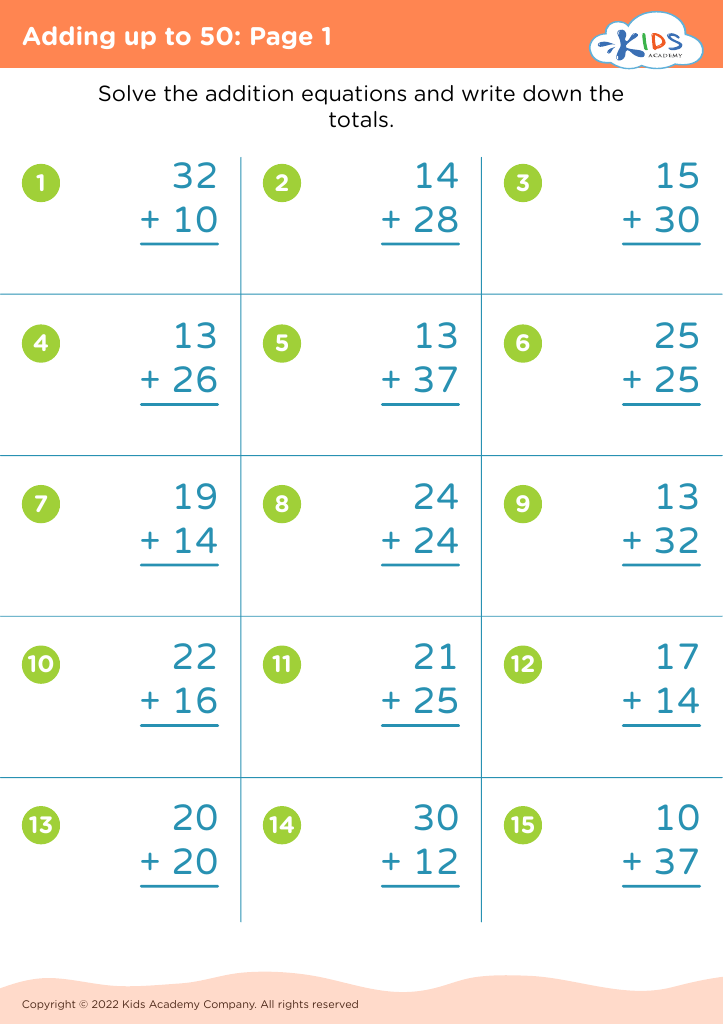
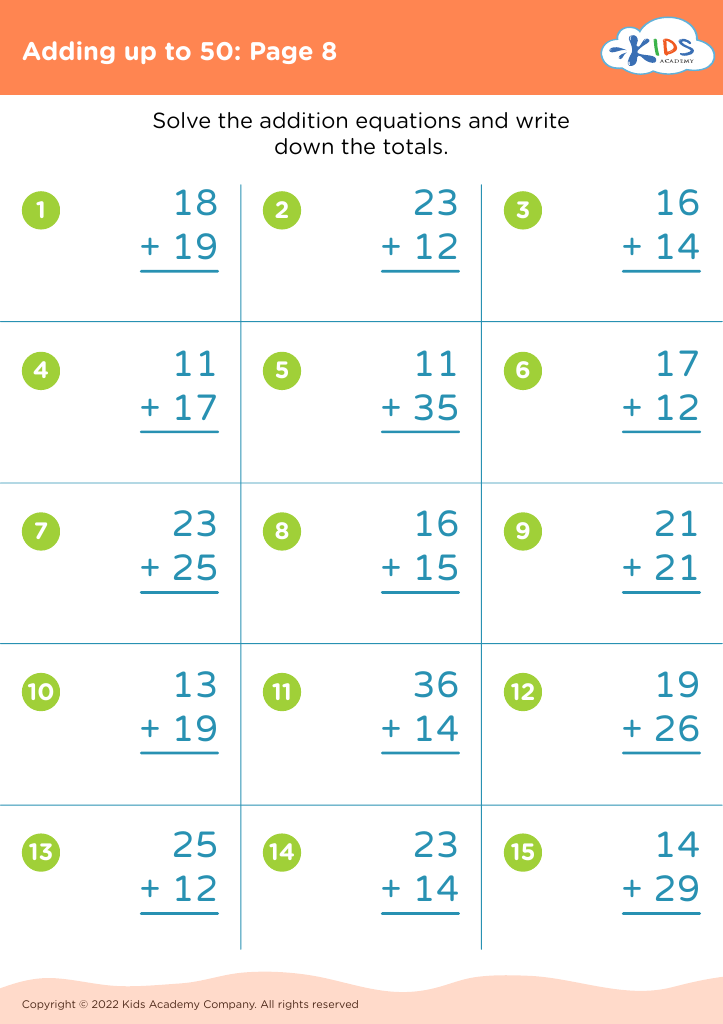
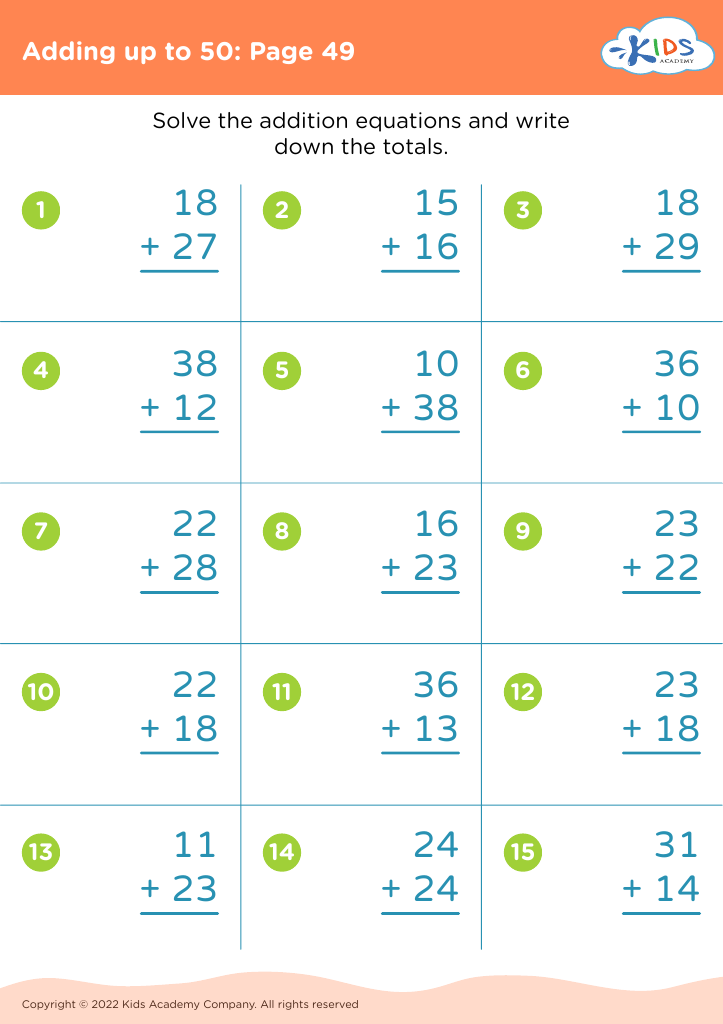
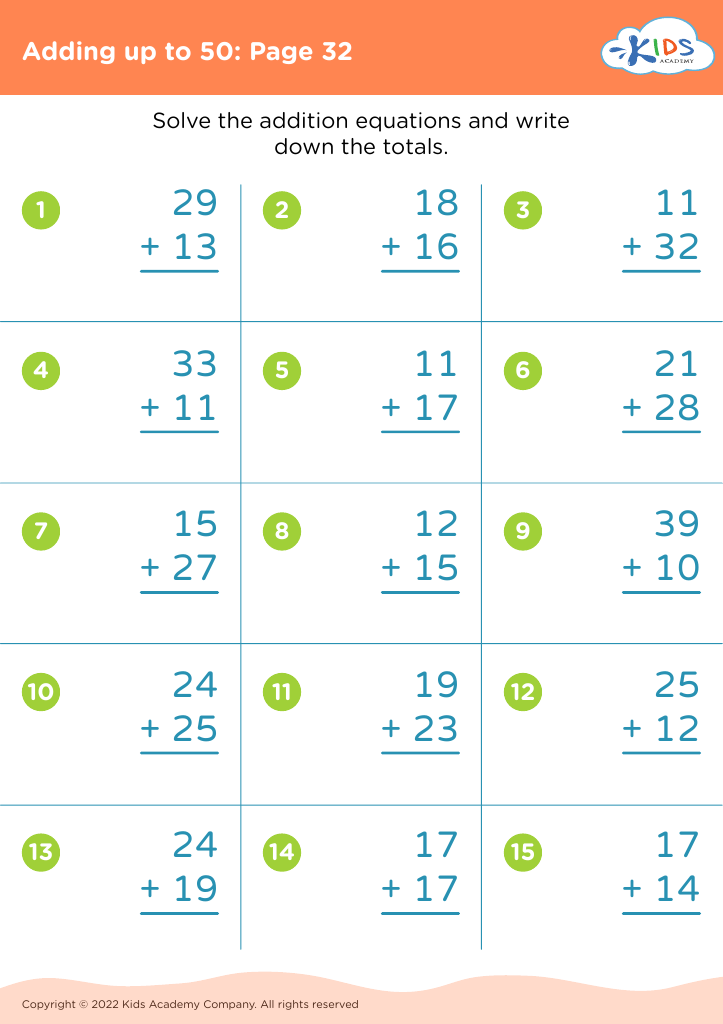


Number recognition and early math skills, such as adding up to 50, are foundational for children aged 5-8. Parents and teachers should prioritize these skills because they are essential for a child’s overall cognitive development and future academic success.
Firstly, number recognition helps children understand quantities, patterns, and relationships between numbers, laying the groundwork for more complex concepts later on. Mastery of numbers up to 50 fosters confidence in math, encouraging a positive attitude toward learning.
Additionally, everyday life often involves math, whether it's counting items, telling time, or managing money. Therefore, being comfortable with numbers equips children with practical skills they will use throughout their lives.
Moreover, engaging children through fun activities related to number recognition can enhance their critical thinking and problem-solving abilities. It also promotes fine motor skills through writing and interactive games.
By incorporating number recognition and addition exercises into daily learning, parents and teachers can nurture a child’s mathematical curiosity and interest. Ultimately, early mastery of these skills not only prepares children for future academic challenges but also cultivates lifelong learners with a strong foundation in numeracy.