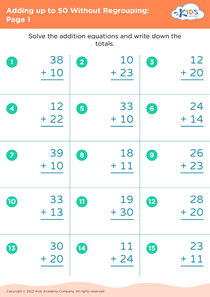
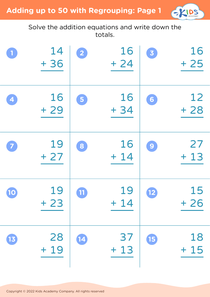
Understanding symmetry Adding up to 50 Misc Worksheets for Ages 5-8
3 filtered results
-
From - To
Explore our engaging "Understanding Symmetry: Adding Up to 50 Misc Worksheets" designed for children aged 5-8. These interactive worksheets help young learners grasp the concept of symmetry while practicing their addition skills up to 50. Incorporating vibrant images and hands-on activities, this resource makes learning fun and visually stimulating. Perfect for classroom use or at-home learning, kids will enhance both their math abilities and critical thinking skills through playful exercises. Discover how symmetrical shapes relate to math in a captivating way. Enhance your child's education with our comprehensive worksheets that combine creativity and fundamental maths practice. Start learning symmetrically today!
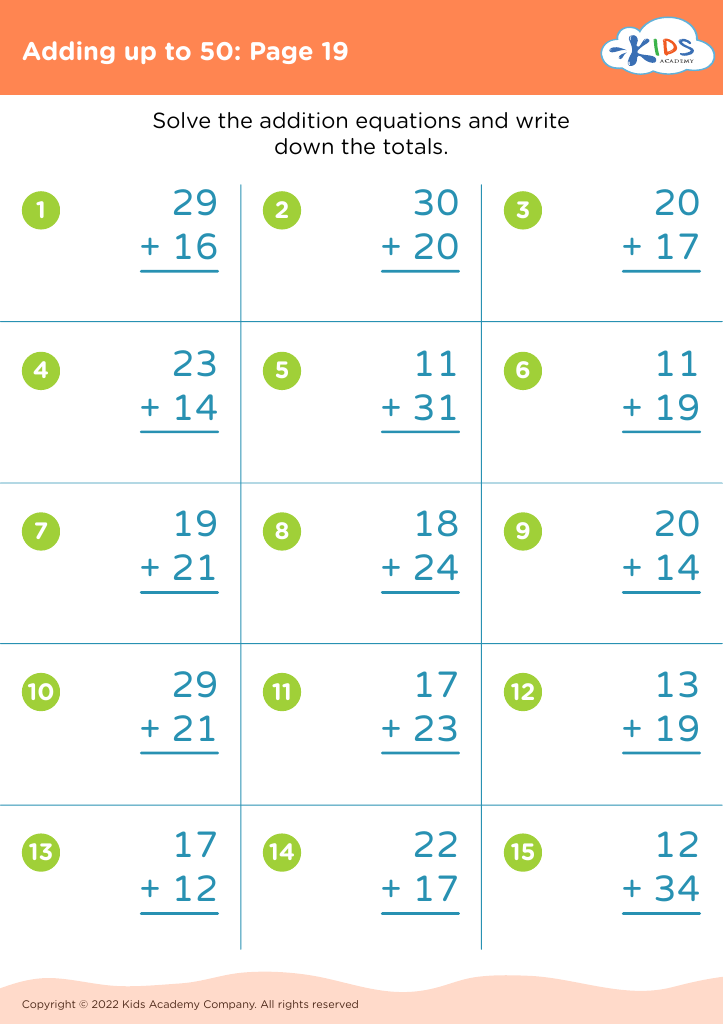
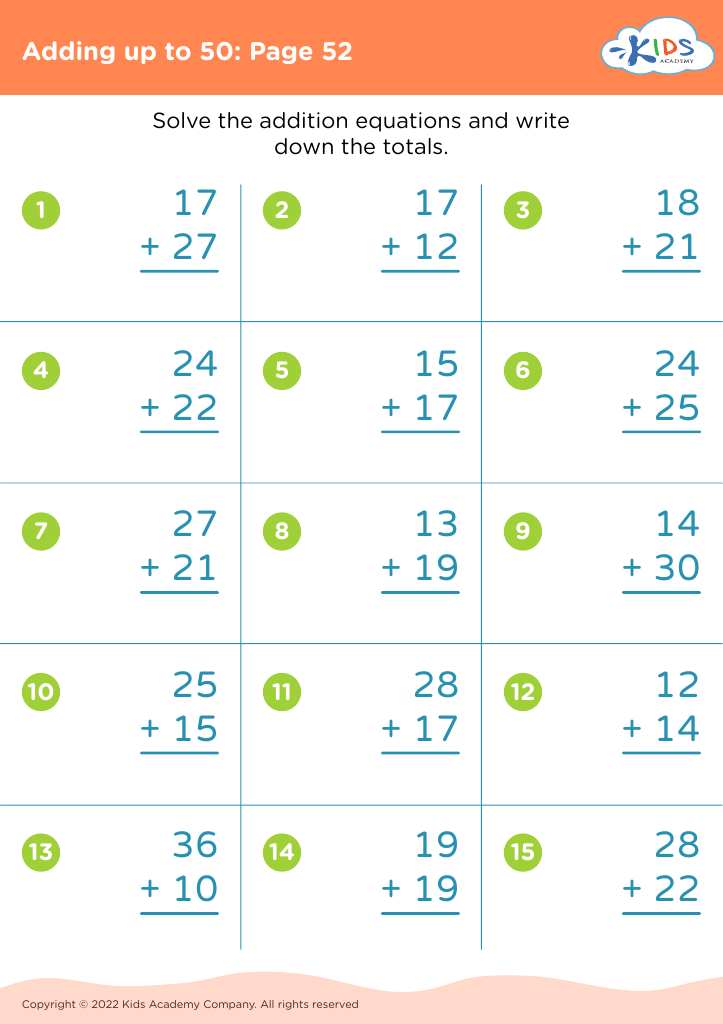
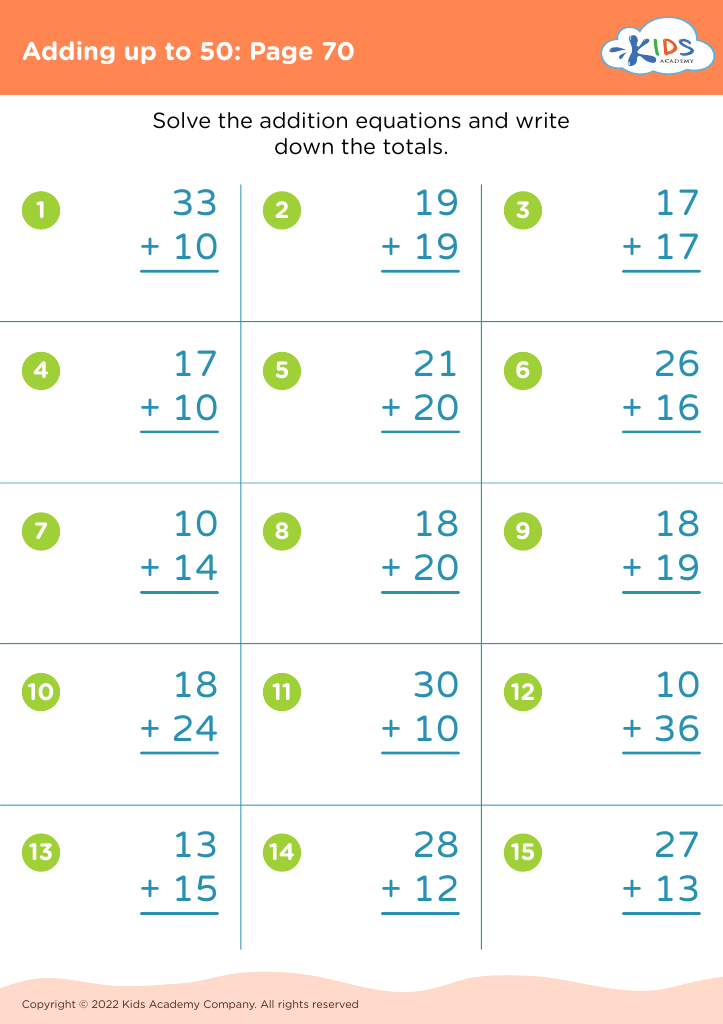


Understanding symmetry and addition concepts, such as adding up to 50, are essential foundational skills for children aged 5-8. These concepts foster critical thinking and cognitive development, helping young learners build a robust mathematical mindset.
Symmetry, a fundamental principle in art, nature, and design, enhances visual-spatial awareness, which is crucial in various fields, including science and engineering. Teaching symmetry helps children recognize patterns and fosters creativity, as they become adept at identifying and creating symmetrical shapes.
On the other hand, mastering how to add up to 50 equips children with essential arithmetic skills necessary for everyday activities. It plays a vital role in developing their number sense, promoting mental math abilities, and enhancing problem-solving skills. Understanding number relationships through tasks like adding to 50 lays the groundwork for more complex mathematical concepts they will encounter later in their education.
Furthermore, engaging with these concepts can foster a love for mathematics, as it is often through hands-on exploration and guided discovery that children find joy in learning. By prioritizing lessons in symmetry and addition, parents and teachers are nurturing not only academic skills but also critical life skills that will serve children throughout their learning journey and beyond.