Filters

17 filtered results

Clear all filters
Favorites
With answer key
Interactive

17 filtered results

Difficulty Level

Grade


Unlock the world of fractions with our "Understanding Fractions: Adding up to 50 with Regrouping Worksheets” designed for ages 5-8! These expertly crafted worksheets blend essential fraction skills with engaging regrouping activities, providing young learners with the foundation they need. Ideal for reinforcing classroom lessons, each worksheet encourages the development of critical math skills in a fun and interactive way. From visual fraction problems to hands-on regrouping scenarios, children will expand their mathematical understanding while enjoying the learning process. Boost your child's confidence and abilities in math with our dynamic and enjoyable worksheets today!
Check out this FREE Trial Lesson on Adding up to 50 with Regrouping for age 5-8!

T

Favorites
With answer key
Interactive
  • 5-8
  • Understanding fractions
  • Adding up to 50 with Regrouping
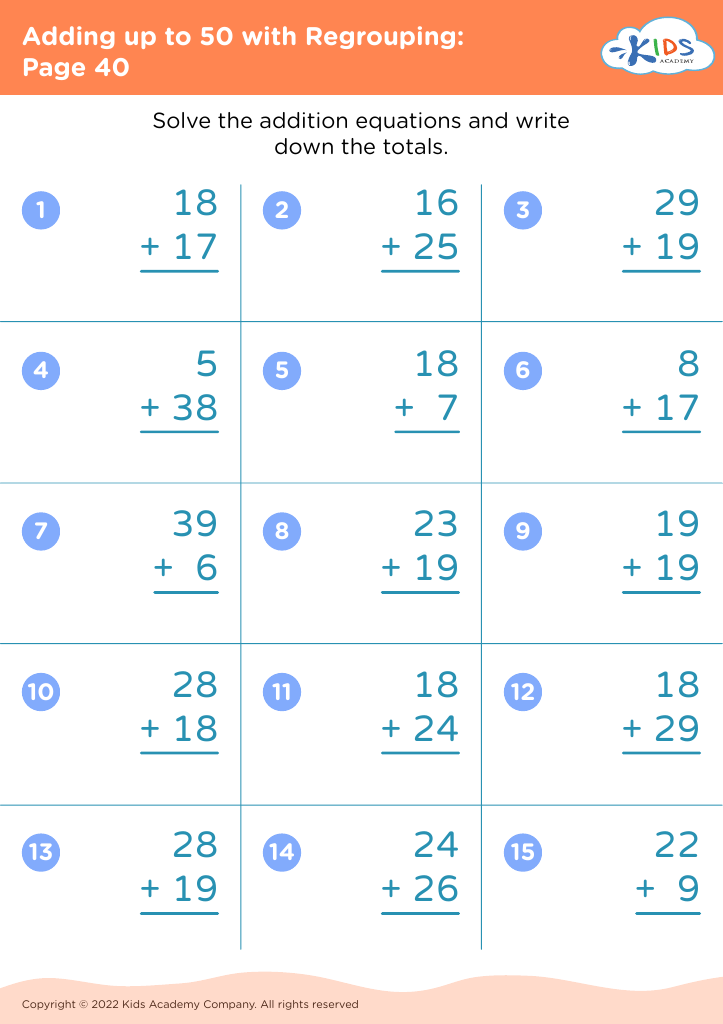
Adding up to 50 with Regrouping: Page 40
Worksheet
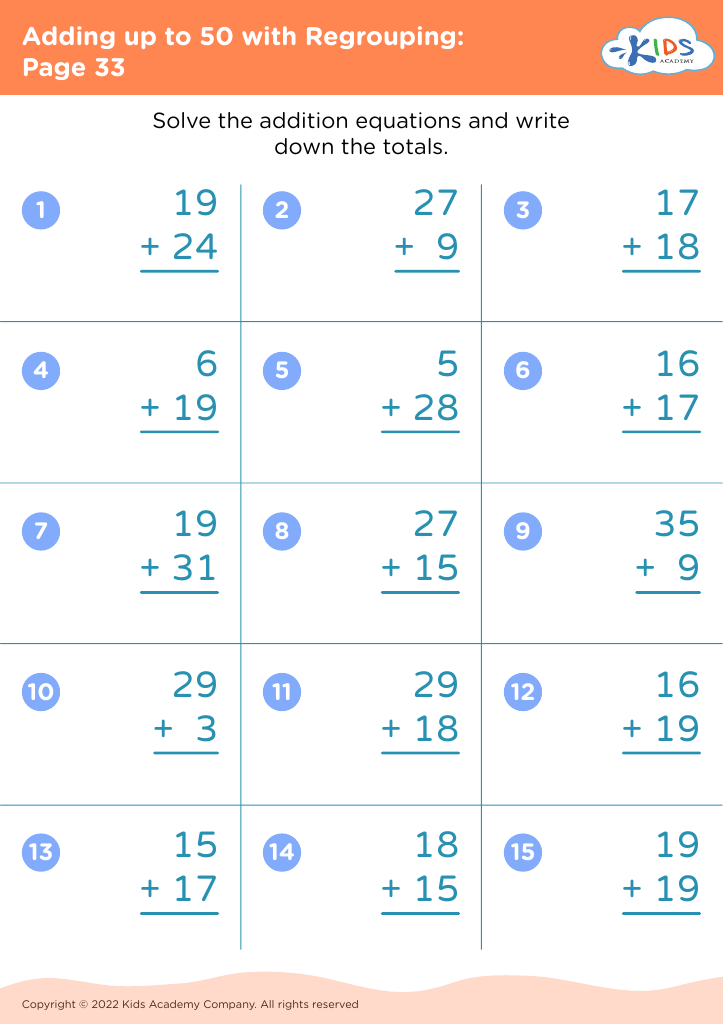
Adding up to 50 with Regrouping: Page 33
Worksheet
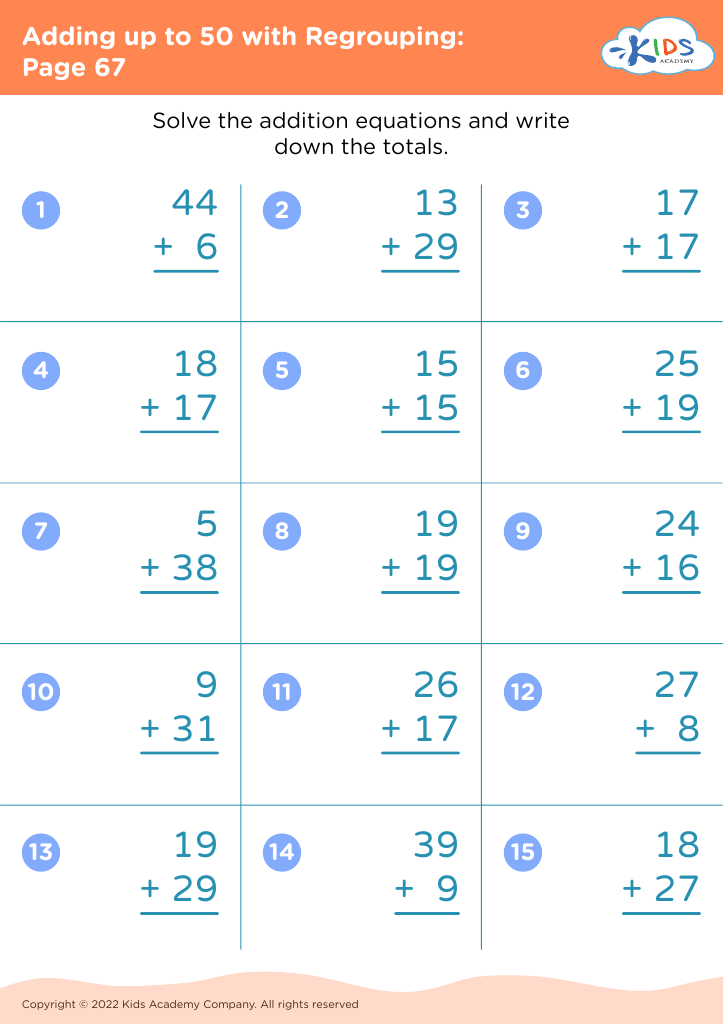
Adding up to 50 with Regrouping: Page 67
Worksheet
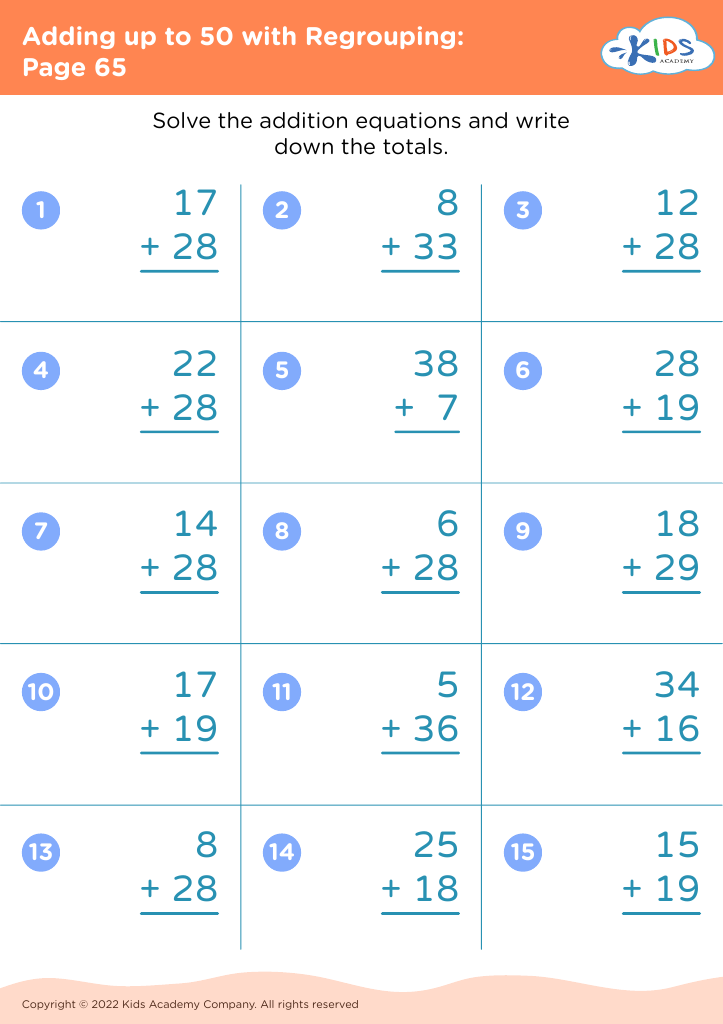
Adding up to 50 with Regrouping: Page 65
Worksheet
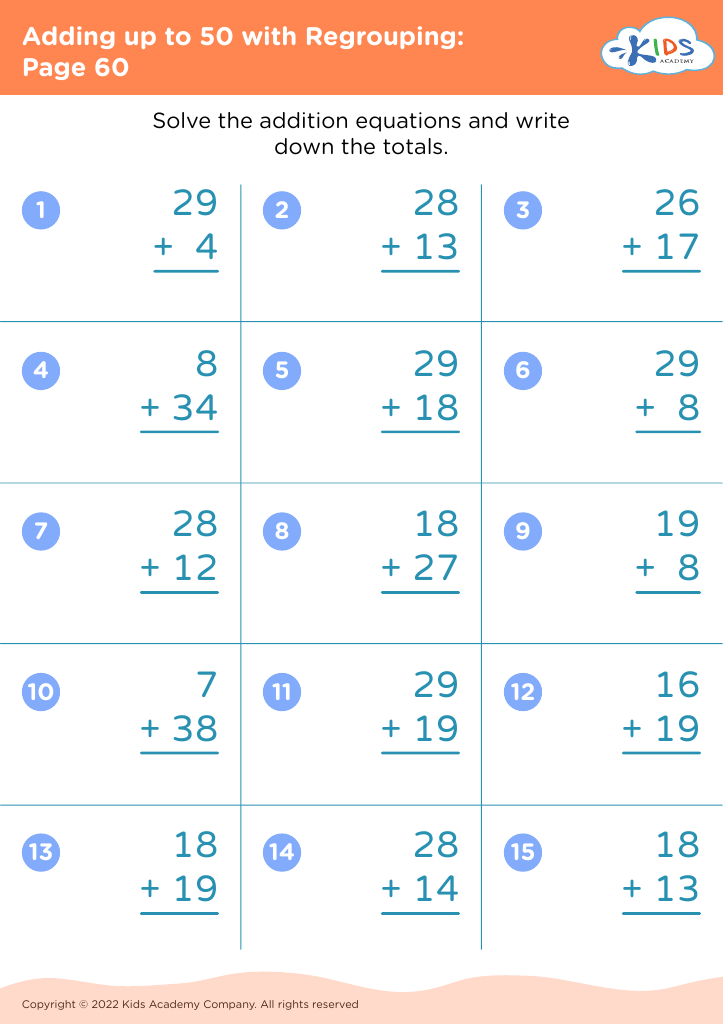
Adding up to 50 with Regrouping: Page 60
Worksheet
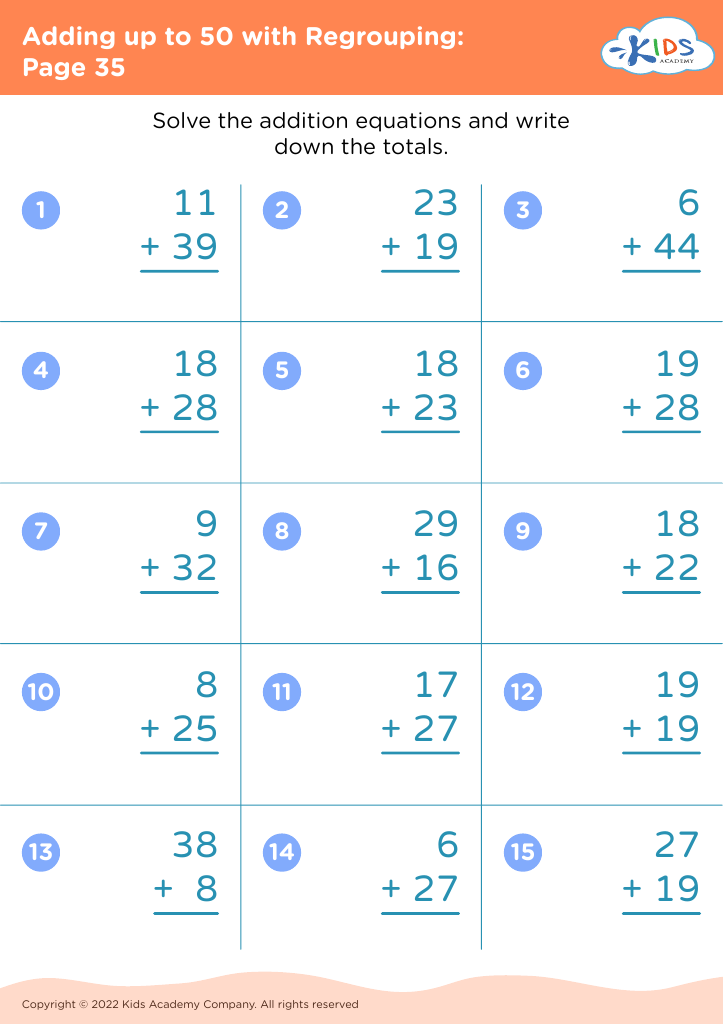
Adding up to 50 with Regrouping: Page 35
Worksheet
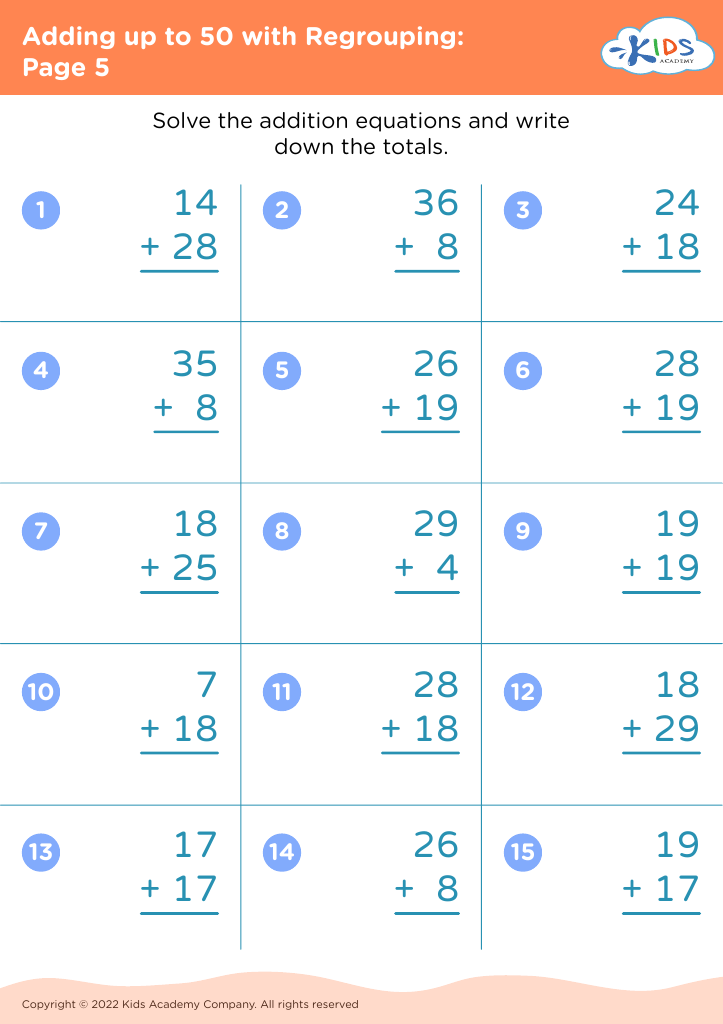
Adding up to 50 with Regrouping: Page 5
Worksheet
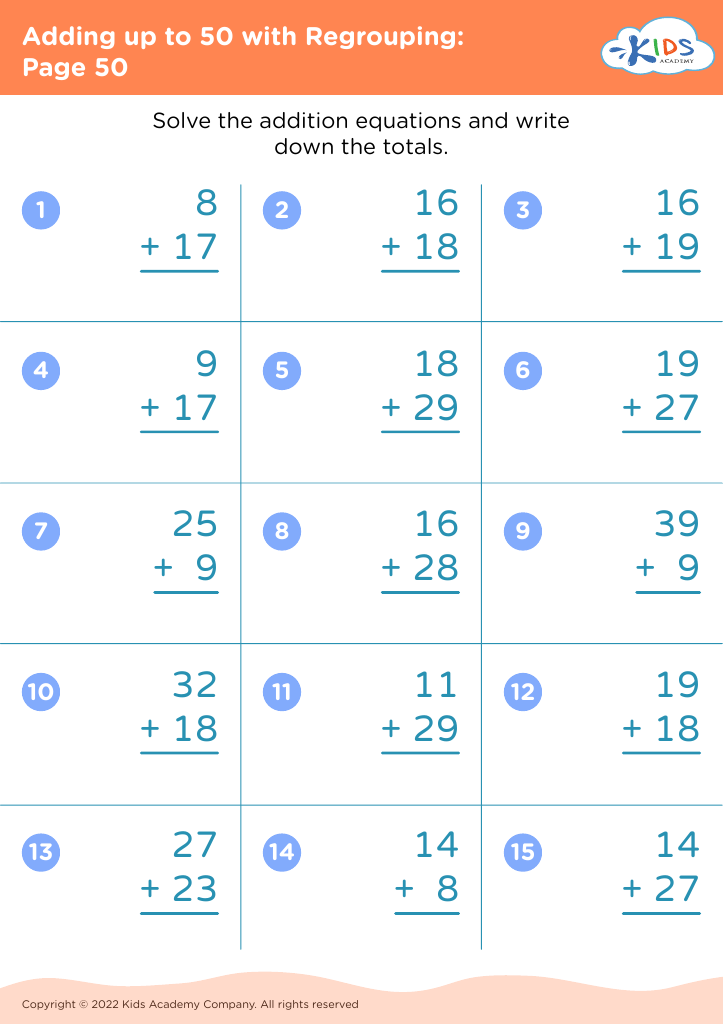
Adding up to 50 with Regrouping: Page 50
Worksheet
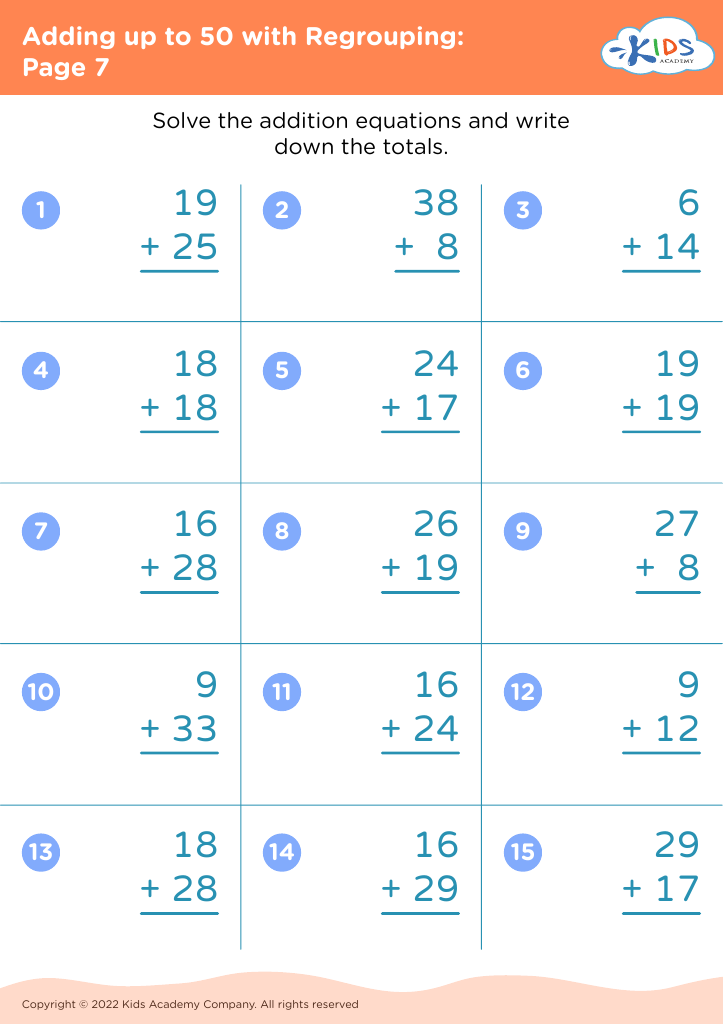
Adding up to 50 with Regrouping: Page 7
Worksheet
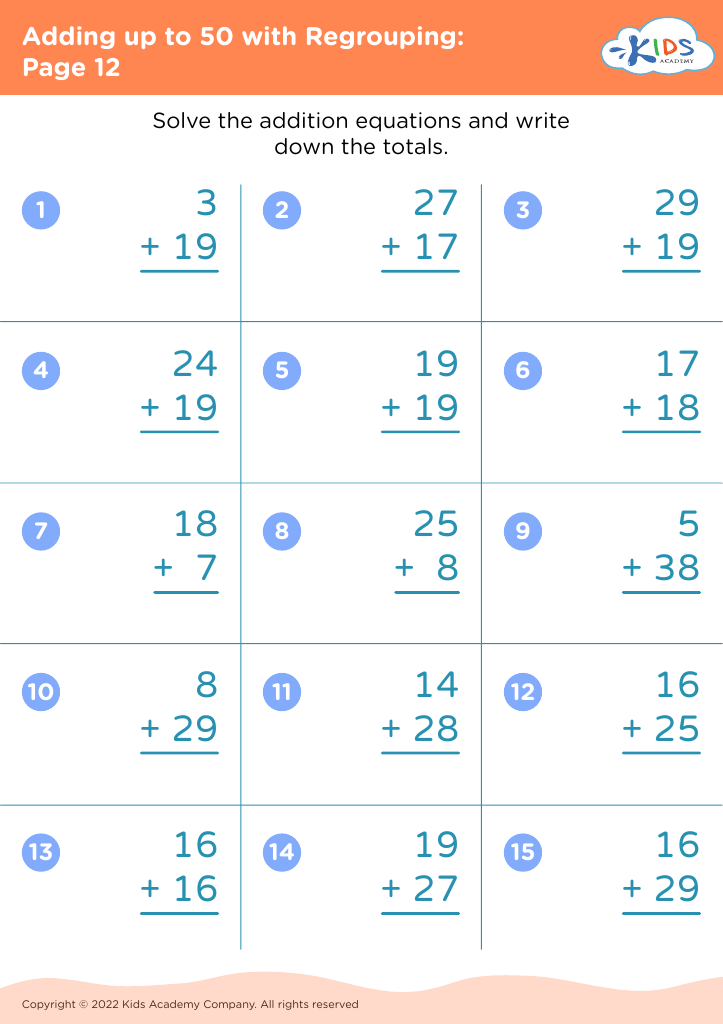
Adding up to 50 with Regrouping: Page 12
Worksheet
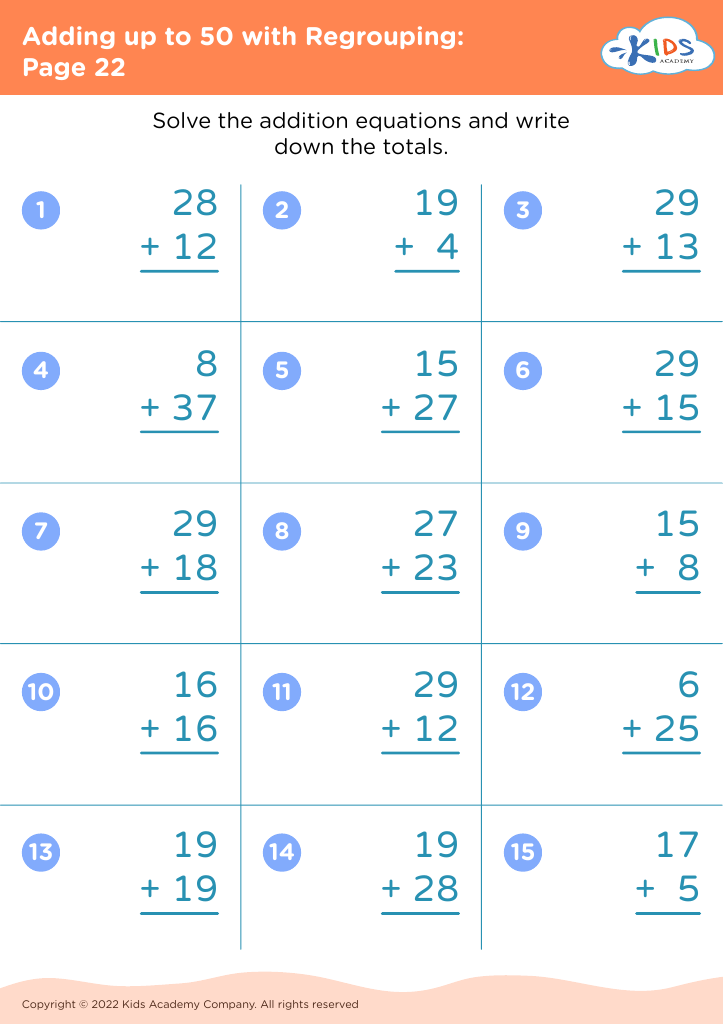
Adding up to 50 with Regrouping: Page 22
Worksheet
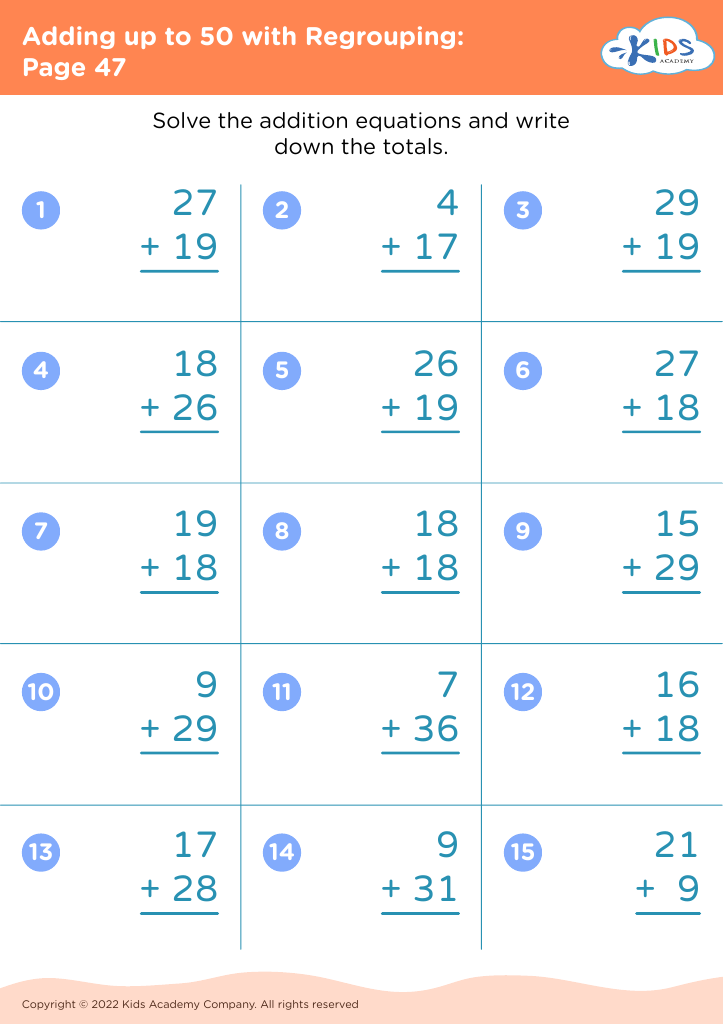
Adding up to 50 with Regrouping: Page 47
Worksheet
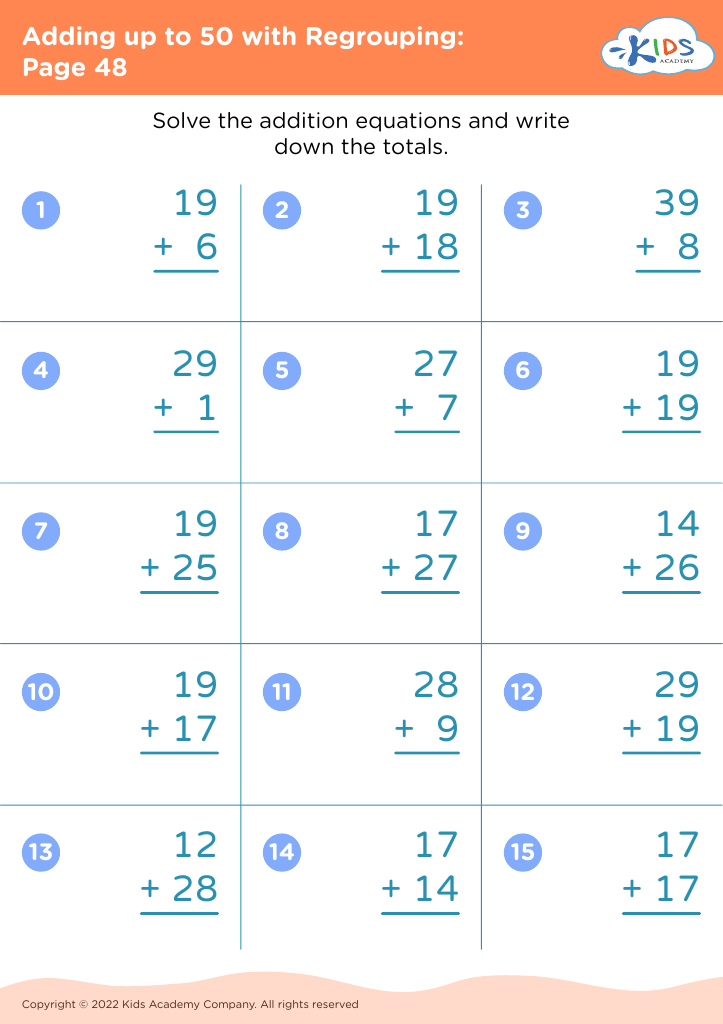
Adding up to 50 with Regrouping: Page 48
Worksheet
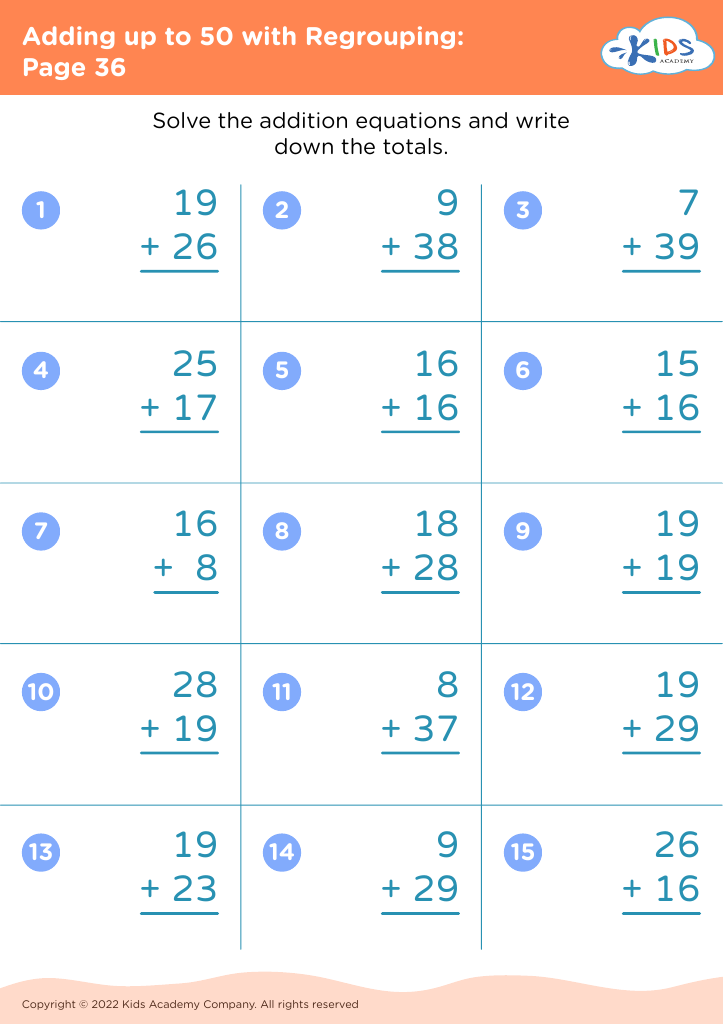
Adding up to 50 with Regrouping: Page 36
Worksheet
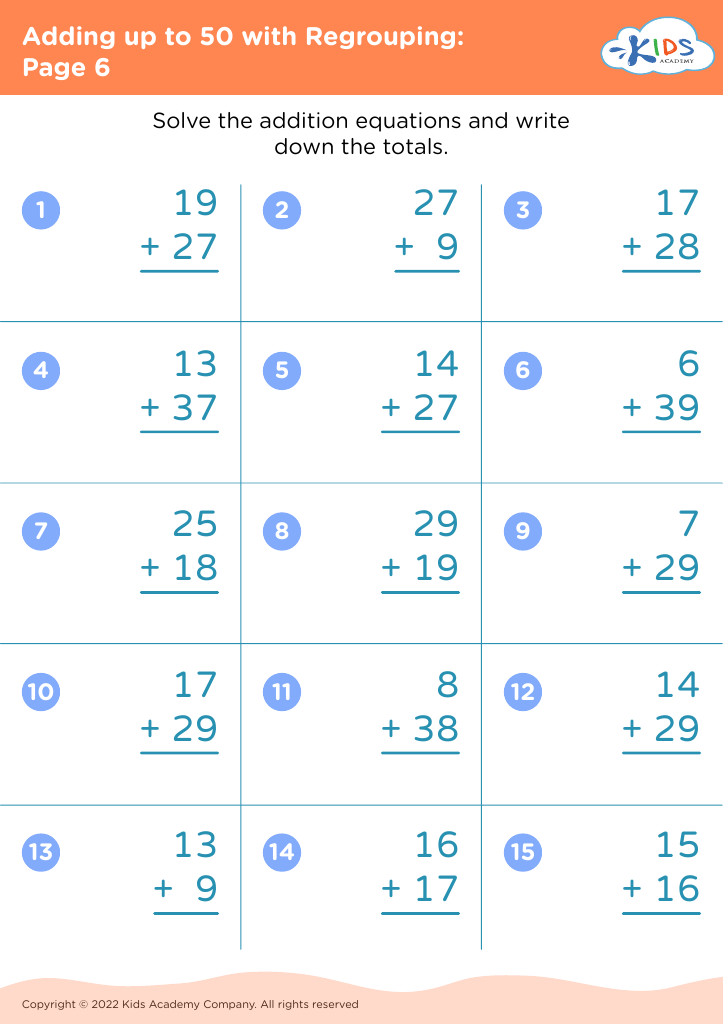
Adding up to 50 with Regrouping: Page 6
Worksheet
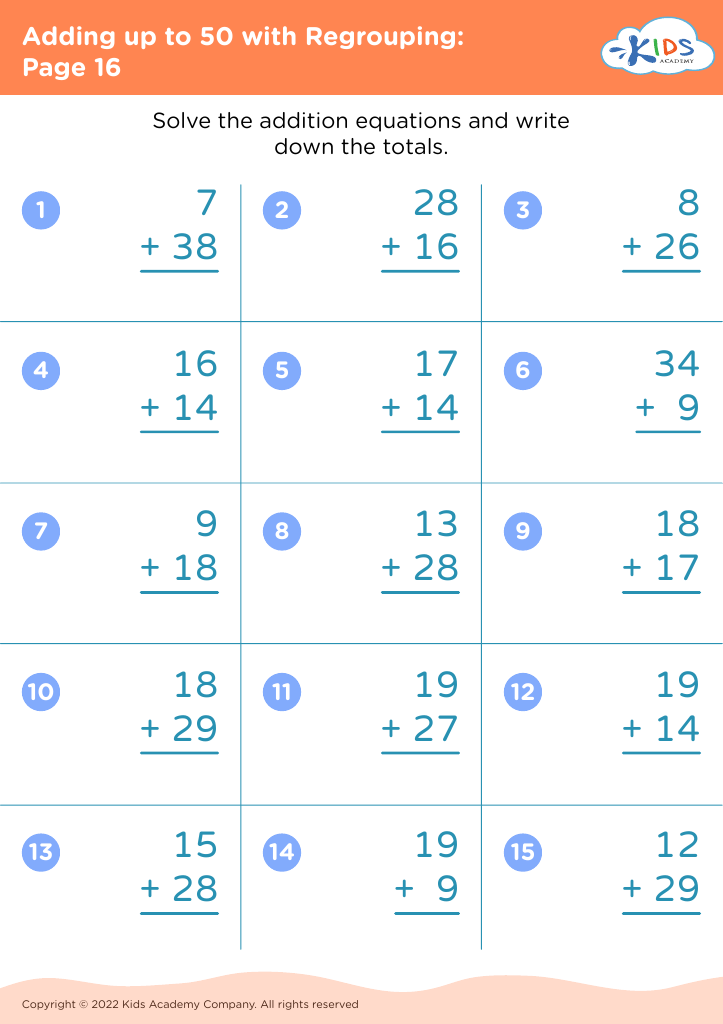
Adding up to 50 with Regrouping: Page 16
Worksheet
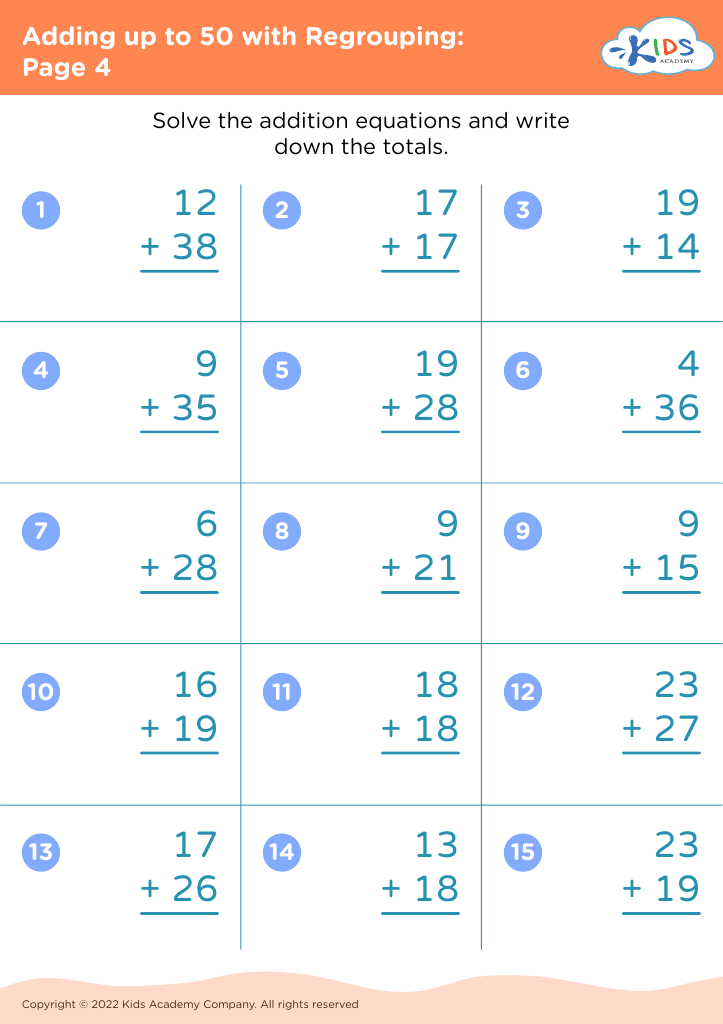
Adding up to 50 with Regrouping: Page 4
Worksheet


Understanding fractions and mastering addition with regrouping are crucial skills for children ages 5-8 as they form foundational elements in mathematics that will be built upon in later years. Fractions help children grasp the concept of parts of a whole, which is essential not just for math, but for real-world applications like cooking, dividing resources, and understanding proportions. Introducing fractions early fosters an intuitive grasp of division and measurement, concepts they'll encounter repeatedly.

Similarly, the ability to add numbers up to 50 with regrouping is a fundamental arithmetic skill. This process of carrying over numbers enhances mental math abilities and improves problem-solving skills. It's crucial for adding multiple-digit numbers, a necessary competency for advanced math lessons. Regrouping also enhances cognitive skills such as memory, attention to detail, and logical thinking.

Parents and teachers play a pivotal role in this learning phase. By actively nurturing these skills, they help mitigate future challenges in more complex mathematics. A strong mathematical foundation, established early, boosts children's confidence and academic performance across subjects. It ensures they are not intimidated by numbers but view them as manageable and even enjoyable components of learning.