Understand fractions Adding up to 50 Without Regrouping Worksheets for Ages 5-8
4 filtered results
-
From - To
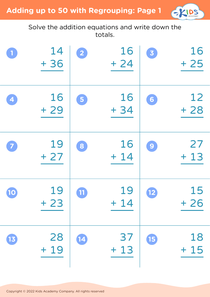
Our "Understand Fractions Adding up to 50 Without Regrouping Worksheets" are tailored for ages 5-8. These engaging worksheets simplify fractions, making math enjoyable and easier to grasp for young learners. By focusing on adding fractions that total up to 50, children can strengthen their number sense and problem-solving skills without the confusion of regrouping. Perfect for early-grade students, each worksheet is designed to build a strong foundation in math, providing clear instructions with fun exercises. Enhance your child’s learning experience with our carefully crafted resources, ensuring that understanding fractions becomes a delightful adventure.
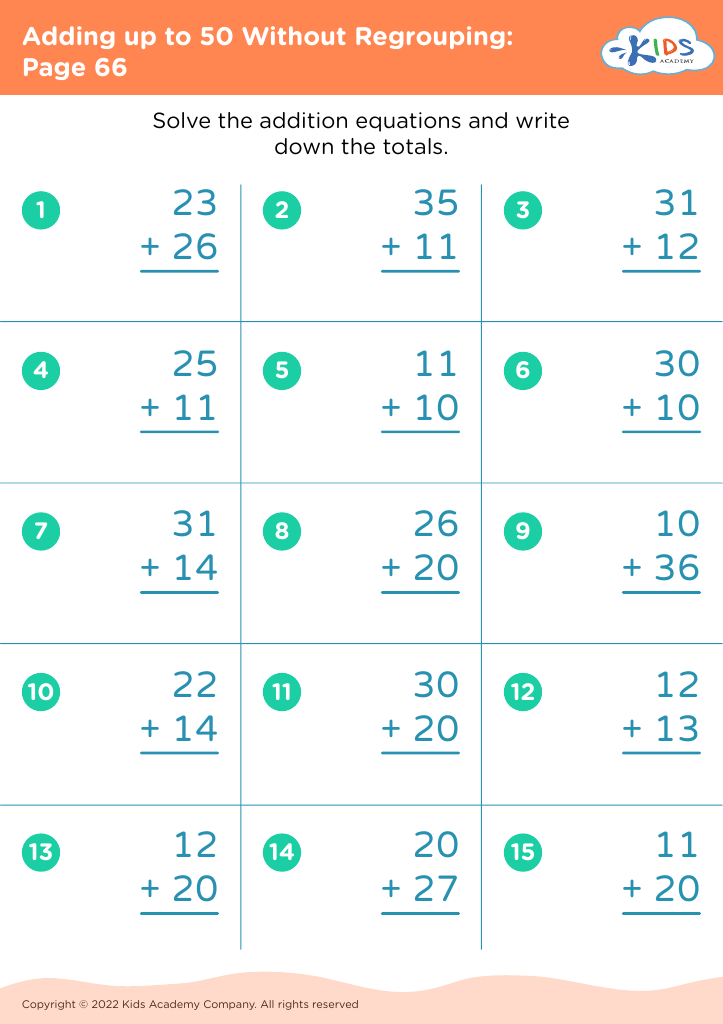
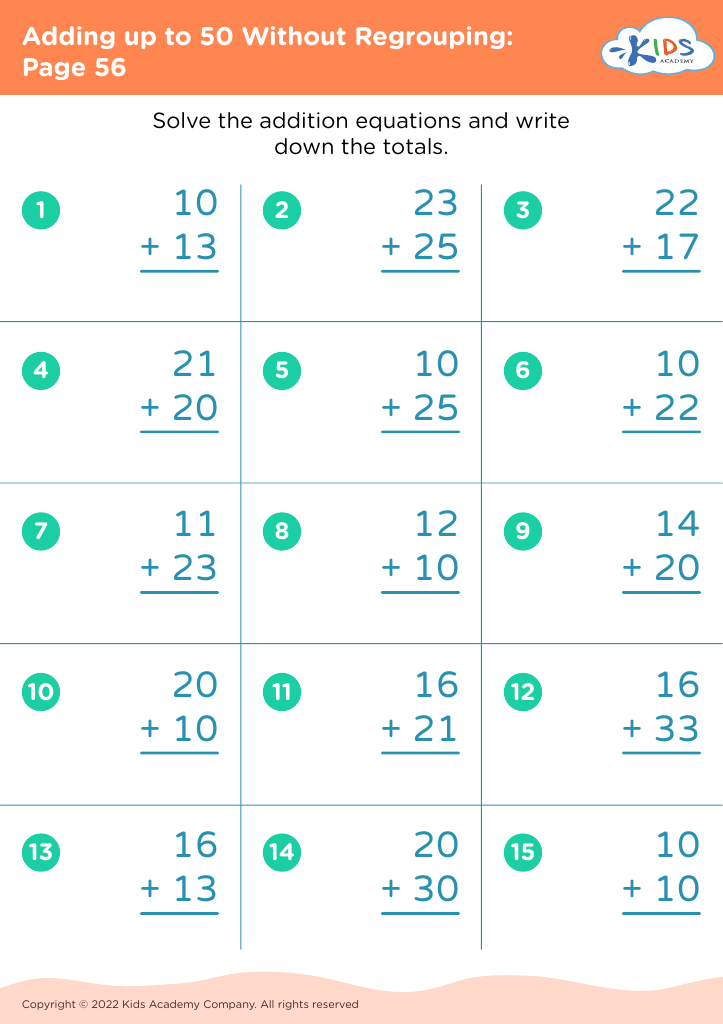
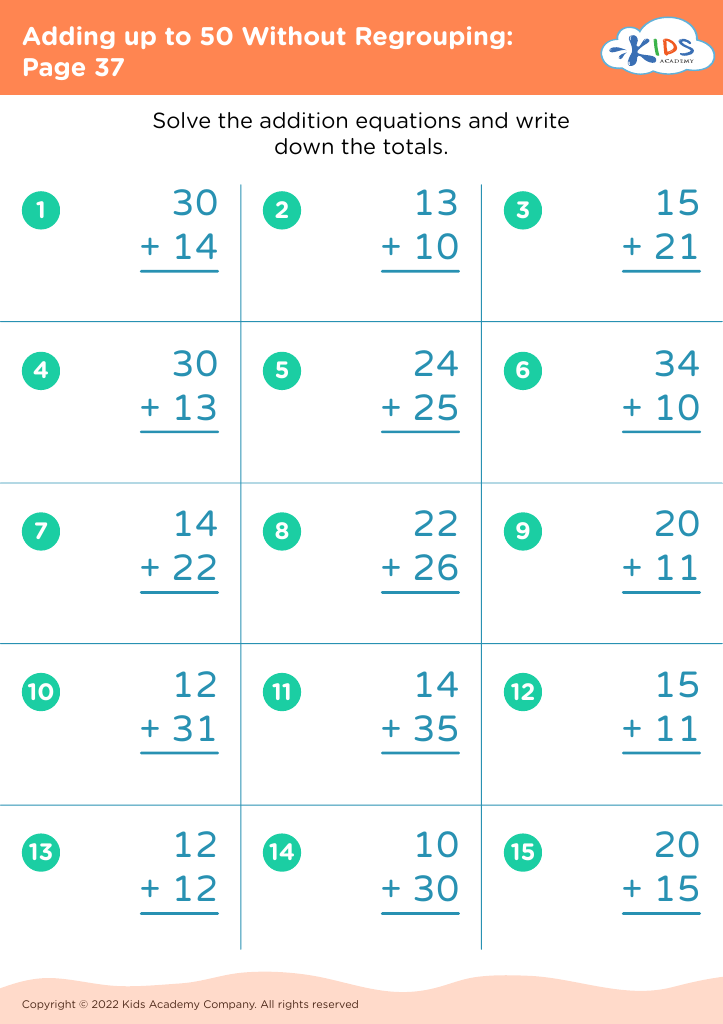
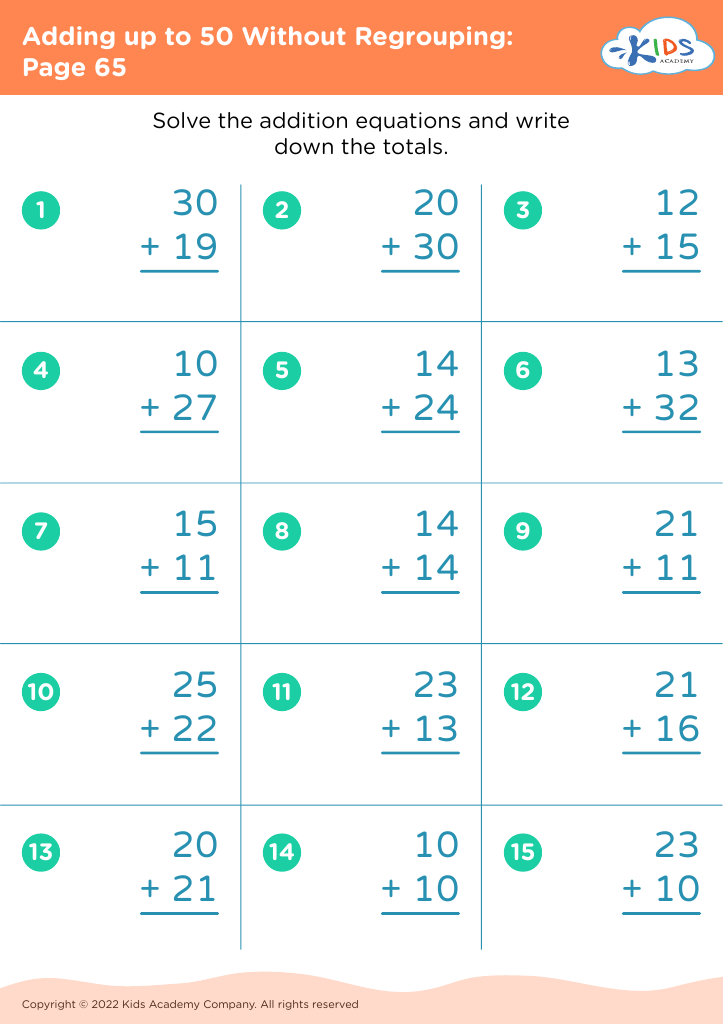


Understanding fractions and mastering the skill of adding up to 50 without regrouping are essential building blocks for young learners, particularly those ages 5-8. Parents and teachers should prioritize these foundational concepts to support their children's math development.
First, grasping fractions helps young students comprehend parts of a whole, which is a crucial concept not only in math but also in everyday life. When children understand fractions, they can better grasp how much of something they have or need. This foundational math skill is essential for more complex topics they will encounter later on.
Learning to add up to 50 without regrouping reinforces mental math fluency and understanding of basic addition. This skill builds confidence and lays the groundwork for more advanced arithmetic, ensuring children can tackle larger numbers with ease. Mastery of this skill also supports logical thinking and problem-solving abilities, both critical for academic success.
Focused attention on these two areas sparks an early love for math by making it accessible and enjoyable. Children will be more likely to engage with math in a positive way if they feel confident in their skills. Therefore, both teachers and parents benefit from investing time in helping children master fractions and addition up to 50, setting them on a path toward mathematical proficiency.