Compare fractions Adding up to 50 Worksheets for Ages 5-8
3 filtered results
-
From - To
Discover our engaging "Compare Fractions Adding Up to 50 Worksheets" designed for children aged 5-8. These colorful and interactive worksheets help young learners develop essential math skills, including understanding and comparing fractions. Each activity encourages students to visually grasp the concept of fractions while completing exercises that sum up to 50. Ideal for classroom or home use, these worksheets foster critical thinking and enhance numerical fluency in a fun, supportive way. Watch your child's confidence soar as they master comparing fractions, laying a solid foundation for future math success. Explore our resources today and make learning enjoyable!
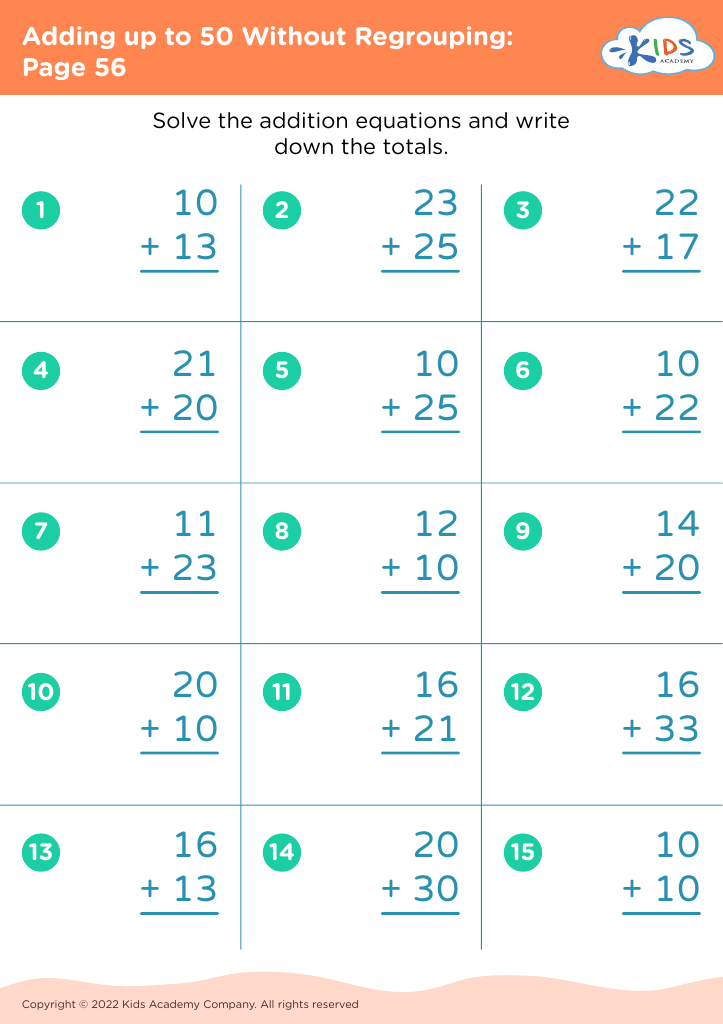
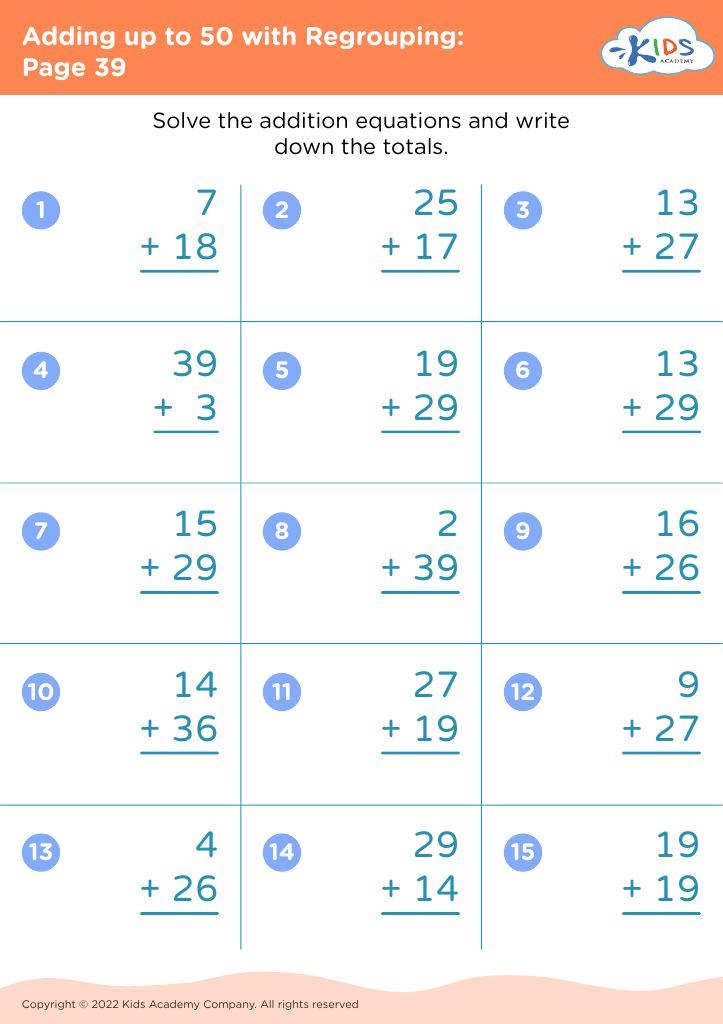
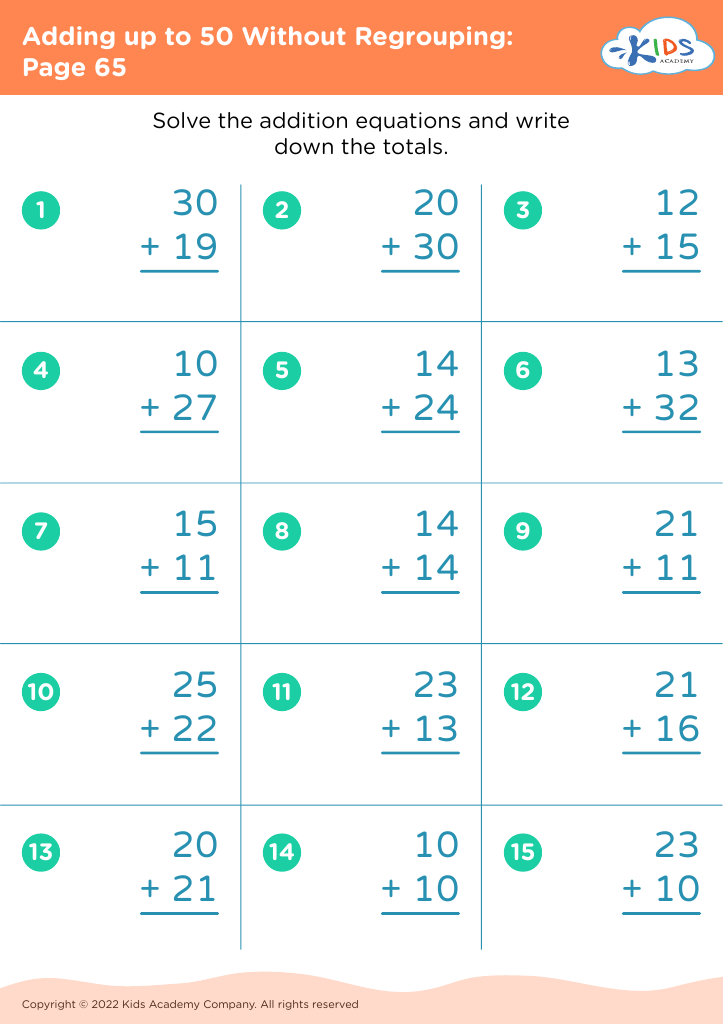




Comparing fractions and understanding relatively small numbers, like those adding up to 50, is crucial for children ages 5-8 as it forms the foundation for their mathematical skills. At this developmental stage, children are learning to grasp the basic concepts of numbers, relationships, and quantitative reasoning. Introducing them to fractions fosters their ability to visually and contextually interpret parts of a whole, enhancing spatial awareness and critical thinking.
Parents and teachers should care because these early experiences with fractions encourage logical reasoning and problem-solving skills. Understanding how to compare fractions prepares students for more complex mathematical concepts in upper grades, making transitions smoother when they encounter addition, subtraction, or even equivalent fractions. By including activities that use numbers up to 50, children can easily grasp these concepts without overwhelming them, thereby building their confidence and reinforcing their understanding of the number system.
Moreover, by engaging children in everyday examples, such as sharing food or splitting chores, parents and teachers can make learning interactive and relatable. This practical approach not only makes math fun but also equips children with essential life skills, paving the way for successful future learning in mathematics. In nurturing these foundational skills, we empower children for long-term academic success.








