Counting objects Adding up to 50 Worksheets for Ages 5-8
4 filtered results
-
From - To
Enhance your child's counting skills with our "Counting Objects Adding Up to 50" worksheets, specially designed for ages 5-8! These engaging resources help young learners practice counting objects, improving their number recognition and basic math skills in a fun way. Each worksheet encourages children to count various objects and visualize numbers as they work towards mastering addition up to 50. Perfect for parents and teachers alike, our worksheets are user-friendly and reinforce essential math concepts through interactive activities. Inspire a love for learning and boost your child's confidence in math with these colorful, stimulating worksheets. Explore today!
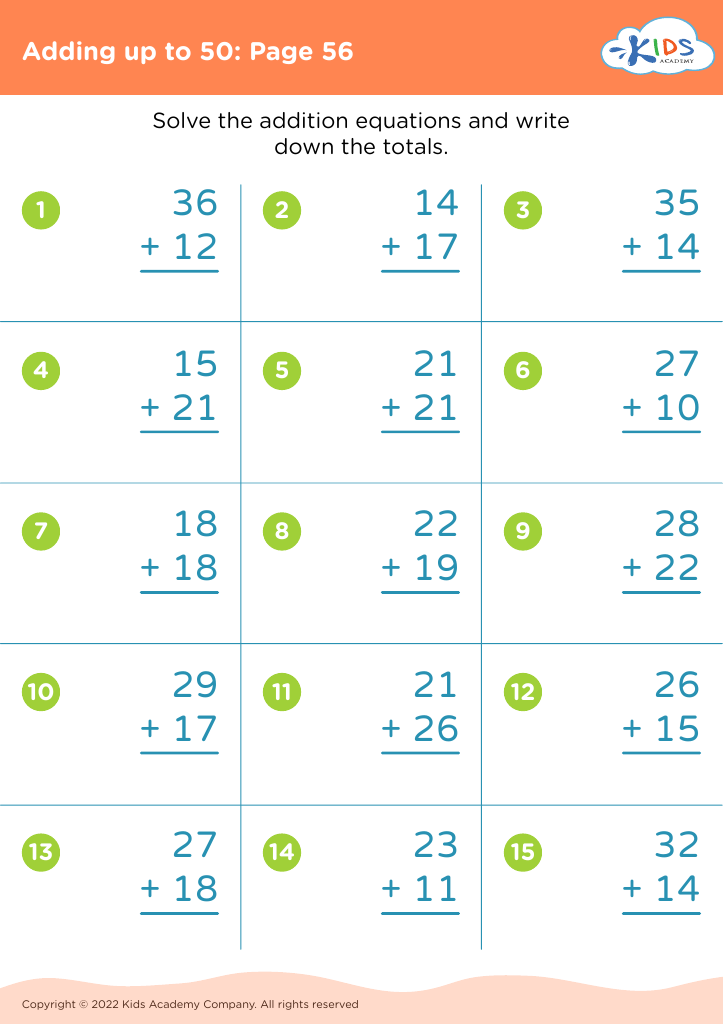
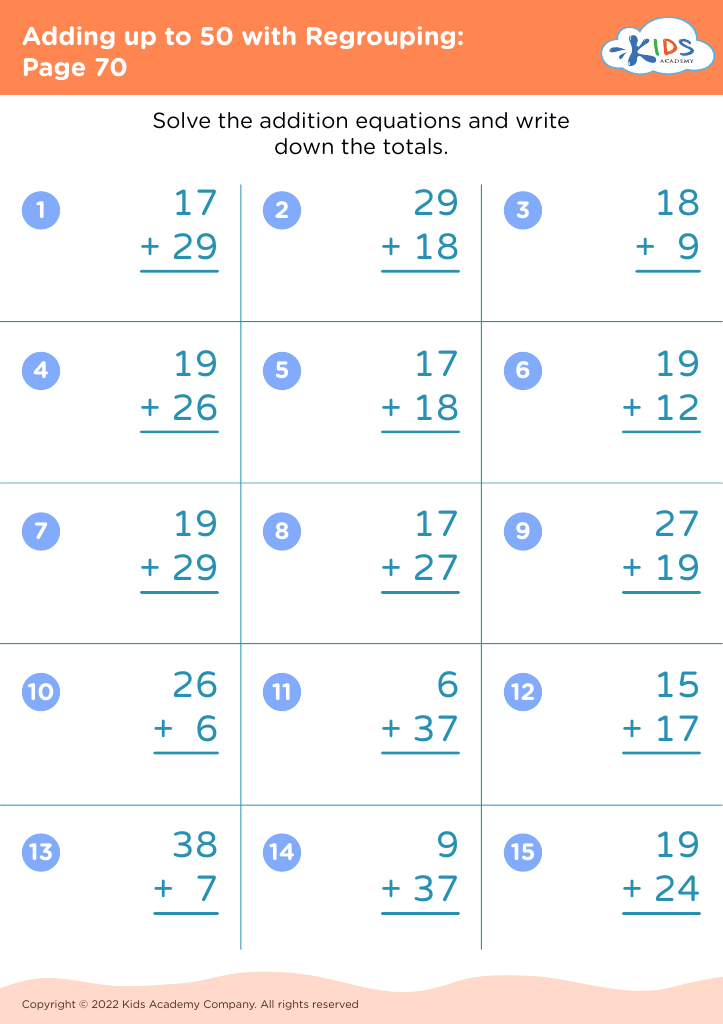
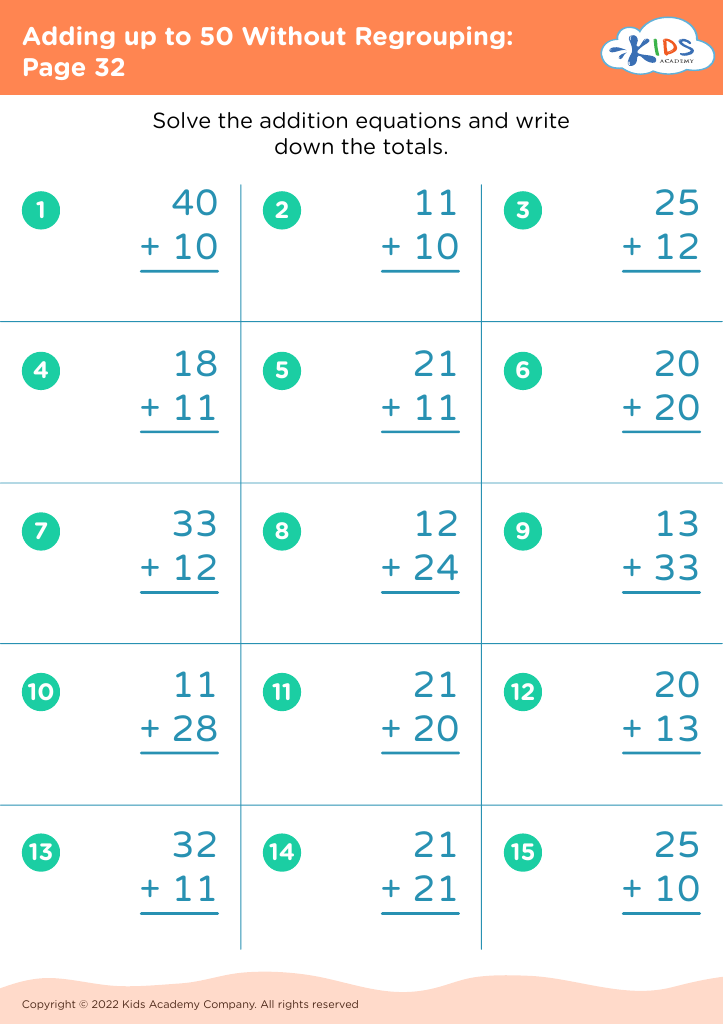
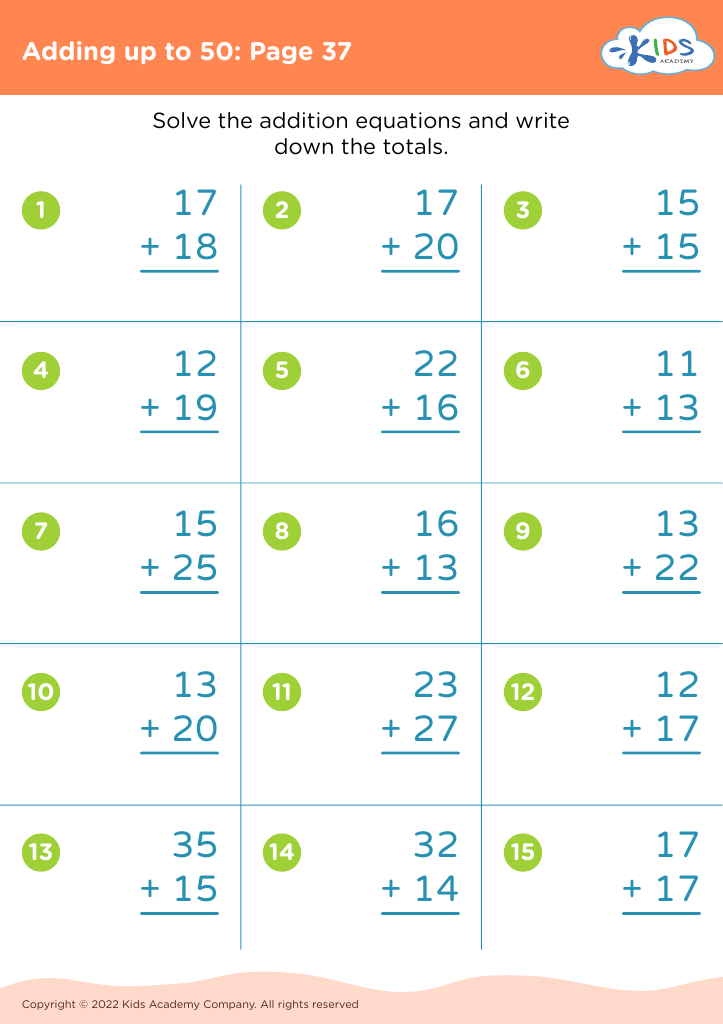




Counting objects and understanding addition up to 50 are crucial skills for children aged 5 to 8, forming the foundation for future mathematical learning. Engaging with numbers at an early age supports cognitive development and fosters critical thinking. When children count objects, they enhance their number recognition, learn one-to-one correspondence, and build a solid understanding of quantity, which are all essential components of early mathematics.
For parents and teachers, promoting counting and addition skills ensures that children develop confidence in their mathematical abilities and are prepared for more complex concepts later on. Mastery of basic addition up to 50 helps children with everyday tasks, such as understanding time, handling money, and measuring quantities, which are vital life skills.
Furthermore, incorporating these activities into play makes learning enjoyable and promotes a positive attitude toward math. When children practice counting through interactive games or hands-on activities, they develop persistence and resilience in problem-solving. By focusing on counting and addition, parents and teachers not only support academic growth but also foster a love for math that can last a lifetime, making it essential for holistic development. Hence, paying attention to these concepts sets children on a path to success in their educational journey and beyond.








