
Develop fine motor skills Adding up to 50 Worksheets for Ages 5-8
4 filtered results
Difficulty Level
Grade
Age
-
From - To
Subject
Activity
Standards
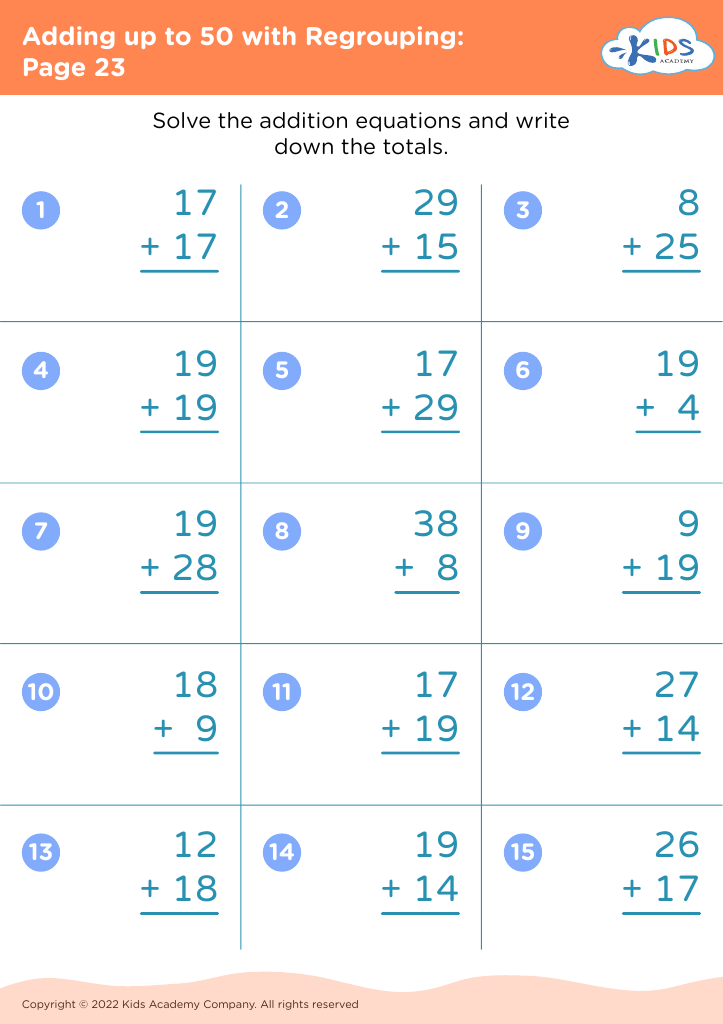
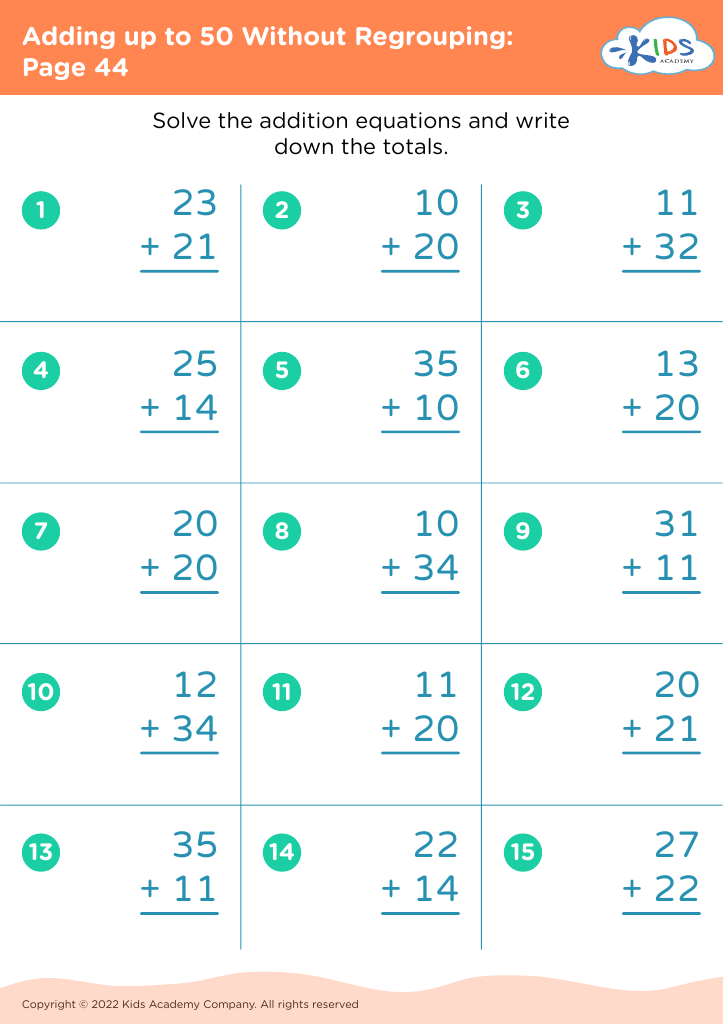
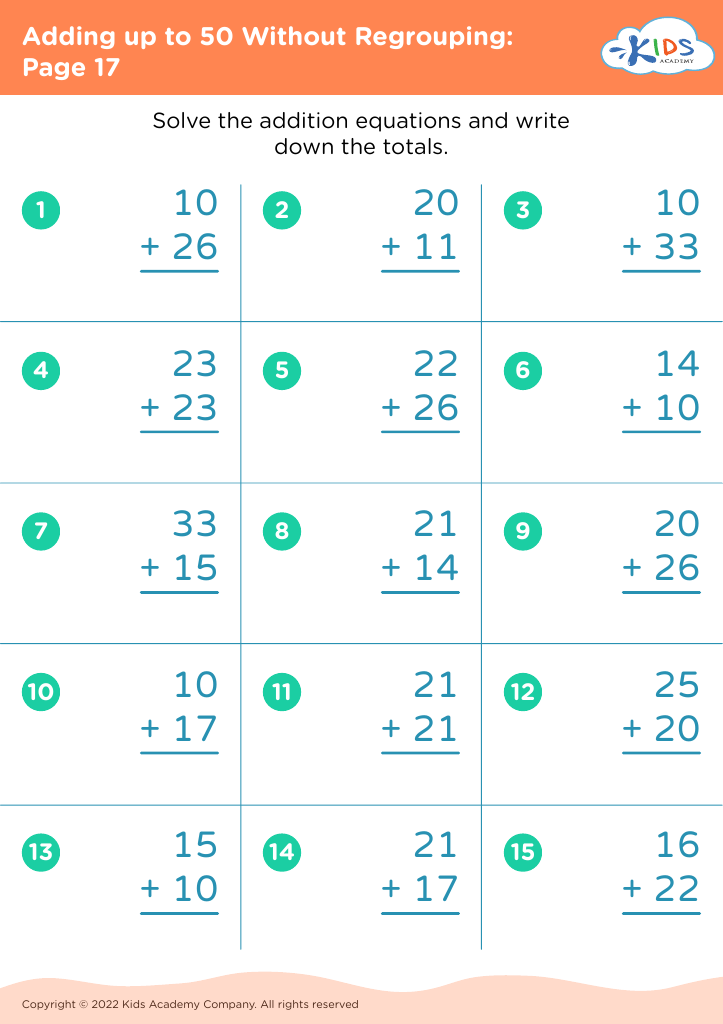
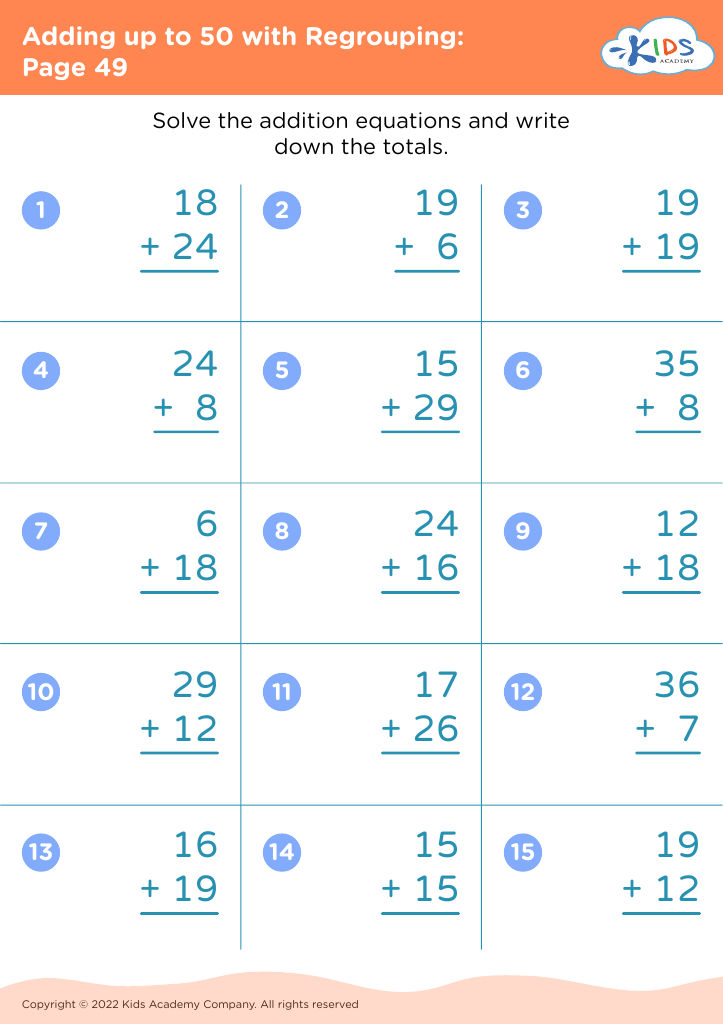
Unlock your child’s potential with our "Develop Fine Motor Skills: Adding up to 50" worksheets, crafted specifically for ages 5-8! These engaging activities combine math practice and fine motor skill development, ensuring a fun and effective learning experience. Each worksheet includes colorful illustrations and interactive tasks that encourage children to cut, trace, and color while mastering addition. As they work through these worksheets, kids enhance their hand-eye coordination and dexterity, laying a strong foundation for their academic journey. Perfect for parents and teachers, these resources provide a well-rounded approach to essential skills your child needs for success in school and beyond!
Favorites
With answer key
Interactive
Join Kids Academy for Free
Who is primarily going to use this learning content?




Developing fine motor skills is crucial for children aged 5-8 as it lays the foundation for various everyday tasks and academic skills. Fine motor skills, involving small muscle movements in the hands and fingers, are essential for activities such as writing, drawing, and cutting, which are foundational for literacy and numeracy.
When children can adeptly manipulate small objects or tools, they gain confidence in their abilities, boosting self-esteem and encouraging a love for learning. Enhanced fine motor skills also contribute to improved hand-eye coordination, which is vital for many tasks beyond school, including sports and arts.
Parents and teachers should be proactive in integrating fine motor skill development within engaging learning experiences – incorporating activities like crafting, building, or puzzles into daily routines. Furthermore, as children practice focusing on these skills, they also improve their concentration and patience, essential attributes for academic success.
In summary, nurturing fine motor skills during these formative years not only equips children with necessary practical skills but also facilitates cognitive and social development, setting the groundwork for future learning and everyday functioning. Therefore, it's imperative for parents and teachers to prioritize activities that enhance these skills in an enjoyable and meaningful way.








