Fraction Addition Adding up to 50 Worksheets for Ages 5-8
5 filtered results
-
From - To
Our "Fraction Addition Adding up to 50 Worksheets" are specially designed for children ages 5-8 to build foundational math skills with ease. These engaging worksheets make learning fun, helping young learners master the basics of fraction addition and practice problems adding up to 50. Featuring colorful visuals and interactive exercises, kids will enjoy discovering how to add different fractions together, enhancing both their confidence and competence in math. Ideal for classroom activities or home practice, these worksheets are a wonderful resource to support your child's mathematical journey. Start exploring today to help your child succeed in math!
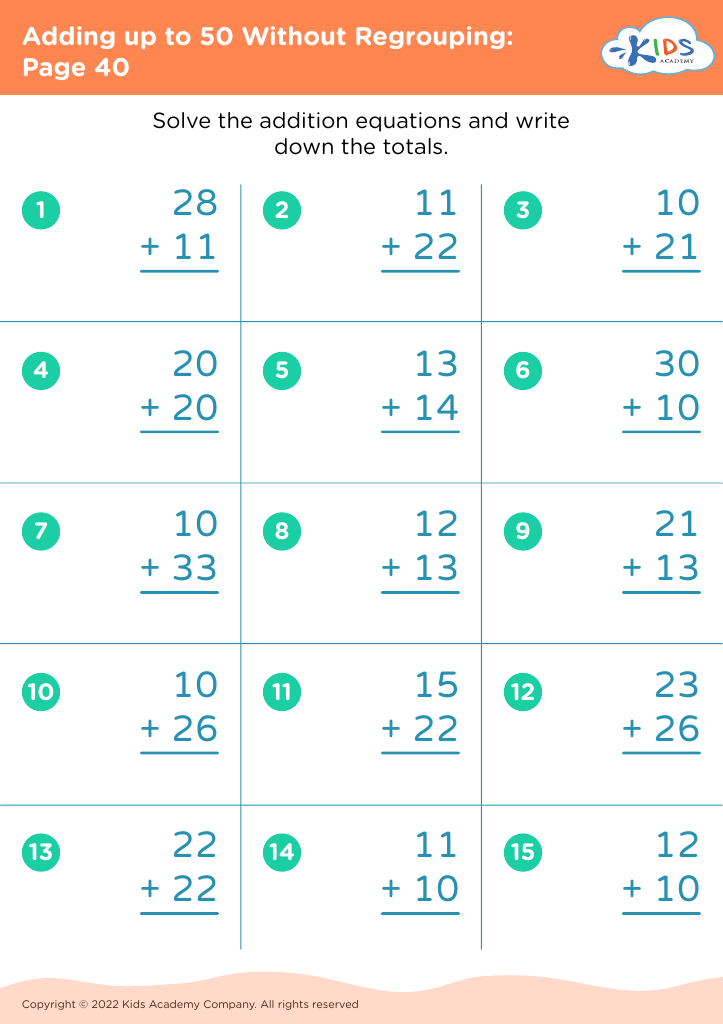
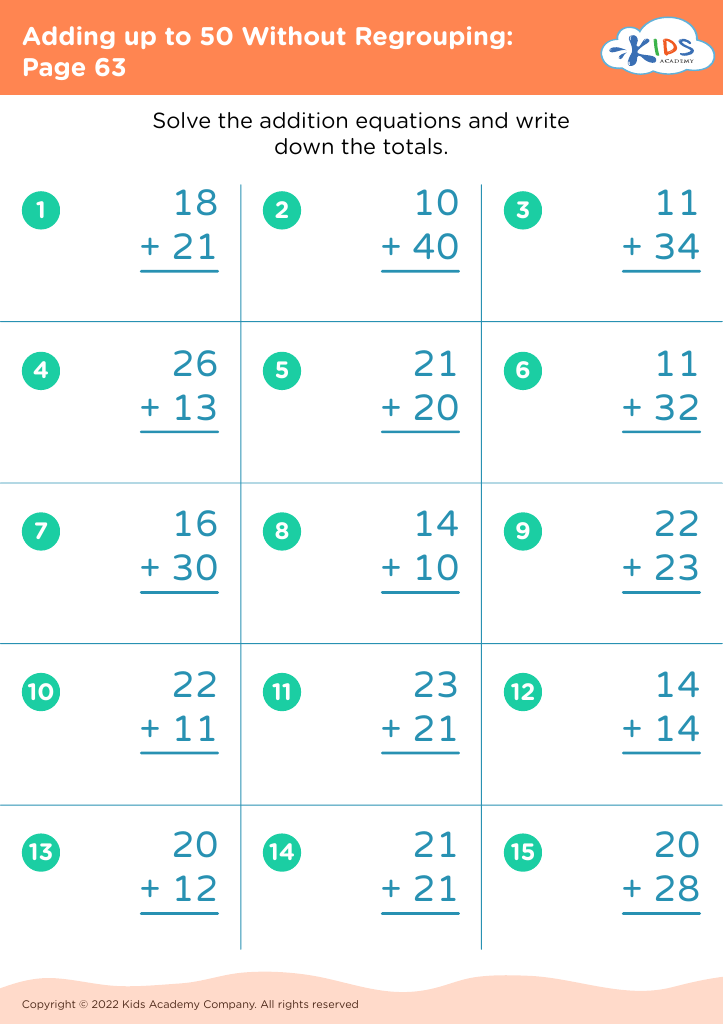
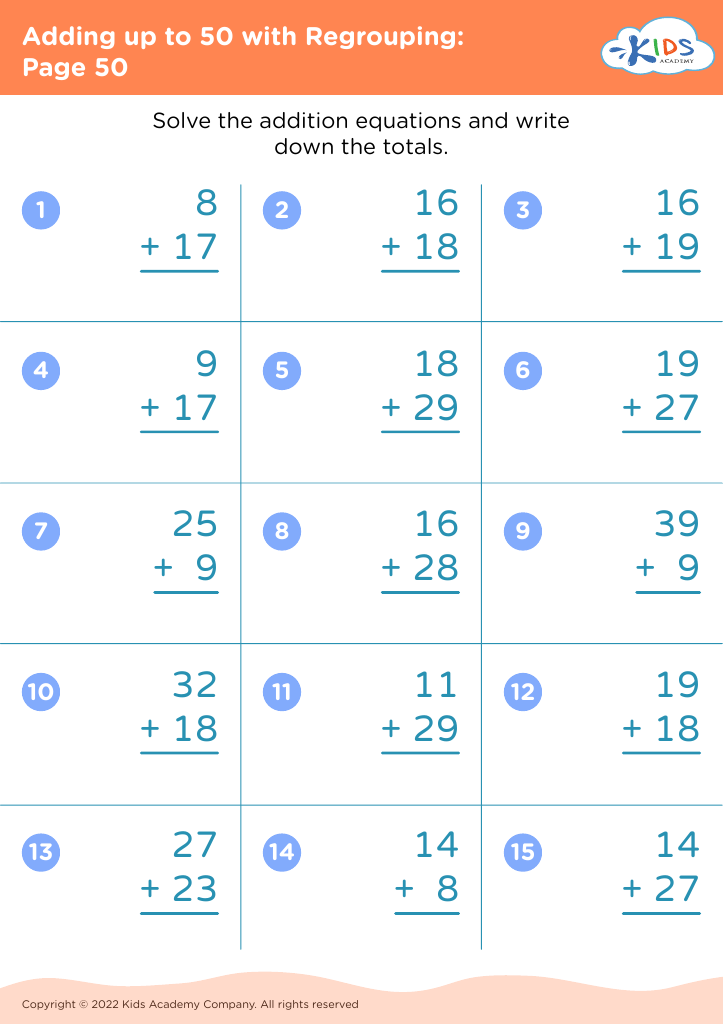
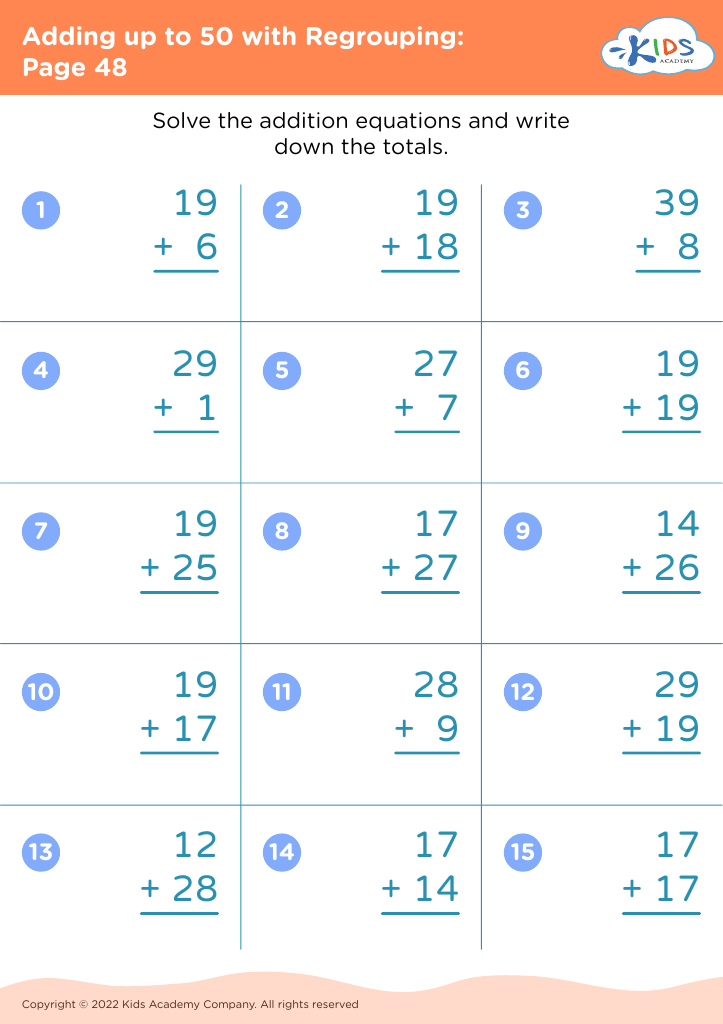
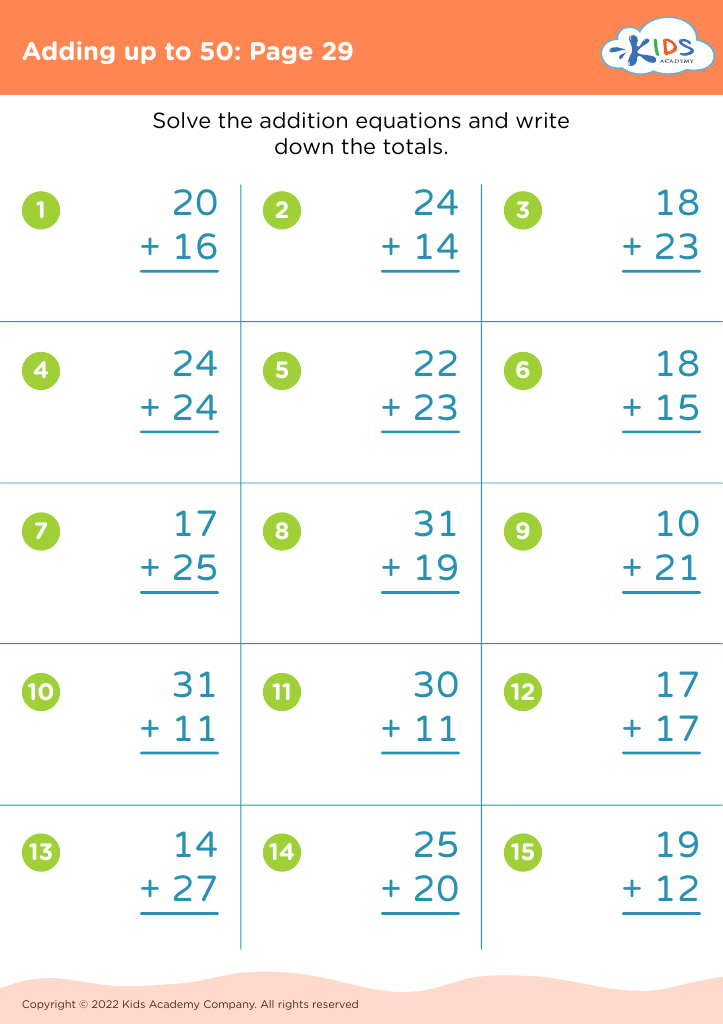




Parents and teachers should care about teaching children fraction addition up to 50 at ages 5-8 because it lays the foundation for essential mathematical skills. Understanding basic fractions early becomes a stepping stone to more complex mathematical concepts that children will encounter in higher grades, such as division, ratios, and algebra. Introducing fractions in this age range helps children grasp the idea of parts making up a whole, an important concept both in mathematics and in everyday life.
Moreover, early exposure to fraction addition enhances problem-solving skills and creative thinking. Children learn to approach problems from different angles and develop strategies to solve them, improving their analytical abilities. Activities involving fraction addition are often hands-on, helping to engage young learners and making the learning process more enjoyable and effective.
Incorporating fractions into everyday tasks, such as cutting fruit or sharing toys, also makes the learning relevant and relatable. By becoming comfortable with fractions early on, children gain confidence in their mathematical abilities, reducing anxiety and fostering a positive attitude toward learning mathematics in the future. Parents and teachers play a pivotal role in shaping a child's academic journey, and focusing on foundational skills like fraction addition contributes significantly to their long-term educational success.








