Fraction comparison Adding up to 50 Worksheets for Ages 5-8
7 filtered results
-
From - To
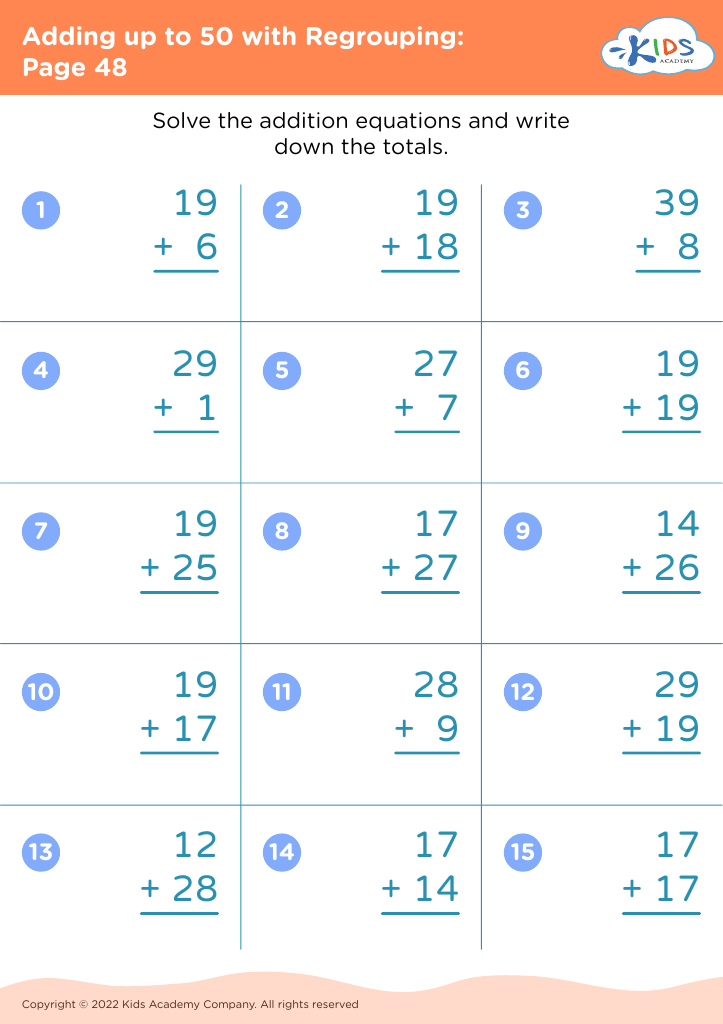
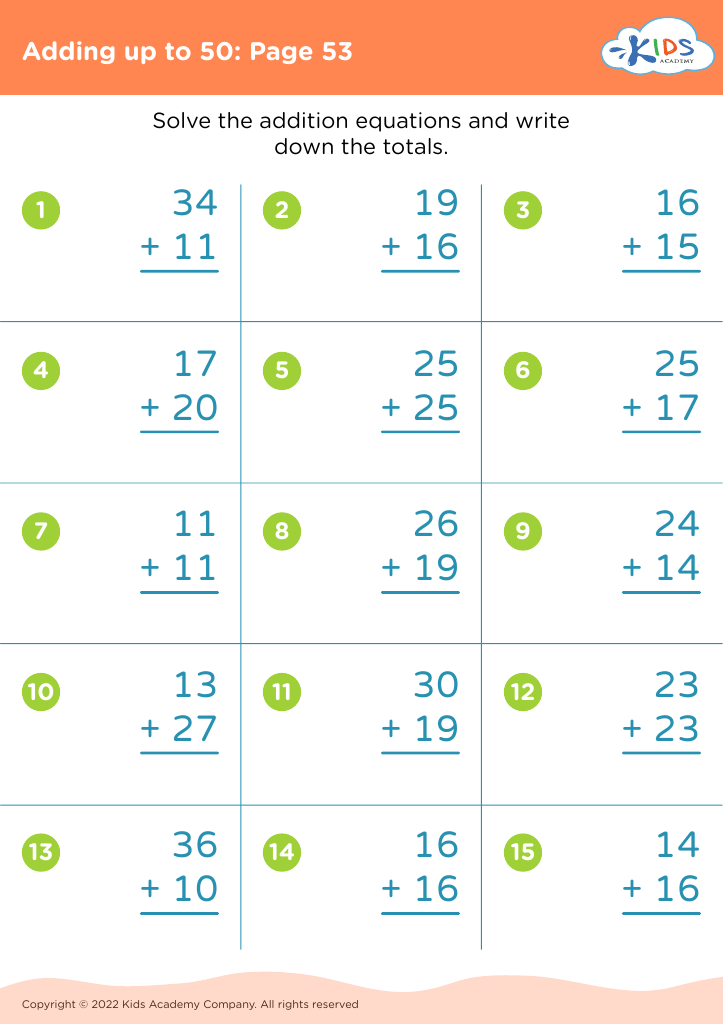
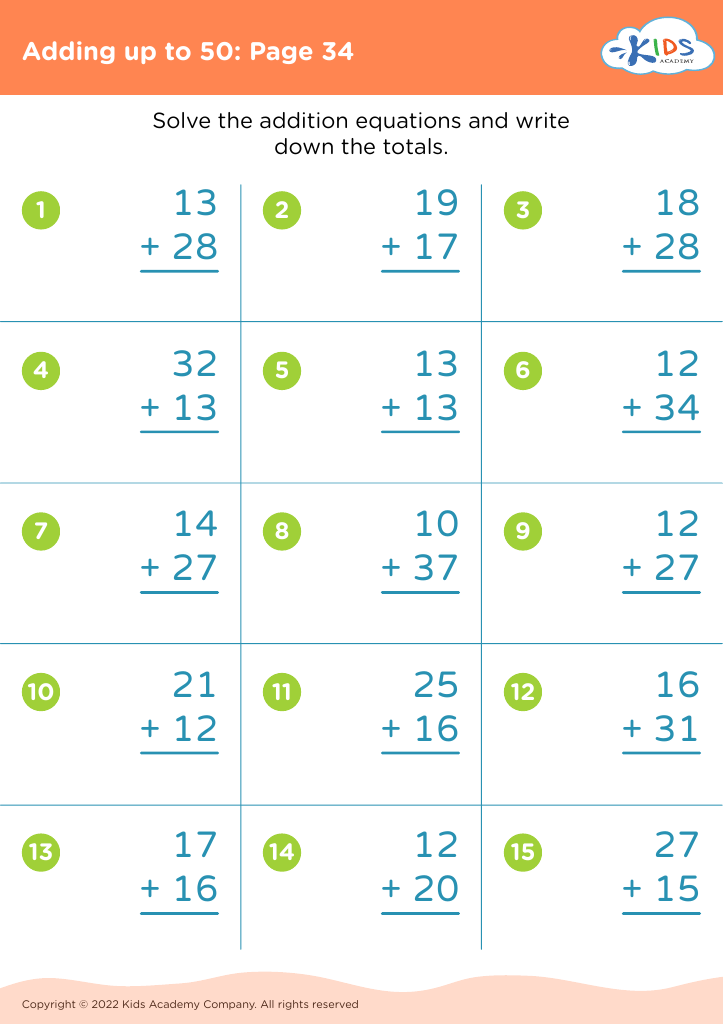
Explore our engaging “Fraction Comparison Adding up to 50 Worksheets” designed for children ages 5-8! These worksheets provide a fun and interactive way for young learners to develop their understanding of fractions and number sense. With colorful illustrations and simple, clear instructions, students will enhance their fraction comparison skills while practicing addition up to 50. Perfect for classroom use or at-home learning, these worksheets promote critical thinking and problem-solving abilities in early math education. Download now and watch your child build confidence in their math skills while enjoying the learning process! Great for reinforcing concepts in a playful way.
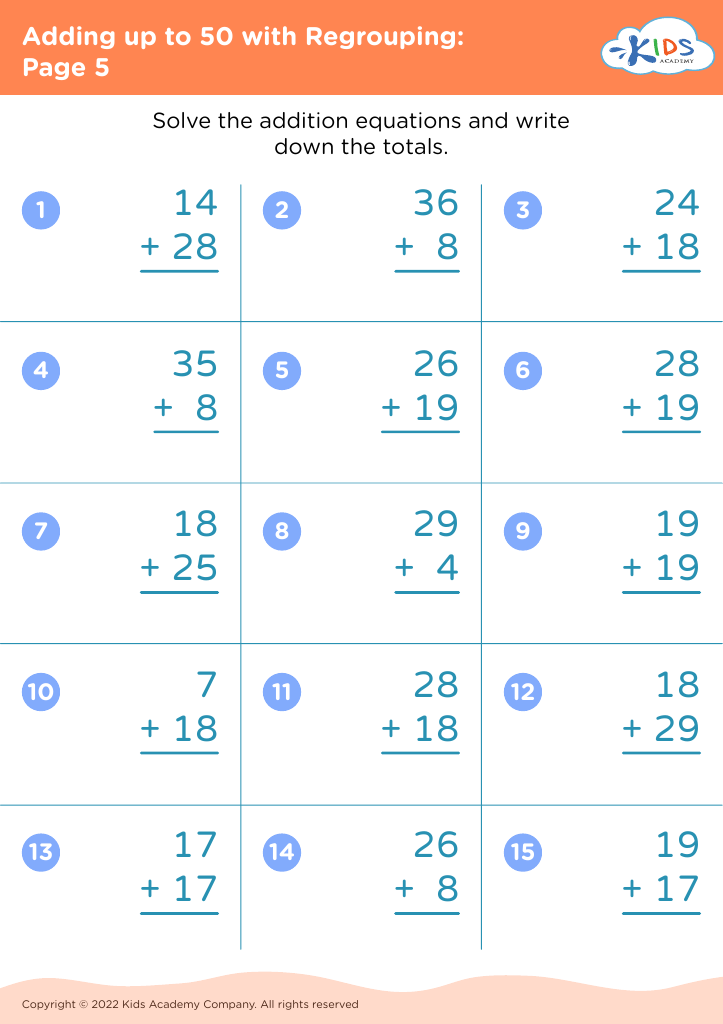
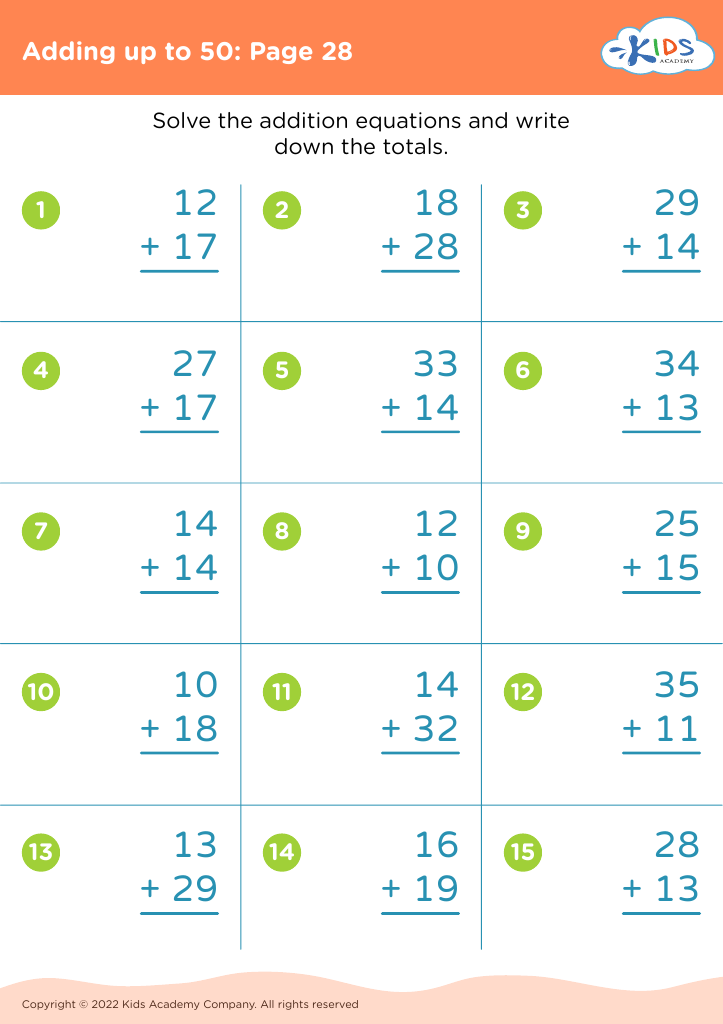
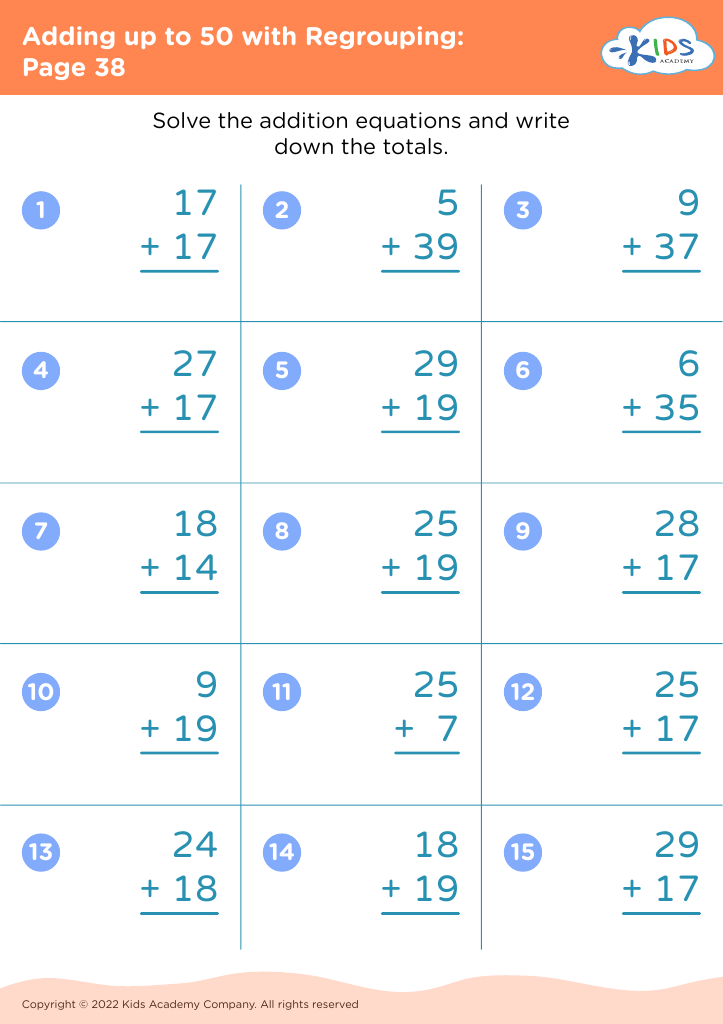
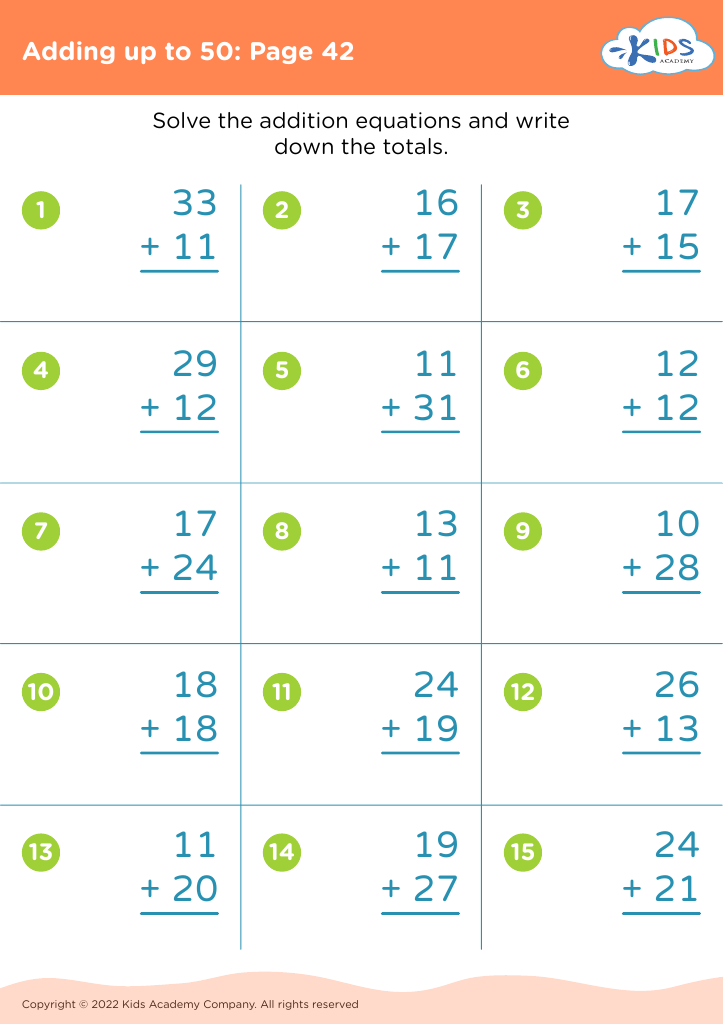




Fraction comparison and understanding how fractions relate to one another lay a critical foundation for young learners, particularly for ages 5-8. At this developmental stage, children are beginning to grasp the nuances of numbers and the significance of relationships between them. When children learn to compare fractions, they not only enhance their number sense but also develop critical thinking skills.
For parents and teachers, it's vital to recognize that this knowledge is not just theoretical; it has practical applications. Understanding fractions helps children make sense of sharing, dividing, and measuring, which are everyday activities. When we introduce concepts like adding up to 50, children learn to understand the value of numbers, scale, and proportion. This concept builds the groundwork for more advanced mathematical concepts in later grades.
Moreover, engaging children with fractions through interactive activities can develop a love for math and promote perseverance. As they face challenges in comparing fractions, they learn valuable problem-solving skills that extend beyond math. By focusing on these early concepts, parents and teachers empower children to explore complex ideas, fostering both academic growth and overall confidence in their abilities. Ultimately, these foundational skills support lifelong learning and effective decision-making in everyday situations.








