Fraction identification Adding up to 50 Worksheets for Ages 5-8
3 filtered results
-
From - To
Explore our engaging "Fraction Identification Adding Up to 50 Worksheets" designed specifically for ages 5-8! These interactive worksheets help young learners grasp essential concepts of fractions while enhancing their addition skills up to 50. Ideal for early childhood education, each worksheet encourages children to identify, compare, and combine fractions through fun exercises and colorful visuals. Boost foundational math knowledge and confidence in a playful learning environment. Perfect for classroom use or at-home practice, these worksheets provide a structured yet enjoyable approach to mastering fractions. Download now and watch your child's math skills flourish!
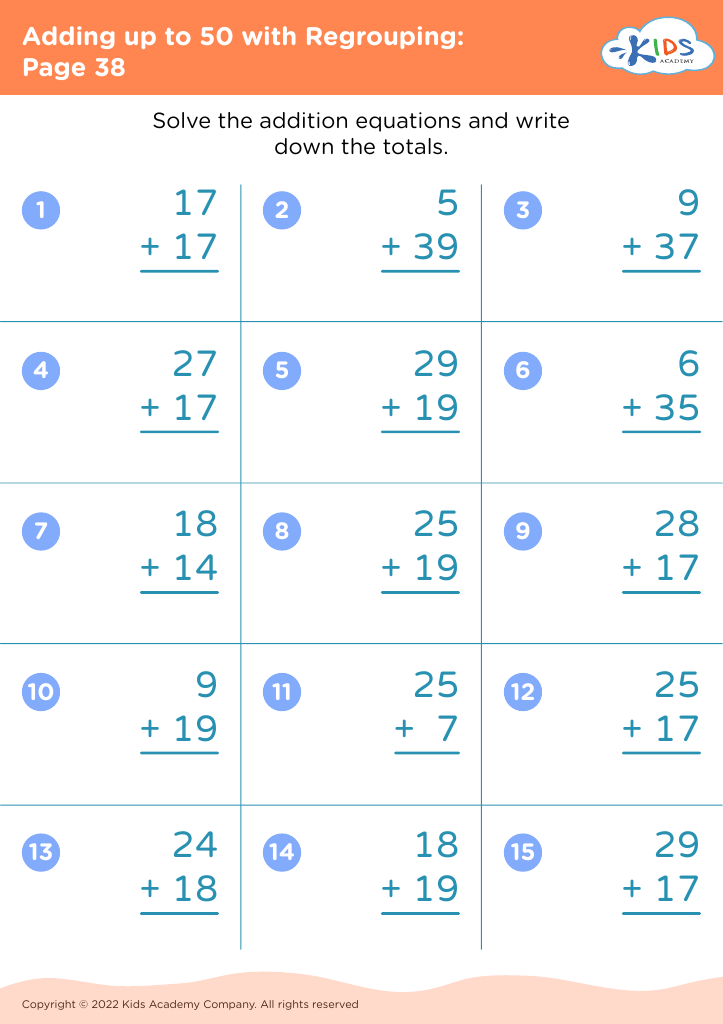
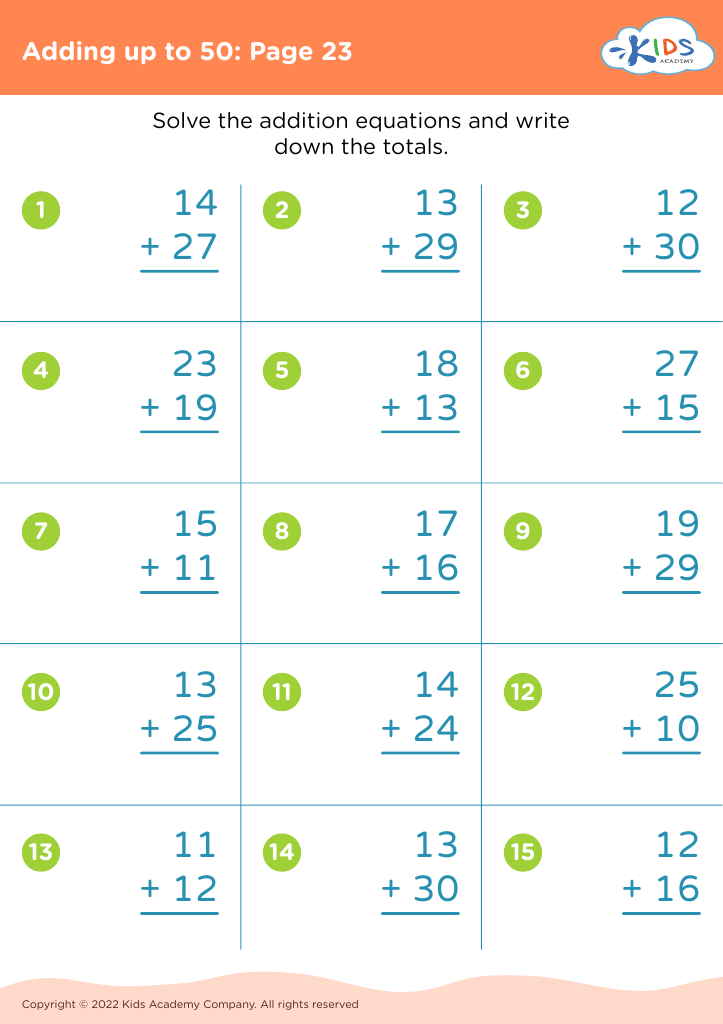
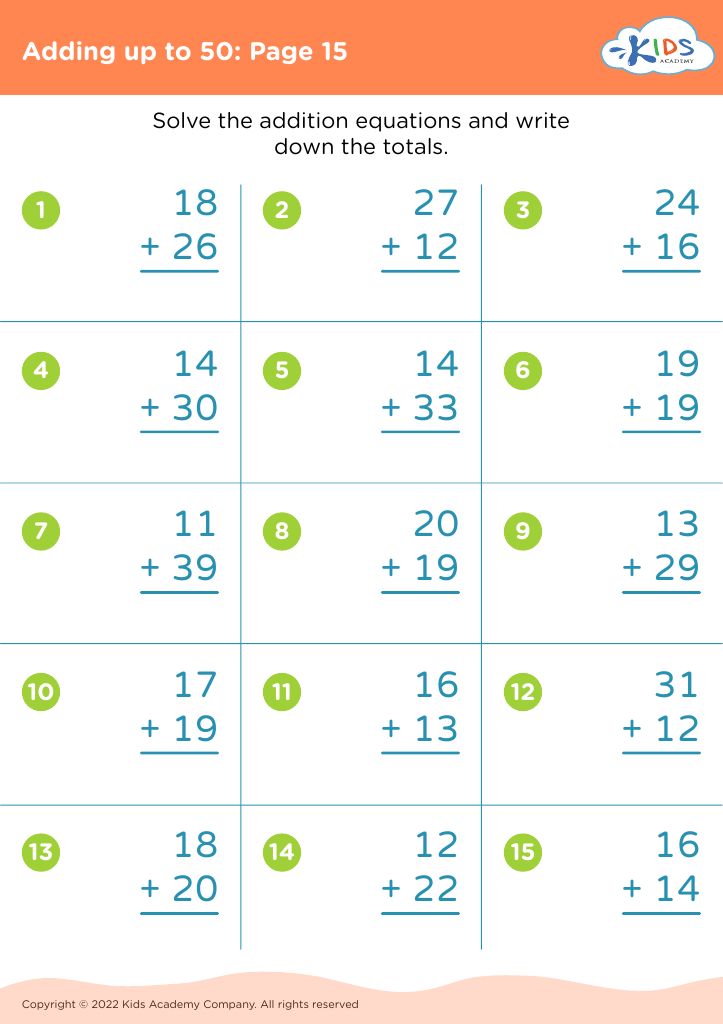




Understanding fraction identification and the ability to sum fractions up to 50 is crucial for children aged 5-8, as it lays the groundwork for more advanced mathematical concepts. This foundational skill supports cognitive development and enhances critical thinking abilities.
First, fractions are an essential aspect of everyday life, from cooking to sharing food, allowing children to see their relevance outside the classroom. By mastering fraction identification, children can develop a better understanding of part-whole relationships, which reinforces their numerical skills.
Additionally, adding fractions prepares students for more complex operations they will encounter later in their education, such as algebra and geometry. It promotes perseverance and problem-solving skills, encouraging kids to explore multiple solutions and think critically.
For parents and teachers, fostering these skills helps nurture a love for math, making it less intimidating as children progress in their education. Encouraging engagement in fun, practical activities related to fractions can also strengthen home-school connections, showing children that learning can occur in various contexts. Overall, emphasizing fraction skills is not just about preparing for academic success; it's about equipping children with essential life skills and boosting their confidence in handling mathematical challenges.








