Fraction simplification Adding up to 50 Worksheets for Ages 5-8
20 filtered results
-
From - To
Explore our expertly designed "Fraction Simplification Adding up to 50 Worksheets for Ages 5-8". These engaging activities are perfect for young learners to grasp the fundamental concepts of fractions and their simplification in an easy, enjoyable way. By introducing basic math skills for adding numbers up to 50, these worksheets build a solid foundation for future mathematical proficiency. Colorful, fun, and educational, our worksheets cater to children aged 5 to 8, ensuring they enjoy and understand the essential steps of fraction simplification while promoting confidence and excitement in math learning progress. Access our worksheets to inspire young mathematicians effortlessly today!
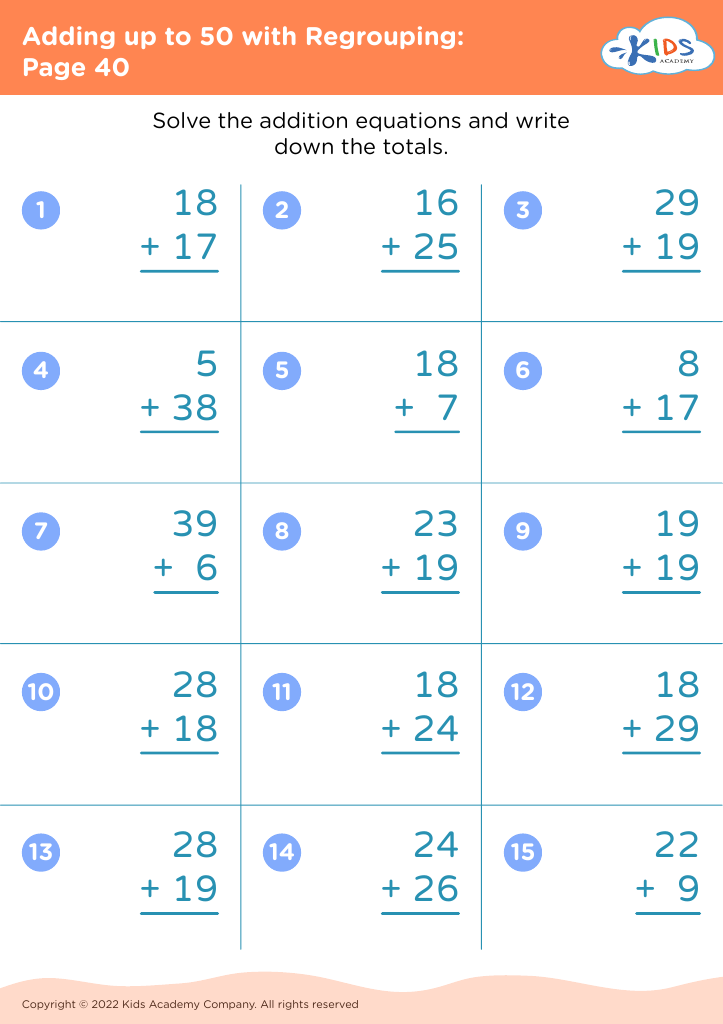
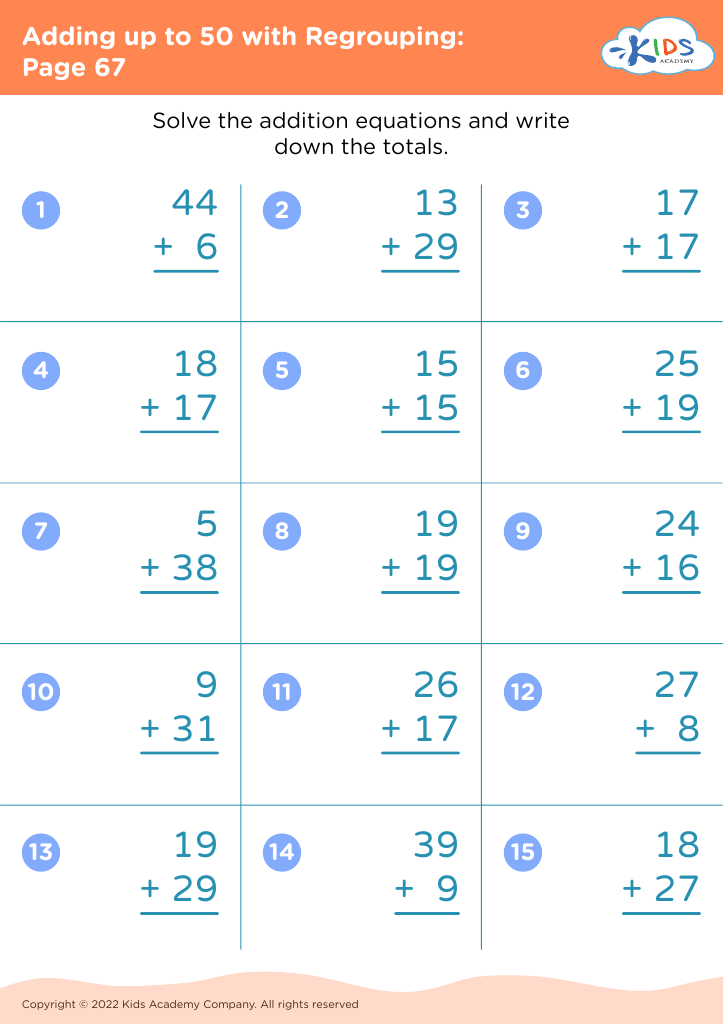
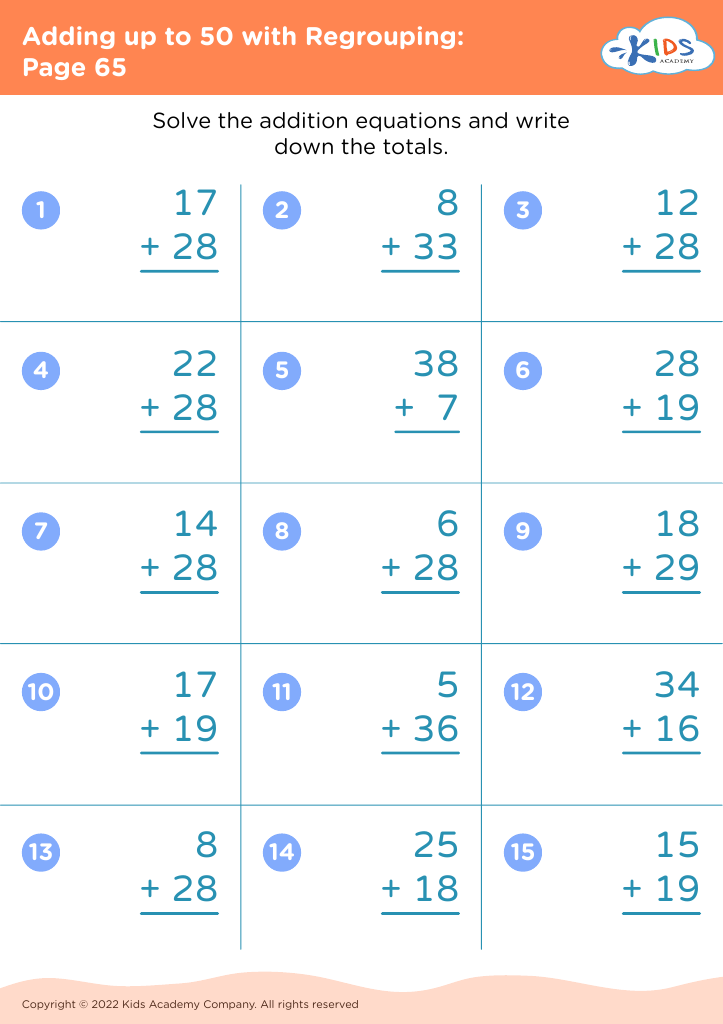
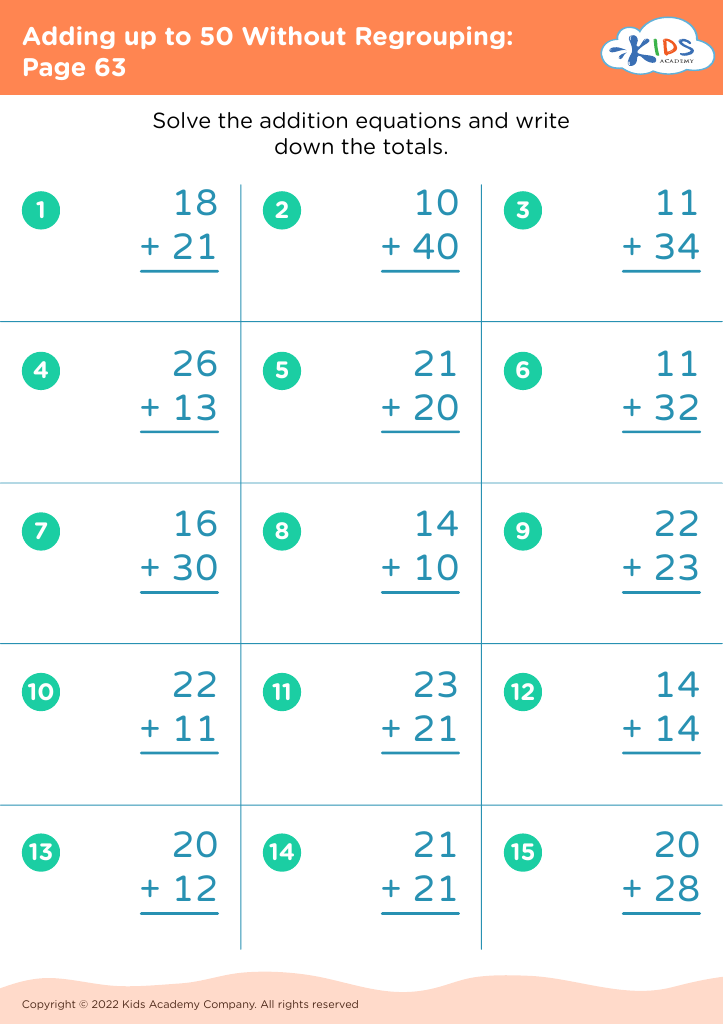
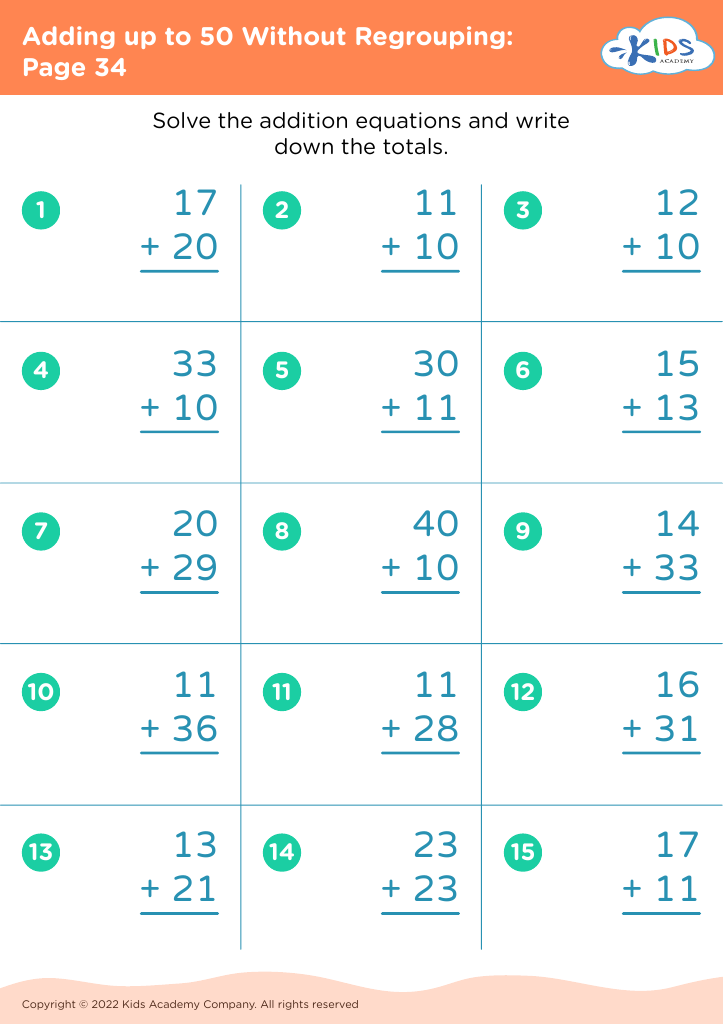
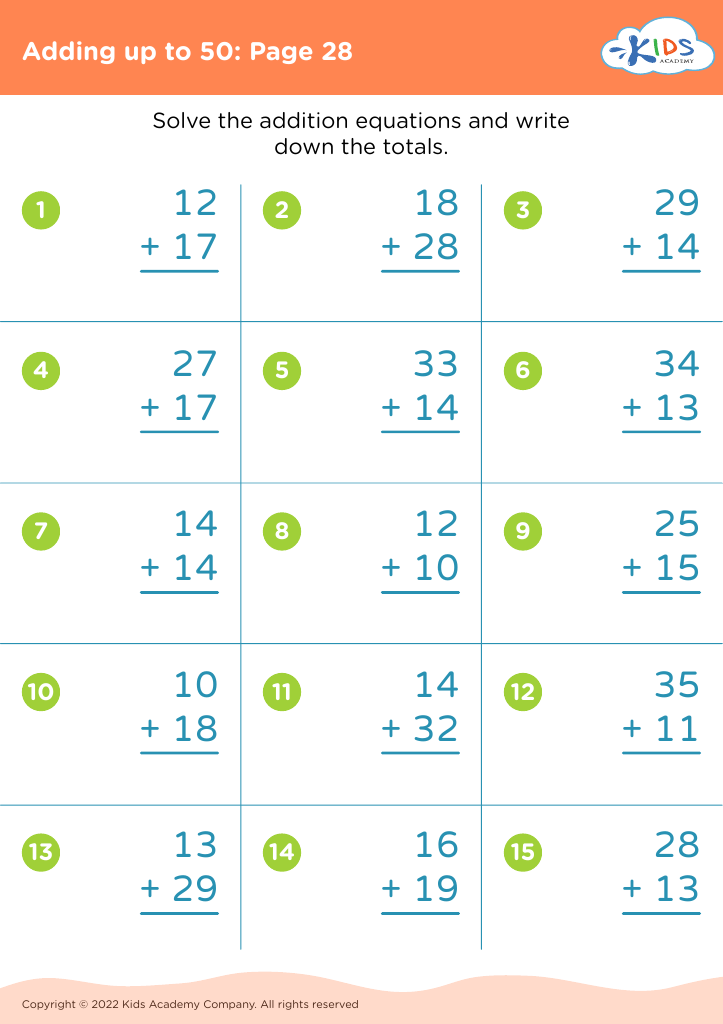
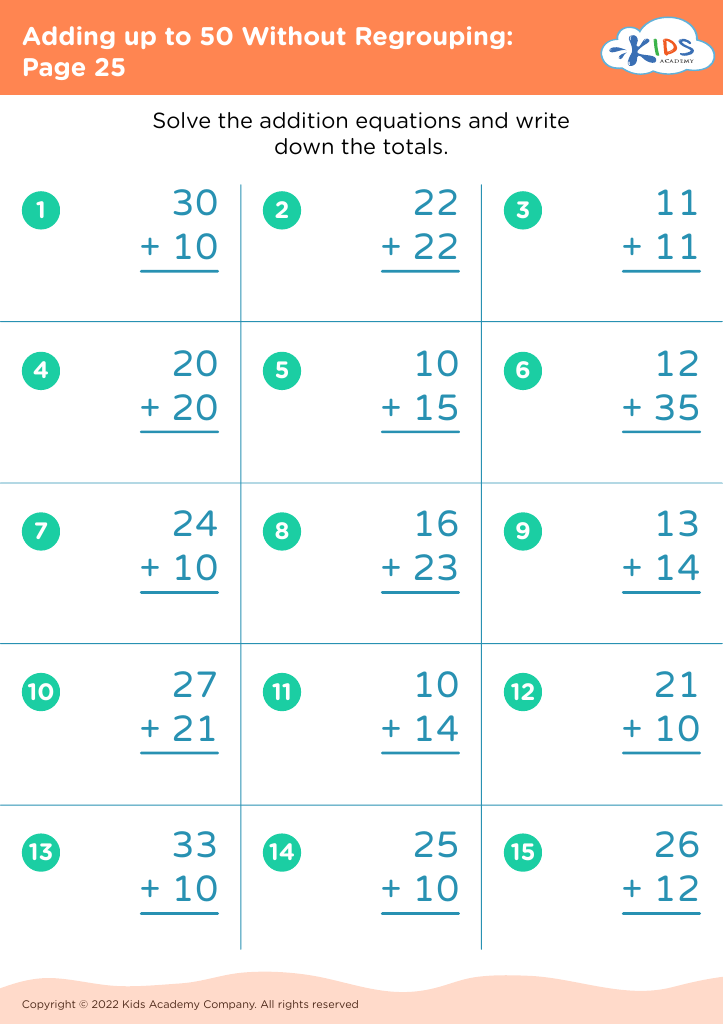
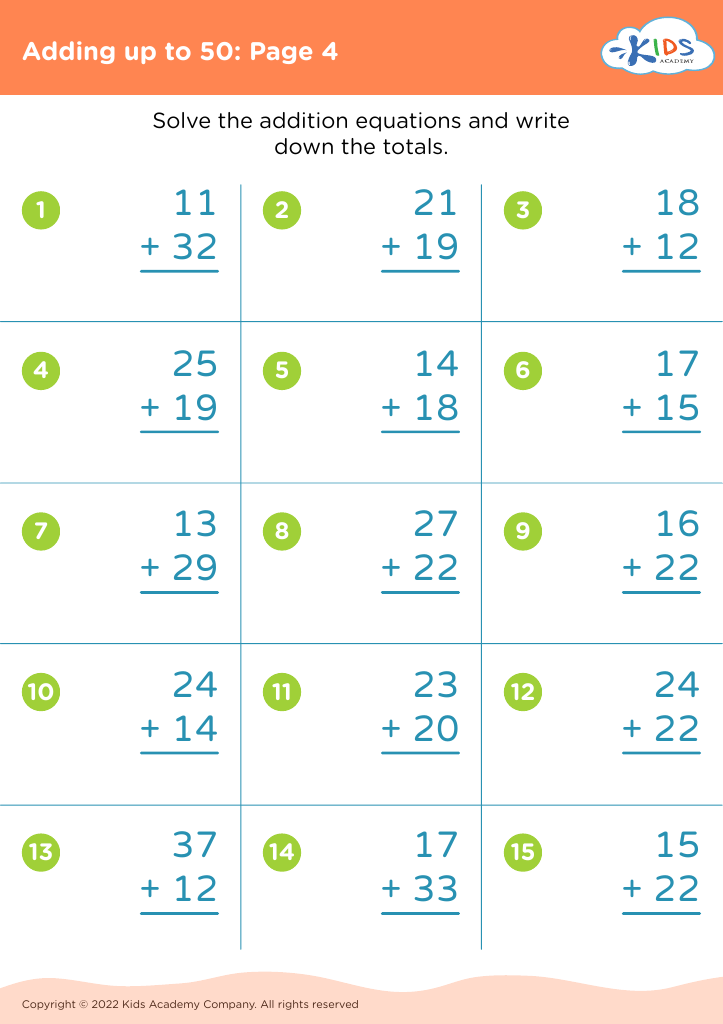
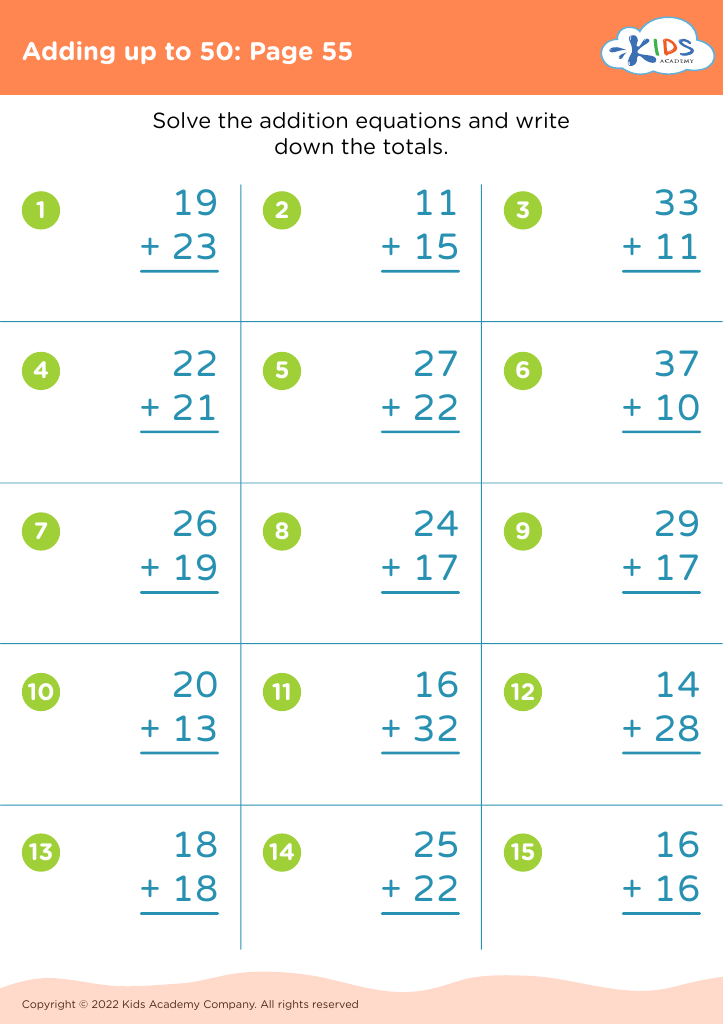
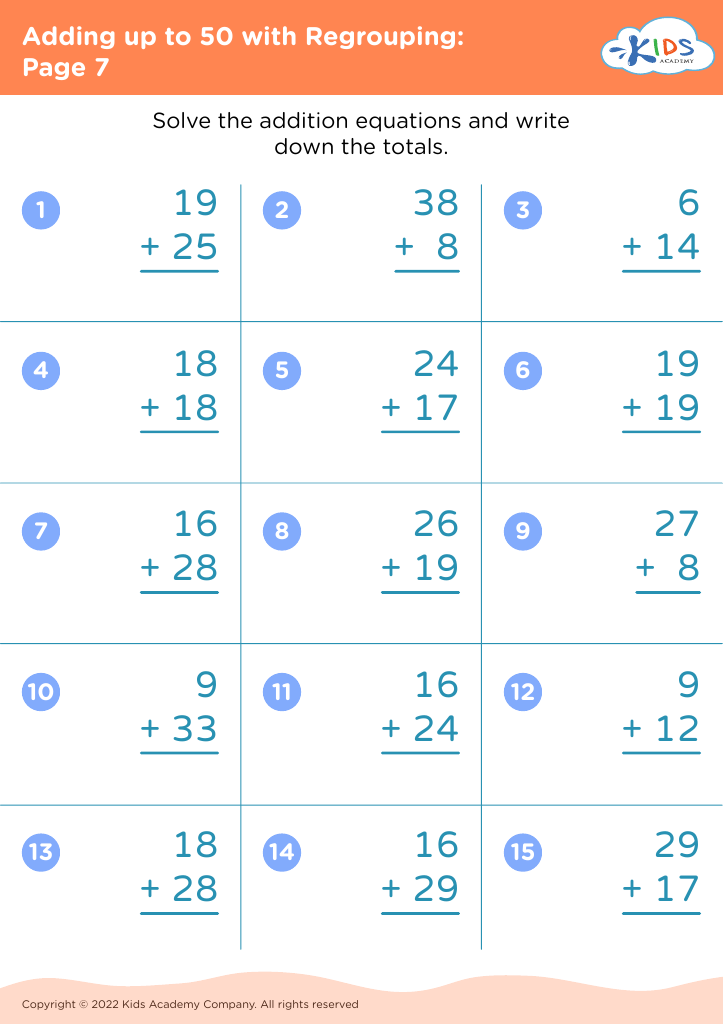
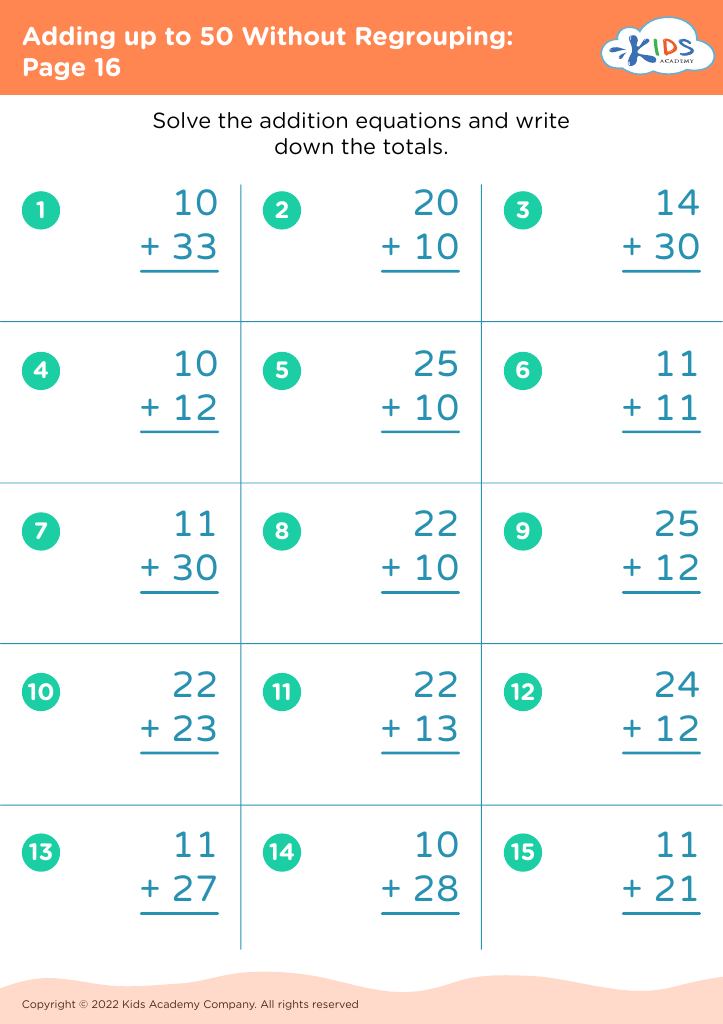
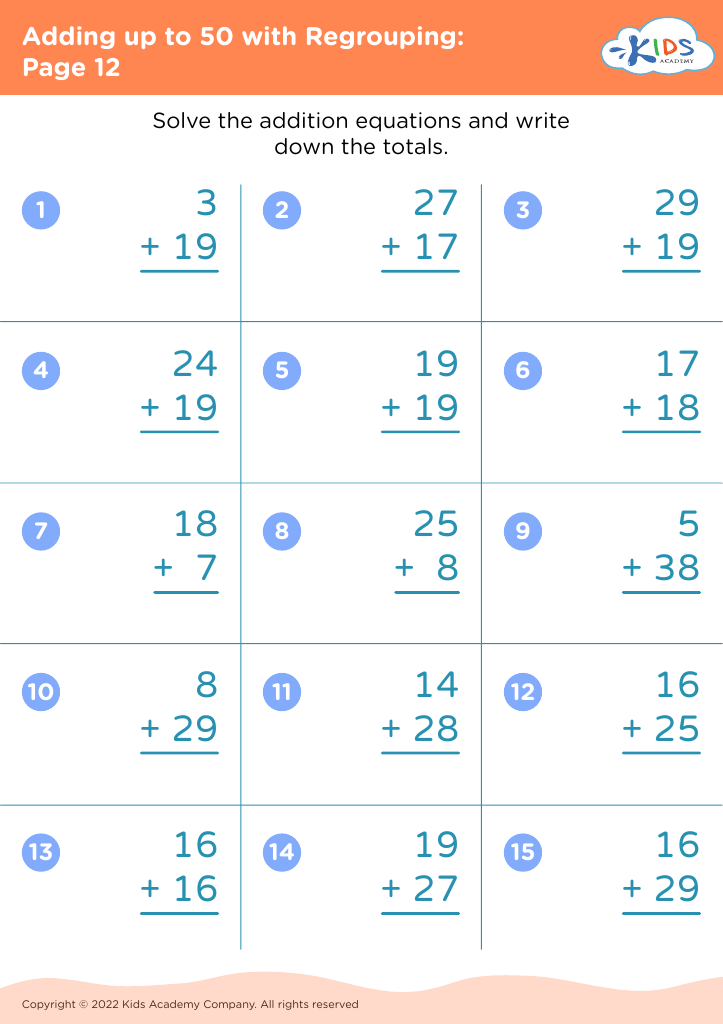
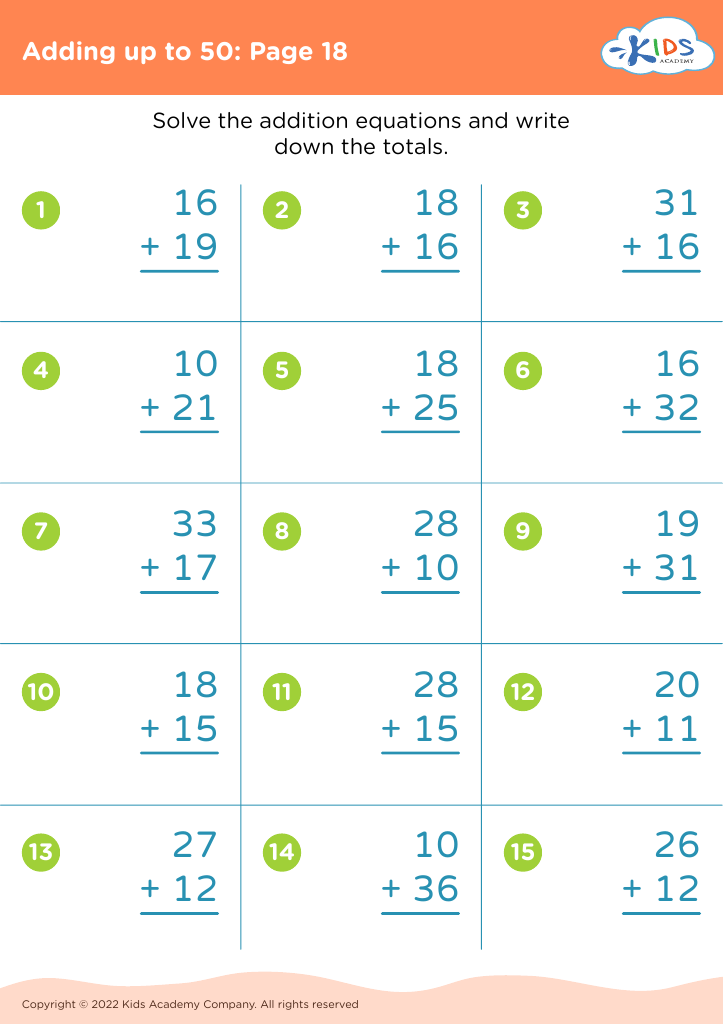
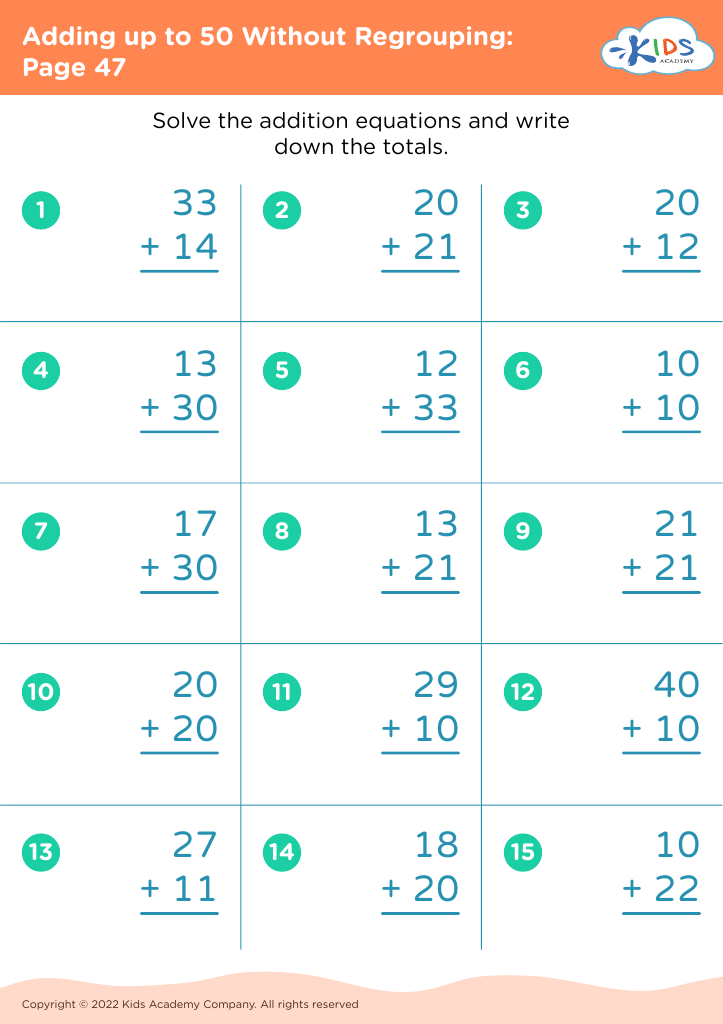
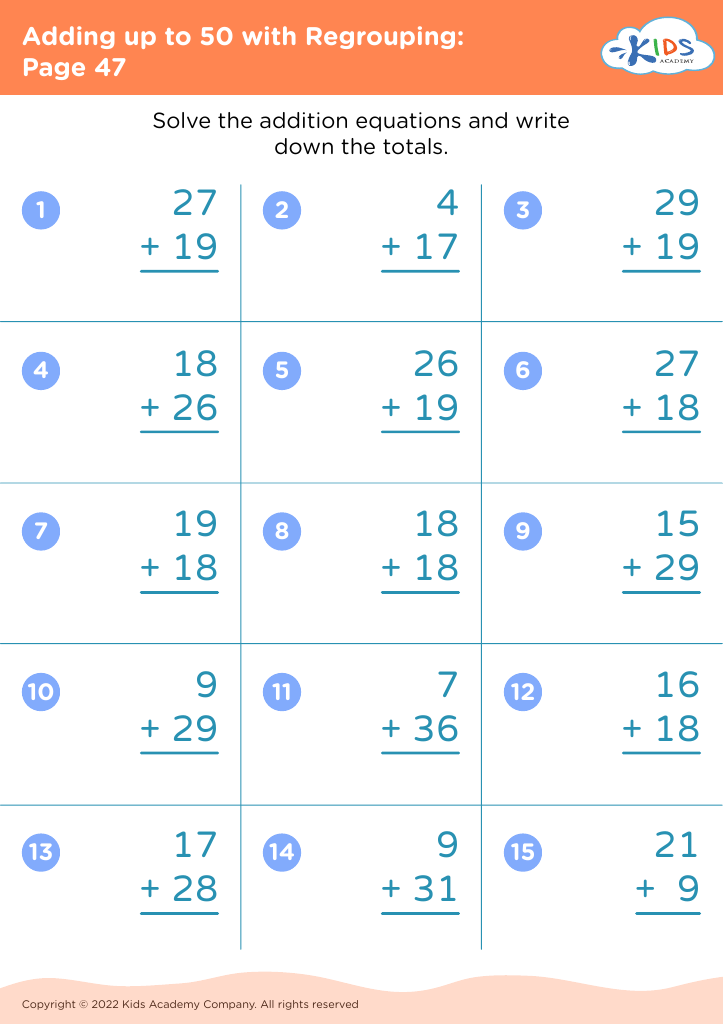
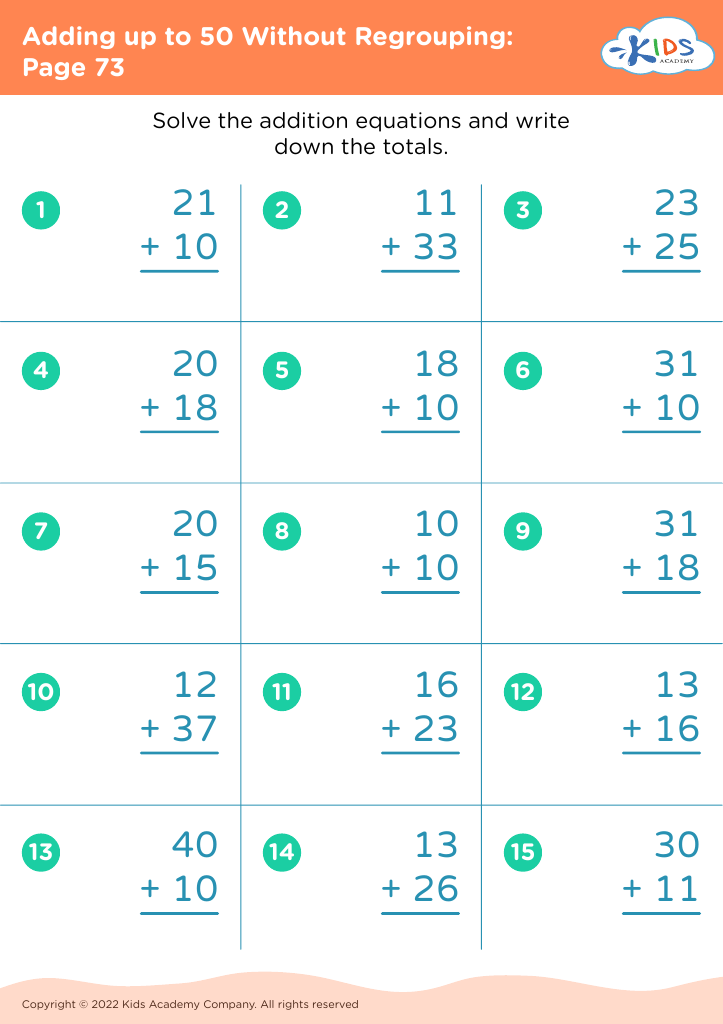
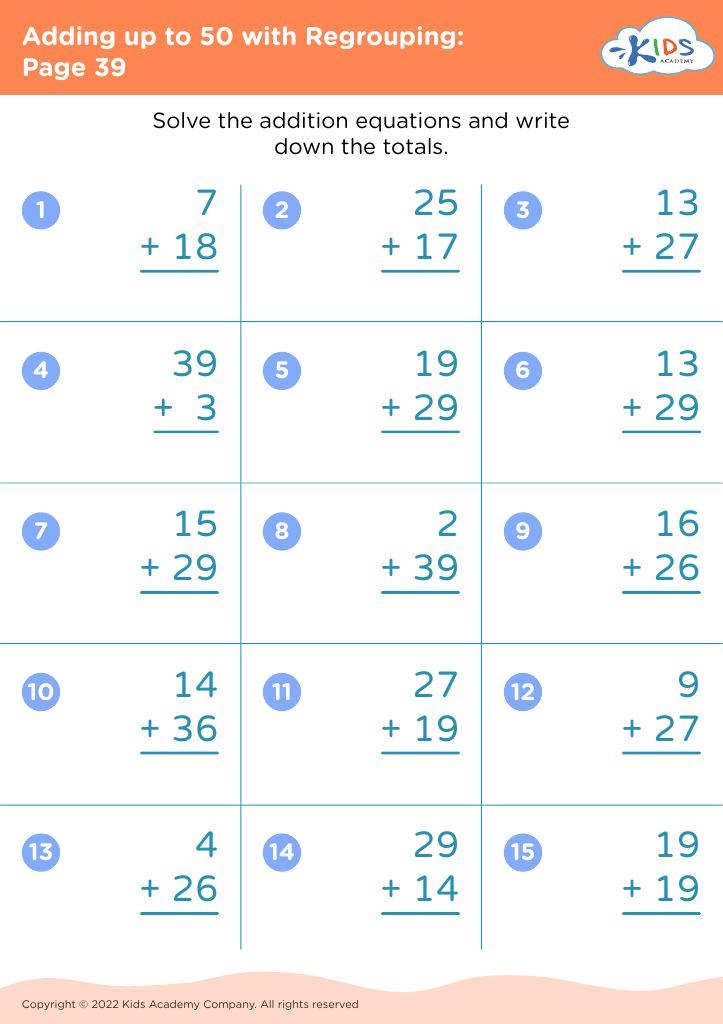
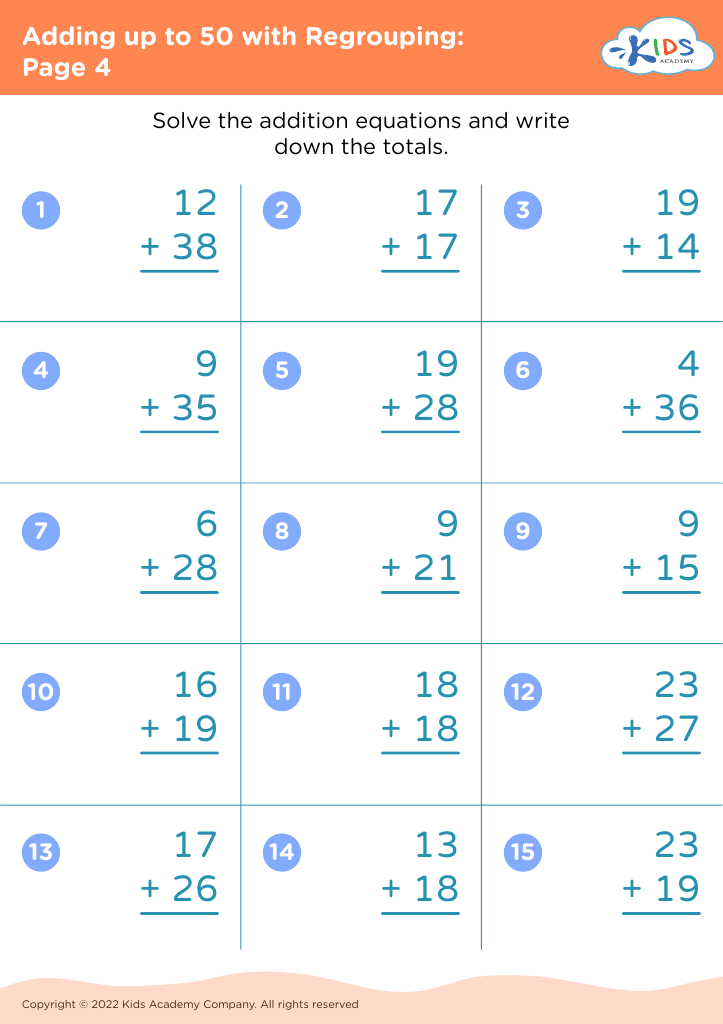
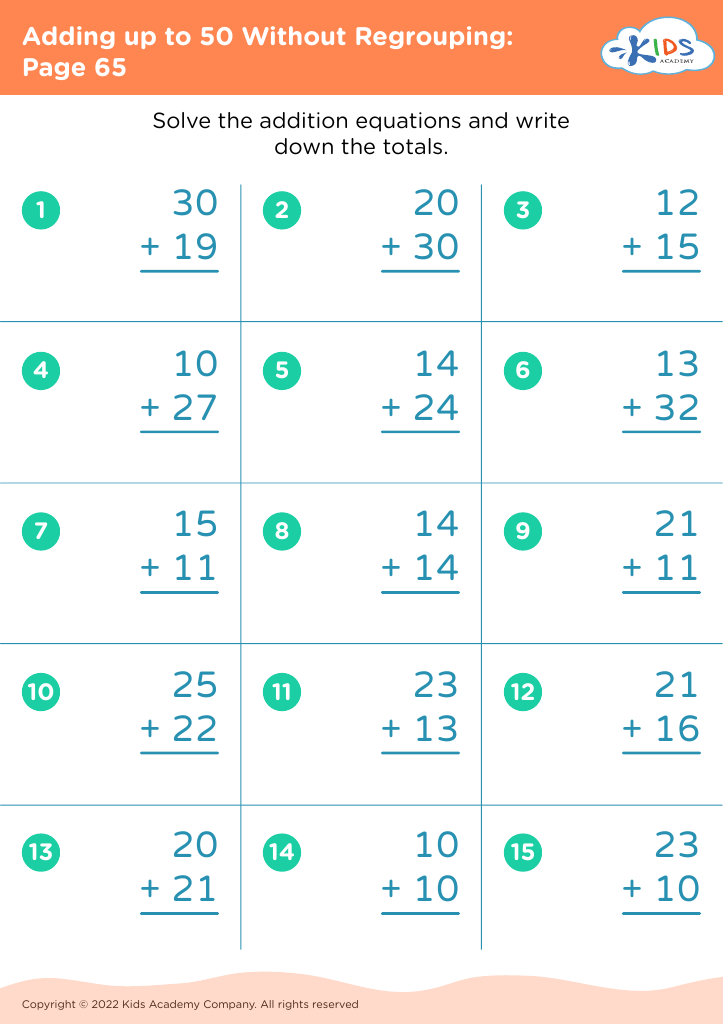
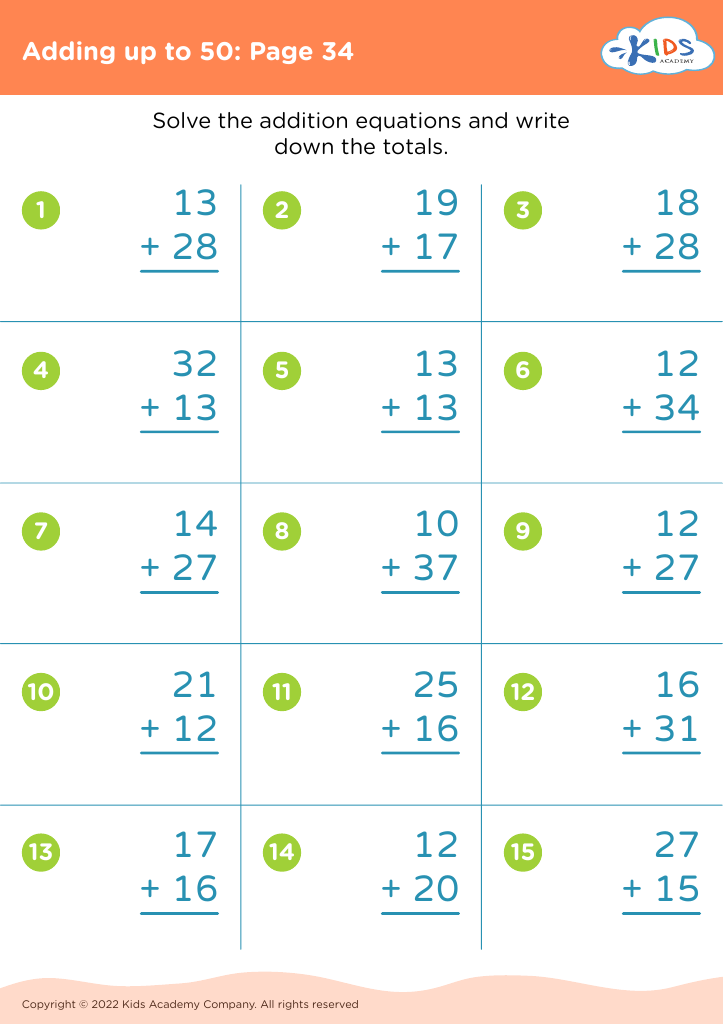




Introducing fraction simplification and addition up to 50 for children aged 5-8 lays a solid foundation for their future math skills. Understanding fractions is fundamental to mathematical literacy, essential for higher-level math topics and everyday situations. Simplifying fractions helps children grasp equivalence and proportionality, fostering more flexible number sense and problem-solving abilities.
At this age, children's cognitive skills are rapidly developing. Simplifying fractions builds logical thinking, and adding numbers up to 50 helps solidify addition facts and number bonds. These activities enhance their arithmetic fluency, promoting efficiency and confidence when tackling more complex mathematical concepts later on.
Moreover, interacting with fractions and higher numbers teaches persistence and attention to detail. Young children learn to break down problems, seek patterns, and verify their answers, which builds critical analytical and reasoning skills.
By engaging with these foundational concepts early, educators and parents set the stage for more sophisticated mathematical learning. It ensures that children won’t find these topics overwhelming as they progress, preparing them for a smooth transition to advanced arithmetic, algebra, and geometry. Thus, early age exposure to fraction simplification and addition forms the building blocks of lifelong mathematical competence and confidence.








