Improve math skills Adding up to 50 Worksheets for Ages 5-8
4 filtered results
-
From - To
Help your child master math with our "Adding up to 50 Worksheets for Ages 5-8." These engaging, educational activities are specially designed to improve math skills in young learners. Our carefully crafted worksheets combine fun and learning, making math practice enjoyable and effective. With colorful graphics and a variety of exercises, children will develop essential addition skills and bolster their confidence in mathematics. Ideal for use at home or in the classroom, these worksheets lay a strong foundation for future math success. Download now and watch your child’s math abilities flourish! Perfect for parents and educators looking for effective resources.
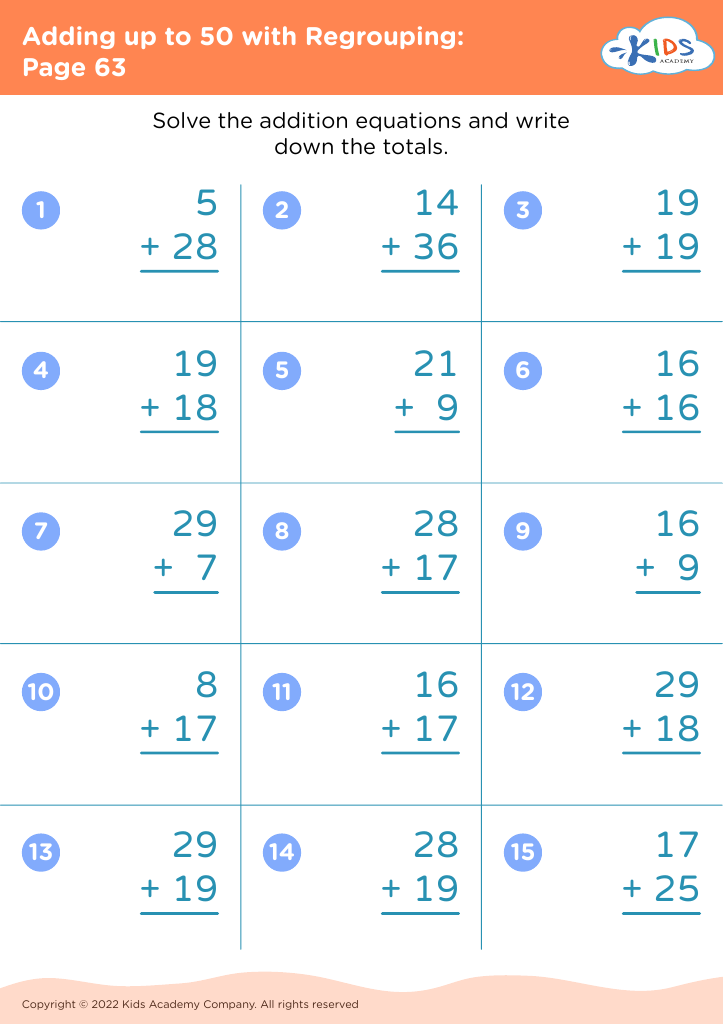
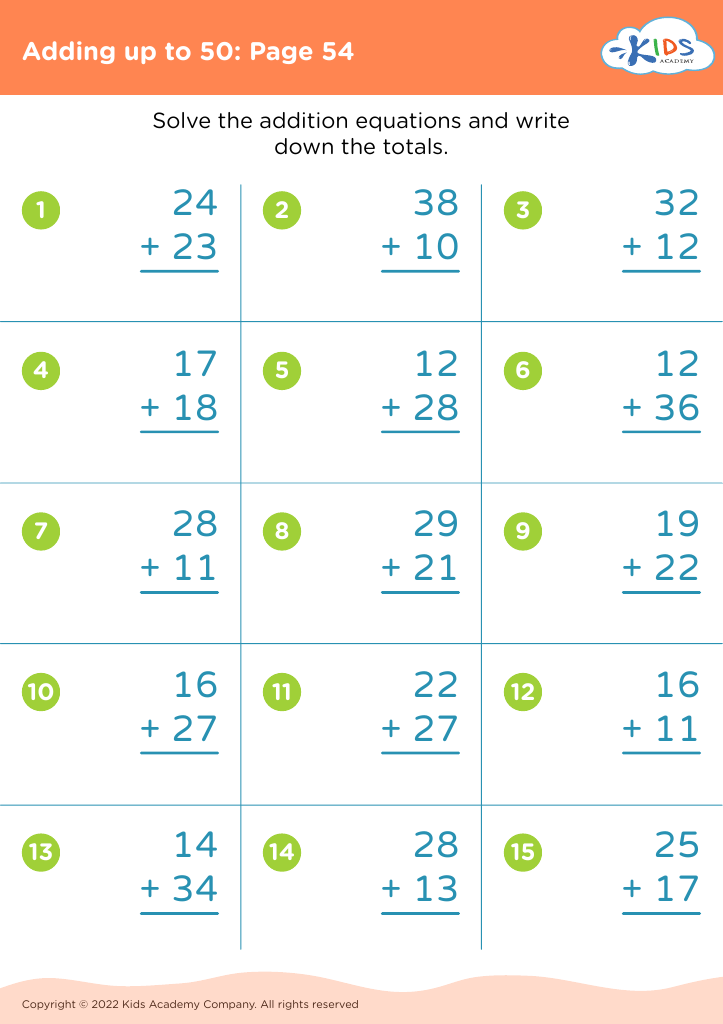
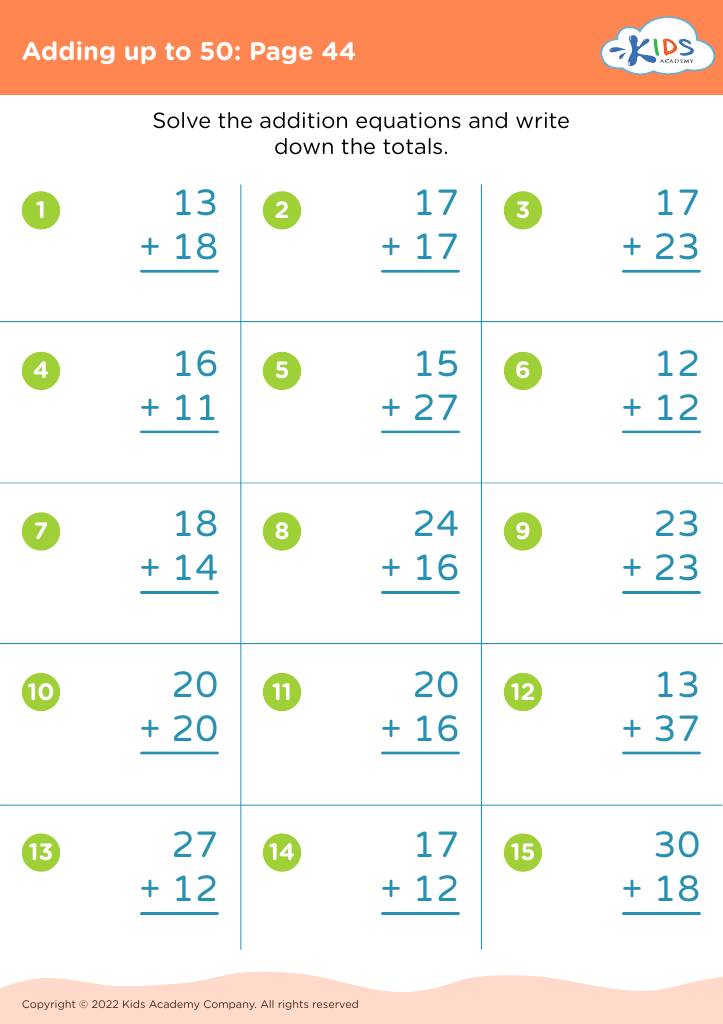
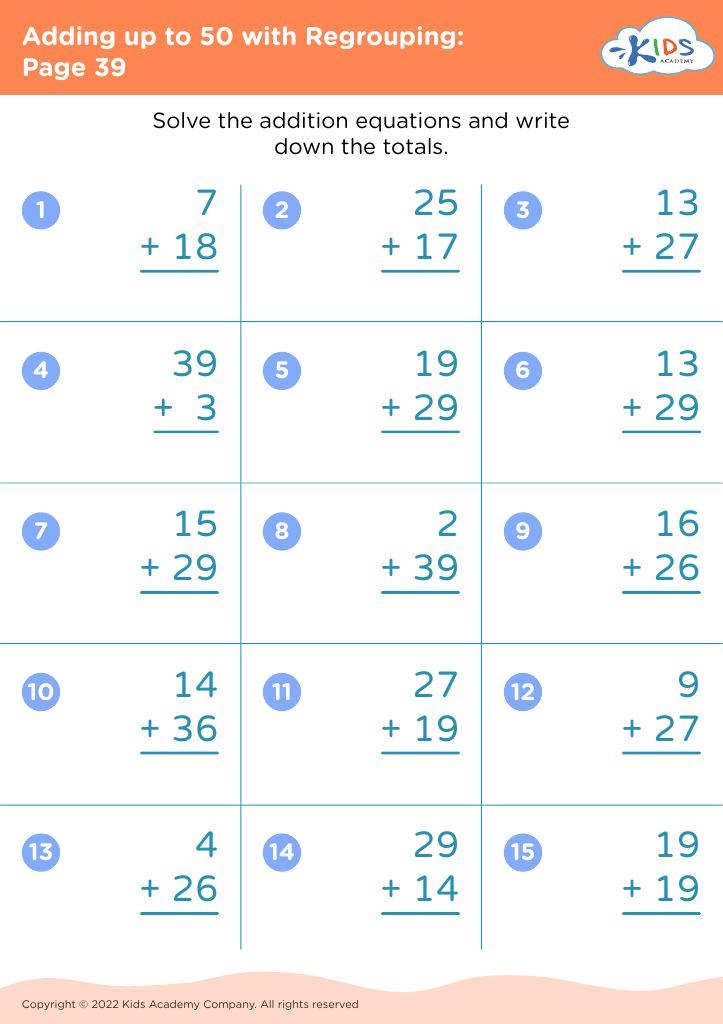




Parents and teachers should prioritize improving math skills, especially addition up to 50, for children ages 5-8 as it lays the foundation for future math success and overall cognitive development. During these formative years, children’s brains are exceptionally receptive to learning basic arithmetic concepts that promote essential problem-solving skills and logical thinking. By mastering addition within this range, children are better equipped to handle more complex mathematical operations encountered in later grades, such as subtraction, multiplication, and division.
Furthermore, strong math skills at an early age boost confidence and create a positive attitude towards learning. This confidence spills over into other academic areas, encouraging a well-rounded education. Basic arithmetic is woven into everyday activities, from counting money to telling time, highlighting its importance in daily life. By ensuring children are proficient in addition, teachers and parents are empowering them to navigate these day-to-day tasks with ease.
Moreover, early math skills have been linked to better academic performance in other subjects. The critical thinking and problem-solving abilities fostered through learning to add also benefit reading comprehension and science exploration. Overall, focusing on foundational math skills prepares children not just for academic success, but for informed and effective participation in their future personal and professional lives.








