Logical thinking Adding up to 50 Worksheets for Ages 5-8
3 filtered results
-
From - To
Enhance your child's logical thinking skills with our engaging "Adding Up to 50 Worksheets" designed specifically for ages 5-8. These worksheets provide a fun and interactive way for kids to practice addition while developing critical thinking and problem-solving abilities. Each page includes a variety of engaging exercises that challenge young minds to manipulate numbers and recognize patterns, building a solid foundation for future math success. Perfect for homeschooling or classroom use, these worksheets encourage independent learning and boost confidence as children advance from simple to more complex addition tasks. Give your child the tools they need to think logically while they learn!
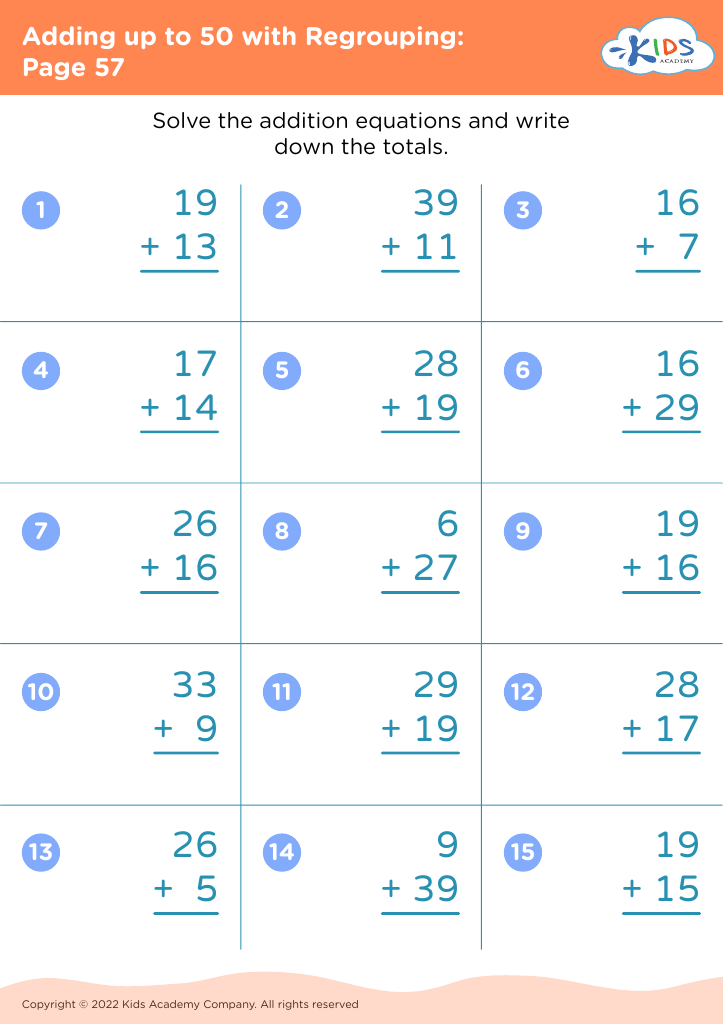
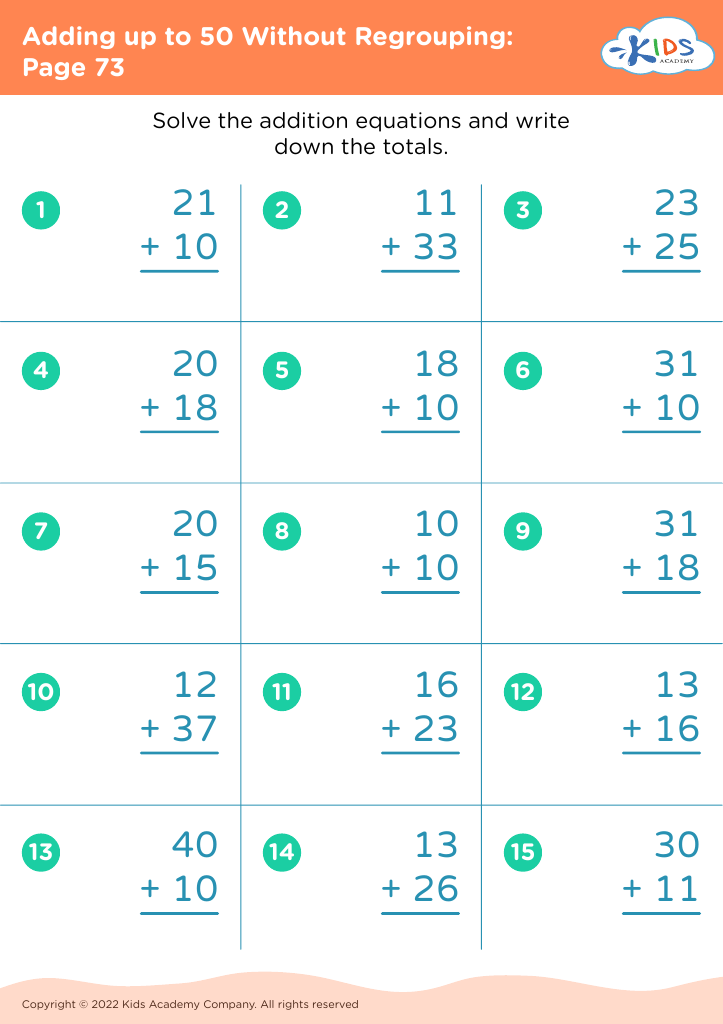
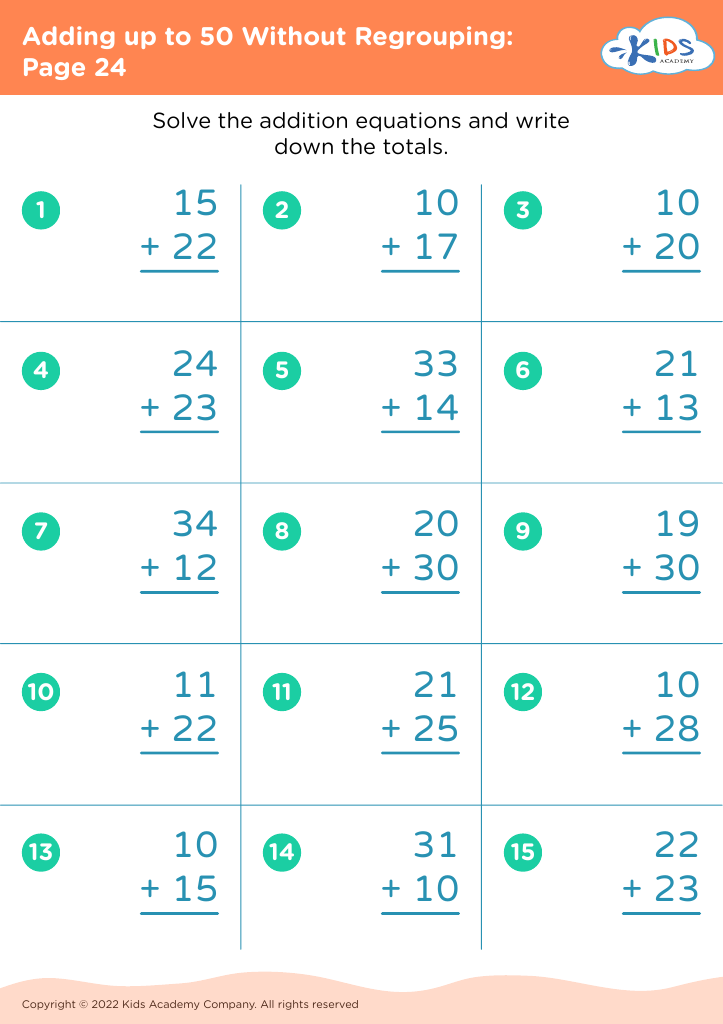




Logical thinking is an essential skill that lays the groundwork for academic success and everyday problem-solving in young children, especially ages 5-8. Focusing on activities like adding up to 50 helps children develop critical reasoning, pattern recognition, and strategic planning. When parents and teachers encourage this skill, they promote a mindset that moves beyond rote memorization to foster deeper understanding.
At this age, children are naturally curious, and engaging them in logical thinking challenges nurtures their intellectual growth. When they work on adding numbers to reach a target, such as 50, they learn to analyze options, predict outcomes, and verify their results. This active engagement not only enhances their mathematical abilities but also boosts their confidence in tackling unfamiliar tasks.
Moreover, logical thinking connects to various subjects. Skills acquired through these exercises can streamline learning in areas such as science and reading, as children begin to make connections and draw conclusions. By prioritizing logical thinking activities, parents and teachers equip children with skills that benefit both their academic journeys and their daily lives, ensuring they grow into well-rounded learners capable of approaching problems thoughtfully.








