Practice counting Adding up to 50 Worksheets for Ages 5-8
3 filtered results
-
From - To
Enhance your young learner's math skills with our "Practice Counting: Adding Up to 50" worksheets designed for ages 5-8! These engaging worksheets provide children with fun and interactive exercises that focus on developing their counting abilities and addition comprehension. Each worksheet is tailored to make learning enjoyable, ensuring that students can practice adding numbers up to 50 in a variety of ways. Perfect for home or classroom use, our resources help build a strong foundation in mathematics. Download and print these worksheets today to support your child's journey toward mastering math with confidence and ease!
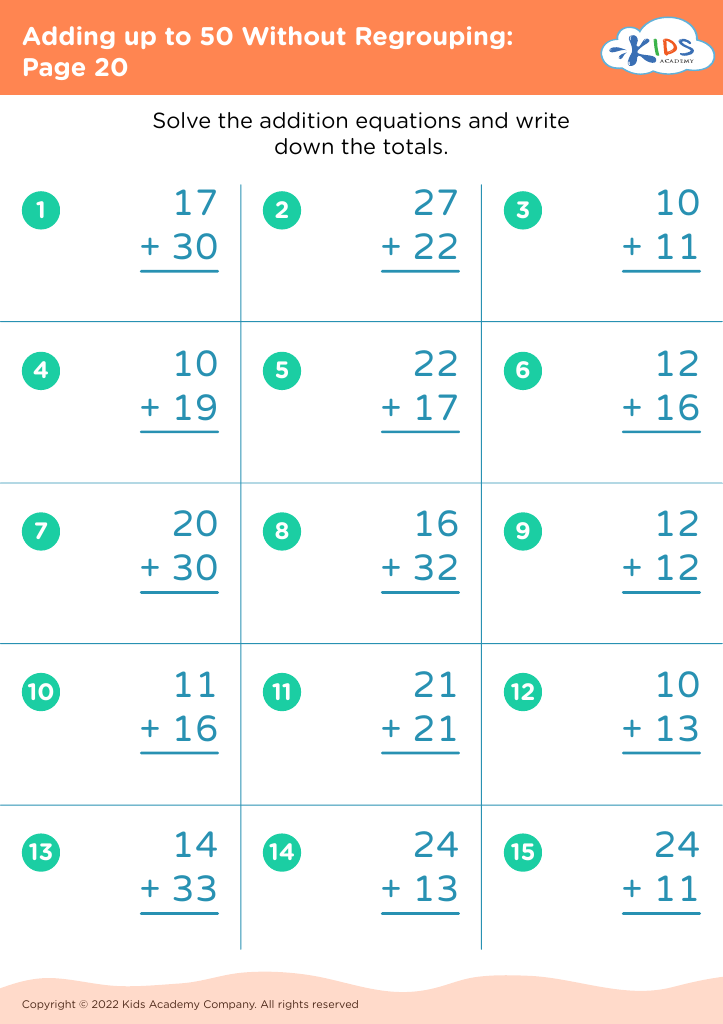
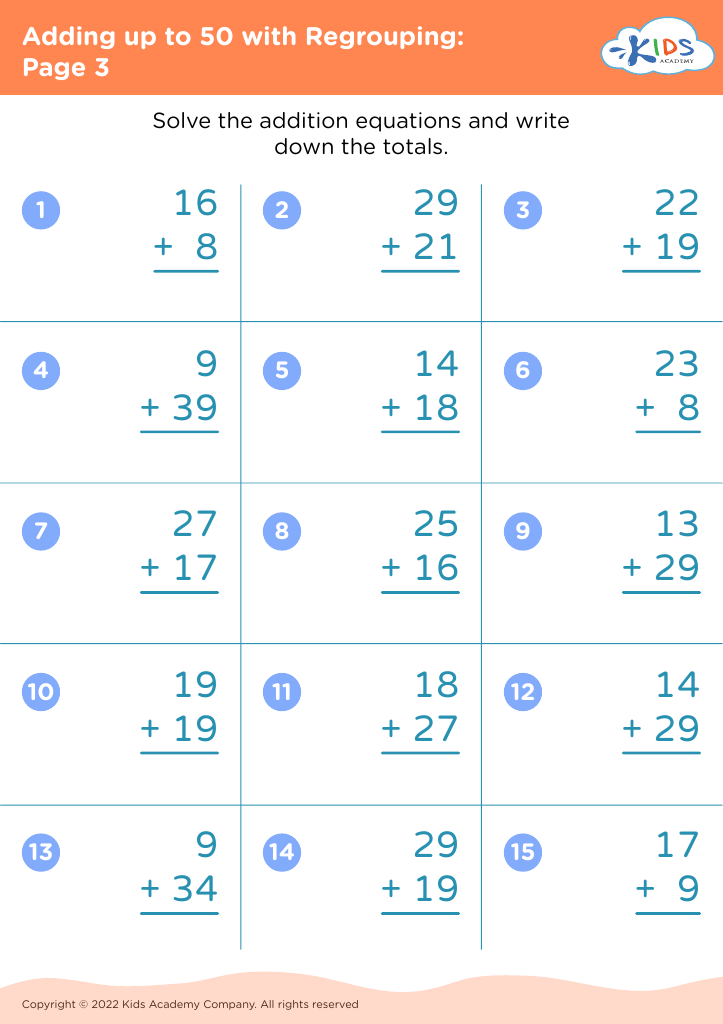
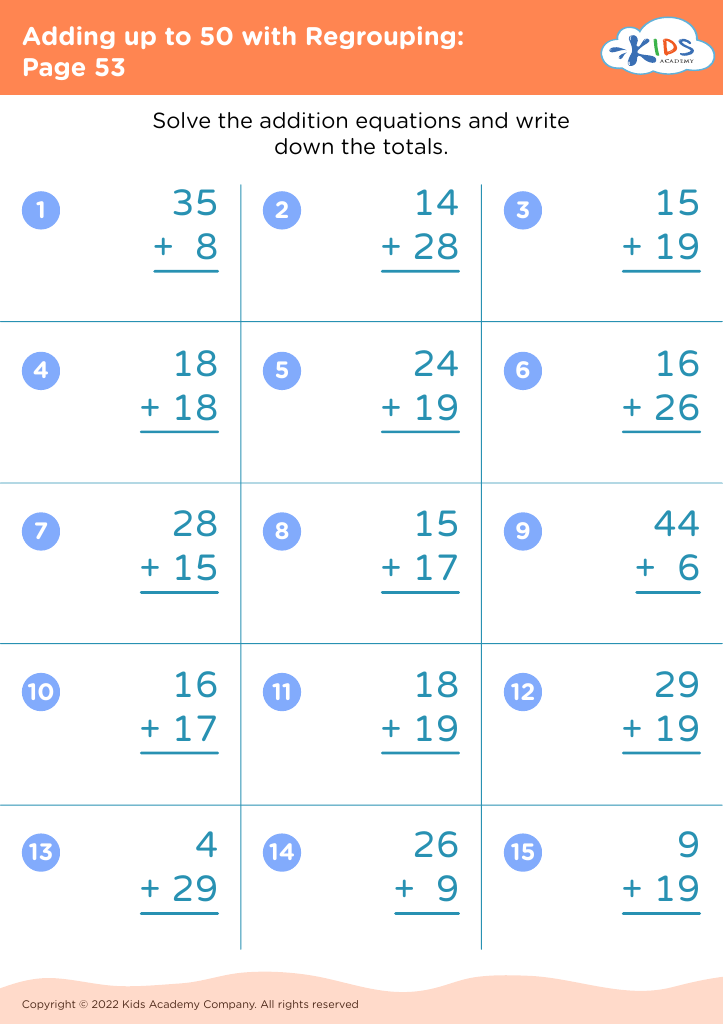




Practice counting and adding up to 50 is a crucial milestone for children aged 5-8. During this developmental stage, children not only strengthen their numerical skills but also begin to grasp essential mathematical concepts that lay the groundwork for future learning. Here's why parents and teachers should prioritize this practice:
-
Foundation for Advanced Math: Mastering numbers up to 50 builds confidence and prepares young learners for addition, subtraction, and even early multiplication and division. Understanding these fundamentals is critical as they encounter more complex math topics later on.
-
Cognitive Development: Counting exercises enhance cognitive skills such as problem-solving, logic, and critical thinking. Engaging in such activities supports brain development, helping children make connections between numbers and real-world applications.
-
Sociability and Interaction: Practicing counting can be a fun, interactive activity. It encourages social interactions between peers, fosters communication skills, and can even involve parents, making learning a shared experience.
-
Emotional Confidence: Success in counting can boost children's confidence in their abilities, motivating them to tackle more challenging tasks and embrace learning opportunities with eagerness.
Investing time in practicing these early counting skills not only enriches mathematical understanding but also nurtures a love for learning that benefits children well beyond their formative years.








