Problem Solving Adding up to 50 Worksheets for Ages 5-8
3 filtered results
-
From - To
Discover our engaging "Problem Solving Adding Up to 50 Worksheets" designed for young learners aged 5-8! These worksheets focus on enhancing mathematical understanding through fun, interactive problem-solving activities. Children will practice addition skills while tackling real-world scenarios, fostering critical thinking and logical reasoning. Each worksheet encourages students to explore numbers up to 50, reinforcing their ability to solve various math problems creatively. Ideal for both classroom and home use, these resources promote confidence in math and comprehension skills. Help your child excel in their math journey with our thoughtful, age-appropriate worksheets that make learning a joyful and rewarding experience!
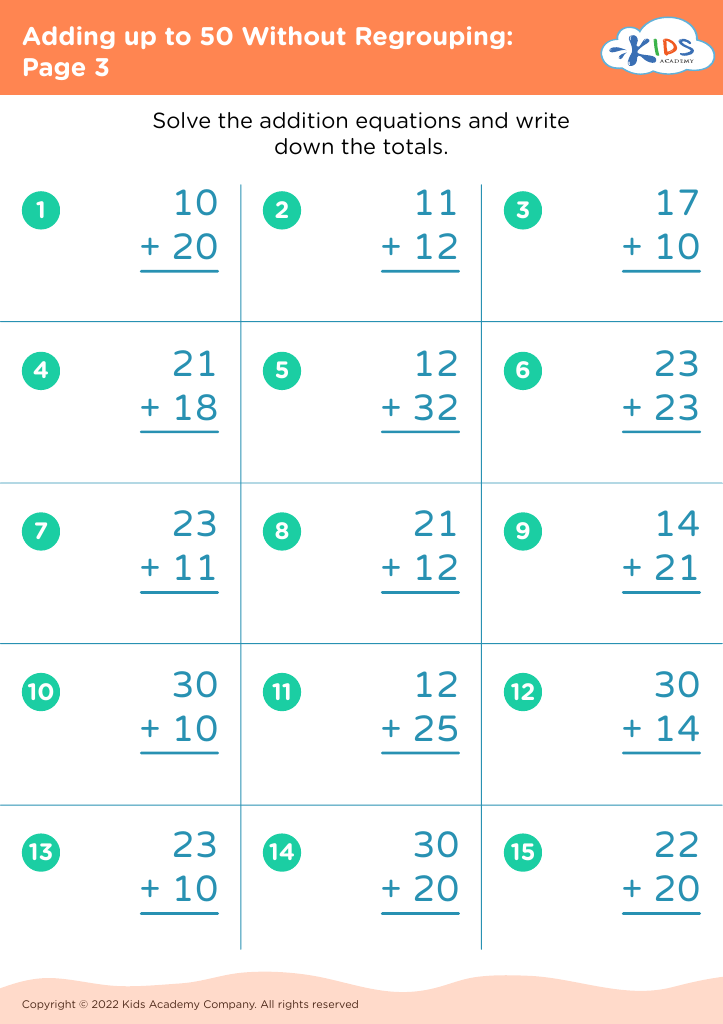
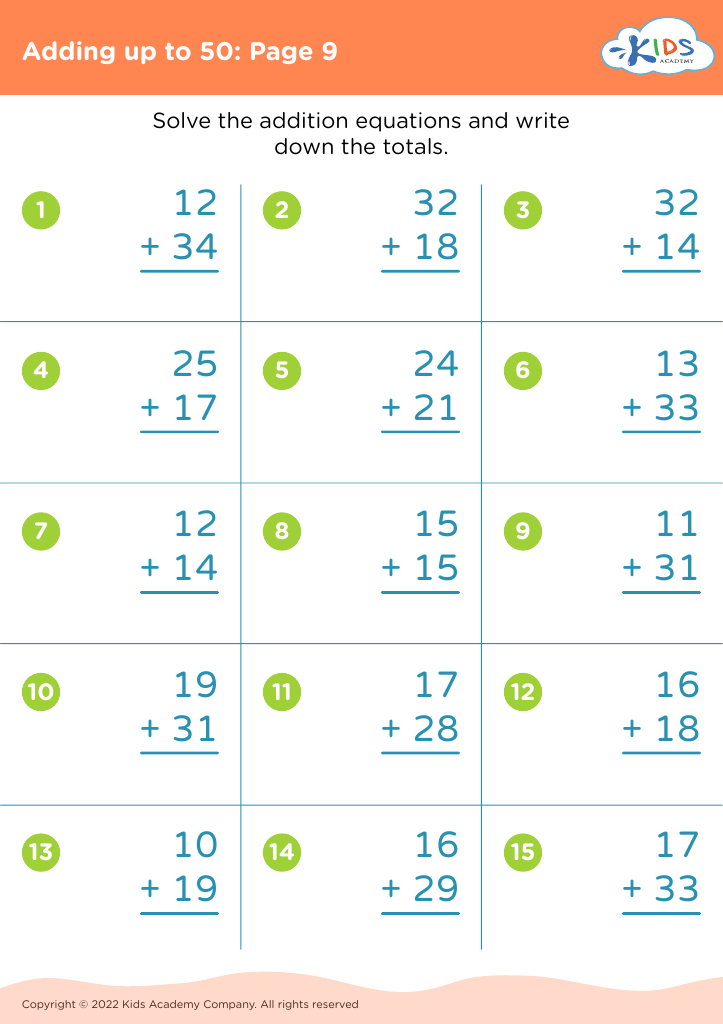
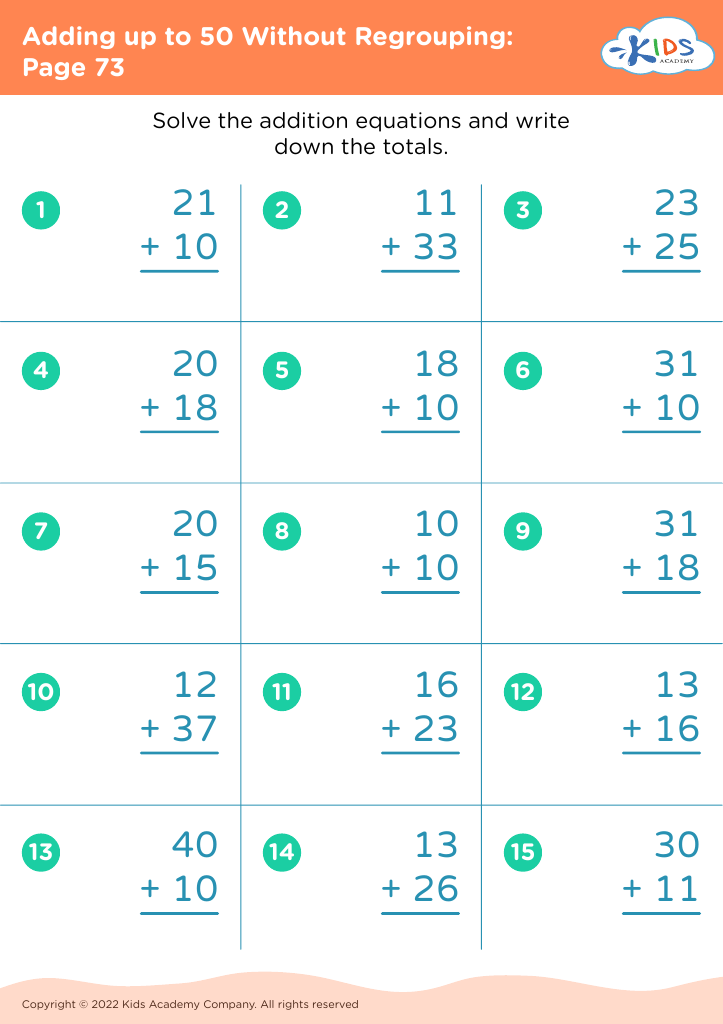




Problem Solving skills, particularly in math, are crucial for children aged 5-8 as they lay a foundation for lifelong learning. “Adding up to 50” offers a fun way for young learners to develop critical thinking and reasoning skills. As parents and teachers, fostering a strong mathematical base helps kids become adept at recognizing patterns, understanding relationships, and applying strategies to solve problems.
Incorporating problem-solving exercises in early education supports cognitive development, as these tasks encourage children to think independently and creatively. Moreover, mastering addition within a set range, like 50, enhances confidence and gives students a sense of achievement. This competence can reduce math anxiety and build a positive attitude toward future math learning.
Furthermore, these skills are not just limited to math—the ability to analyze situations, consider various solutions, and make informed decisions benefits children academically and in everyday life. A focus on problem solving mirrors real-world situations requiring critical thinking, rolling over into literacy and social interactions. Encouraging young learners to tackle mathematical challenges equips them with the resilience and determination needed to succeed, making it imperative for parents and educators to prioritize skills like "Adding up to 50."








