Problem-solving practice Adding up to 50 Worksheets for Ages 5-8
3 filtered results
-
From - To
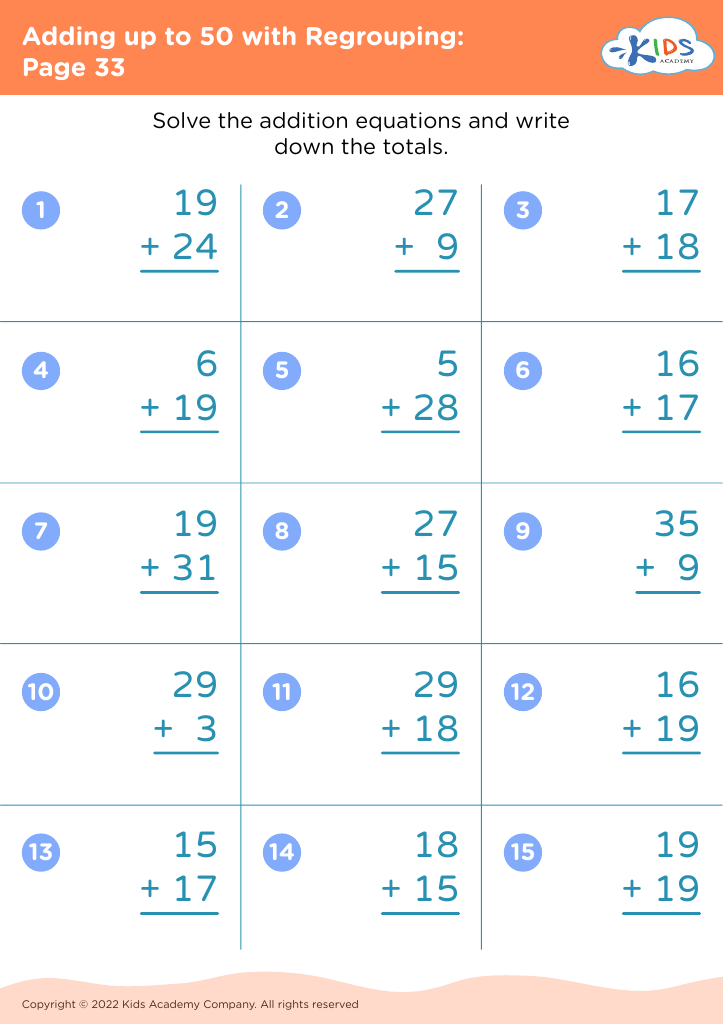
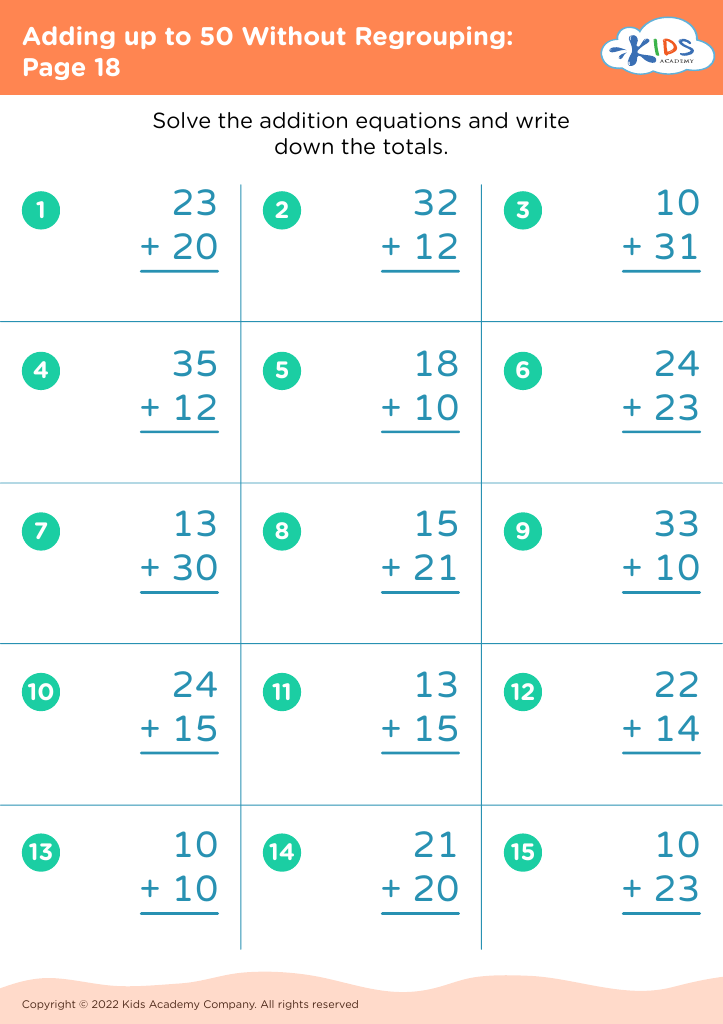
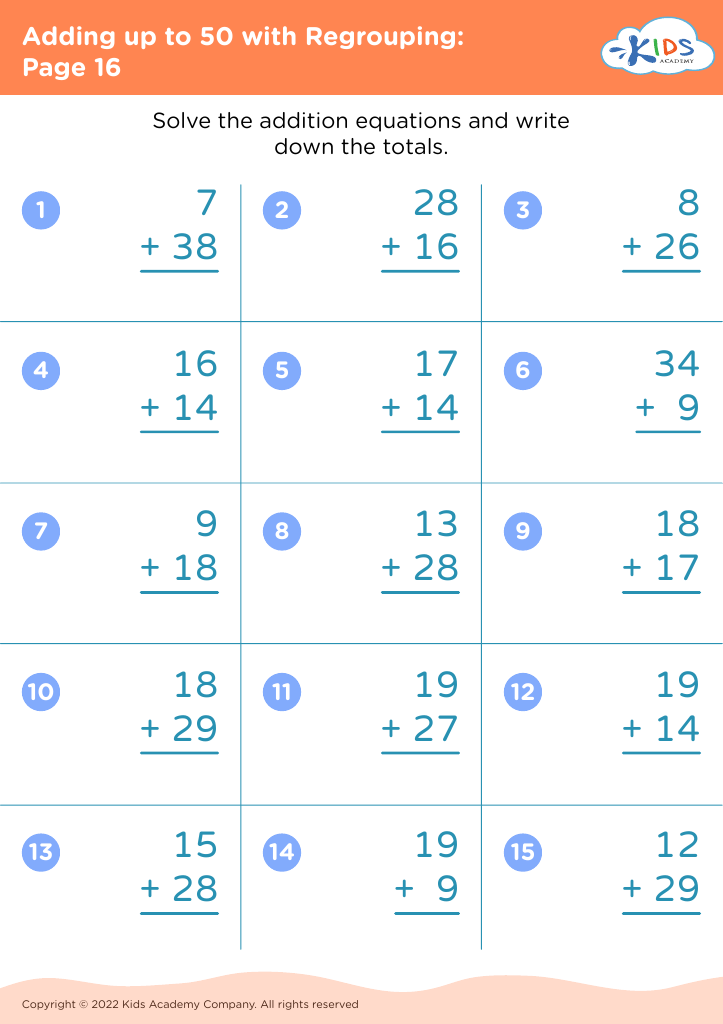
Boost your child's math skills with our “Problem-Solving Practice: Adding up to 50 Worksheets” designed for kids ages 5-8! These engaging and easy-to-follow worksheets are perfect for young learners to practice and improve their addition skills. Our colorful, age-appropriate worksheets enhance problem-solving abilities while making math fun and interactive. Each worksheet provides a variety of problems to solve, helping children to build confidence and fluency in addition. Ideal for use at home or in the classroom, this resource supports foundational math proficiency and prepares your child for advanced mathematical concepts. Start the journey to success today!




Parents and teachers should prioritize problem-solving practices like adding up to 50 for children aged 5-8 because these critical skills form the bedrock of early mathematical understanding. At this stage, children's brains are highly receptive to learning basic arithmetic, which helps cultivate cognitive abilities that are crucial for future academic success.
Engaging in problem-solving activities develops children's numerical fluency, enabling them to understand addition's foundational structure. This fluency is essential for tackling more complex math problems later in their education. For instance, learning to add up to 50 boosts their ability to grasp place value, which is key to mastering larger numbers and more advanced operations.
Additionally, problem-solving enhances logical thinking and improves concentration and attention to detail. These skills are not only applicable to mathematics but are also transferable to other subjects. They promote a growth mindset, encouraging children to view challenges as opportunities for development rather than insurmountable obstacles.
Practicing addition within this range also allows children to learn at a pace suited to their developmental stage, thereby building confidence and reducing math anxiety. As a result, children become well-equipped with a positive attitude towards learning and an eagerness to tackle more difficult problems as they progress.
Overall, problem-solving practice geared towards adding up to 50 is instrumental in molding a child's academic trajectory and overall cognitive development.








