Recognizing equivalent fractions Adding up to 50 Worksheets for Ages 5-8
3 filtered results
-
From - To
Explore our "Recognizing Equivalent Fractions Adding Up to 50 Worksheets" designed specifically for children aged 5-8. These engaging worksheets help young learners grasp the concept of equivalent fractions while developing their addition skills. Through fun exercises, kids will identify and compare fractions that hold the same value, reinforcing their understanding of mathematical relationships. With colorful visuals and age-appropriate challenges, these worksheets make learning enjoyable and interactive. Ideal for home or classroom use, they cater to various learning styles, ensuring every child gets the attention they need. Unlock your child's potential in mathematics today with our carefully crafted resources!
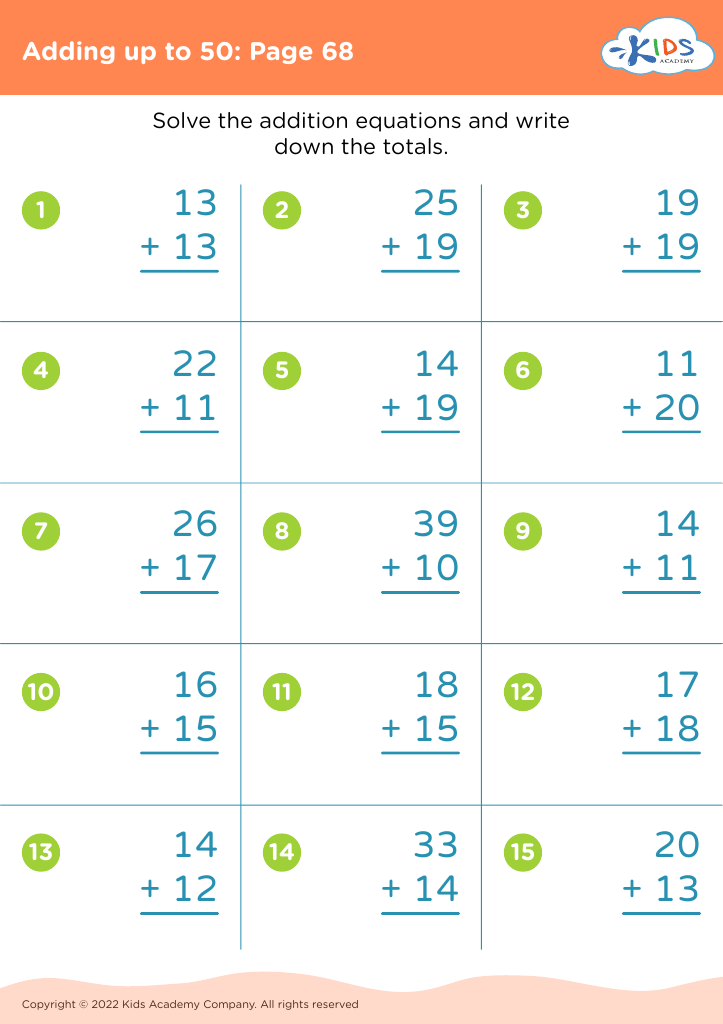
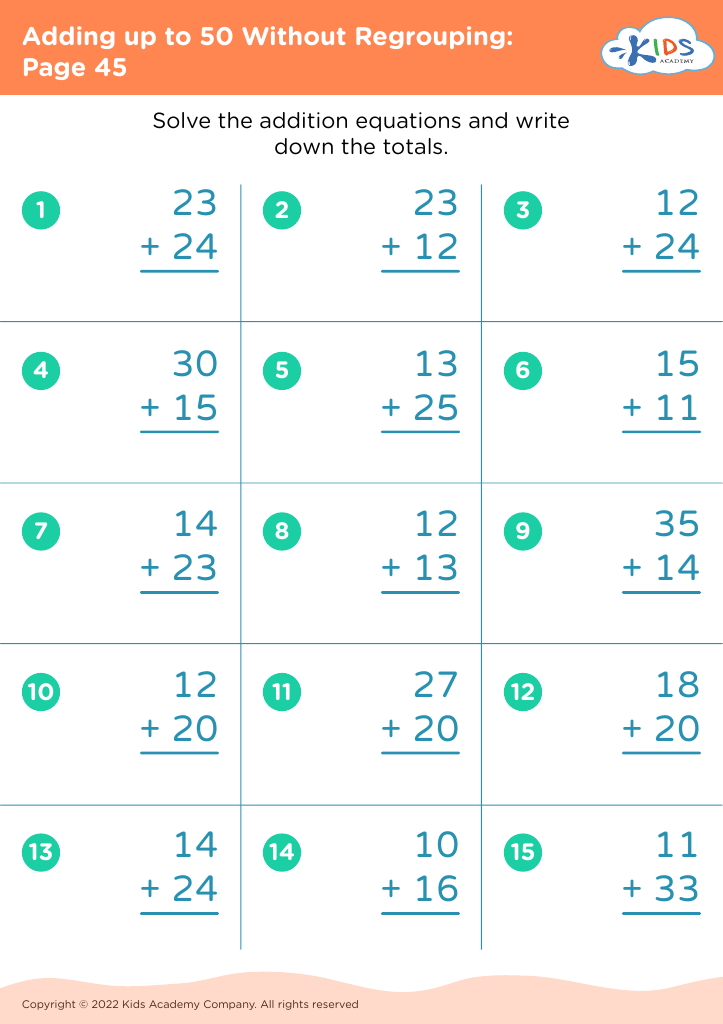
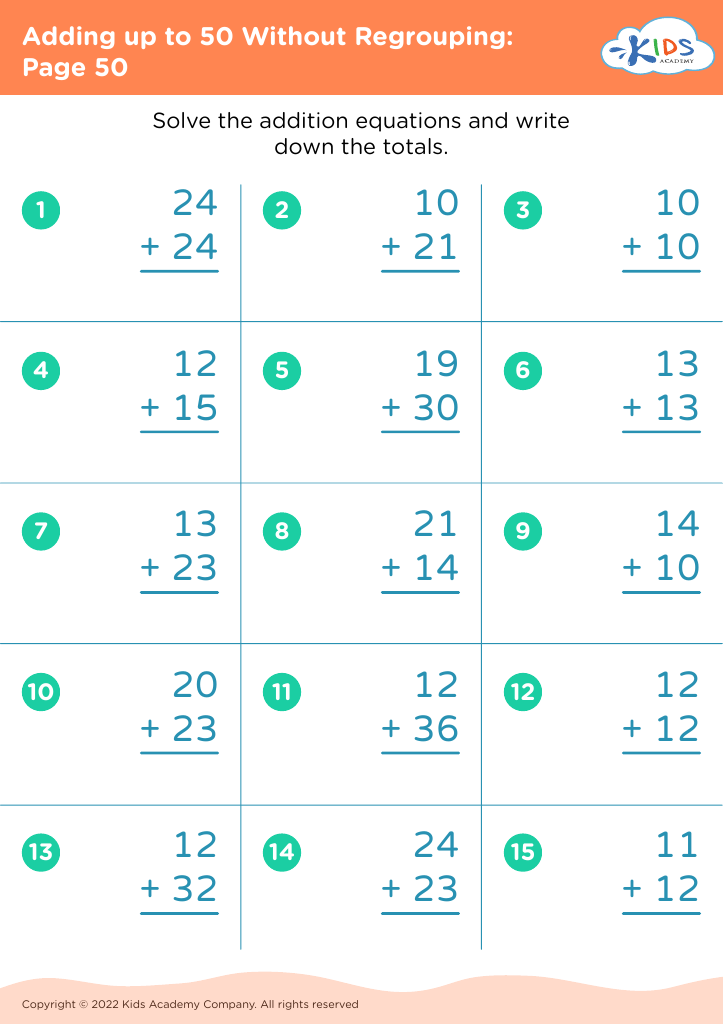




Recognizing equivalent fractions and understanding the concept of numbers that add up to 50 are vital skills for children aged 5-8. For parents and teachers, fostering these skills early on lays a solid mathematical foundation essential for future learning. Equivalent fractions help children grasp the idea of parts of a whole, enhancing their ability to compare and manipulate numbers. This understanding develops critical thinking and problem-solving skills, which are key to mathematics and numerous real-life situations.
When children learn to recognize that different fractions can represent the same value, they improve their number sense and visualization skills. This understanding is crucial as they progress to more complex math concepts in later grades.
Similarly, learning to add numbers up to 50 introduces children to basic addition strategies and reinforces their arithmetic skills. This familiarity with numbers prepares them for more complex operations, fosters confidence in their math abilities, and encourages a positive attitude towards learning.
In summary, recognizing equivalent fractions and mastering addition up to 50 not only enriches children’s mathematical abilities but also equips them with essential skills for future success in school and everyday life. Parents and teachers promoting these concepts play a pivotal role in their mathematical development.








