Simplifying Fractions Adding up to 50 Worksheets for Ages 5-8
8 filtered results
-
From - To
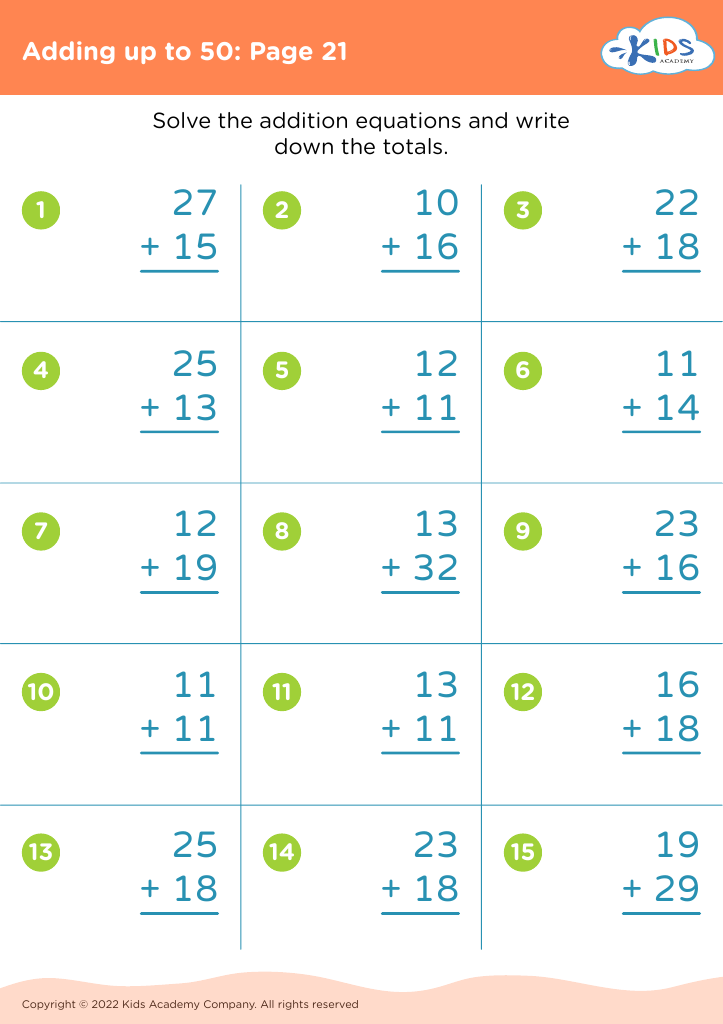
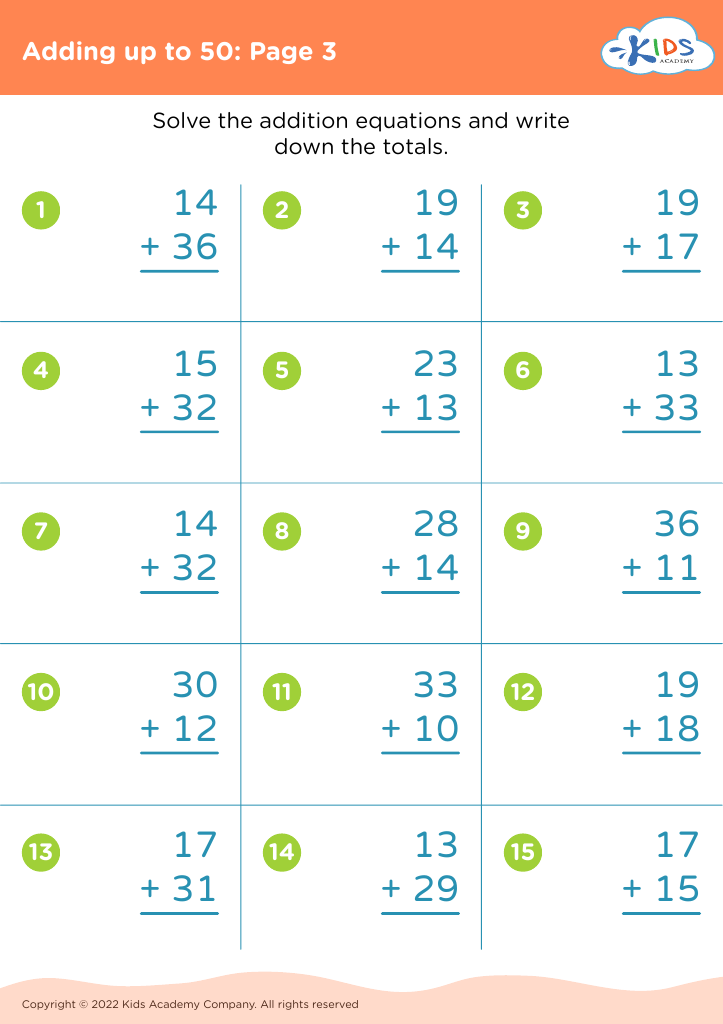
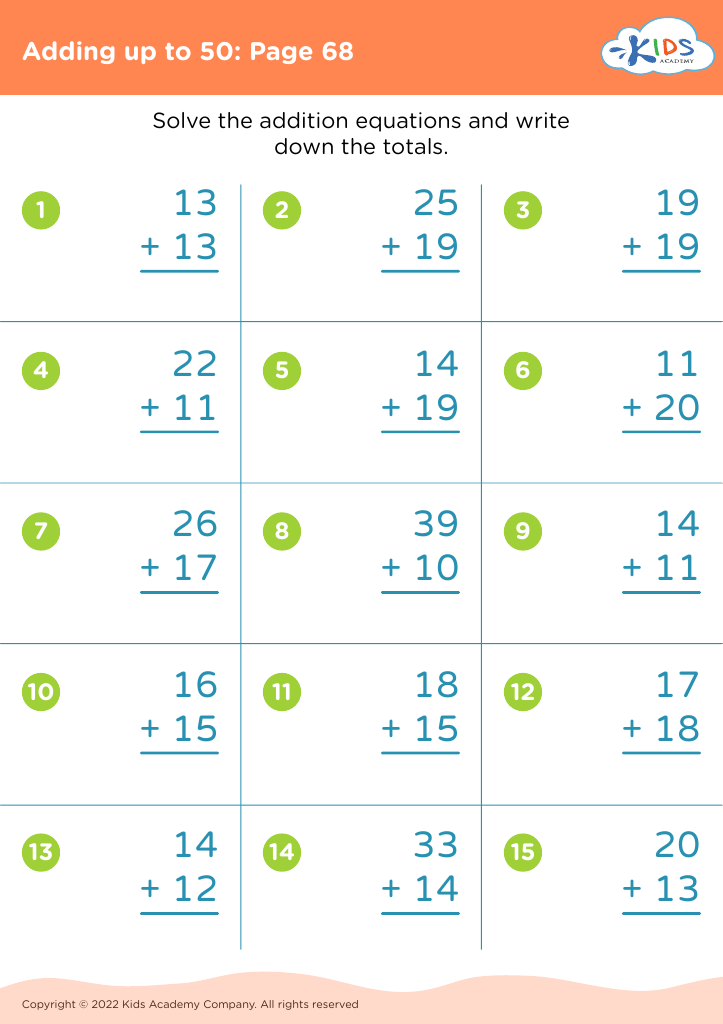
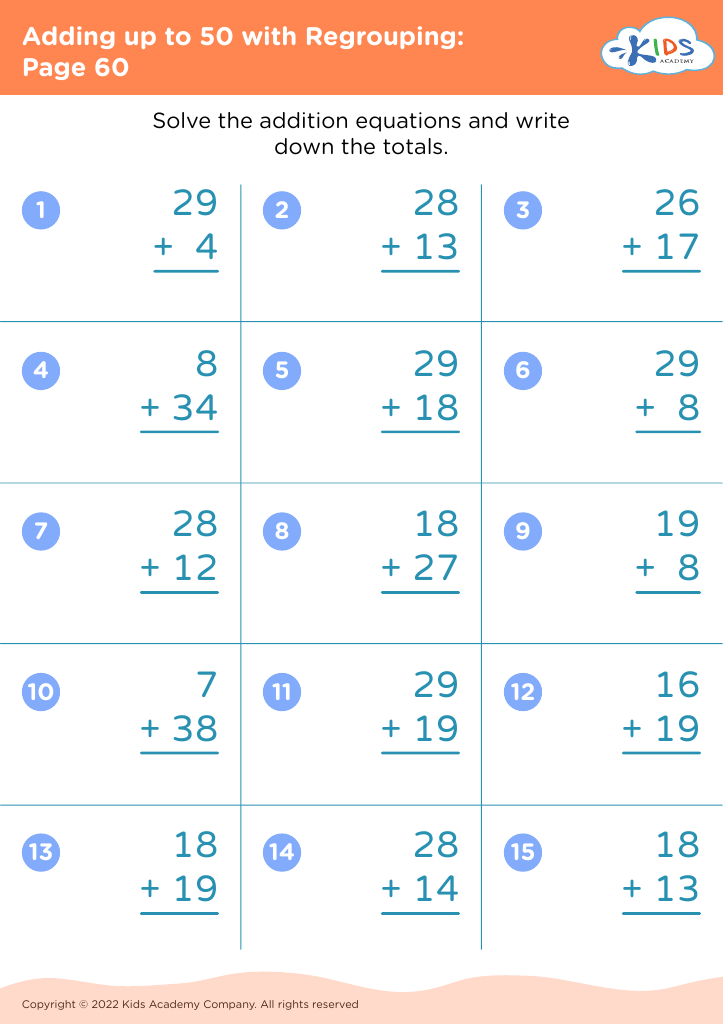
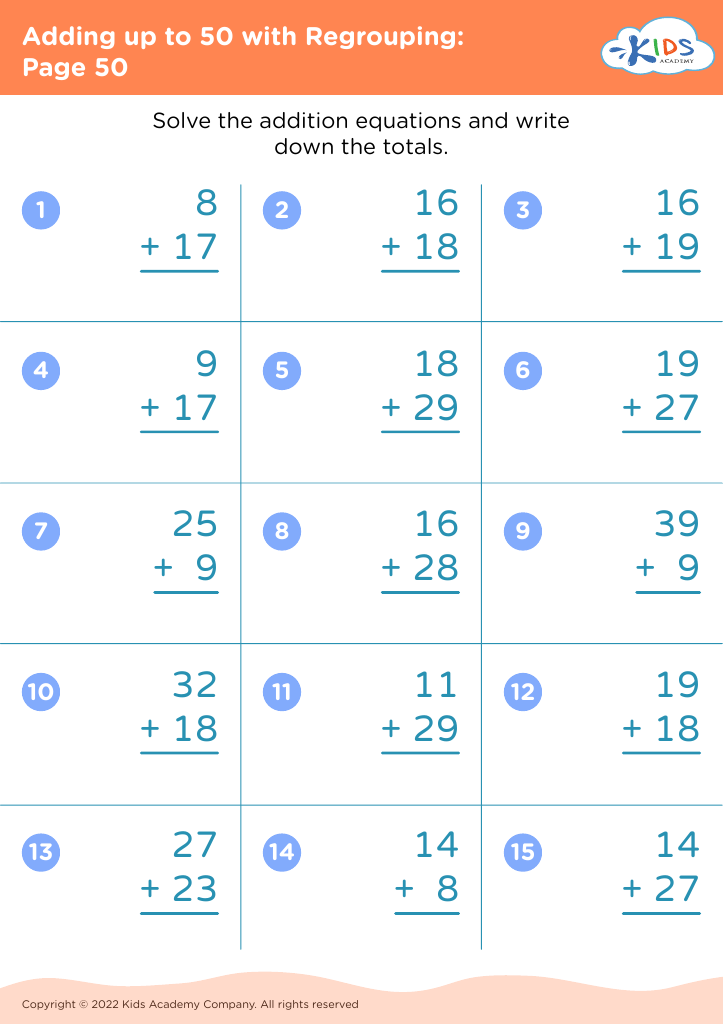
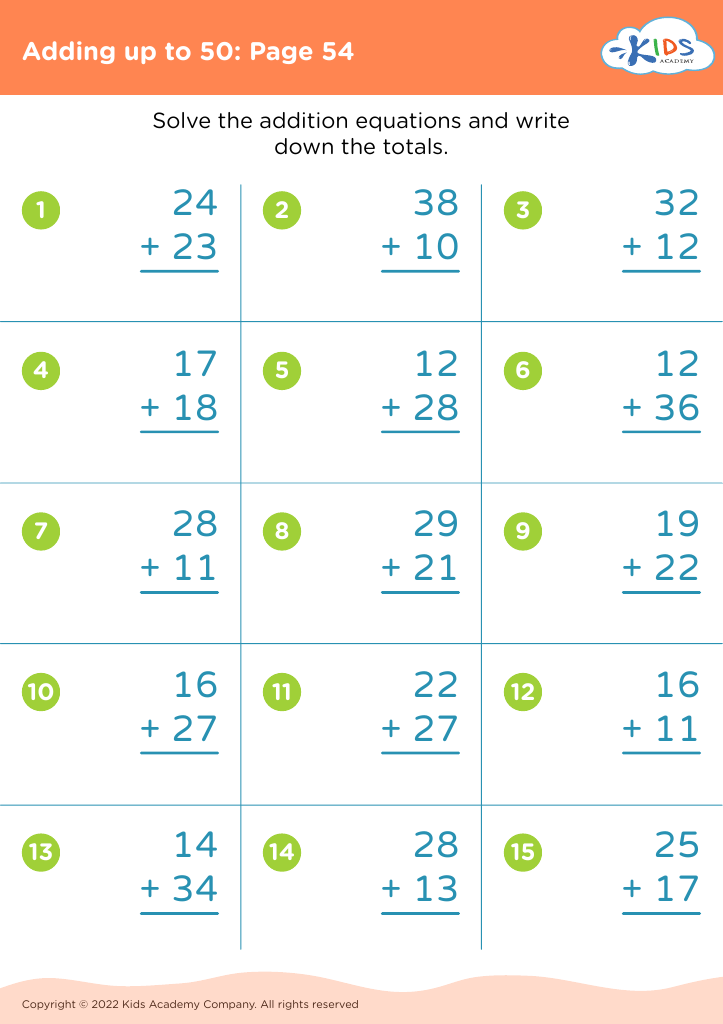
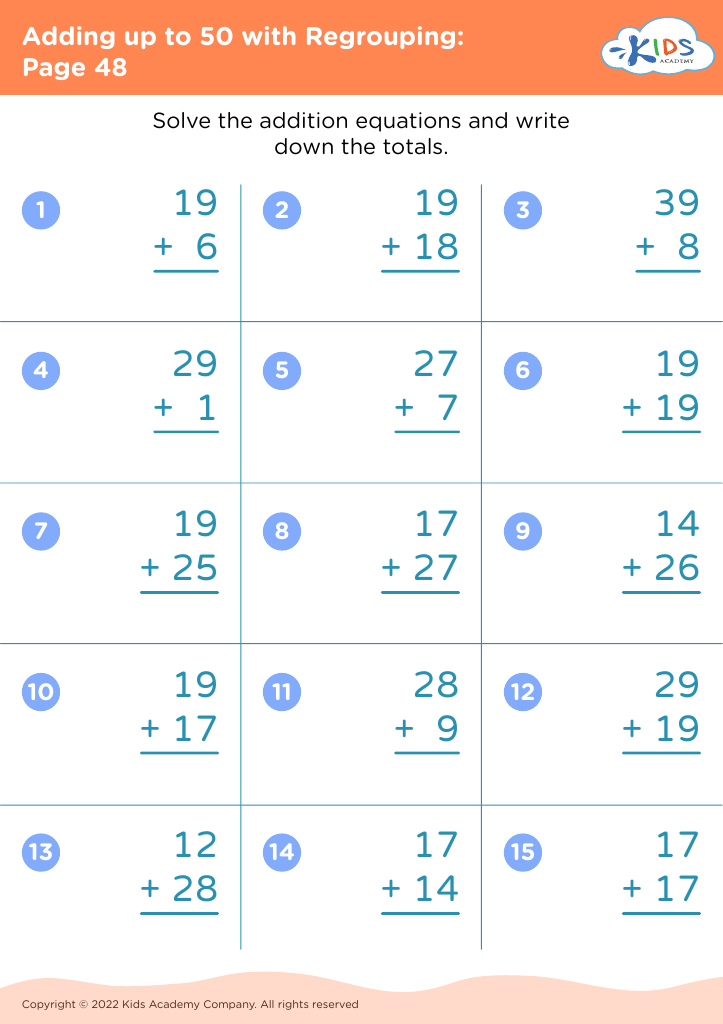
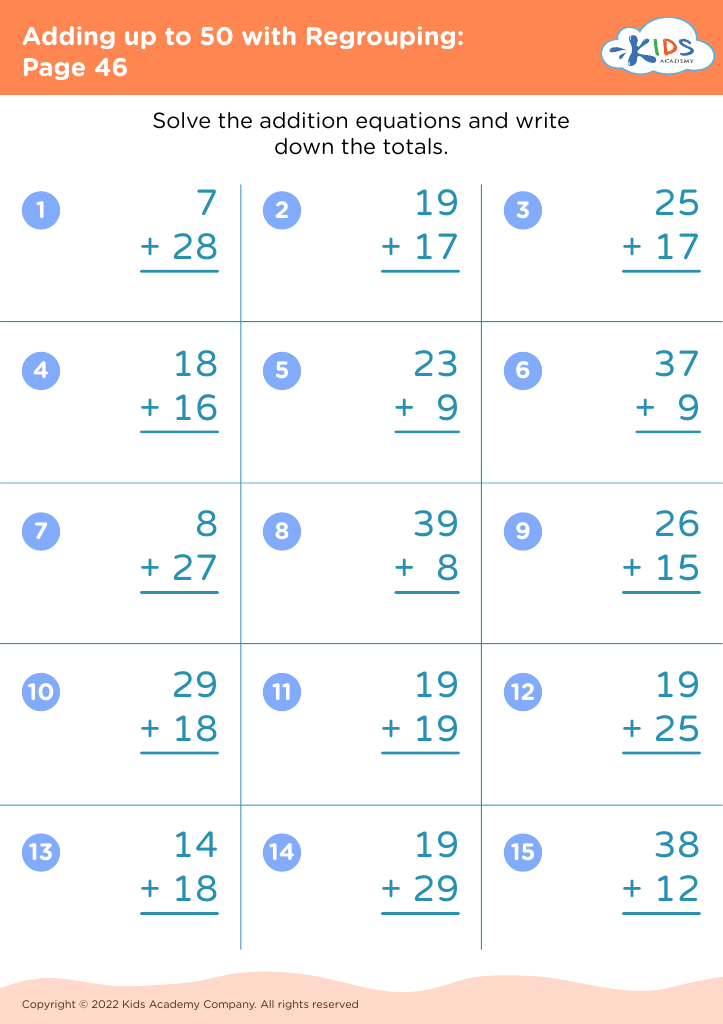
Discover our engaging "Simplifying Fractions Adding Up to 50 Worksheets," specially designed for children aged 5-8. These interactive worksheets make learning fractions fun and accessible, allowing young learners to build a solid foundation in mathematical concepts. Kids will explore how to simplify fractions while mastering their addition skills up to 50. With colorful illustrations and age-appropriate challenges, these worksheets encourage critical thinking and problem-solving. Ideal for classroom use or at-home practice, our resources aim to foster confidence in budding mathematicians. Unlock the joy of learning and watch your child excel in their math journey with our excellent worksheets!




Simplifying fractions is a foundational math skill that has broad applications, making it vital for parents and teachers to foster understanding in children ages 5-8. This skill enhances number sense, enabling young learners to recognize equivalent values and improve their comprehension of fractions.
By focusing on activities that simplify fractions that add up to 50, educators can make math both visual and engaging. Using visual aids, such as fraction circles or bars, allows children to see relationships between numbers. Engaging games can help children practice this skill in a fun, low-pressure environment, supporting a positive attitude towards math.
Furthermore, this concept lays the groundwork for future learning in mathematics, including addition, subtraction, and even basic algebraic thinking. When children grasp the idea of fractions, they build confidence in problem-solving skills that extend beyond arithmetic.
For parents, reinforcing these skills at home cultivates a supportive learning atmosphere. It allows families to participate in educational activities together, ensuring that children not only learn but find joy in discovering new concepts. Overall, simplifying fractions is essential for broadening children's understanding of math, helping them become proficient and enthusiastic learners.








