Understanding fractions Adding up to 50 Worksheets for Ages 5-8
47 filtered results
-
From - To
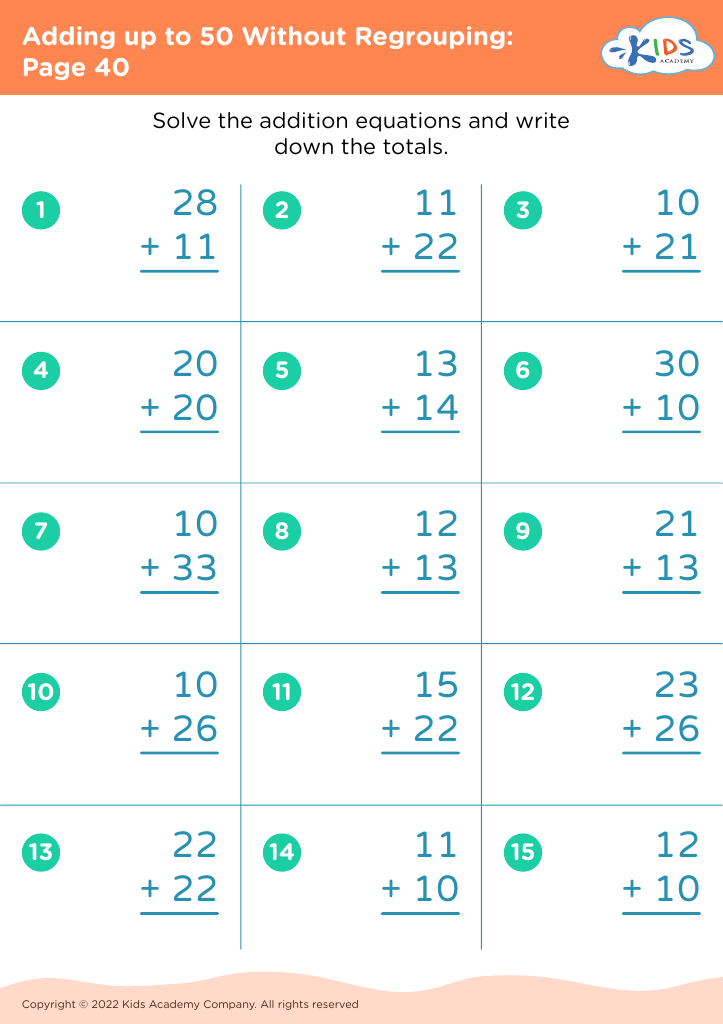
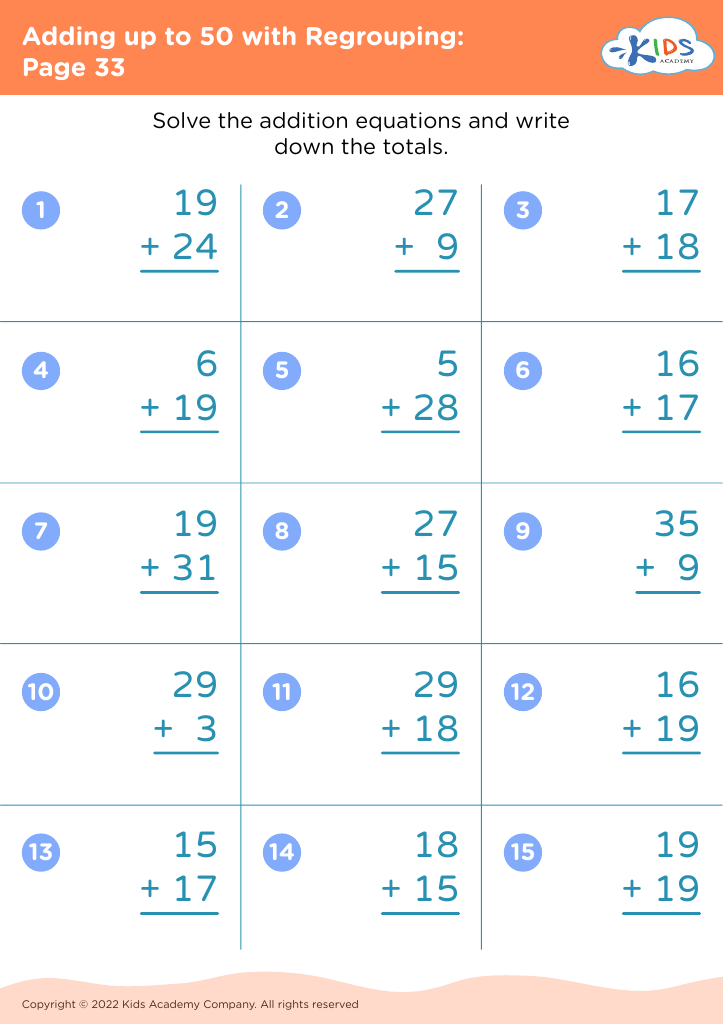
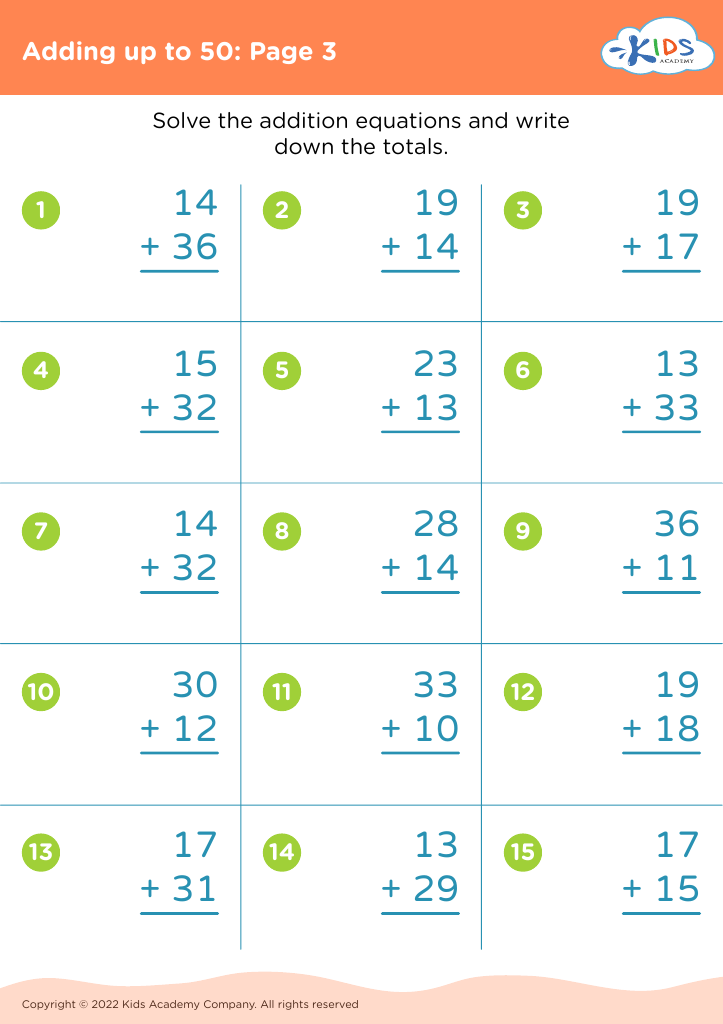
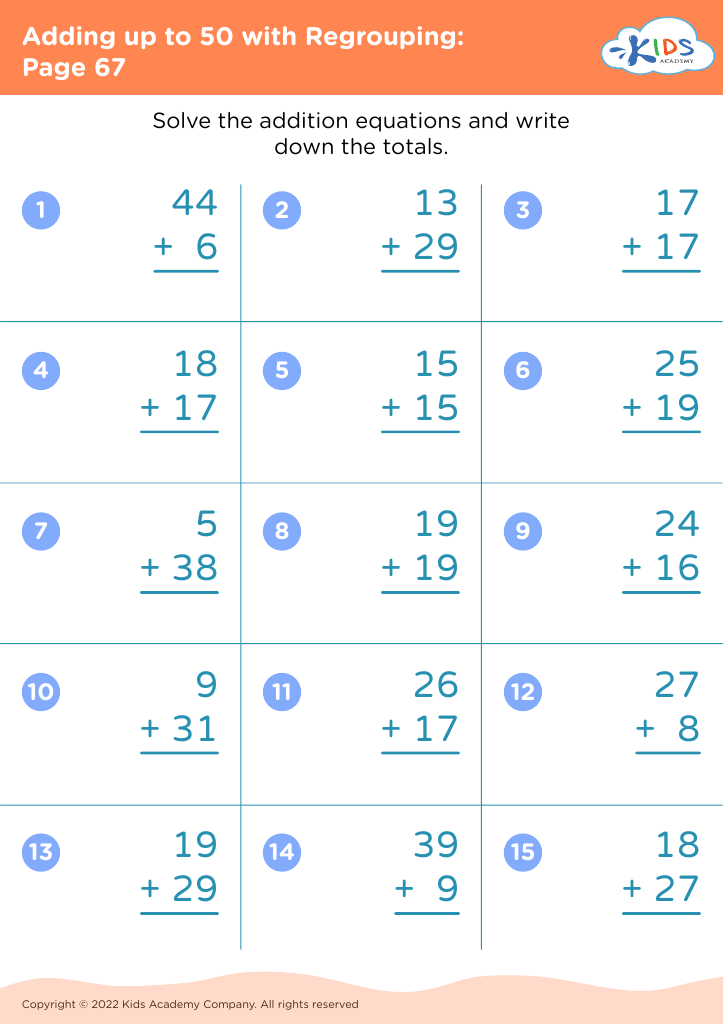
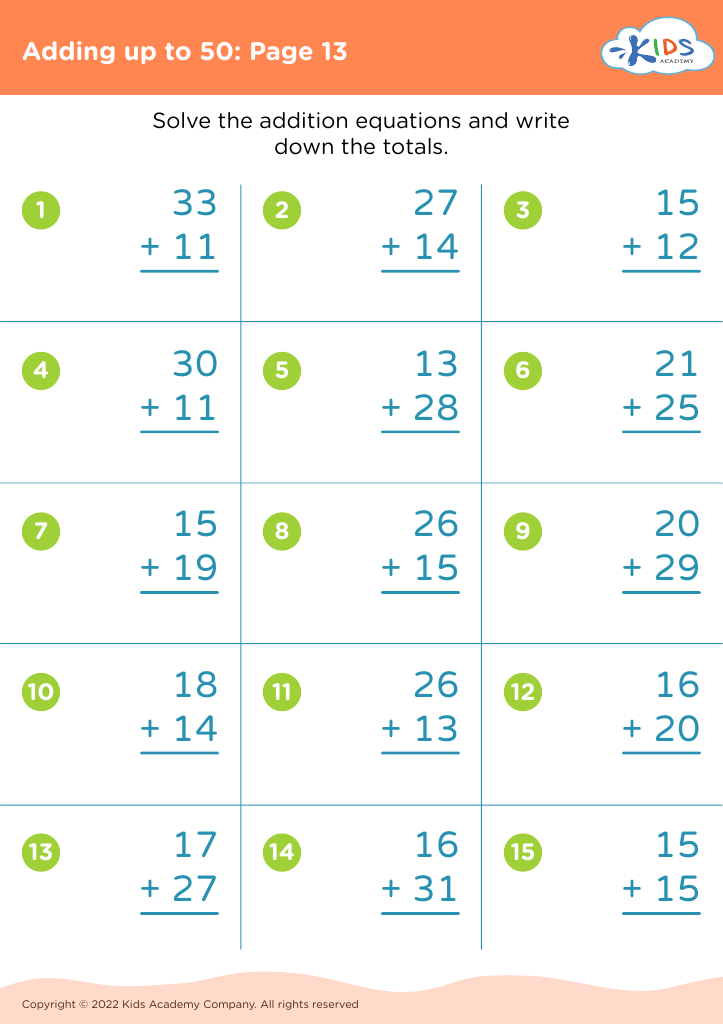
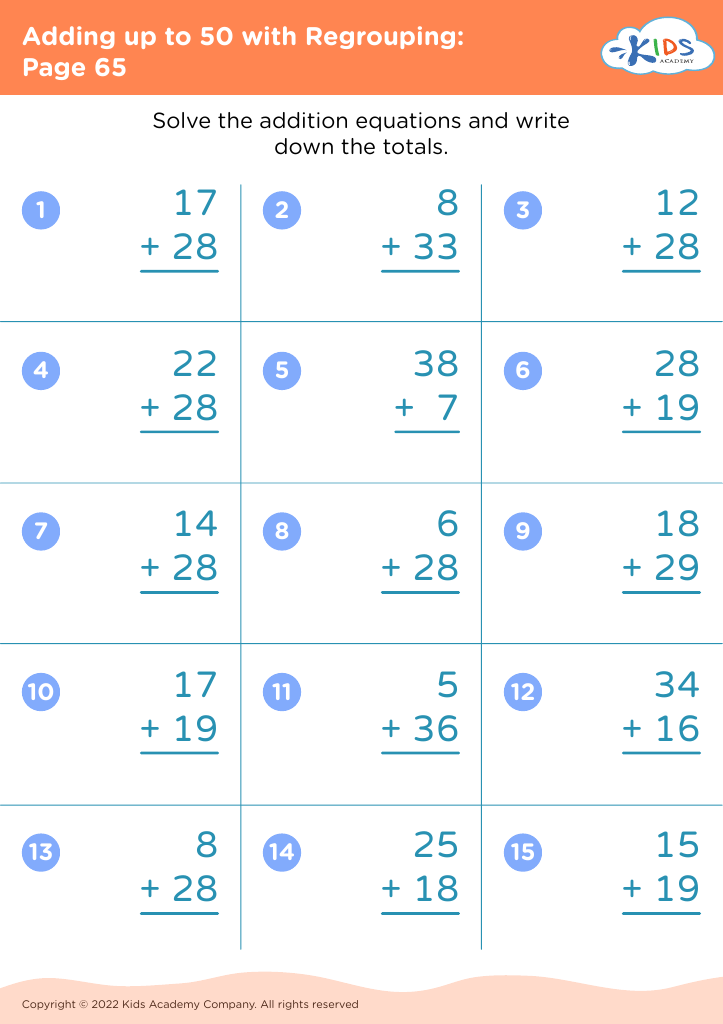
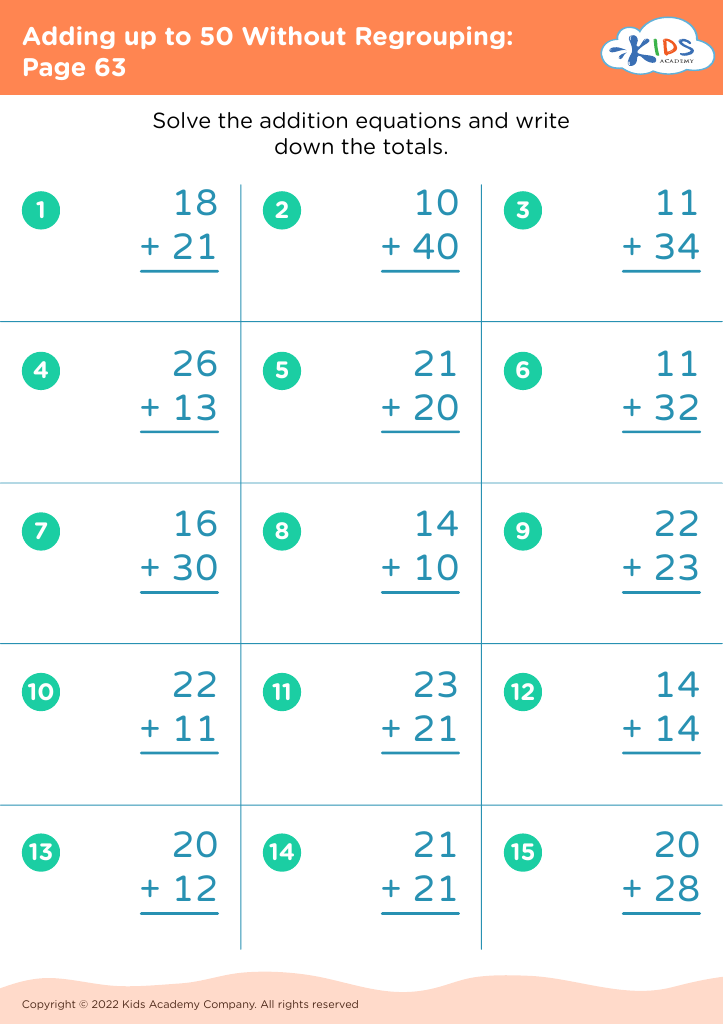
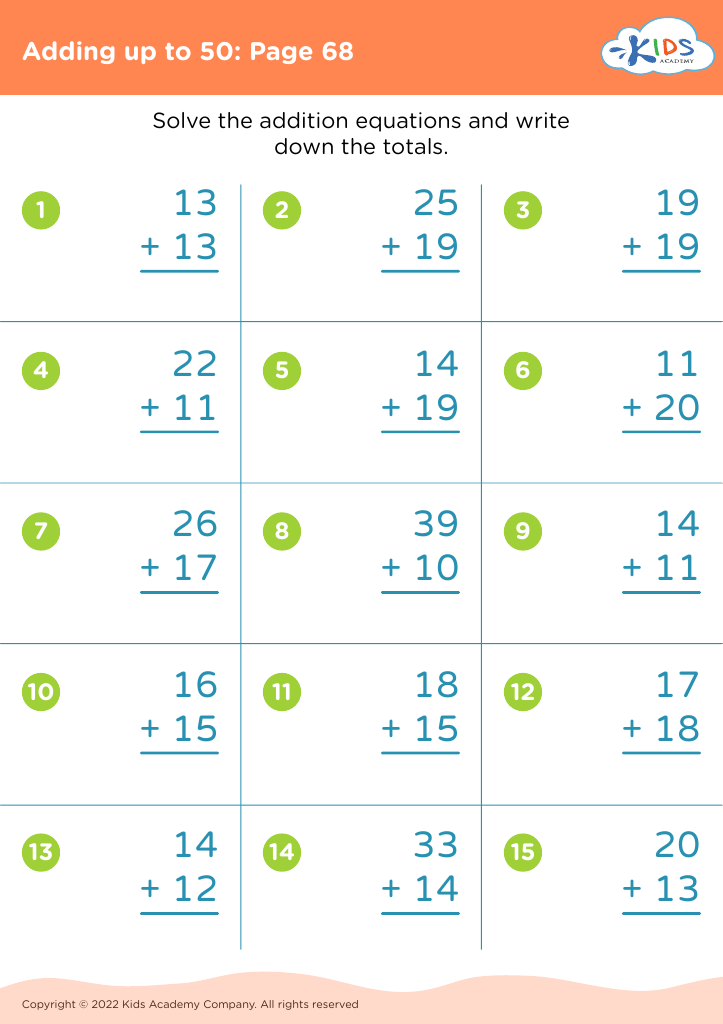
Our "Understanding Fractions Adding up to 50 Worksheets for Ages 5-8" are specially designed to help young learners grasp the concept of fractions while practicing addition. These worksheets blend colorful visuals and engaging activities to make learning math fun and interactive. Ideal for classroom or at-home practice, each sheet guides children through step-by-step problems, strengthening their skills in fractions and addition up to 50. Perfect for ages 5-8, these printables enhance learning confidence and build a solid foundation in mathematics. Explore a rich variety of exercises that make understanding fractions simple and enjoyable!
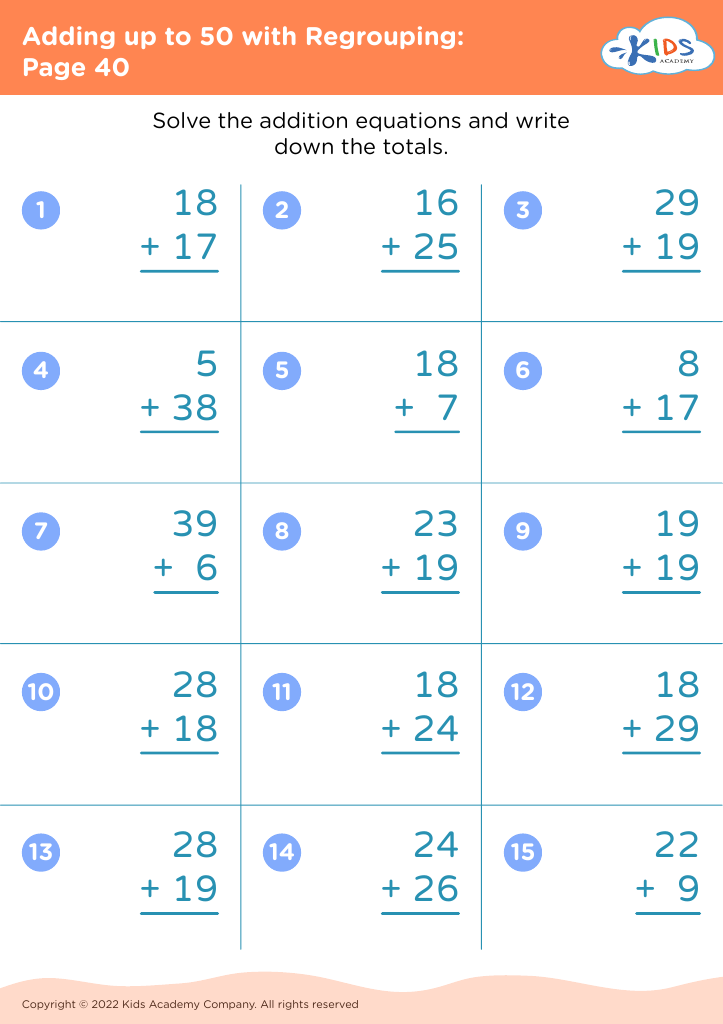
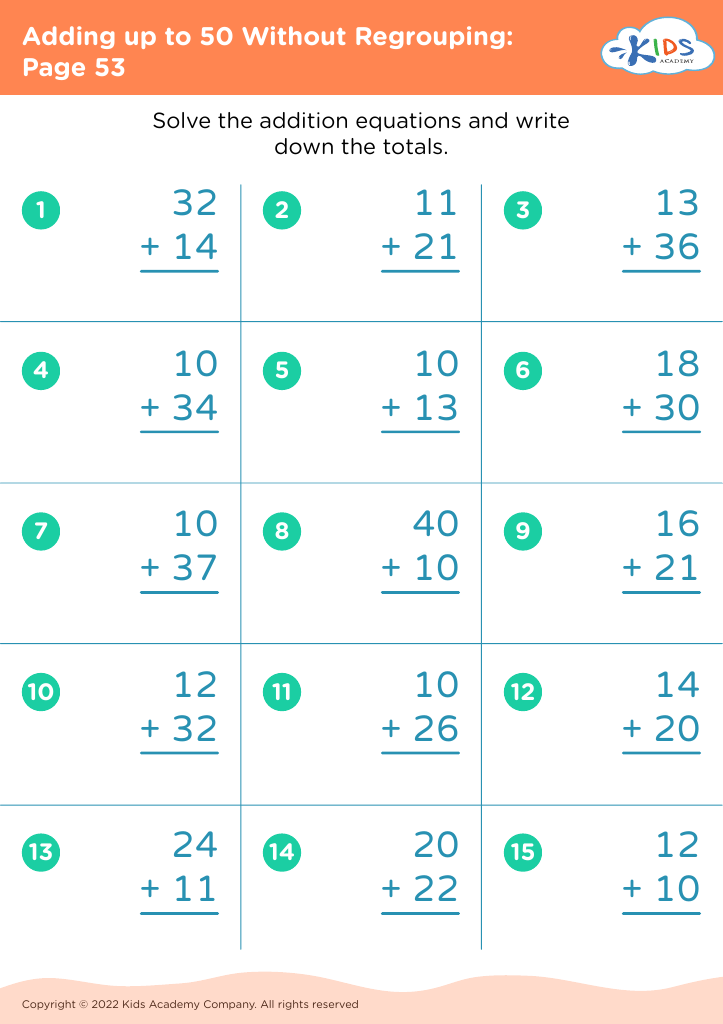
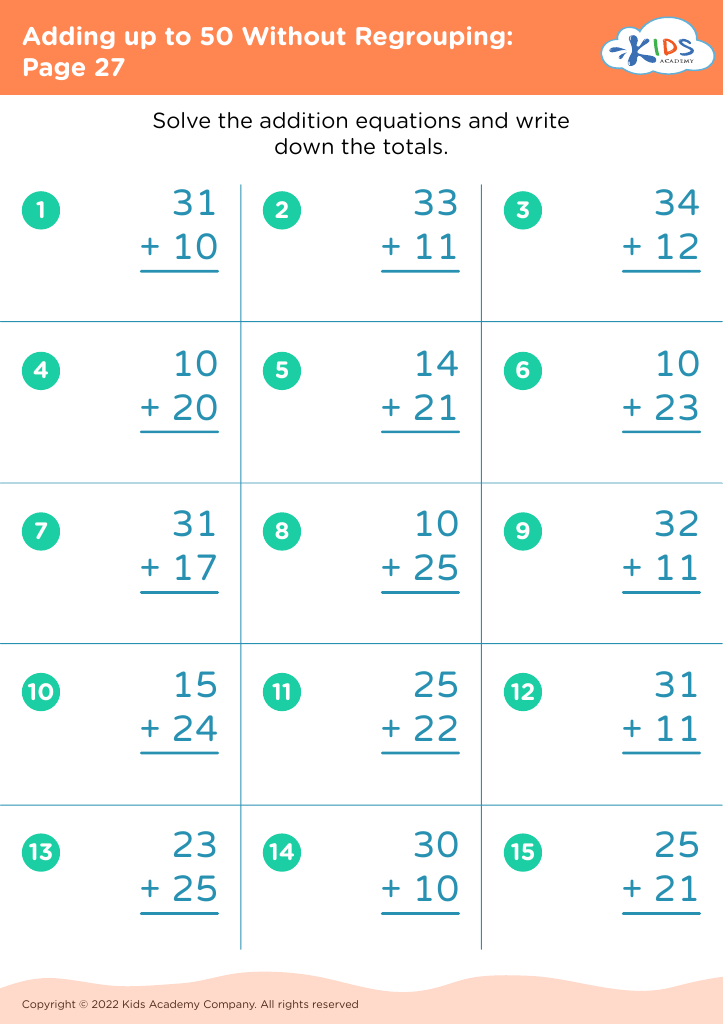
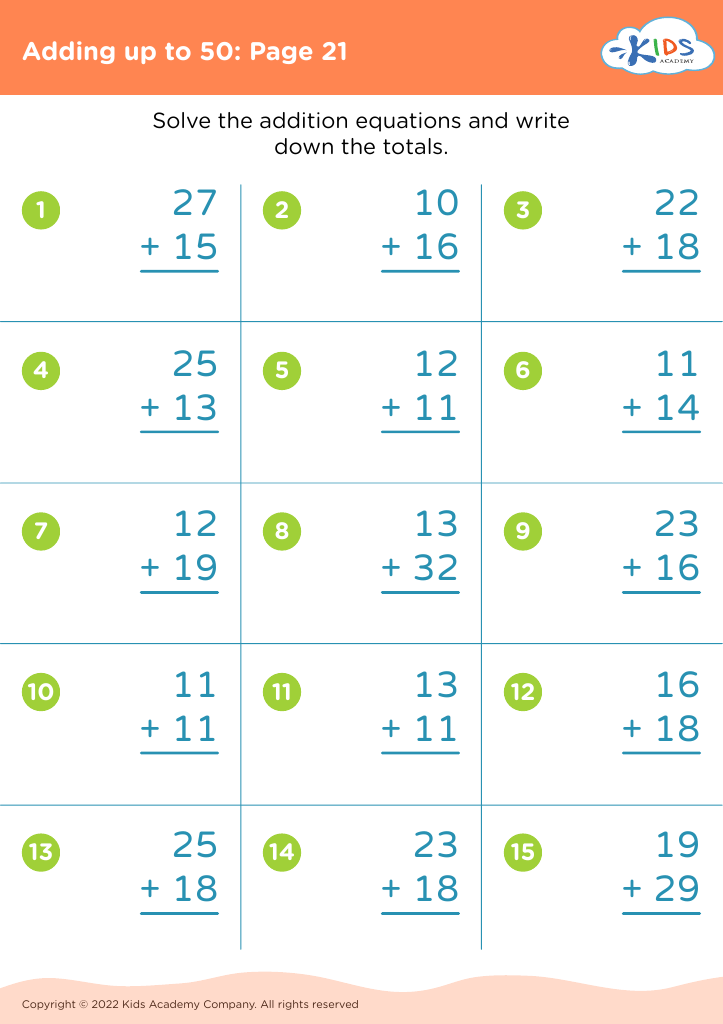
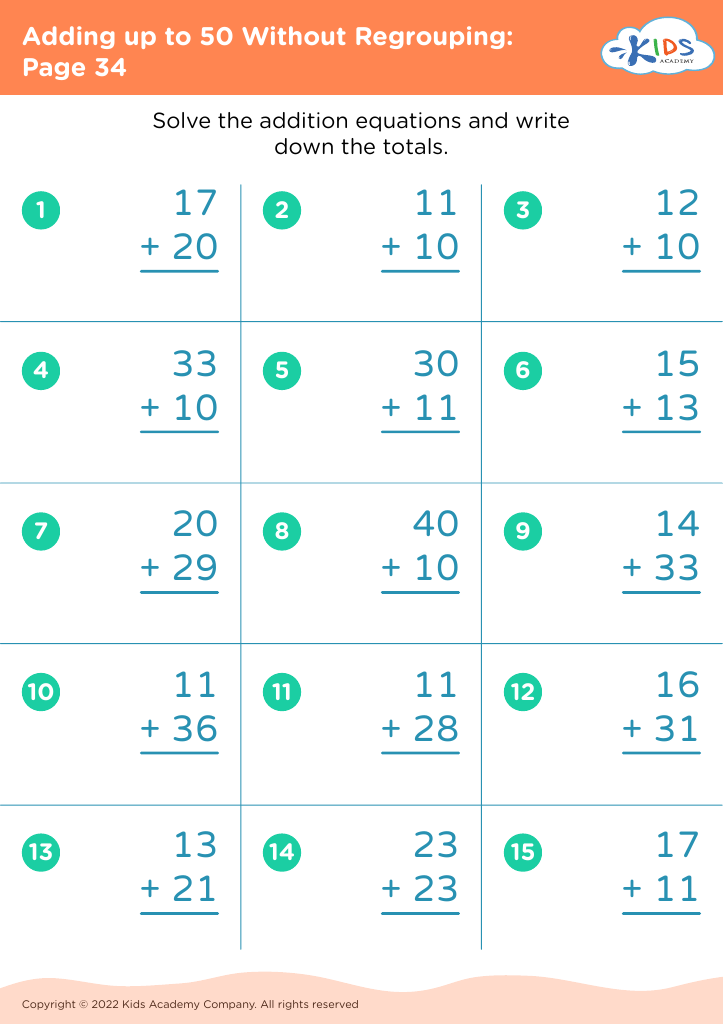
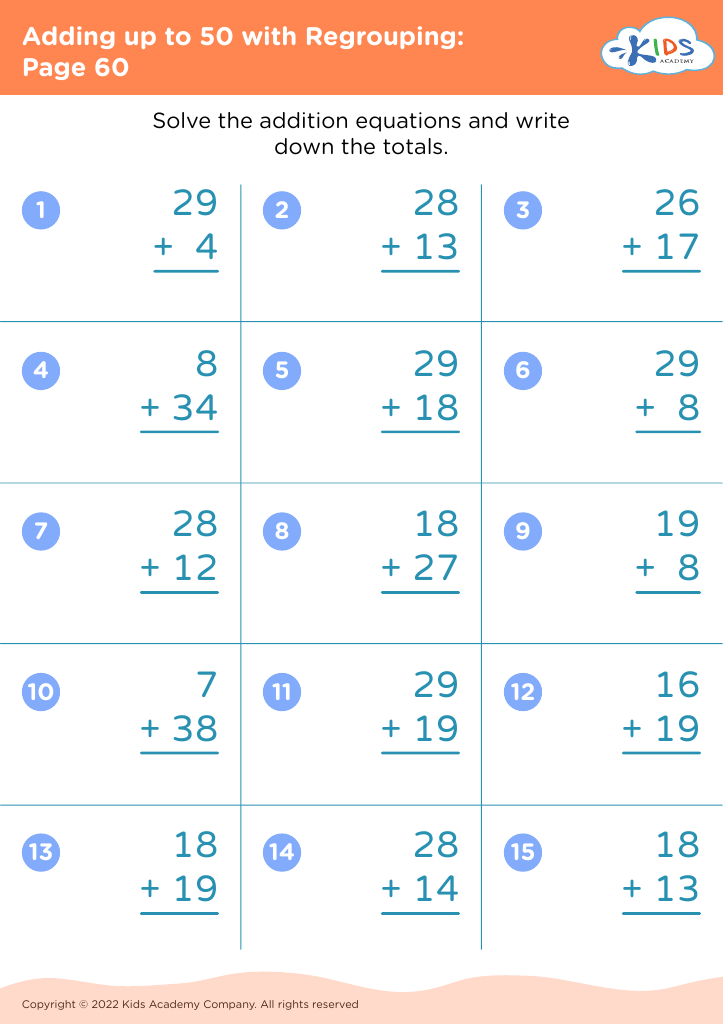
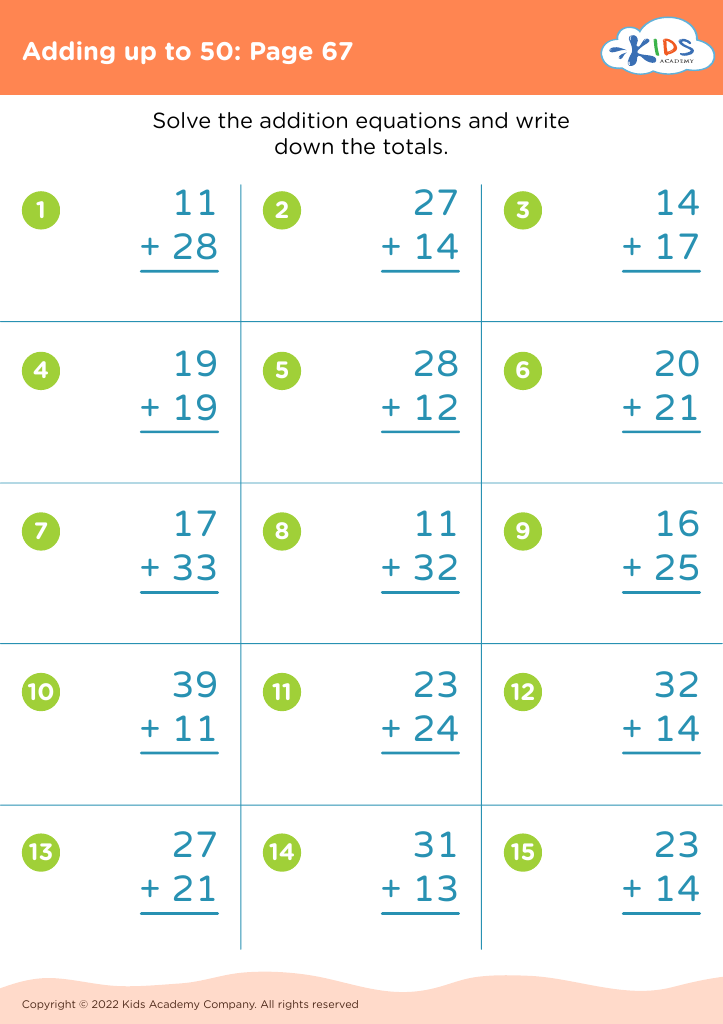
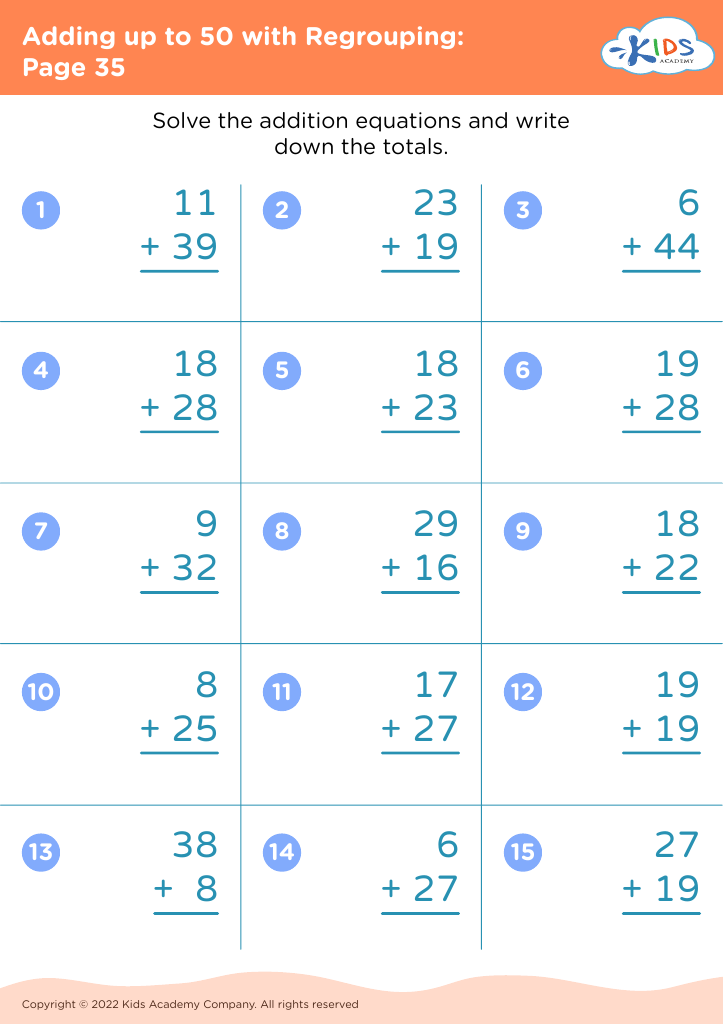
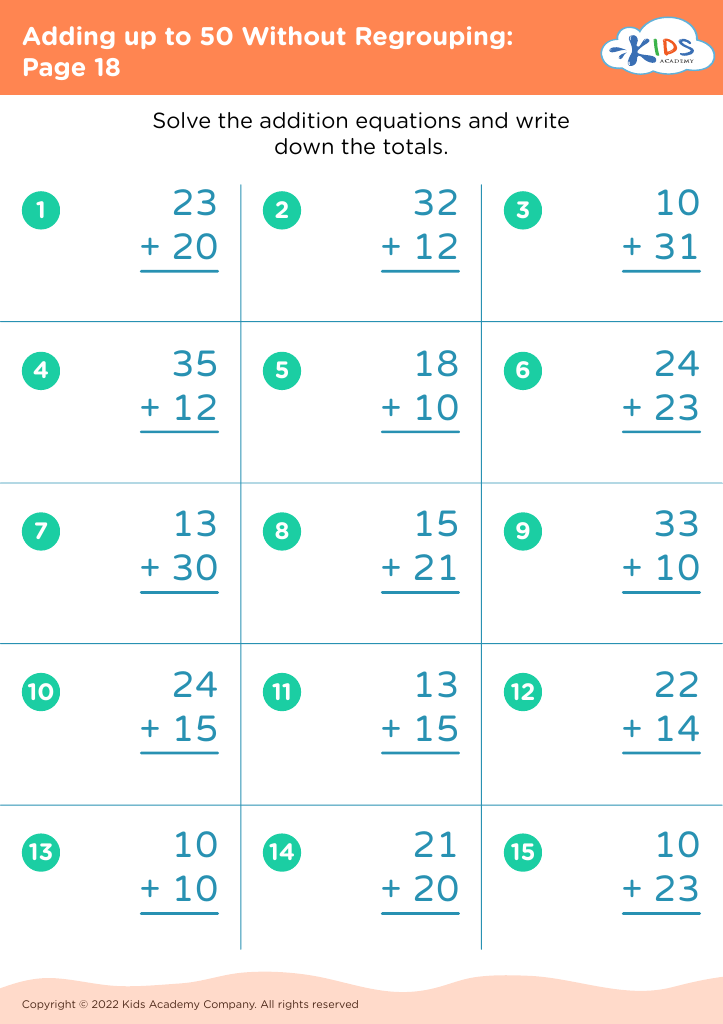
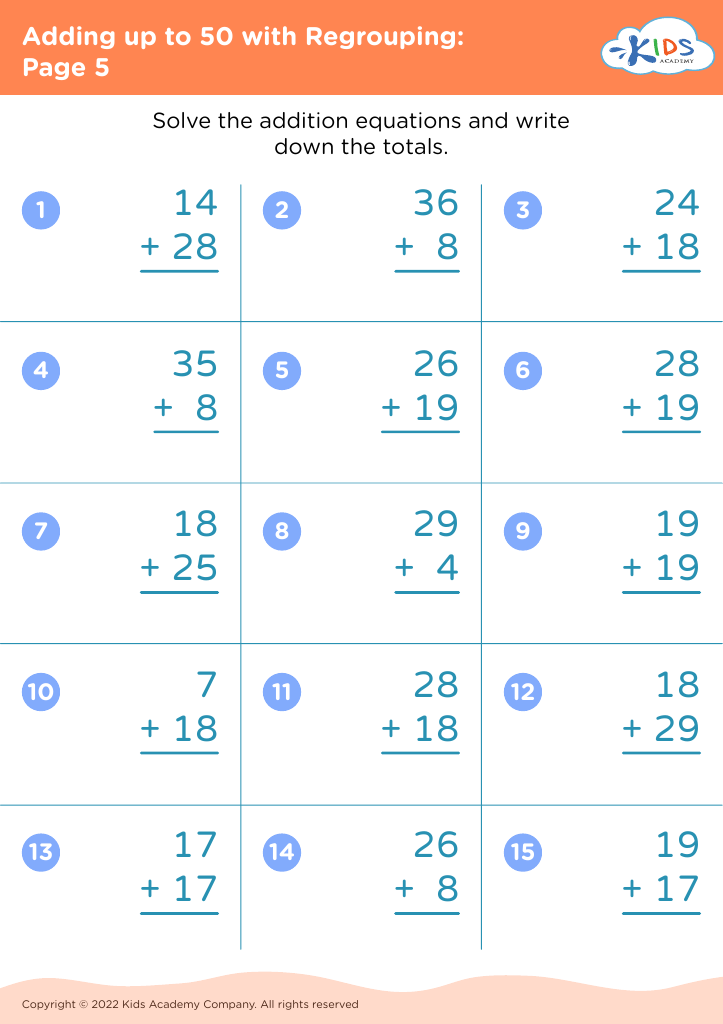
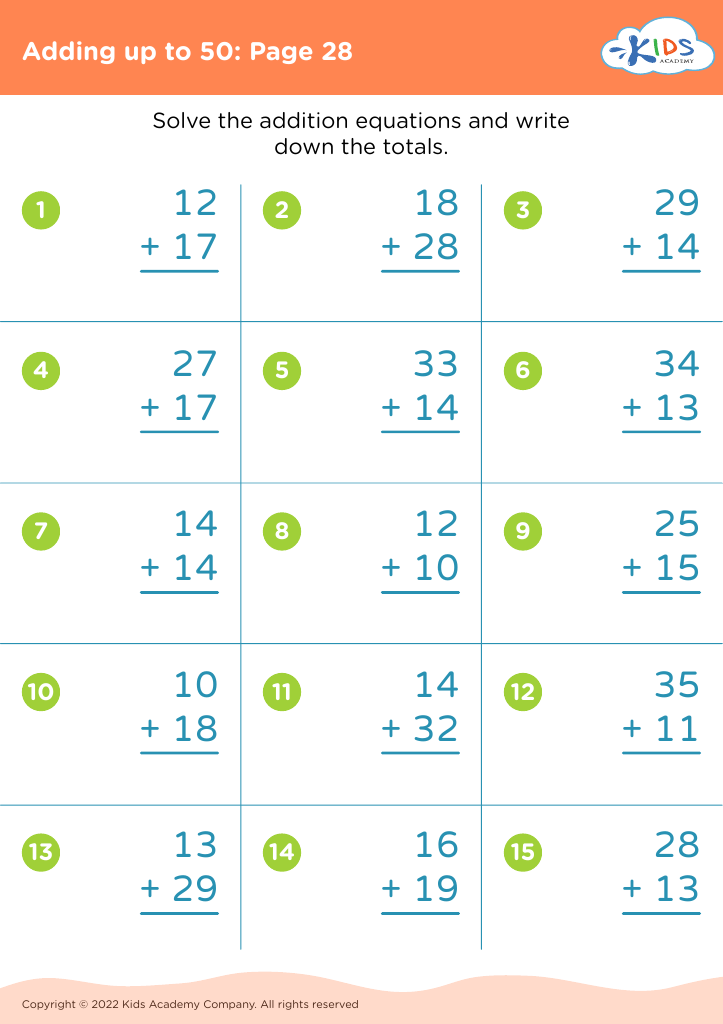
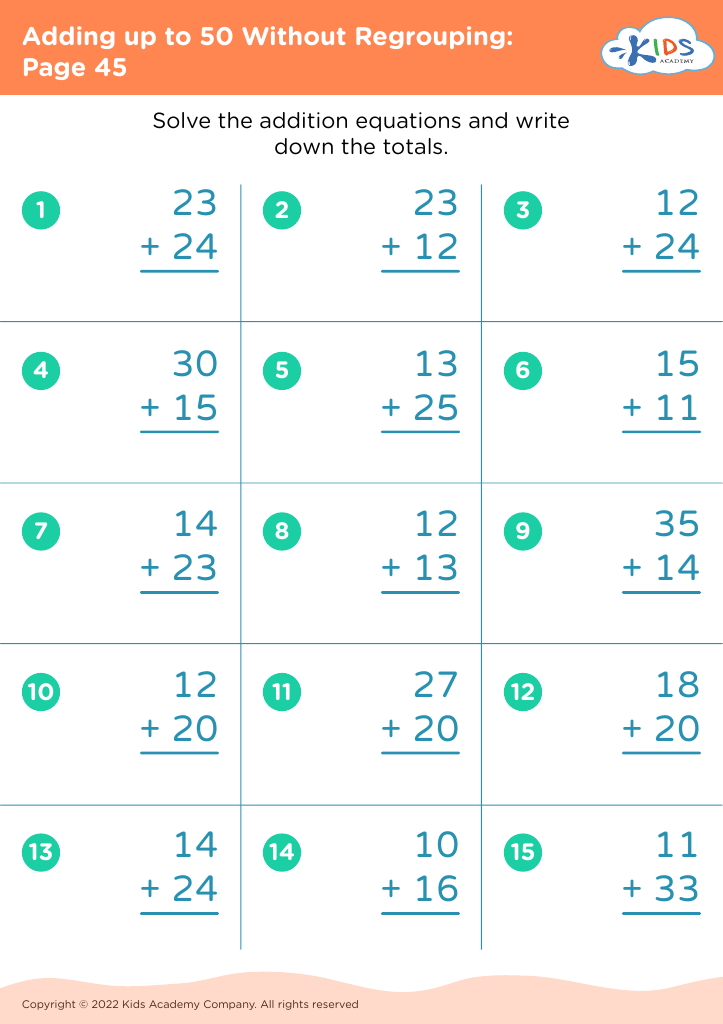
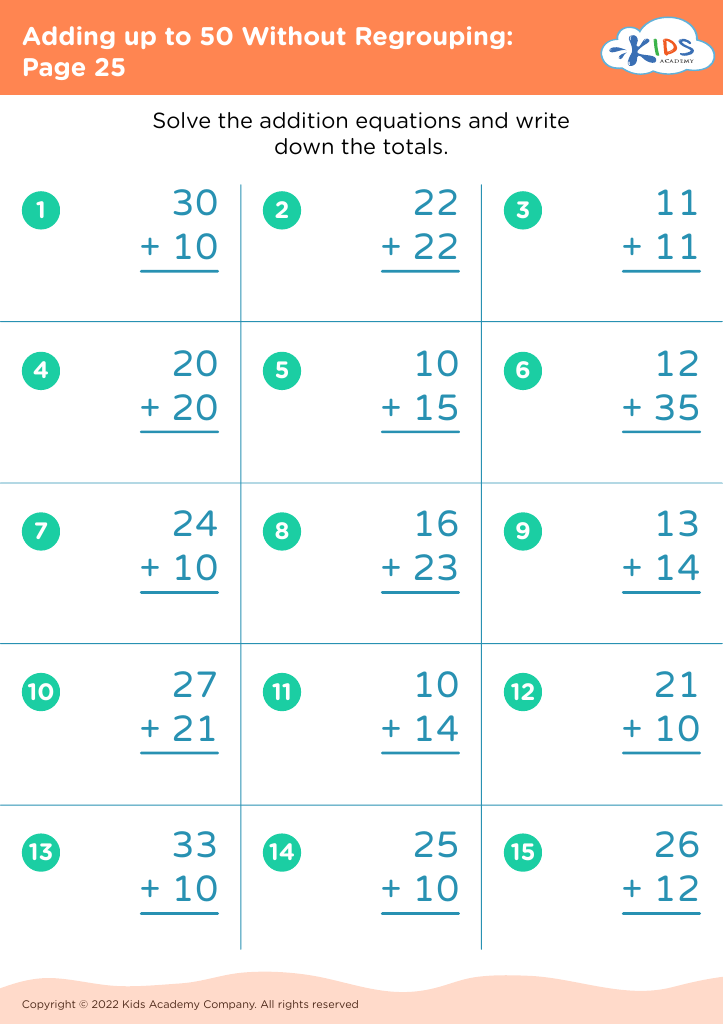
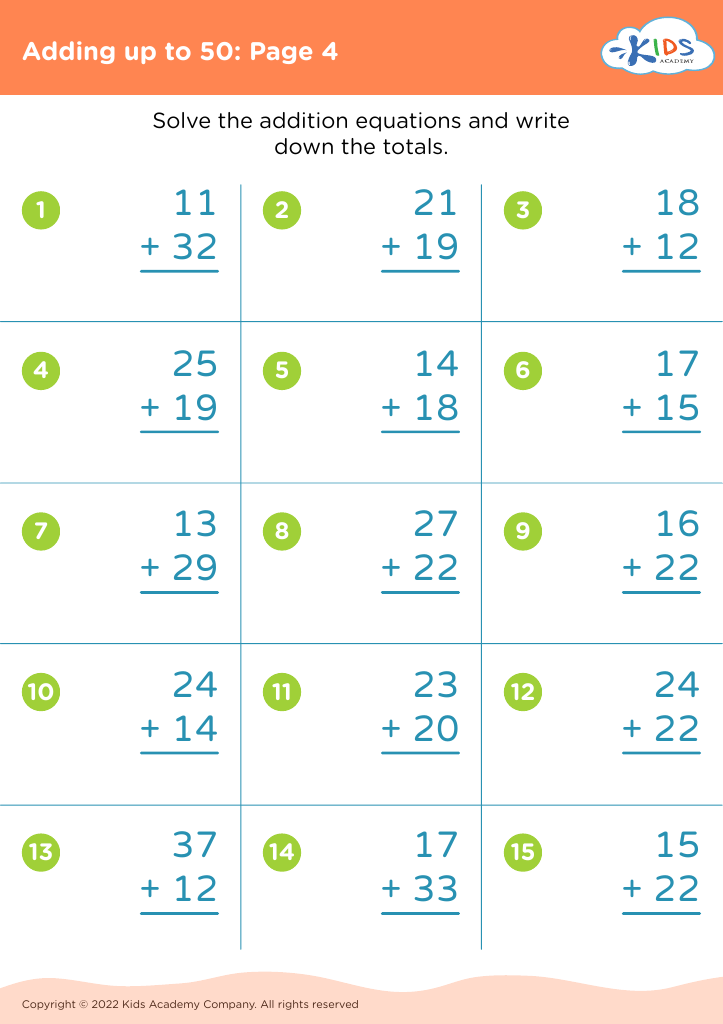
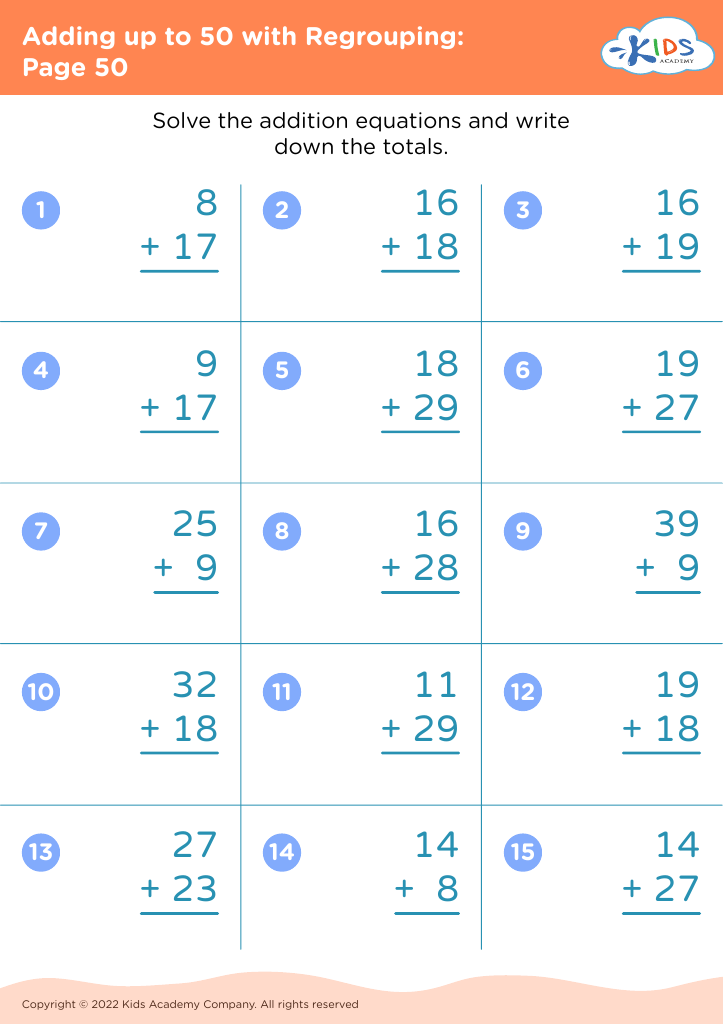
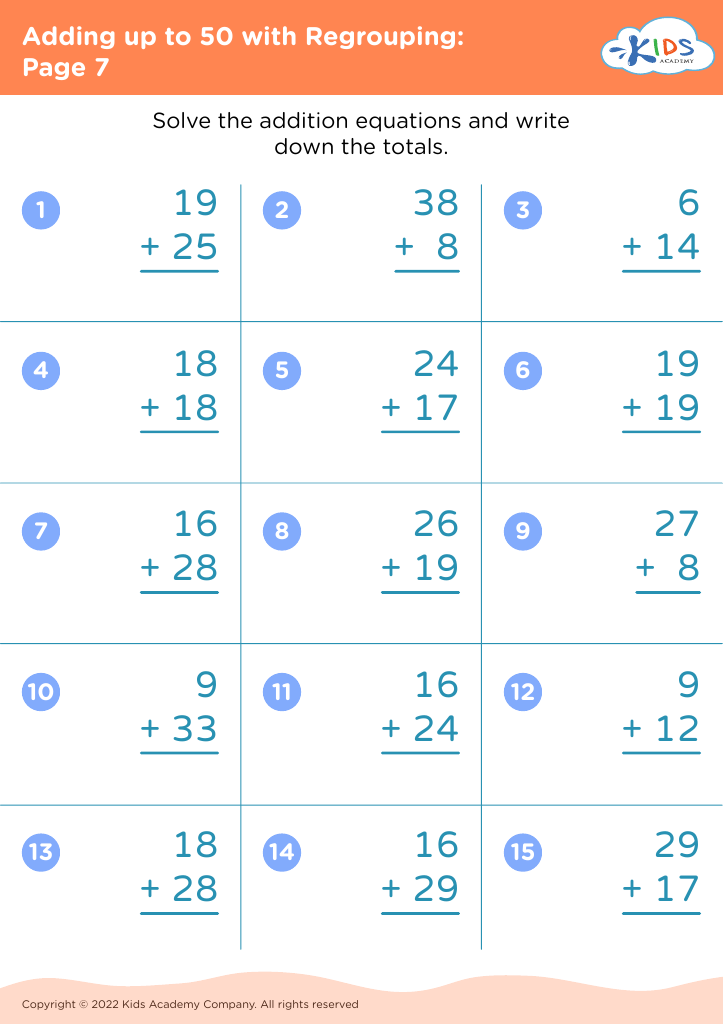




Understanding fractions and practicing adding numbers up to 50 are fundamental skills that can significantly bolster the development of mathematical reasoning in children aged 5-8. At this foundational stage, young learners are developing their number sense, which is crucial for their future success in more advanced math concepts.
Engaging with fractions helps children grasp the idea that numbers can be divided into parts, fostering a deep comprehension of division, ratios, and proportional relationships. This concept is indispensable, not only in mathematics but also in everyday activities such as cooking or sharing.
Simultaneously, mastering addition up to 50 strengthens a child's ability to recognize number patterns, which aids in mental arithmetic. This progressive rehearsing of basic sums lays the groundwork for tackling more complex equations and enhances problem-solving skills. These arithmetic exercises also play a vital role in developing memory and concentration, skills that are valuable across all areas of learning.
Parents and teachers who prioritize these areas contribute to a solid math foundation, which can increase a child's confidence and enjoyment of the subject. Early success in mathematics often leads to a lifelong positive attitude towards the subject, paving the way for future achievements and a sustained interest in STEM (Science, Technology, Engineering, and Mathematics) areas.








