Understanding patterns Adding up to 50 Worksheets for Ages 5-8
8 filtered results
-
From - To
Explore our "Understanding Patterns: Adding Up to 50" worksheets, specially designed for children aged 5-8. These engaging resources help young learners grasp the concept of patterns while building their addition skills up to 50. Kids will enjoy colorful activities that reinforce pattern recognition and promote mathematical thinking. Our worksheets encourage creativity, hand-eye coordination, and cognitive development through fun and interactive exercises. By working through these materials, children will gain confidence in mathematics while developing essential problem-solving skills. Perfect for classroom use or at-home learning, our worksheets are easy to access and provide a comprehensive approach to understanding patterns in math. Get started today!
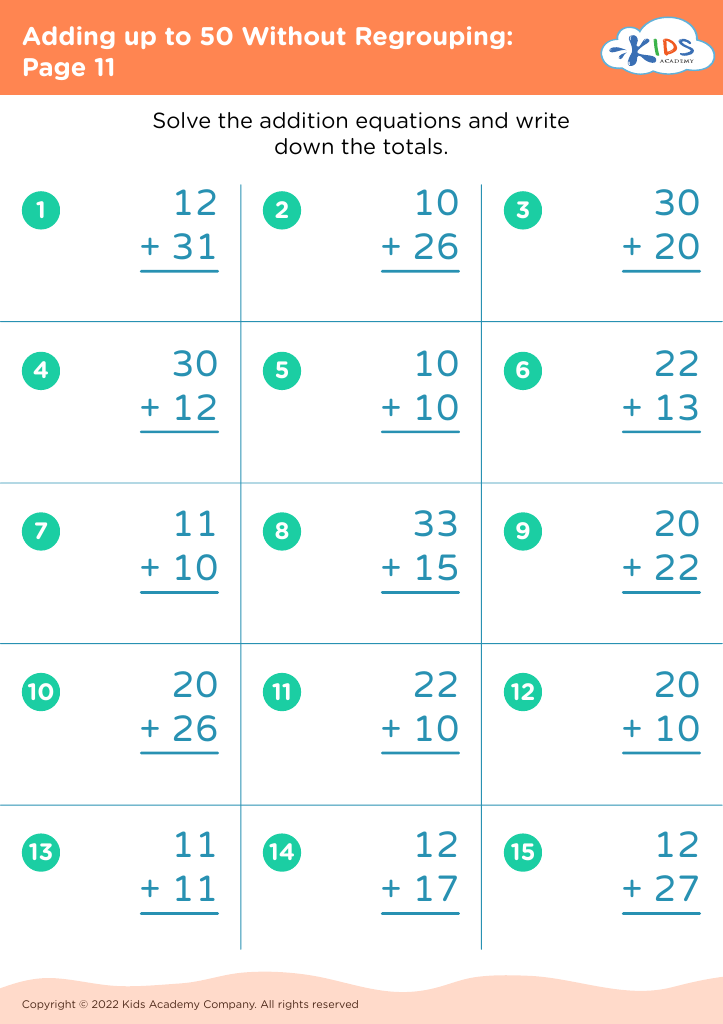
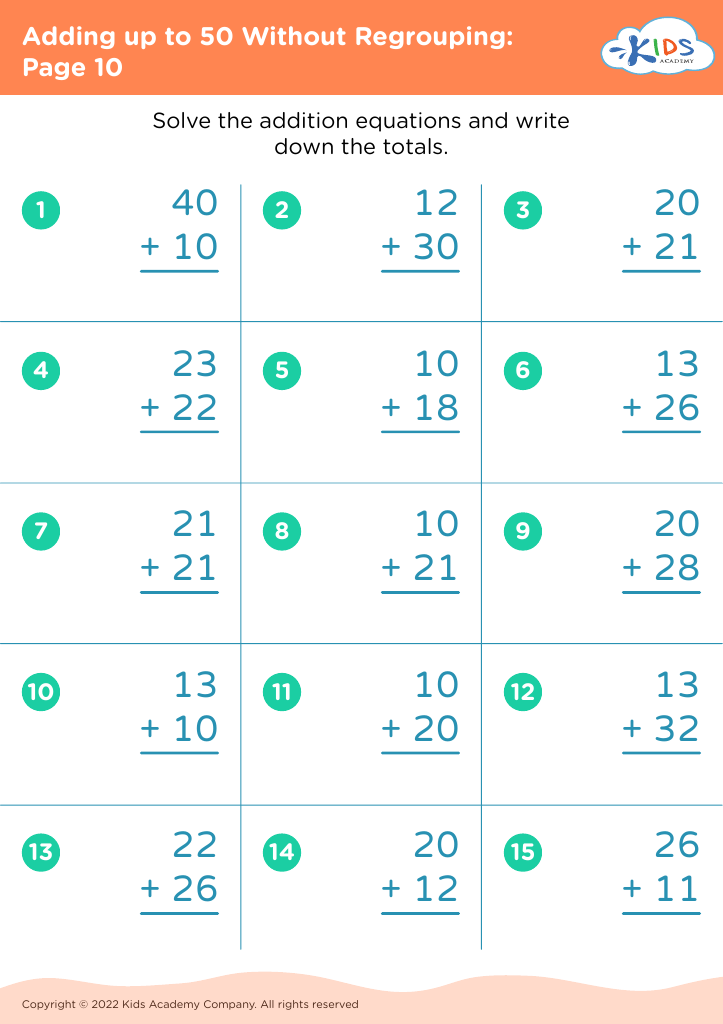
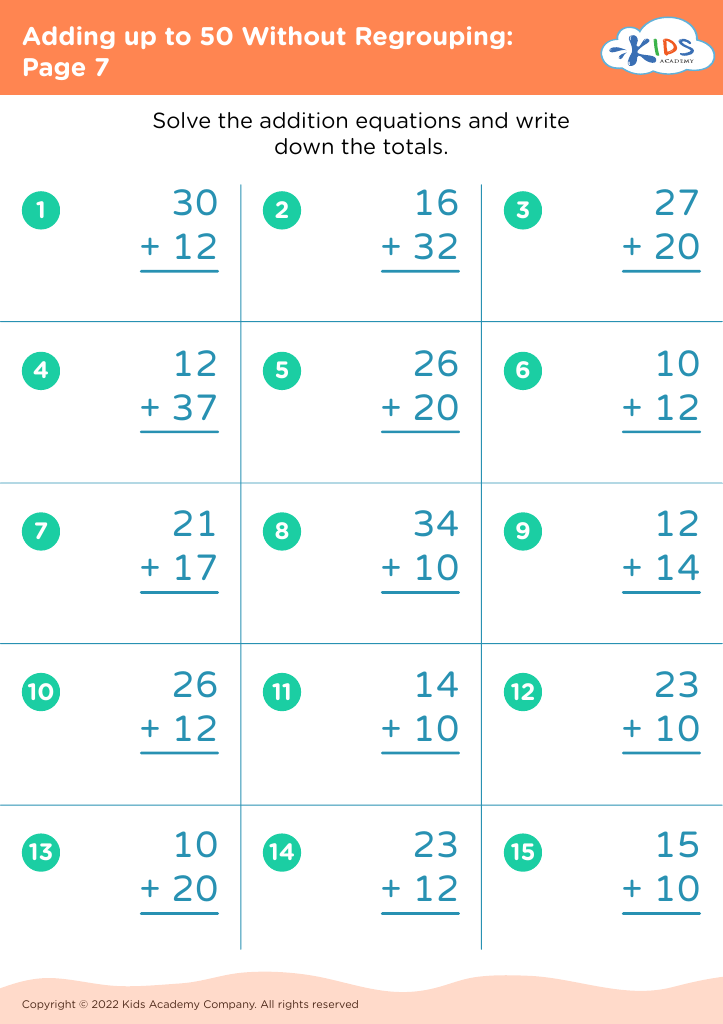
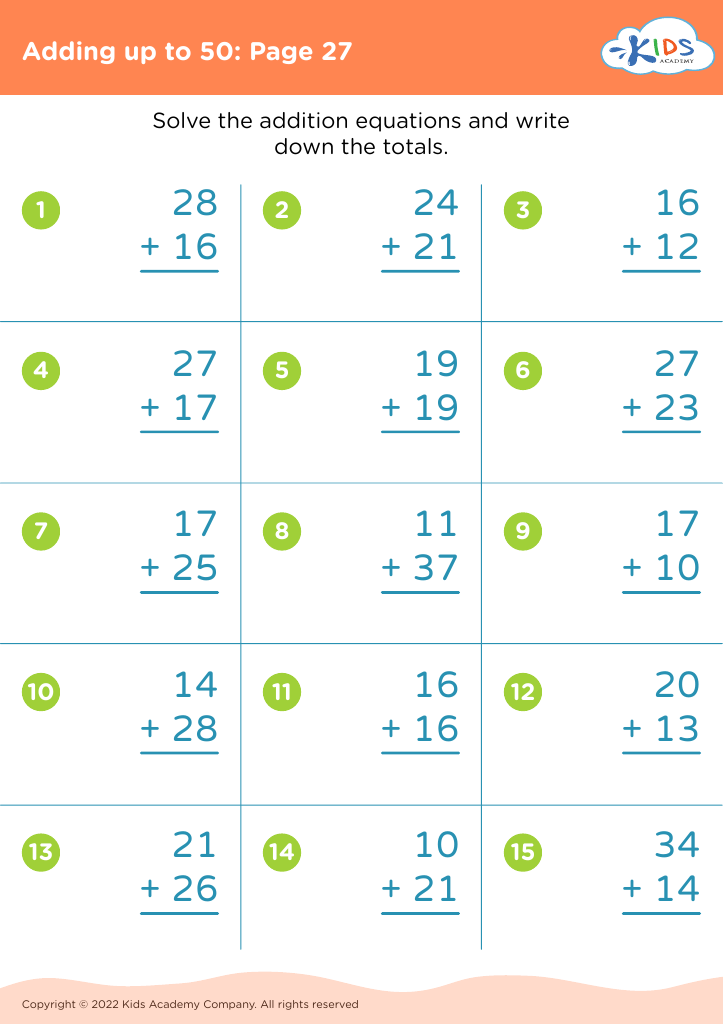
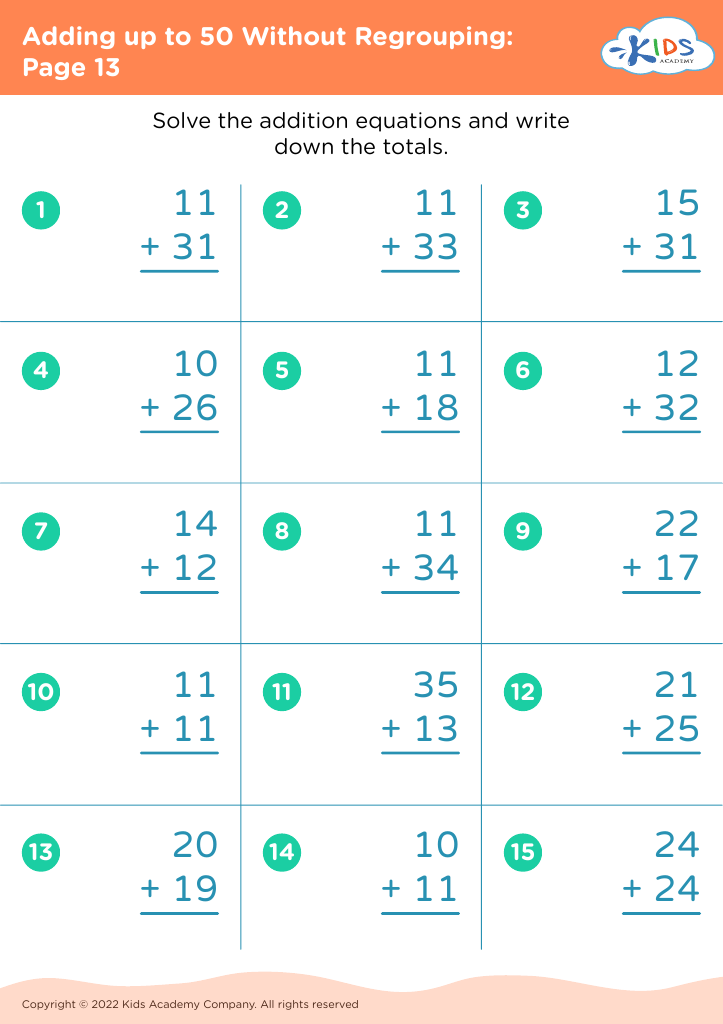
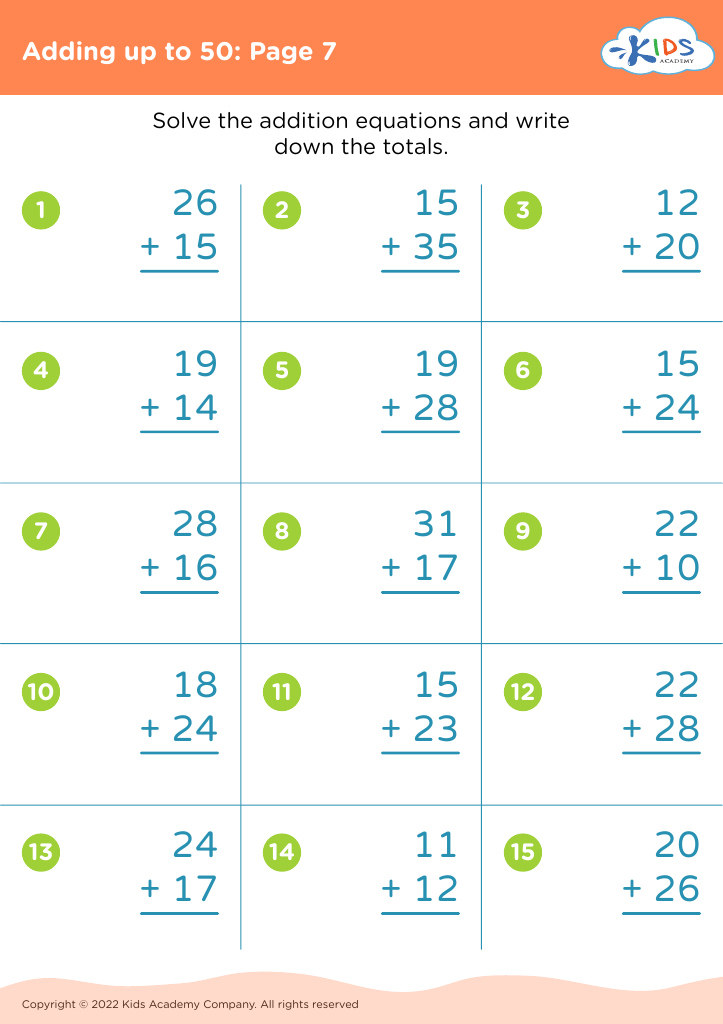
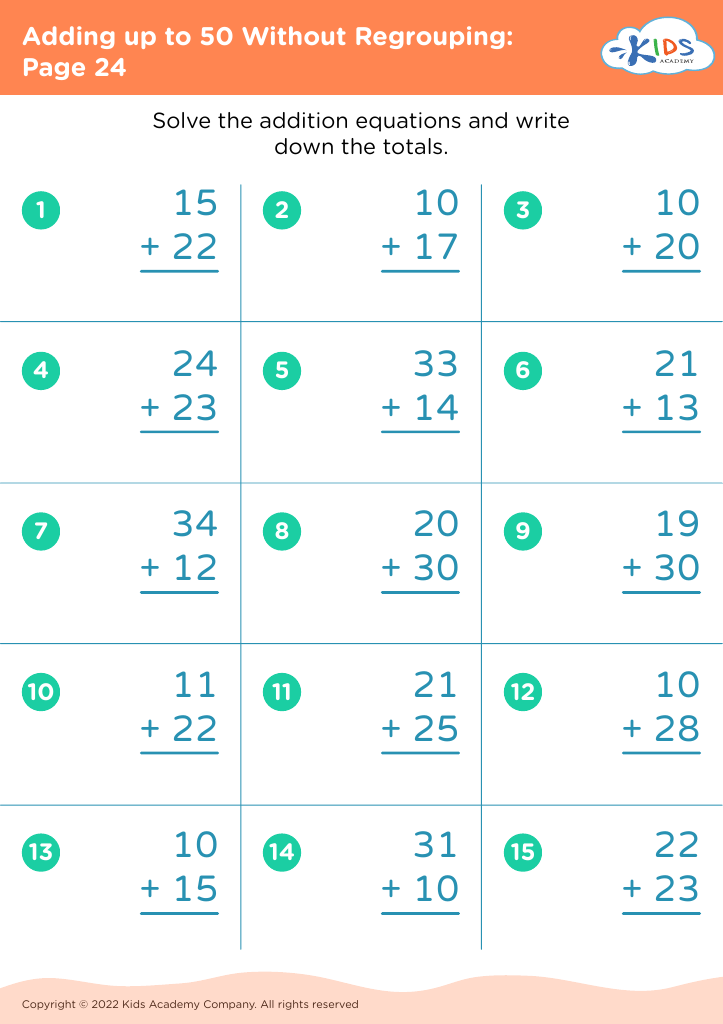
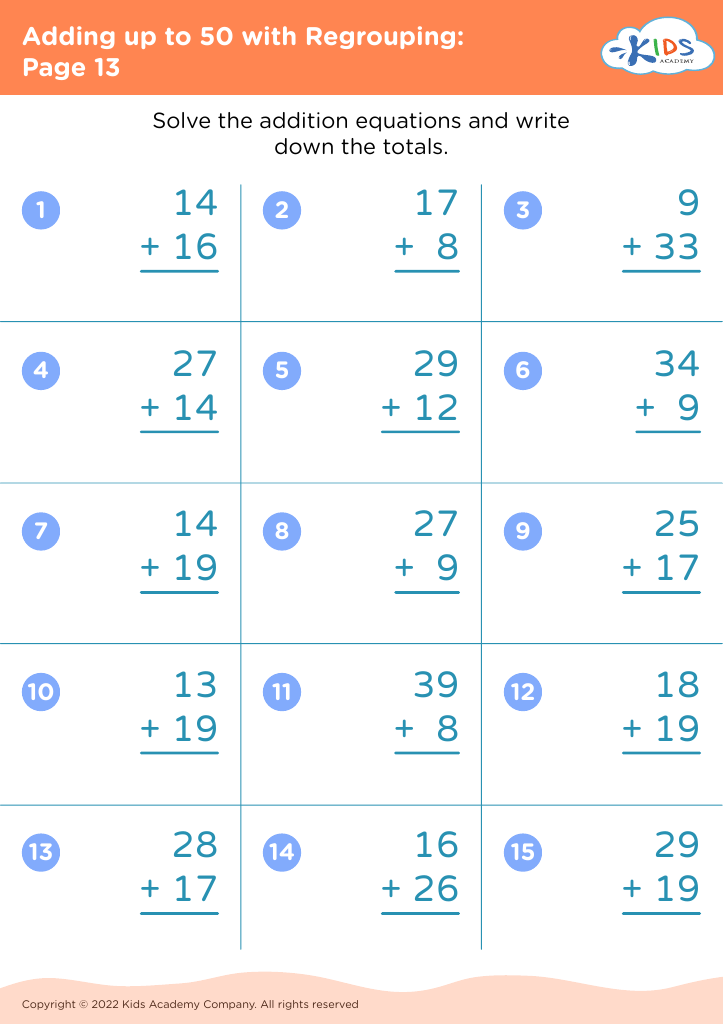




Understanding patterns, particularly in relation to adding up to 50, is crucial for children aged 5-8. At this developmental stage, children are beginning to grasp fundamental mathematical concepts, and recognizing patterns lays the groundwork for more complex math skills. Patterns help children identify relationships between numbers, making it easier for them to solve math problems and perform mental calculations.
Learning to add up to 50 through patterns fosters critical thinking and enhances problem-solving skills. When children recognize numerical patterns, such as skip counting by tens or identifying number pairs that sum to 50, they build a solid understanding of addition and subtraction. This proficiency is essential not only for their immediate coursework, but also for future mathematical pursuits.
Moreover, understanding these patterns boosts confidence in young learners. When children can apply what they've learned about patterns, they are more likely to engage with math positively, viewing it as a puzzle to solve rather than a chore to complete. Additionally, it encourages collaboration and discussion among peers, as children often share and explore their strategies in group settings. Therefore, parents and teachers should prioritize pattern recognition to support children’s overall mathematical development and instill a love for learning that lasts a lifetime.








