Basic math concepts Adding with Busy Bugs Worksheets for Ages 5-8
6 filtered results
-
From - To
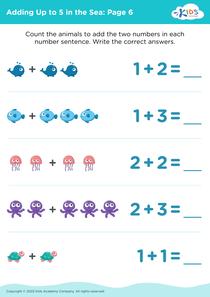
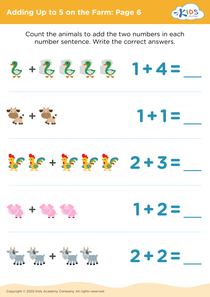
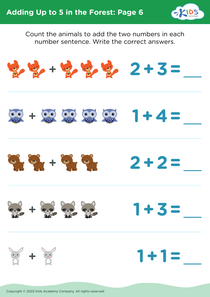
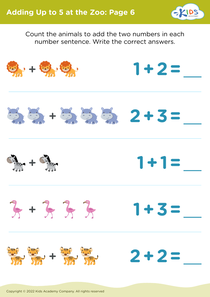
Introduce your young learners to the world of addition with our "Adding with Busy Bugs" worksheets, designed specifically for ages 5-8. These engaging activities combine colorful images of playful bugs to capture children's imaginations while building foundational math skills. Each worksheet focuses on basic math concepts through fun and interactive exercises, helping children practice addition in various contexts. Your students will enhance their problem-solving abilities, boost their confidence in math, and develop a love for learning. Perfect for both classroom use and home practice, these worksheets are an essential tool for mastering addition in a delightful way!
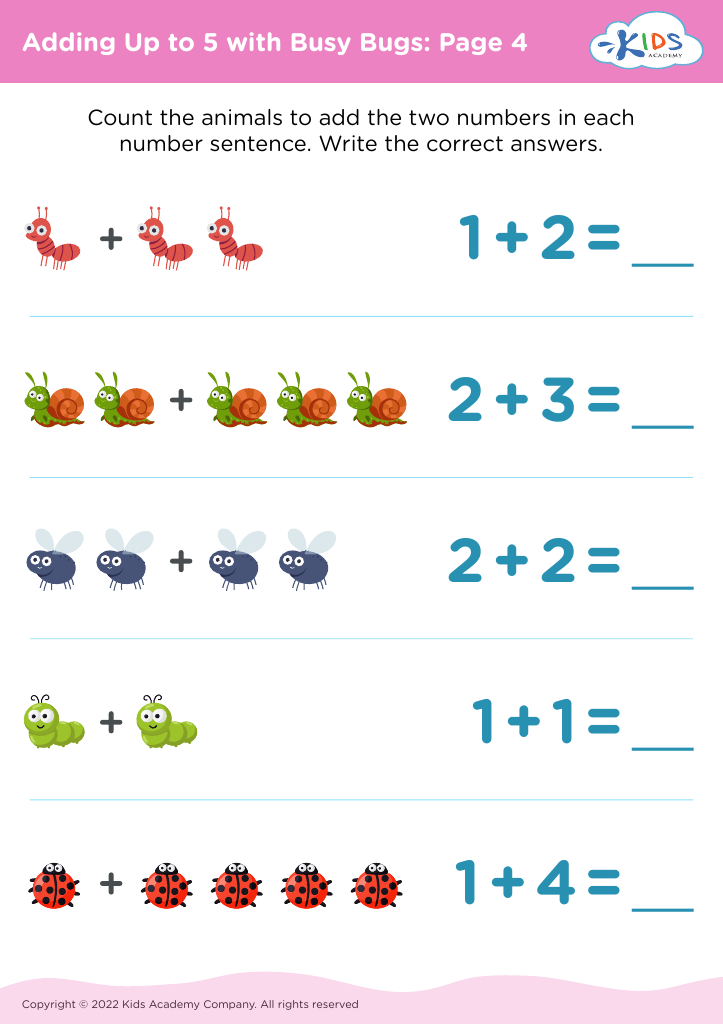
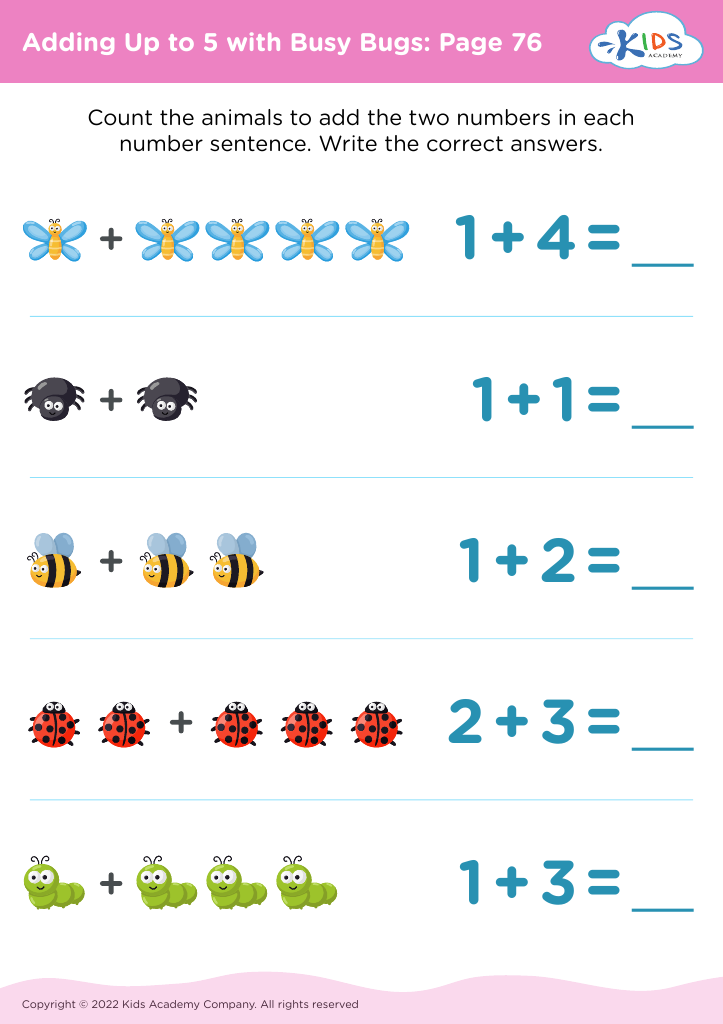
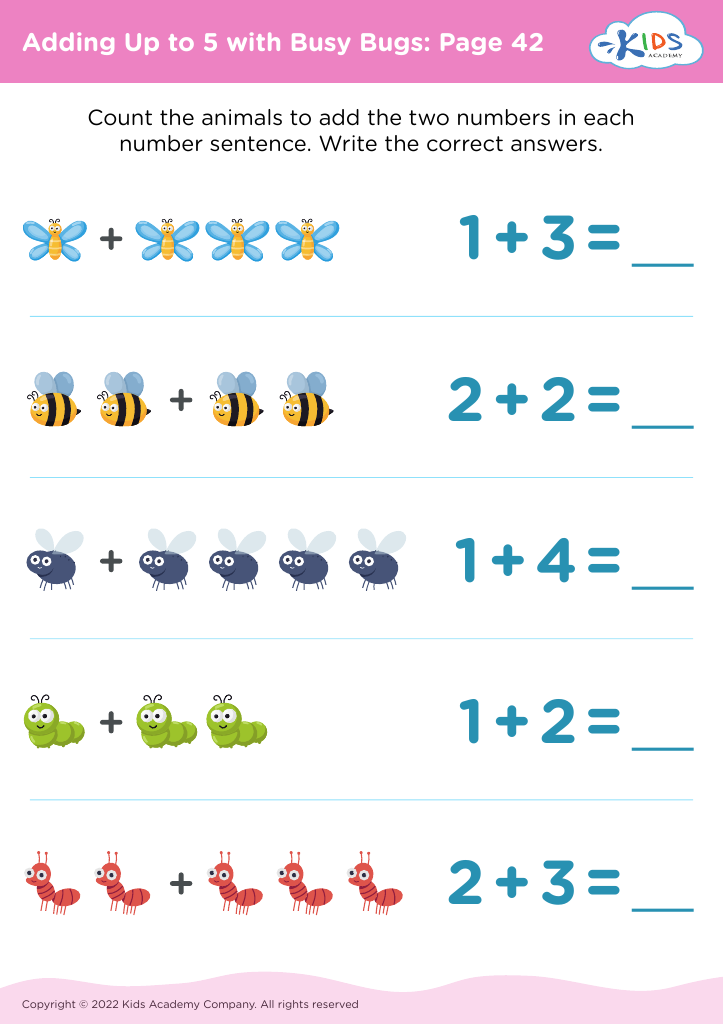
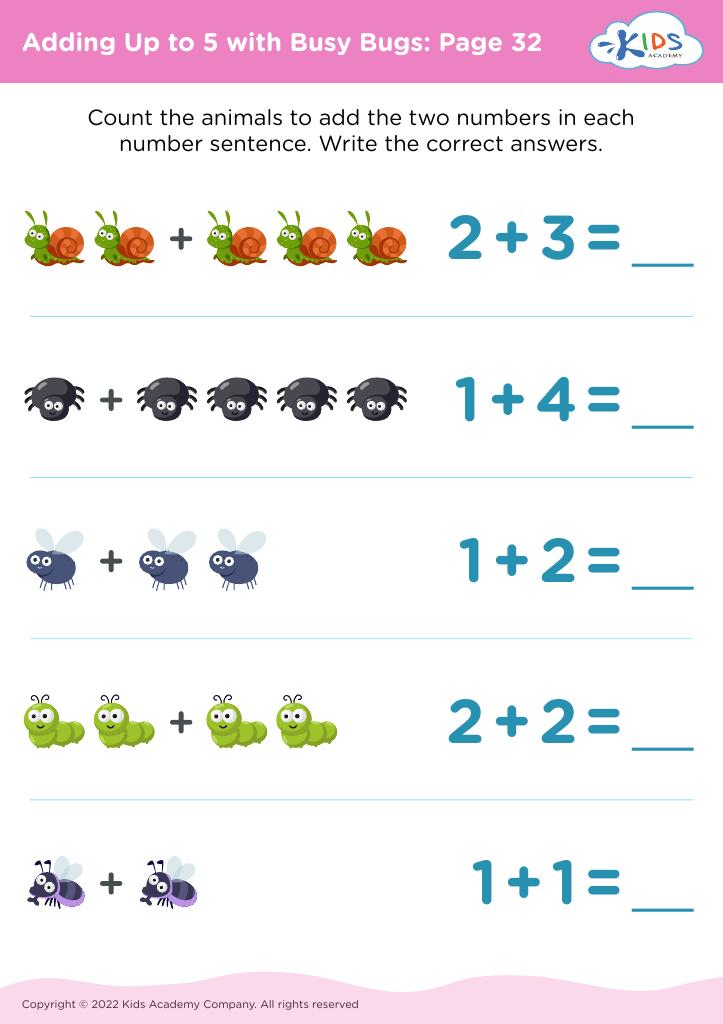
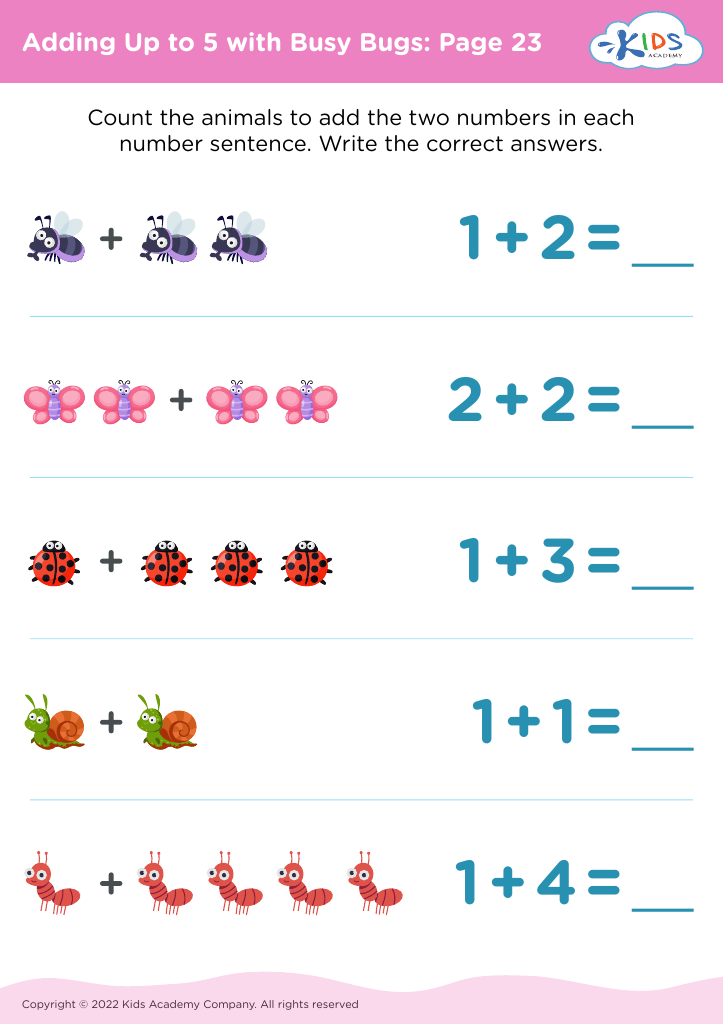
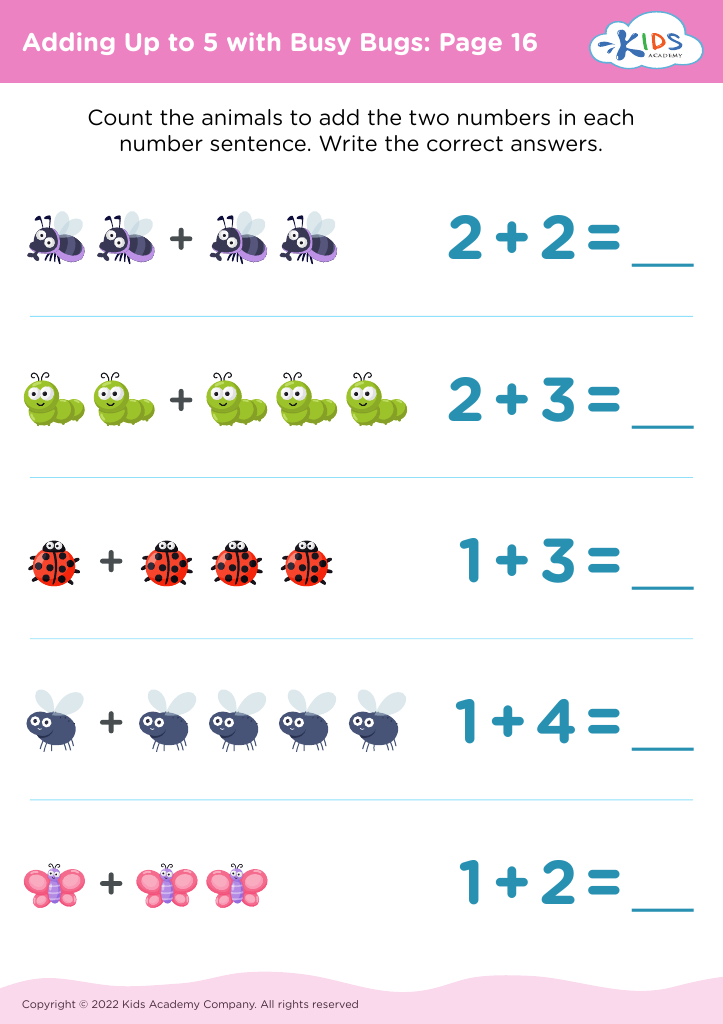



Parents and teachers should care about introducing Basic Math concepts like Adding with Busy Bugs to children aged 5-8 for several compelling reasons. During early childhood, foundational math skills are crucial for later academic success. Engaging activities like Busy Bugs help children develop not only their addition skills but also their problem-solving abilities and critical thinking.
The interactive nature of Busy Bugs captivates young learners, making math enjoyable and less intimidating. Incorporating visual and hands-on elements fosters a deeper understanding of numbers and addition, encouraging children to explore concepts through play. This method accommodates different learning styles, ensuring that every child can grasp basic math principles effectively.
Furthermore, early exposure to math sets the stage for lifelong learning and confidence in handling numerical challenges. Math literacy in these formative years forms the bedrock for more complex subjects down the line, such as advanced arithmetic and mathematics in later grades.
By integrating tools like Busy Bugs in their teaching, educators and parents not only make learning fun but also instill a positive attitude towards math, encouraging children to embrace future mathematical challenges with enthusiasm. Hence, recognizing the importance of basic concepts like addition is vital for nurturing well-rounded, confident learners.