Animal identification Addition & Subtraction Worksheets for Ages 5-8 - Page 2
28 filtered results
-
From - To
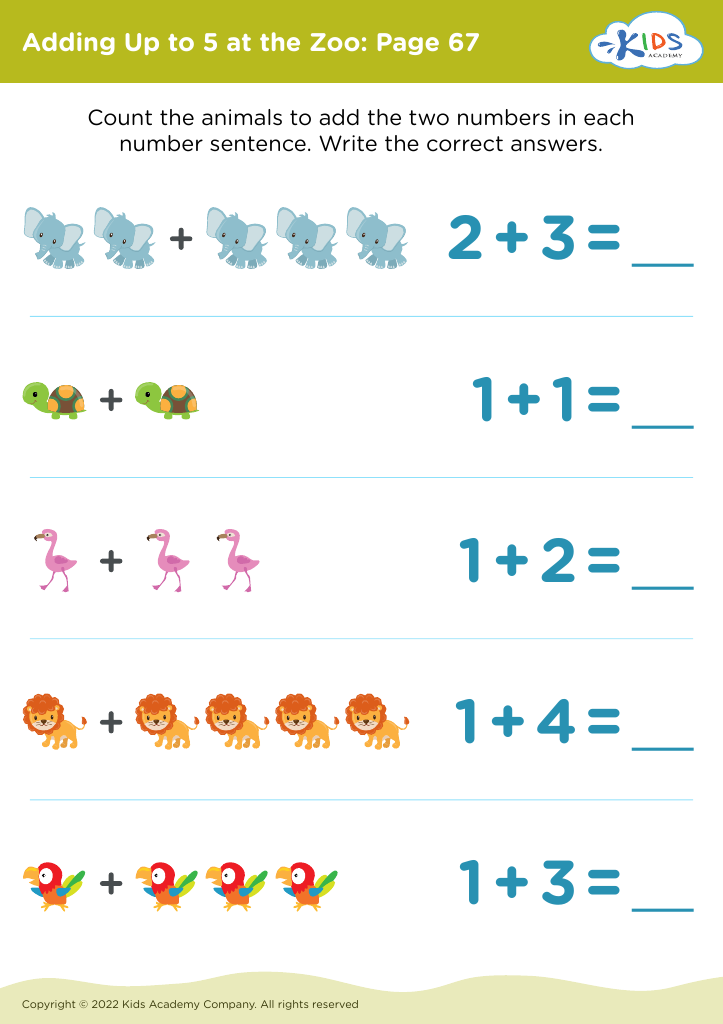
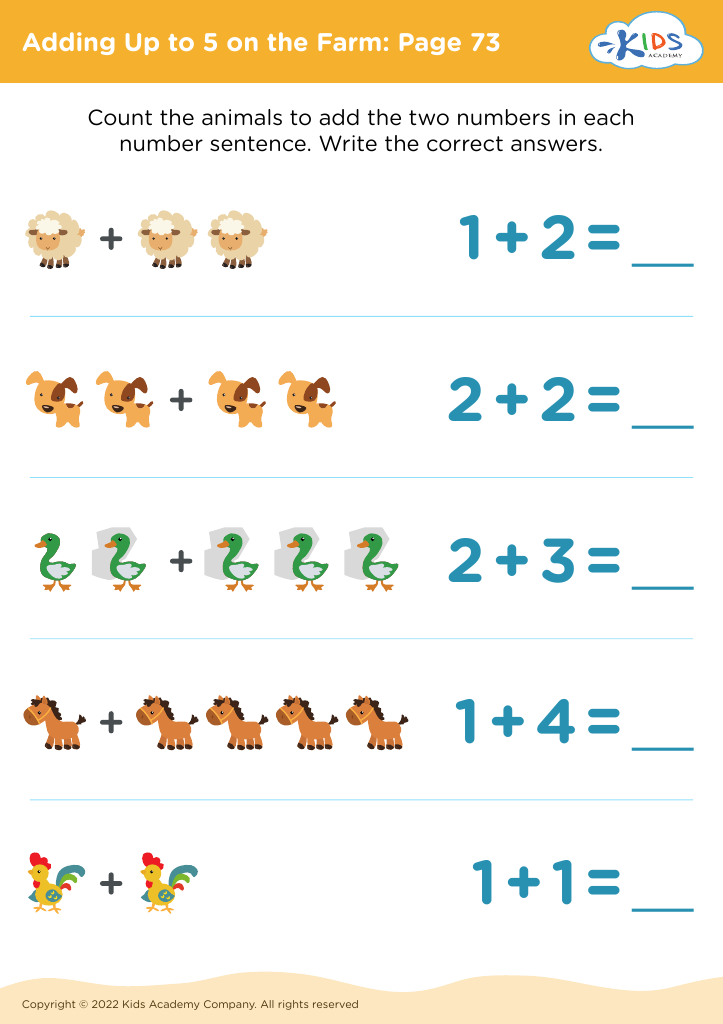
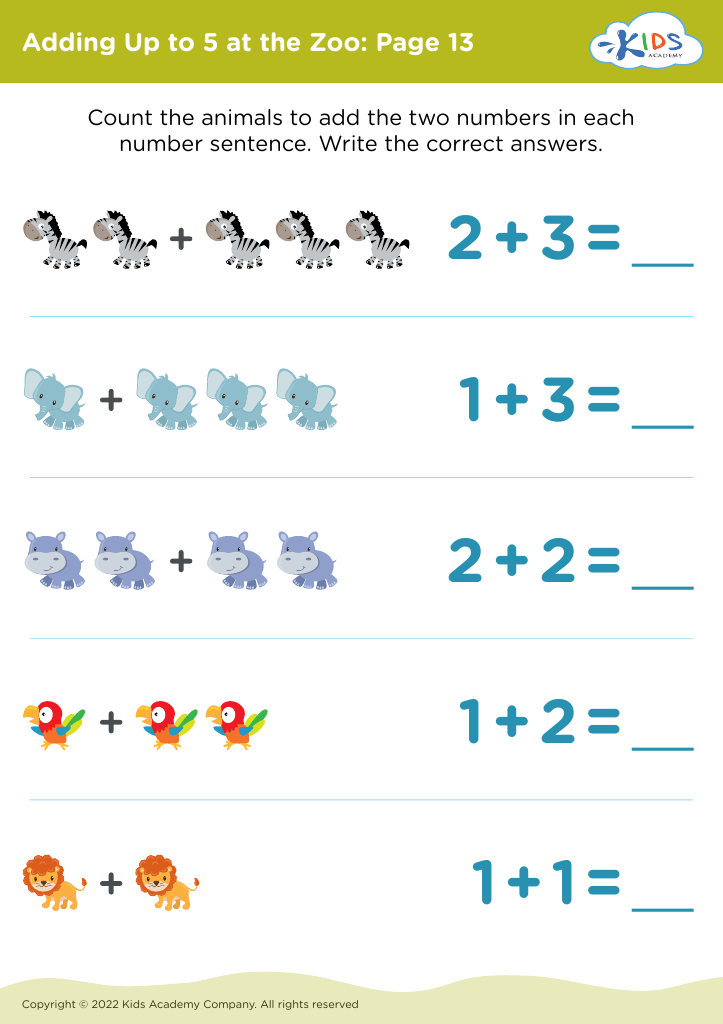
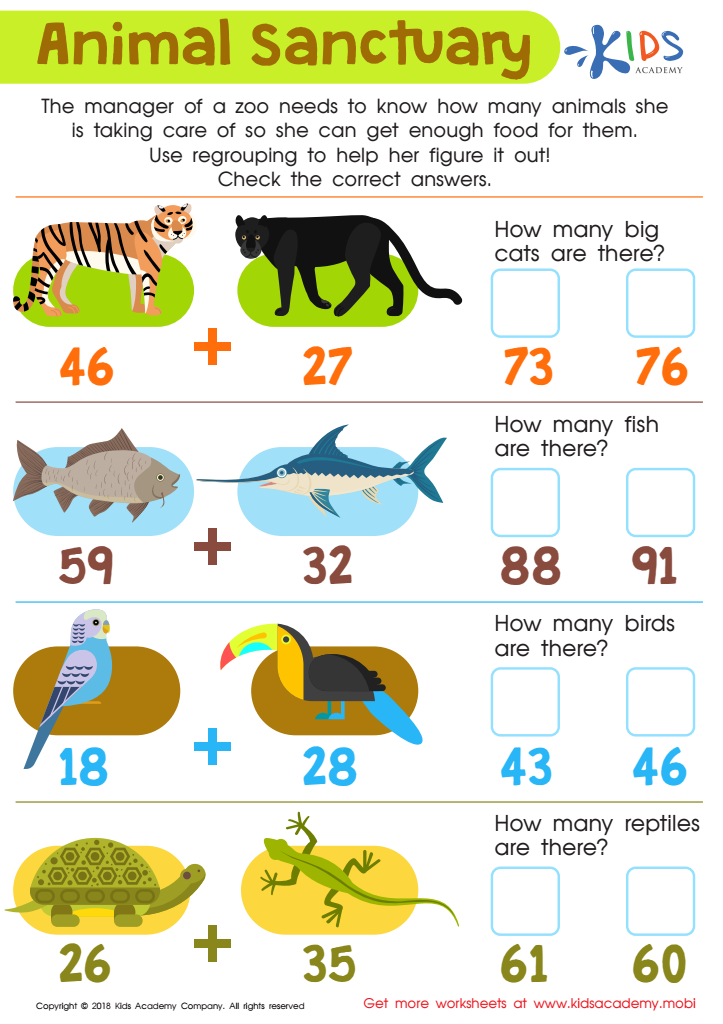
Animal Sanctuary Worksheet
 Assign to My Students








Animal identification Addition & Subtraction is an engaging and effective way to teach early mathematics concepts to children aged 5-8. Understanding these methods fosters not only foundational math skills, such as counting and simple arithmetic, but also enhances cognitive development through playful learning.
For parents and teachers, this approach taps into children's natural curiosity about animals, making the learning process more relatable and enjoyable. Engaging students by using their interest in animals can increase their motivation and attention in lessons, leading to better retention of information. Additionally, combining math with themes of empathy and a sense of responsibility towards living creatures encourages a holistic educational environment.
Moreover, teaching addition and subtraction through animal identification cultivates critical thinking and problem-solving skills. Children learn to categorize and associate numbers with real-world contexts, which reinforces their understanding of quantity and operational relationships.
By integrating these math concepts with animal themes, educators and caregivers create memorable experiences that promote a love for learning. Ultimately, fostering early math skills sets the stage for academic success and prepares children for more complex concepts as they progress in their educational journey. This foundational knowledge is essential for their future development, both in math and beyond.








