
Basic math practice Addition & Subtraction Worksheets for Ages 5-8
4 filtered results
Difficulty Level
Grade
Age
-
From - To
Subject
Activity
Standards
Help your child master essential math skills with our Basic Math Practice Addition & Subtraction Worksheets designed for ages 5-8. These engaging printable worksheets provide a fun and interactive way for young learners to practice addition and subtraction, laying a strong foundation for future math success. With a variety of exercises targeting different skill levels, each worksheet builds confidence and proficiency step-by-step. Perfect for homeschooling or supplementary practice, our worksheets reinforce key concepts while keeping children motivated and challenged. Explore our collection and watch your child’s math abilities flourish, one worksheet at a time!
Favorites
With answer key
Interactive
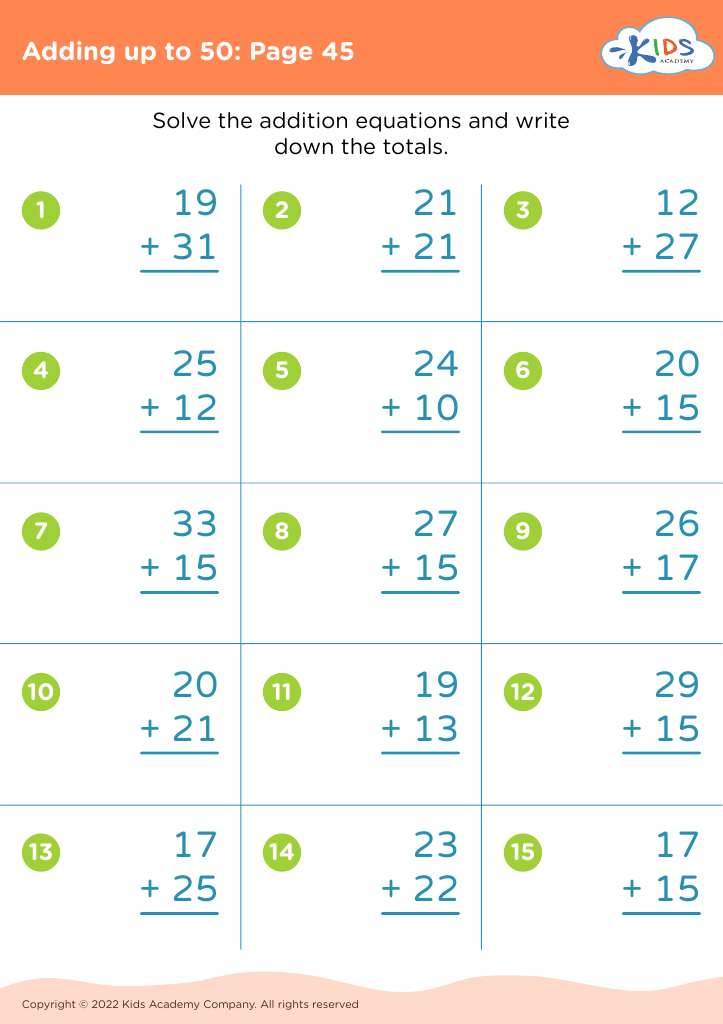
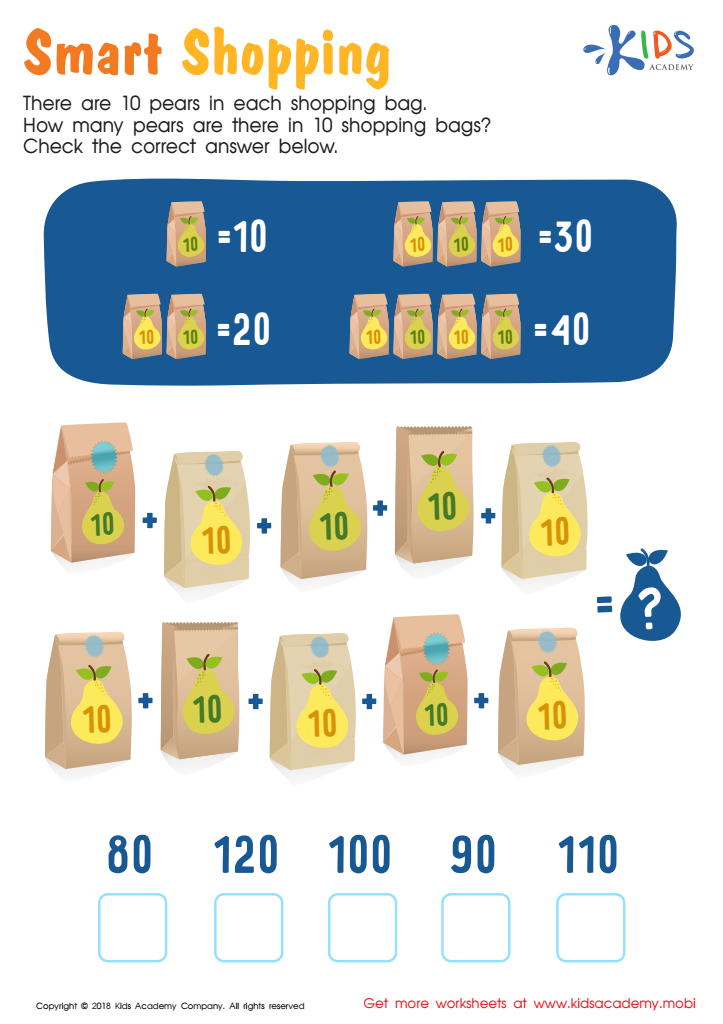
Smart Shopping: Trade Tens for a Hundred Worksheet
Use this worksheet to test counting skills: each bag has 10 pears. Ask your child how many pears are in 10 bags. Guide them as they count through the printout and check the answer below. See if they got it right!
 Assign to My Students
Smart Shopping: Trade Tens for a Hundred Worksheet
Worksheet
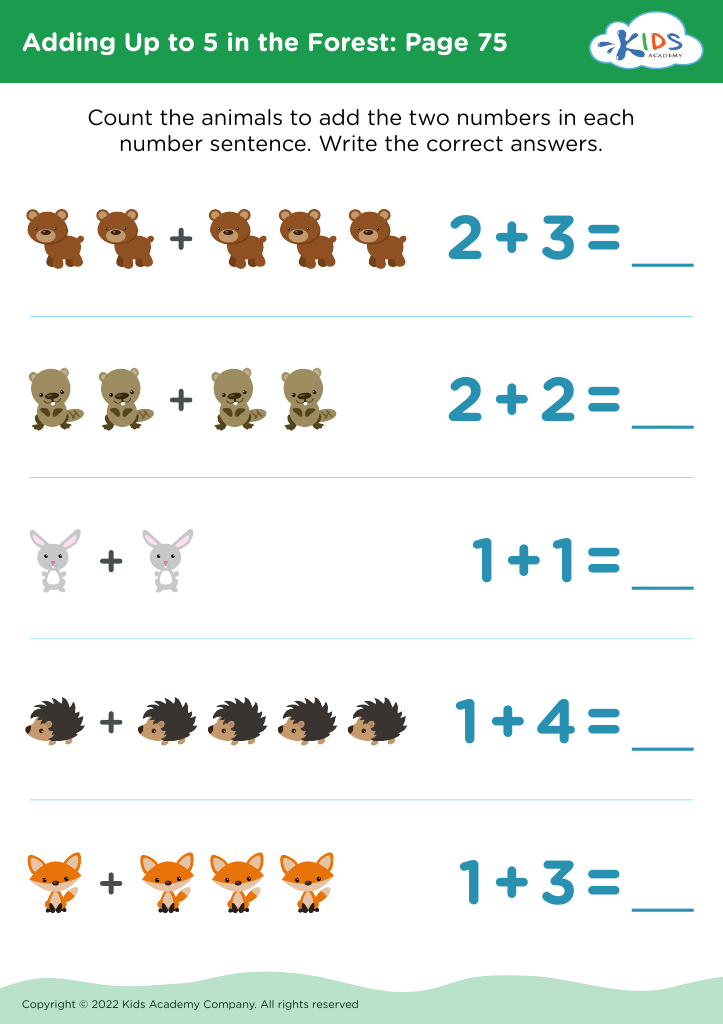
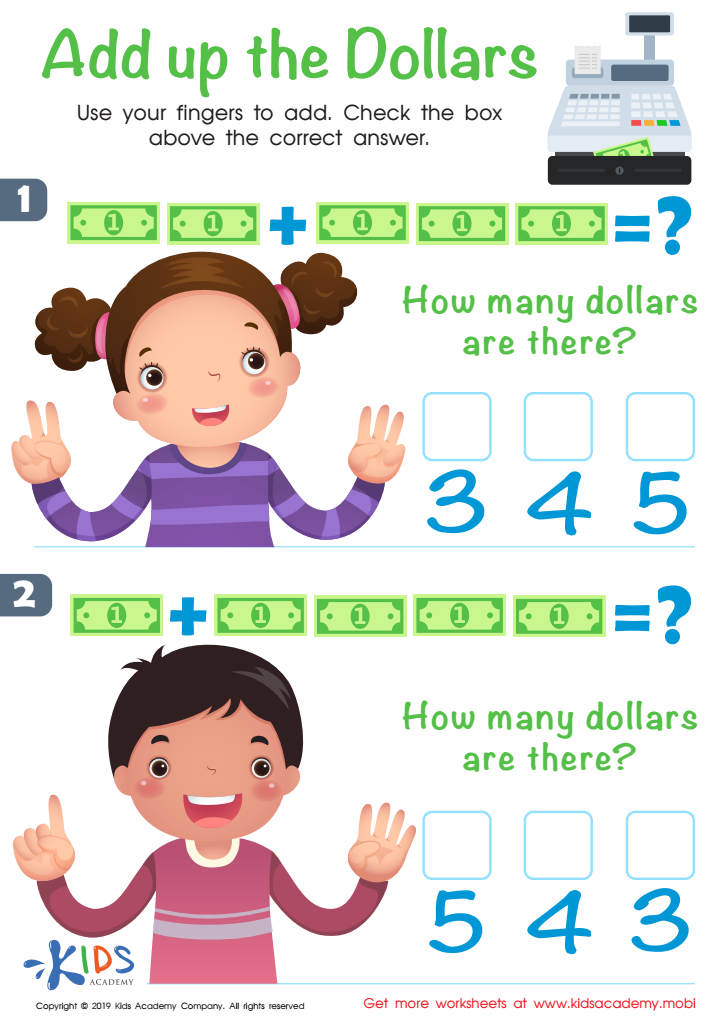
Add up the Dollars Worksheet
Money is key in life. It buys what we love and need. Get students to learn with exercises full of colour and familiar items like this worksheet. It shows two kids and some money. Ask pupils to use their fingers to add the money and check the box with the right answer.
Add up the Dollars Worksheet
Worksheet
Join Kids Academy for Free
Who is primarily going to use this learning content?








Ensuring that children ages 5-8 practice basic math skills, particularly addition and subtraction, is crucial for their academic and cognitive development. At this early stage, young learners are developing foundational skills that will support more complex mathematical concepts later on. Mastery of basic addition and subtraction enhances their number sense, which is understanding how numbers relate to each other and the world around them.
Basic math skills also play a pivotal role in everyday problem-solving and decision-making, ranging from simple tasks like sharing treats equally among friends to understanding the timing in daily routines. Regular practice helps solidify these skills, leading to increased confidence and reduced anxiety when faced with more advanced mathematical challenges.
Additionally, proficiency in early math is strongly linked to future academic success across various subjects. Studies show that children who enter elementary school with strong math skills tend to perform better in later grades, not just in math, but in reading and science as well. This is because math promotes logical thinking and analytical skills.
Parents and teachers have the unique ability to influence students' attitudes toward math. Positive reinforcement and regular practice can turn potential frustration into a rewarding and enjoyable experience, fostering a lifelong appreciation and competency in mathematics.








