Comparing quantities Addition & Subtraction Worksheets for Ages 5-8
8 filtered results
-
From - To
Introducing our Comparing Quantities Addition & Subtraction Worksheets, designed for children aged 5-8. These engaging worksheets help young learners develop essential math skills, focusing on comparing quantities using addition and subtraction. With diverse exercises and colorful illustrations, children can boost their confidence and improve their problem-solving abilities. Perfect for home or classroom use, these worksheets cover a range of fun, interactive activities that adhere to educational standards. Give your child a head start in math by incorporating these effective tools into their learning routine. Download now to make learning math easy and enjoyable!
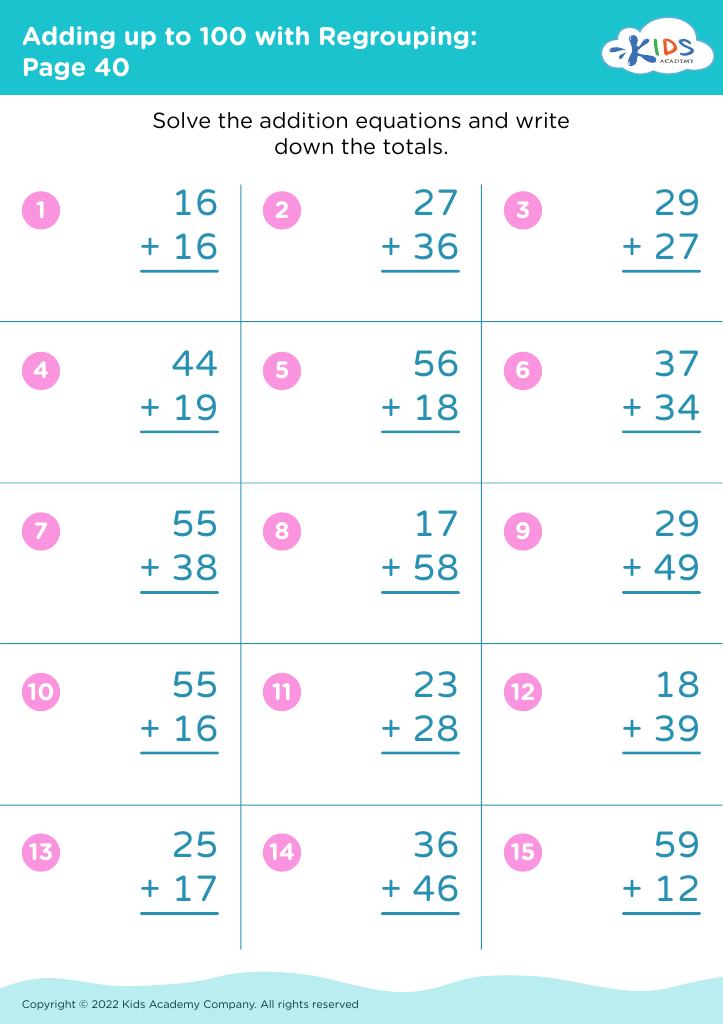
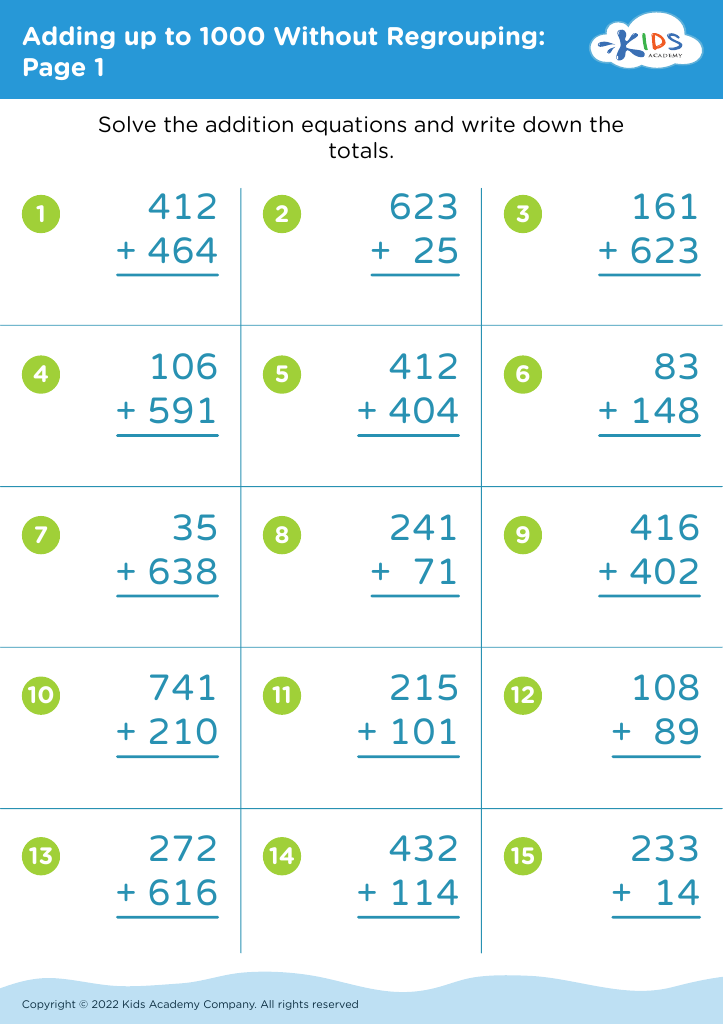
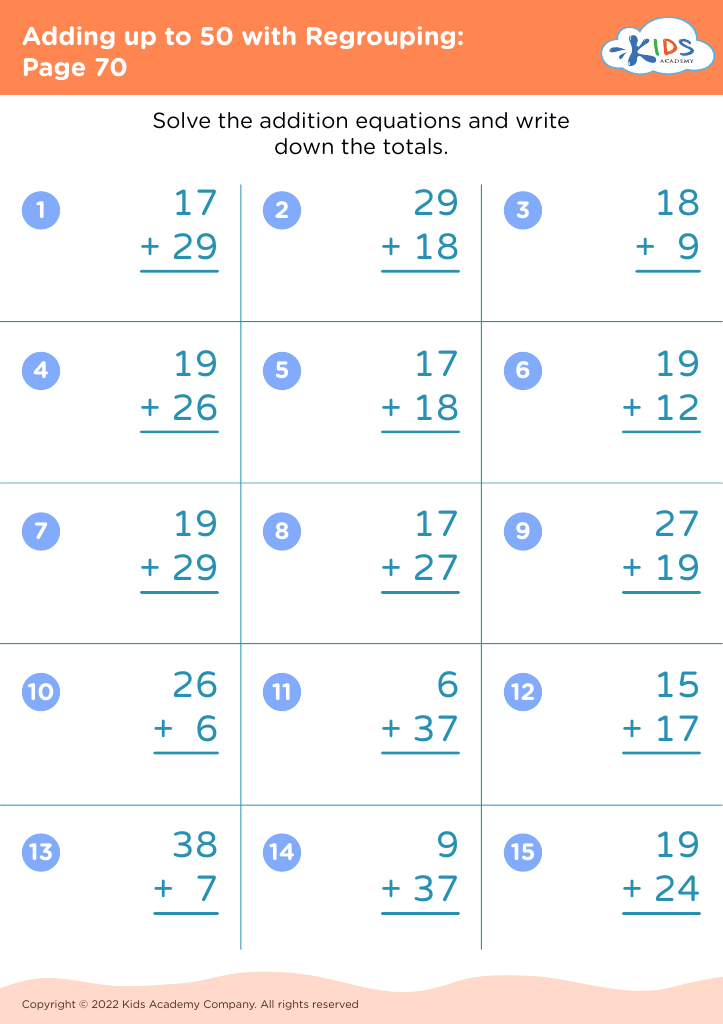
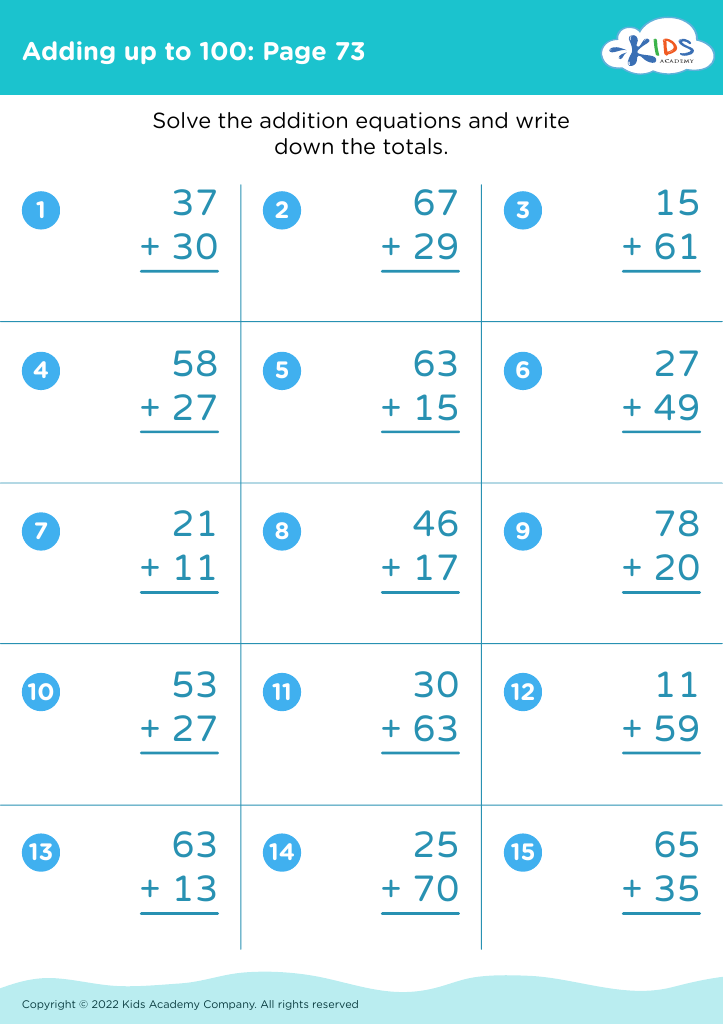
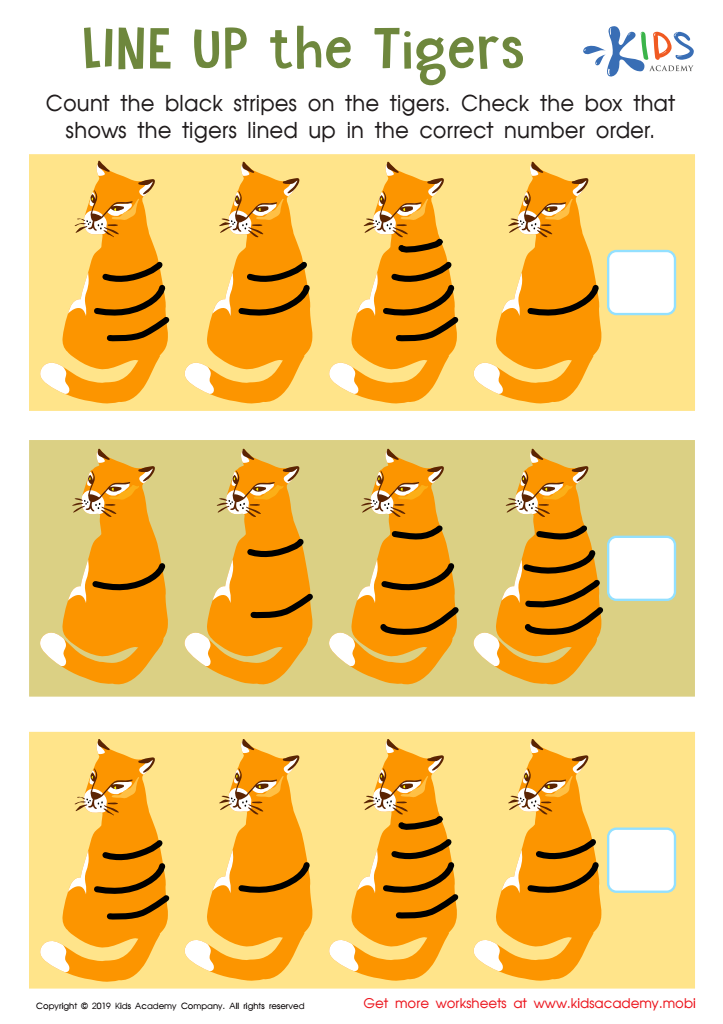
Line up the Tigers Worksheet
 Assign to My Students
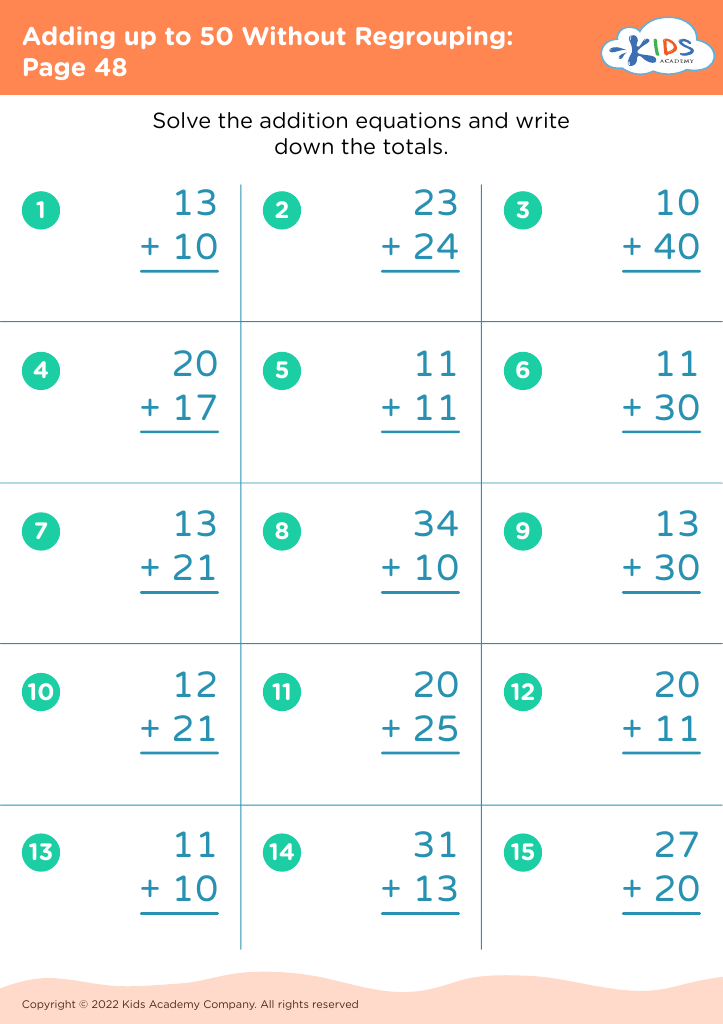
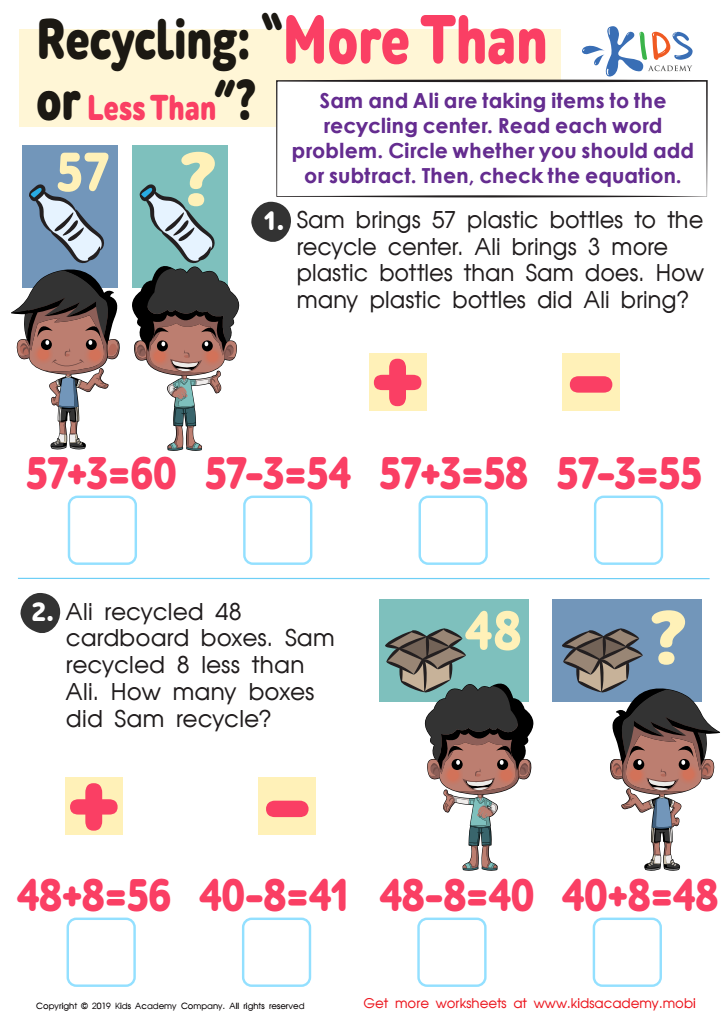
Recycling - More or Less Worksheet
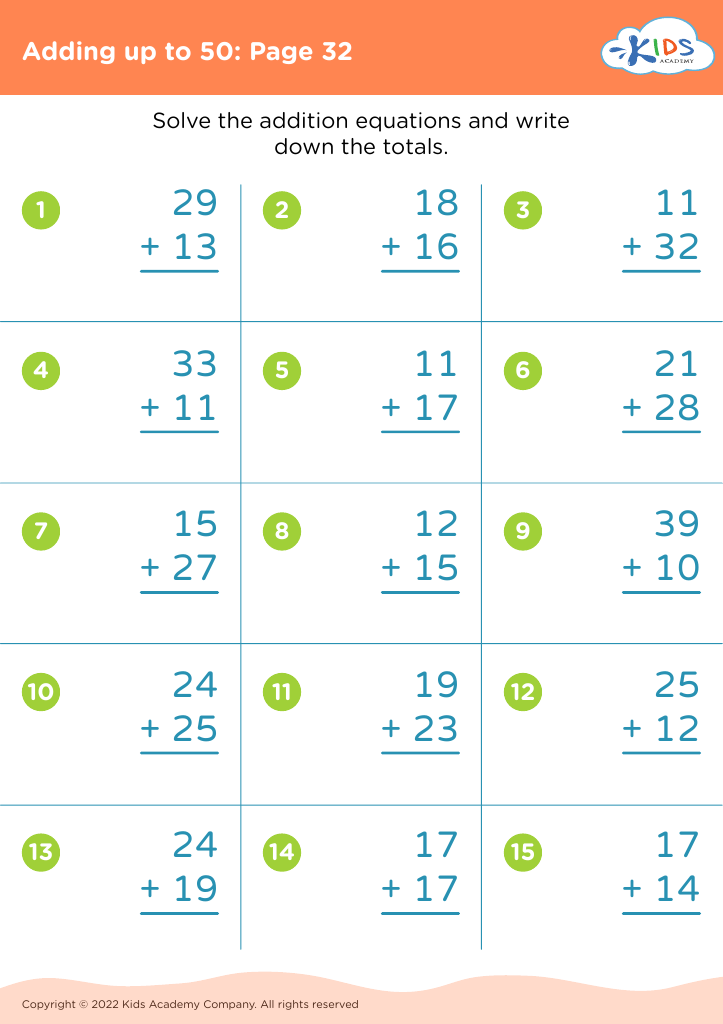








Understanding comparing quantities, addition, and subtraction at ages 5-8 is crucial for children’s early mathematical development. During these formative years, children are building foundational skills that will support their future academic success and daily life problem-solving abilities.
Firstly, comparing quantities helps children develop number sense, which is the ability to understand, relate, and connect numbers. It plays a significant role in making comparisons such as greater than, less than, or equal to, which are essential concepts in everyday decision-making and more complex mathematics.
Addition and subtraction are the basic building blocks of arithmetic. Mastery of these operations in early grades enables children to handle more advanced mathematical concepts confidently. It teaches them about the relationship between numbers and how they can be manipulated, fostering critical thinking and analytical skills.
Furthermore, these skills enhance children’s language development. Discussing mathematical concepts requires children to use logical and structured language, thereby improving their communication abilities. Also, they bridge the gap between practical real-life tasks and abstract thinking.
By investing time and effort into teaching these concepts, parents and teachers are equipping children with the tools they need for future success in mathematics and beyond. They ensure students are not only academically prepared but also capable of applying these skills in everyday contexts confidently and effectively.








