Identifying patterns Addition & Subtraction Worksheets for Ages 5-8
3 filtered results
-
From - To
Discover our engaging "Identifying Patterns Addition & Subtraction Worksheets" designed specifically for children ages 5-8. These worksheets provide a fun and interactive way for young learners to recognize and understand numerical patterns in addition and subtraction. Crafting a solid foundation in math skills, these resources encourage critical thinking and problem-solving while keeping students motivated. Each worksheet is designed with vibrant visuals and age-appropriate challenges, making learning enjoyable. Explore our collection today and empower your child to recognize patterns, boosting their confidence in mathematics! Perfect for homeschooling or classroom activities, these worksheets will enhance your child's learning experience and make math exciting!
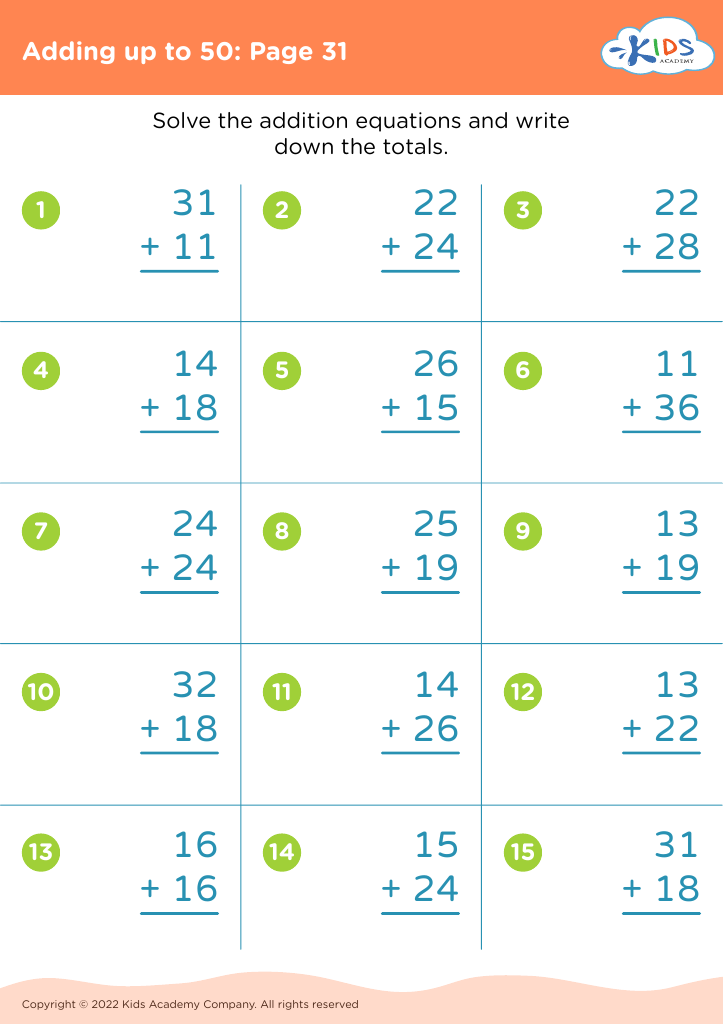
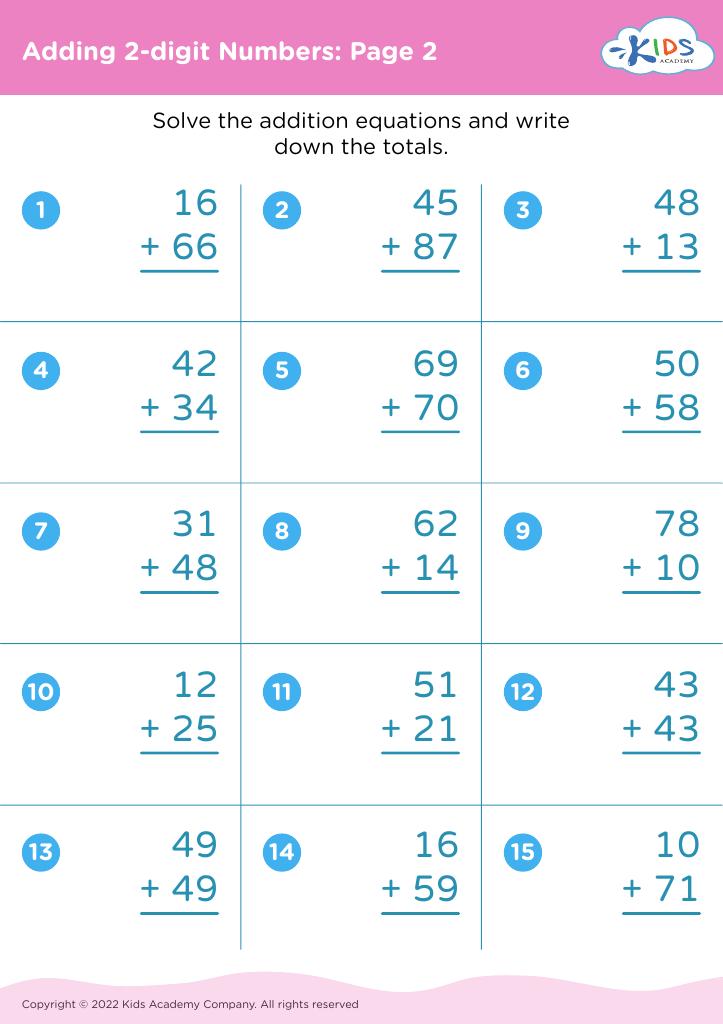
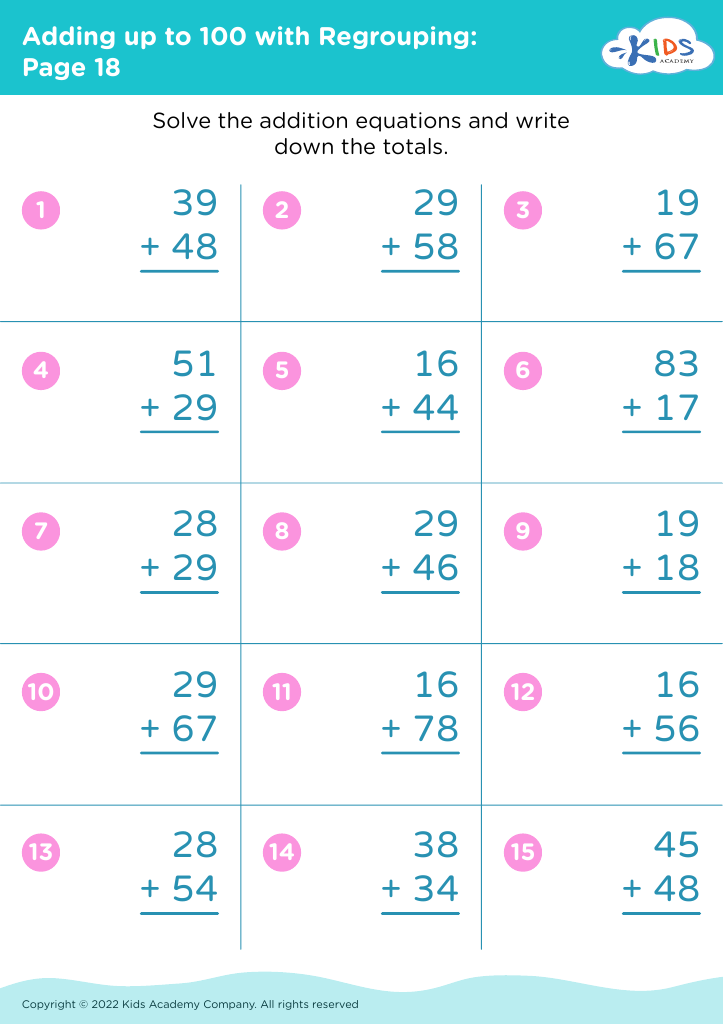








Identifying patterns in addition and subtraction is crucial for children aged 5-8 as it forms the foundational skills for advanced mathematical understanding. Recognizing patterns helps young learners make connections between numbers, enhancing their ability to predict outcomes and solve problems efficiently. This skill is not just about raw computation; it fosters critical thinking and logical reasoning.
When children understand how patterns work, such as the commutative property (e.g., 2 + 3 is the same as 3 + 2), they become more confident in their mathematical abilities. This confidence encourages a positive attitude towards math, reducing anxiety and apprehension that often develops in later years.
Furthermore, identifying patterns aids in mental math skills, allowing children to perform calculations swiftly without relying solely on written algorithms. It encourages them to explore multiple strategies for a single problem, thereby deepening their comprehension of numbers.
Additionally, mastery of pattern recognition can enhance collaboration among peers, as children share strategies and insights. Teachers and parents should actively engage and support children in these patterns to nurture a solid mathematical foundation, setting the stage for more complex concepts and lifelong math skills. Recognizing early patterns in addition and subtraction helps shape a well-rounded, confident learner.








