Learn subtraction Addition & Subtraction Worksheets for Ages 5-8
4 filtered results
-
From - To
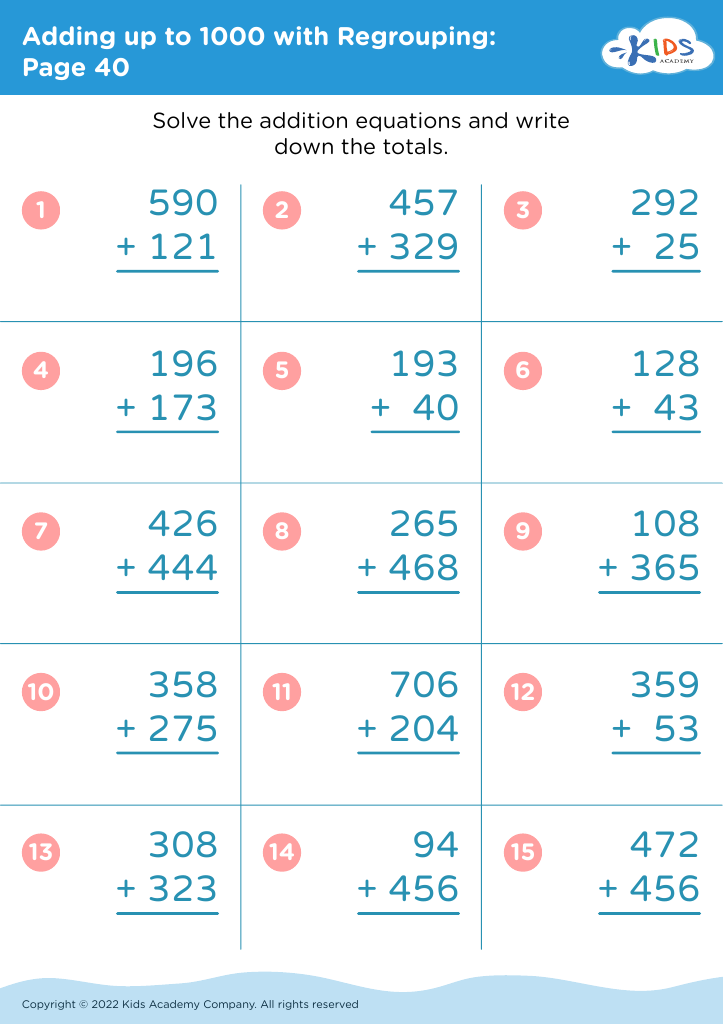
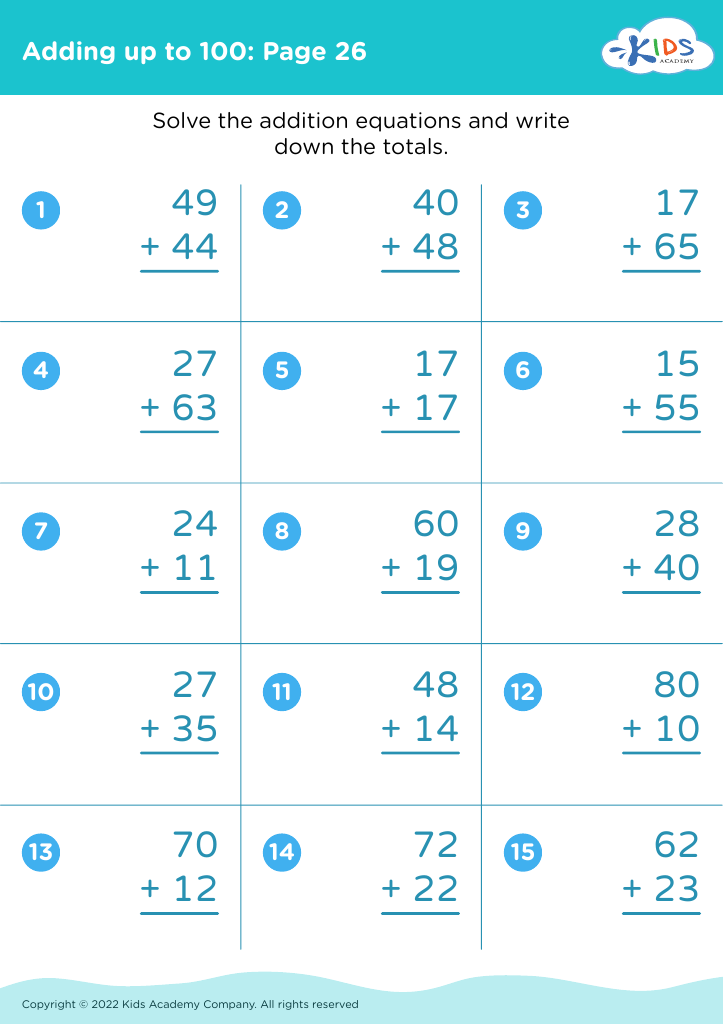
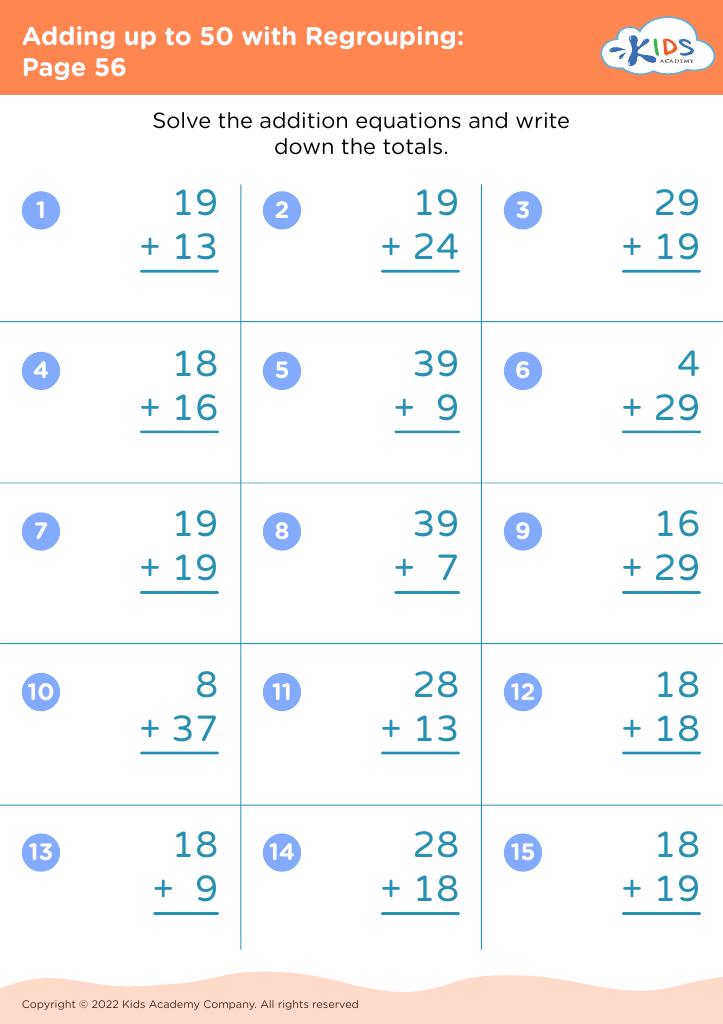
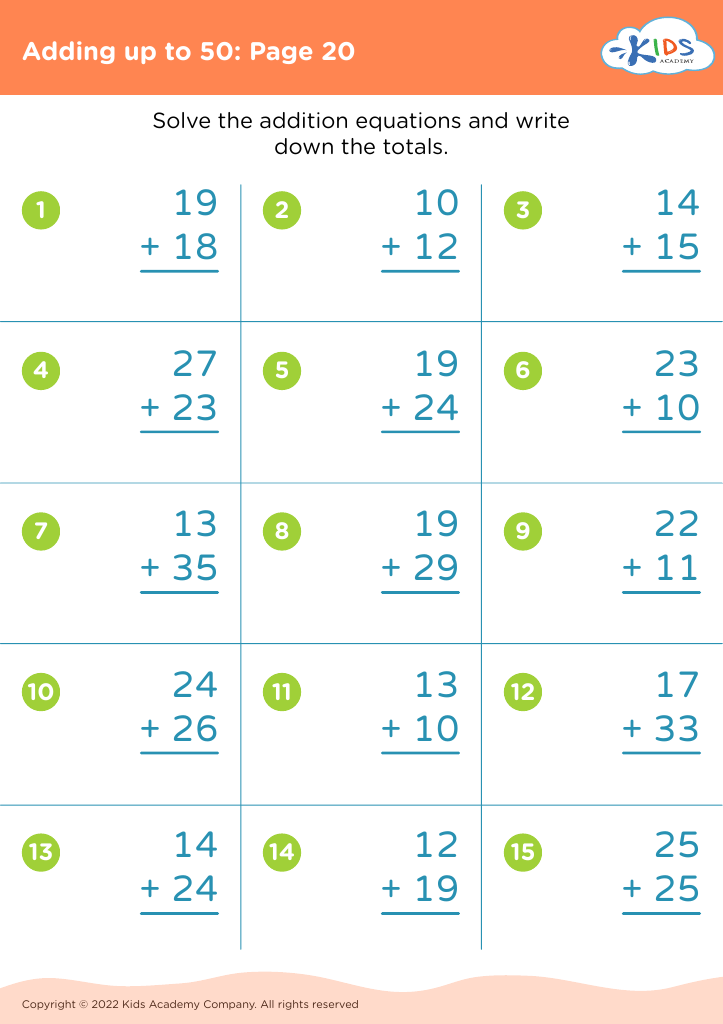
Discover our engaging Addition & Subtraction Worksheets designed for children ages 5-8. These educational resources offer a fun and interactive way for young learners to master basic arithmetic skills. Through a variety of enjoyable exercises, kids can learn subtraction and addition effortlessly, enhancing their problem-solving and critical thinking abilities. Perfect for classroom activities or at-home learning, our worksheets are tailored to build confidence and foster a love for mathematics in every child. Give your child the tools they need to succeed with Kids Academy’s expertly crafted worksheets. Start exploring today and watch their skills soar!








Parents and teachers should prioritize learning subtraction and addition for children aged 5-8 due to the foundational nature of these skills in their overall mathematical development. At this early stage, children are like sponges, absorbing fundamental concepts that will set the stage for future learning.
Addition and subtraction are essential building blocks in mathematics. Mastery in these areas not only prepares children for advanced arithmetic but also fortifies critical thinking and problem-solving abilities. As youngsters interact with numbers through addition and subtraction, they develop numerical fluency, making it easier to handle more complex math operations like multiplication and division later on.
Moreover, understanding these basic concepts fosters confidence in young learners. When children can accurately and efficiently solve addition and subtraction problems, they experience a sense of accomplishment, which stimulates a positive attitude towards mathematics and learning in general. This encouragement is crucial at a young age when attitudes toward subjects are forming and impacting long-term academic success.
Additionally, these skills are used in daily life scenarios, such as counting money, telling time, and measuring ingredients in a recipe. Ensuring that children grasp addition and subtraction well prepares them for real-world applications, thereby enhancing their practical life skills and overall cognitive development.








