Filters

570 filtered results

Clear all filters
Favorites
With answer key
Interactive

570 filtered results

Difficulty Level

Grade


Check out this FREE Trial Lesson on Addition & Subtraction for age 5-8!

Add 10 to a 2 digit Number

Favorites
With answer key
Interactive
  • 5-8
  • Number Recognition
  • Addition & Subtraction
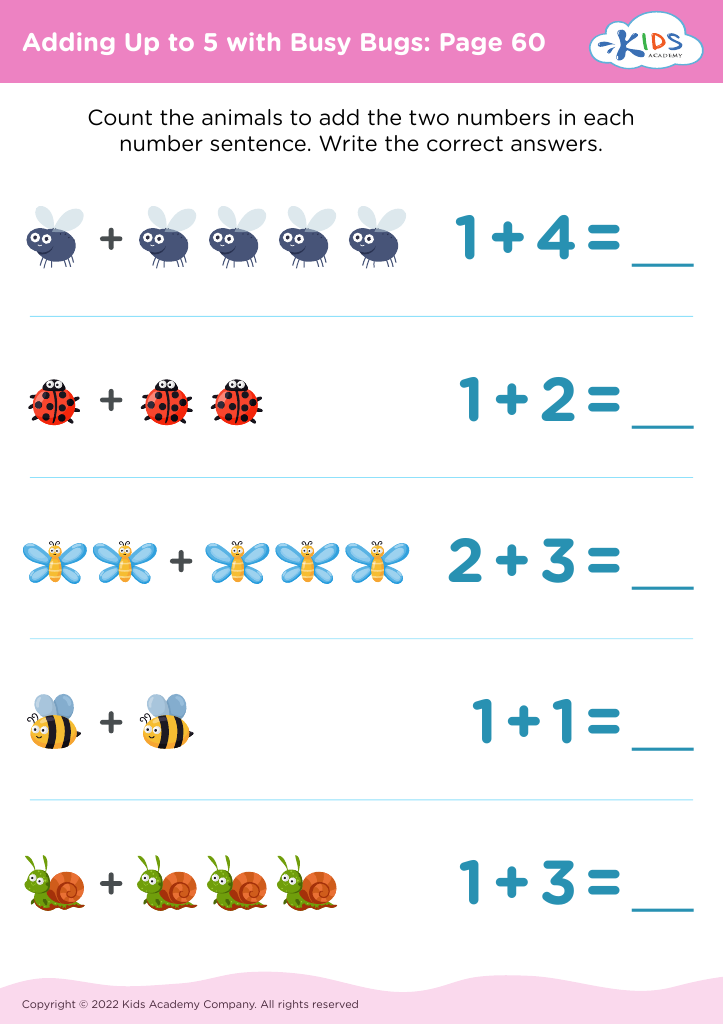
Adding Up to 5 with Busy Bugs: Page 60
Worksheet
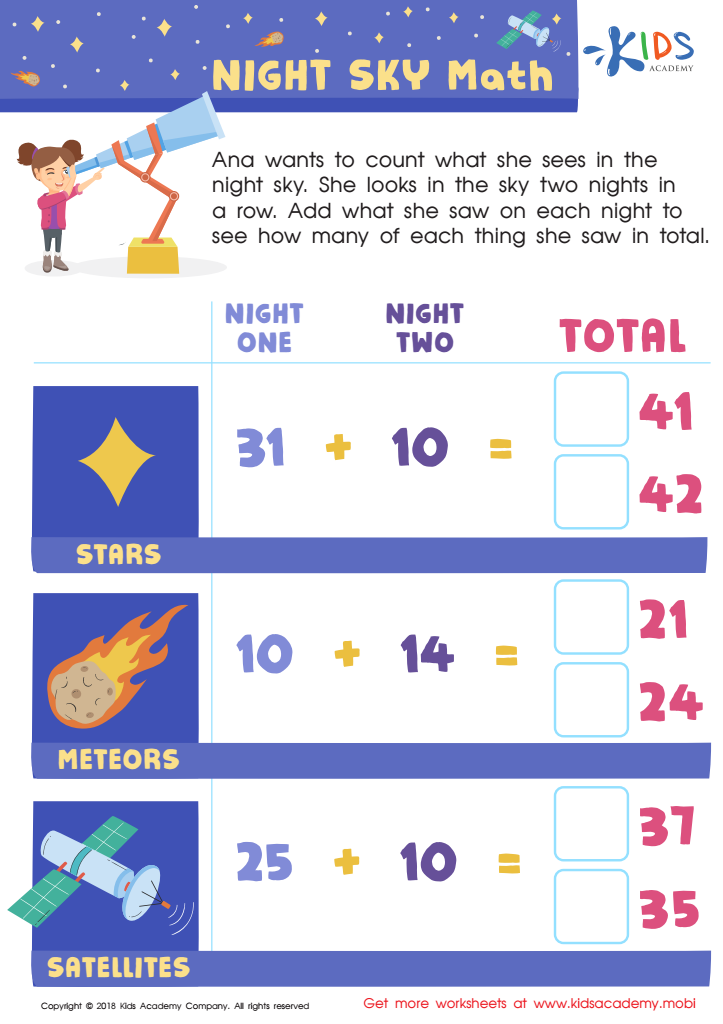
Night Sky Math Worksheet

Night Sky Math Worksheet

Kids can use this colorful worksheet to learn math and addition while also exploring the night sky. Invite them to use a telescope to identify the things they see. Ask them to join Ana, the little girl in the worksheet, to count what she saw in two nights. Help them add the totals of each night to find out how many of each item she saw!
Night Sky Math Worksheet
Worksheet
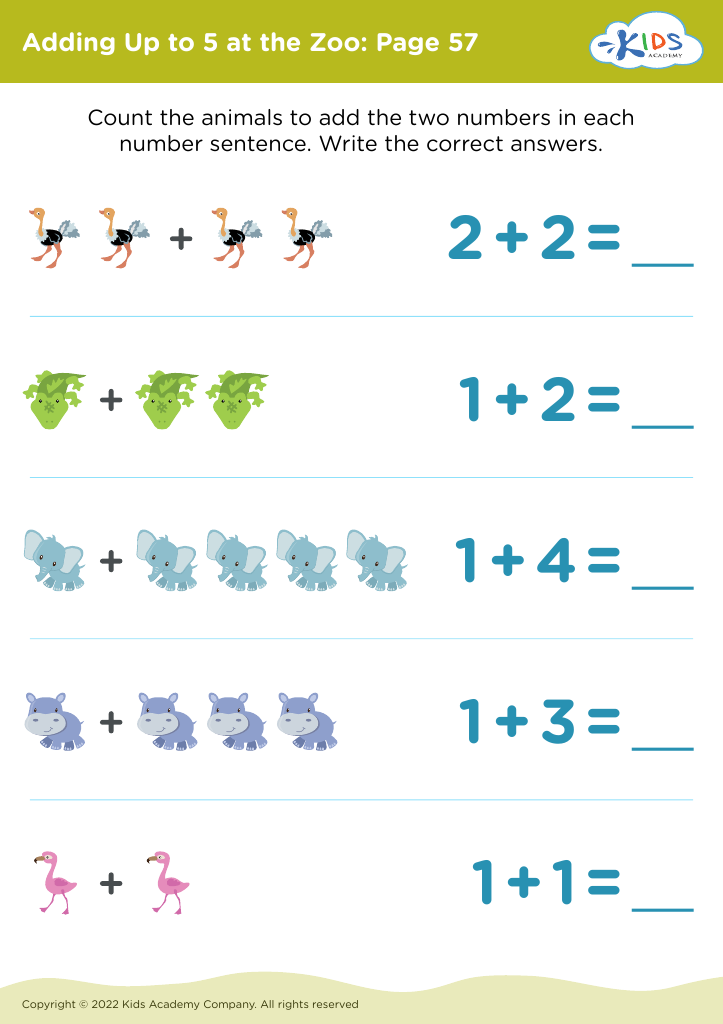
Adding Up to 5 at the Zoo: Page 57
Worksheet
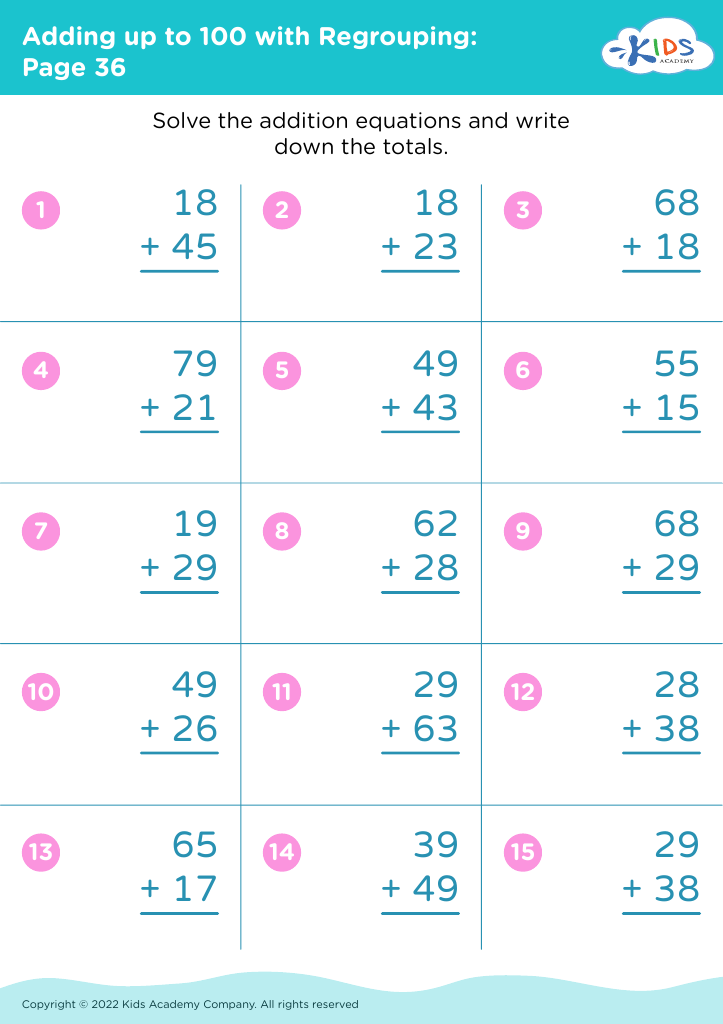
Adding up to 100 with Regrouping: Page 36
Worksheet
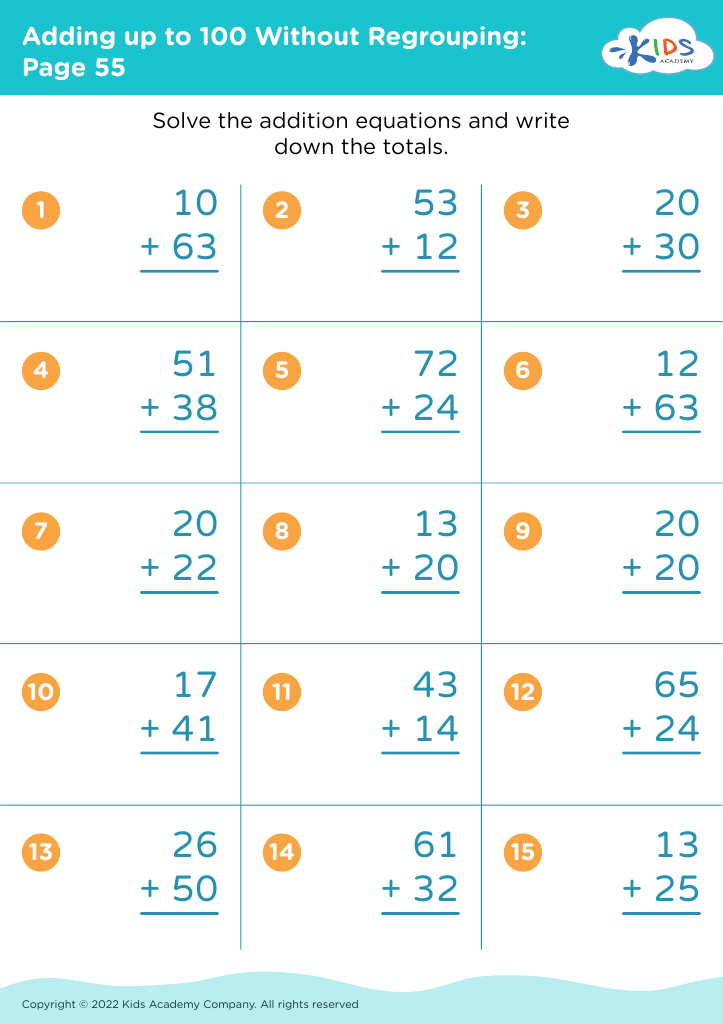
Adding up to 100 Without Regrouping: Page 55
Worksheet
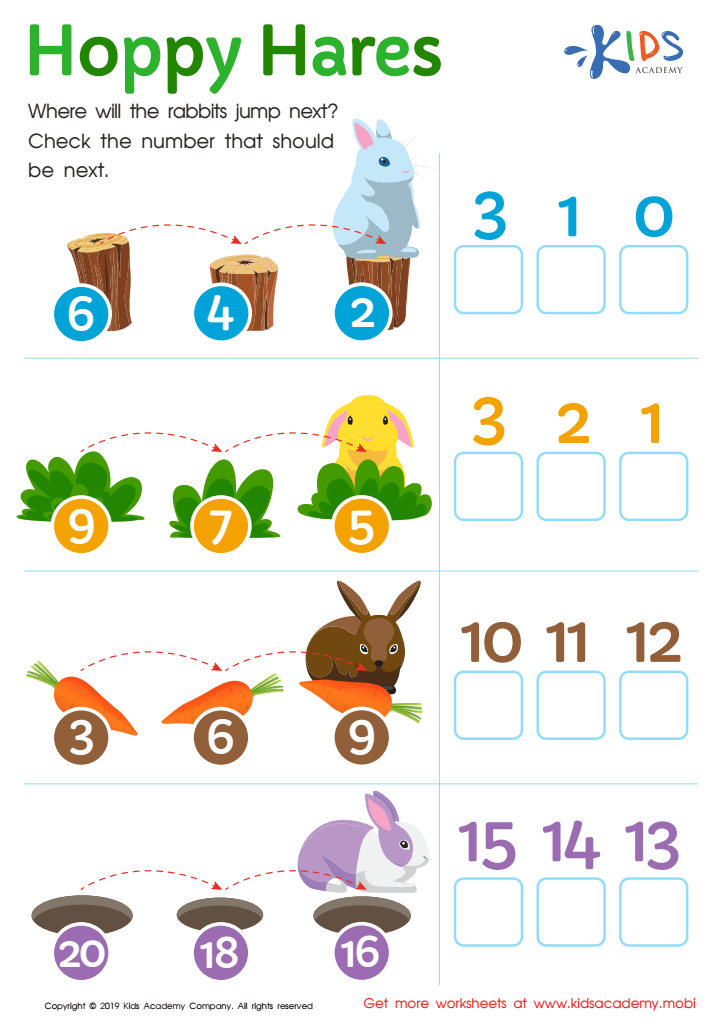
Hoppy Hares Worksheet

Hoppy Hares Worksheet

Ask your kids if they can identify the rabbits in the picture, then help them solve the math problems. The rabbits need to hop from place to place, so look at the numbers and help your kids figure out the next one. These cute and friendly little animals make great pets. Have fun solving this worksheet together!
Hoppy Hares Worksheet
Worksheet
Number Stories One More - Assessment 1 Worksheet Preview

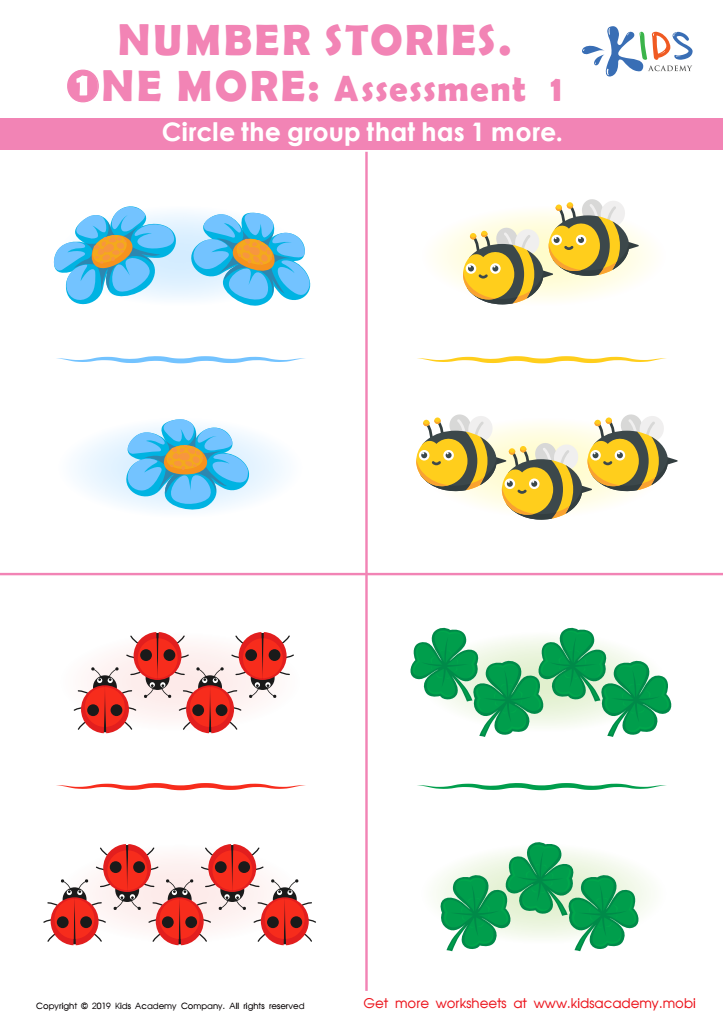
Number Stories One More – Assessment 1 Worksheet
Does your child need a fun way to practice distinguishing between different groups of numbers? This free PDF worksheet will have them circle the group that has one more. With its colorful nature drawings, it's an attractive activity that visual learners will enjoy!
Number Stories One More – Assessment 1 Worksheet
Worksheet
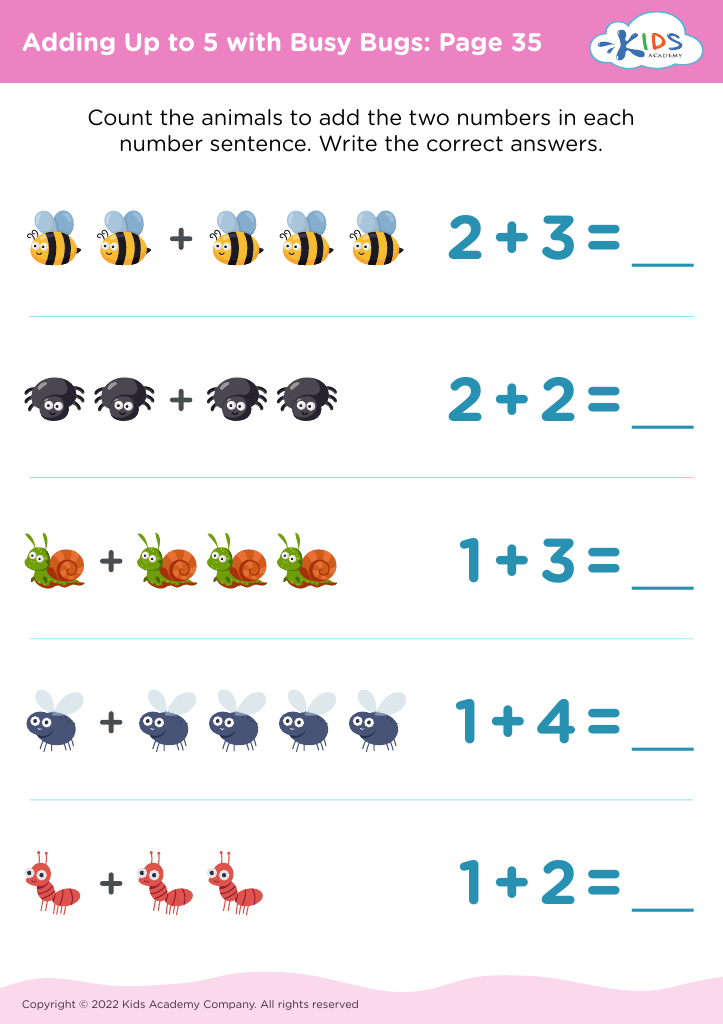
Adding Up to 5 with Busy Bugs: Page 35
Worksheet
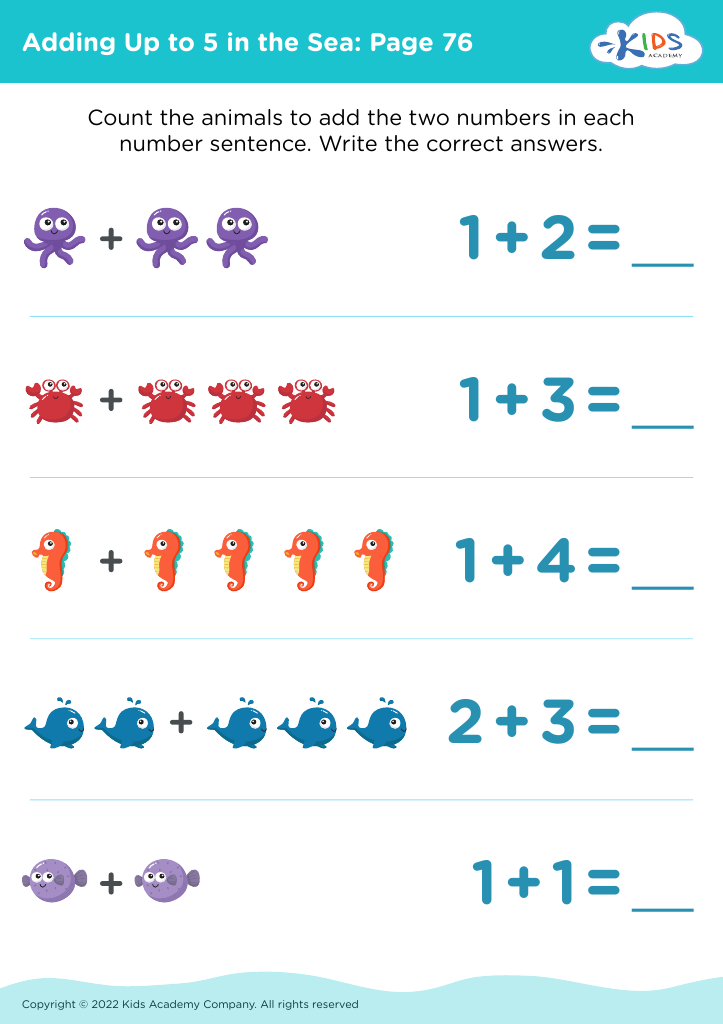
Adding Up to 5 in the Sea: Page 76
Worksheet
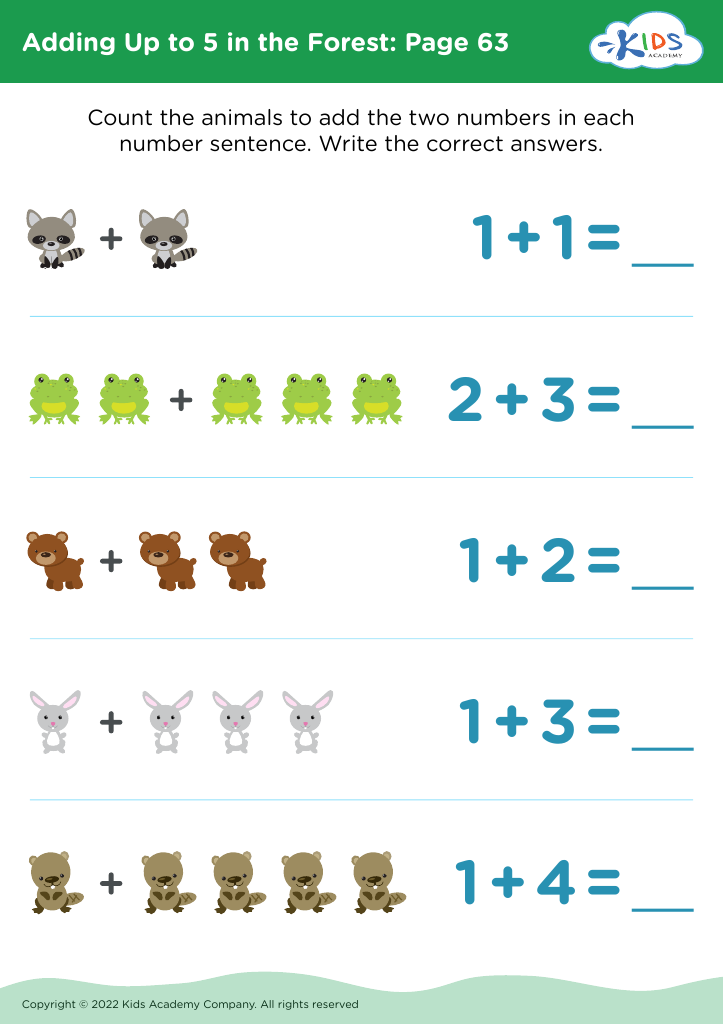
Adding Up to 5 in the Forest: Page 63
Worksheet
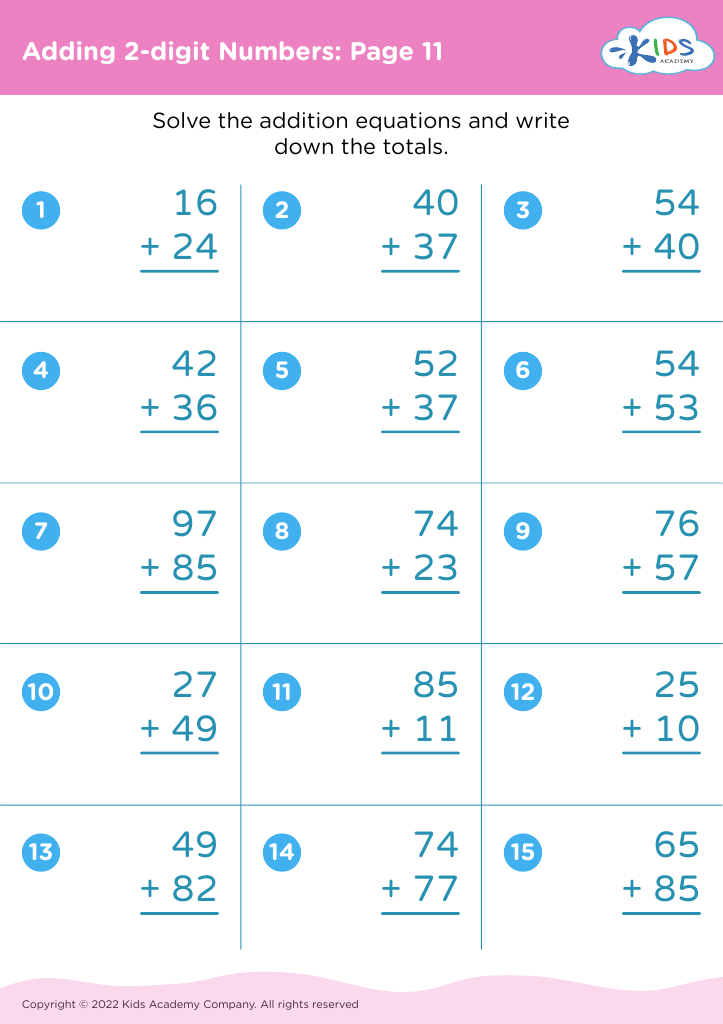
Adding 2-digit Numbers: Page 11

Adding 2-digit Numbers: Page 11

Adding 2-digit Numbers: Page 11
Worksheet
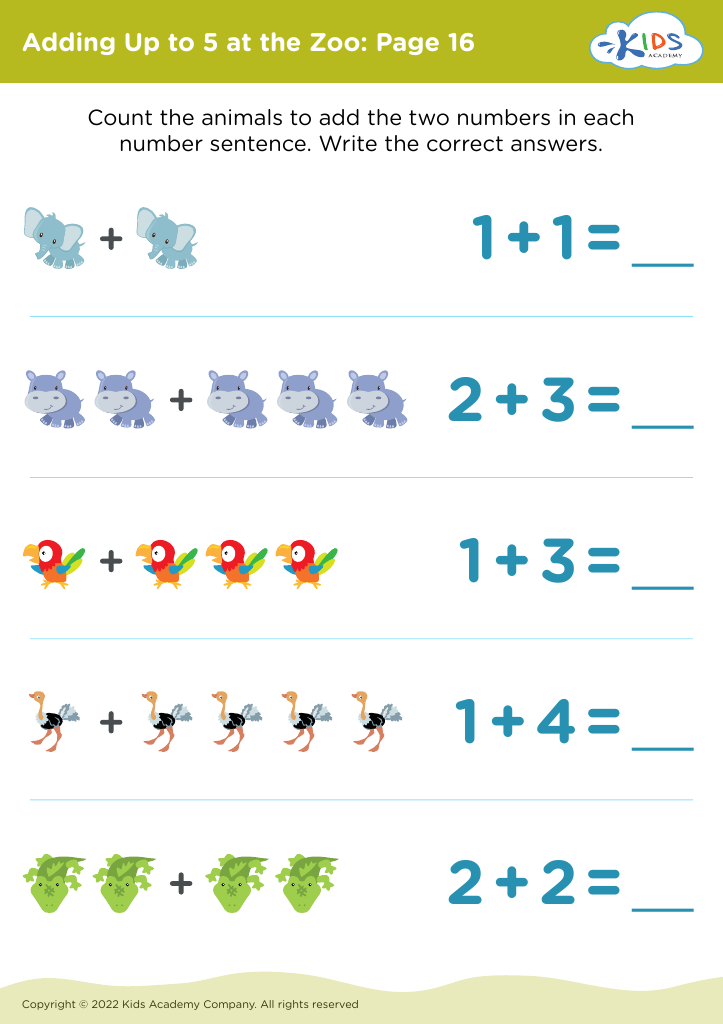
Adding Up to 5 at the Zoo: Page 16
Worksheet
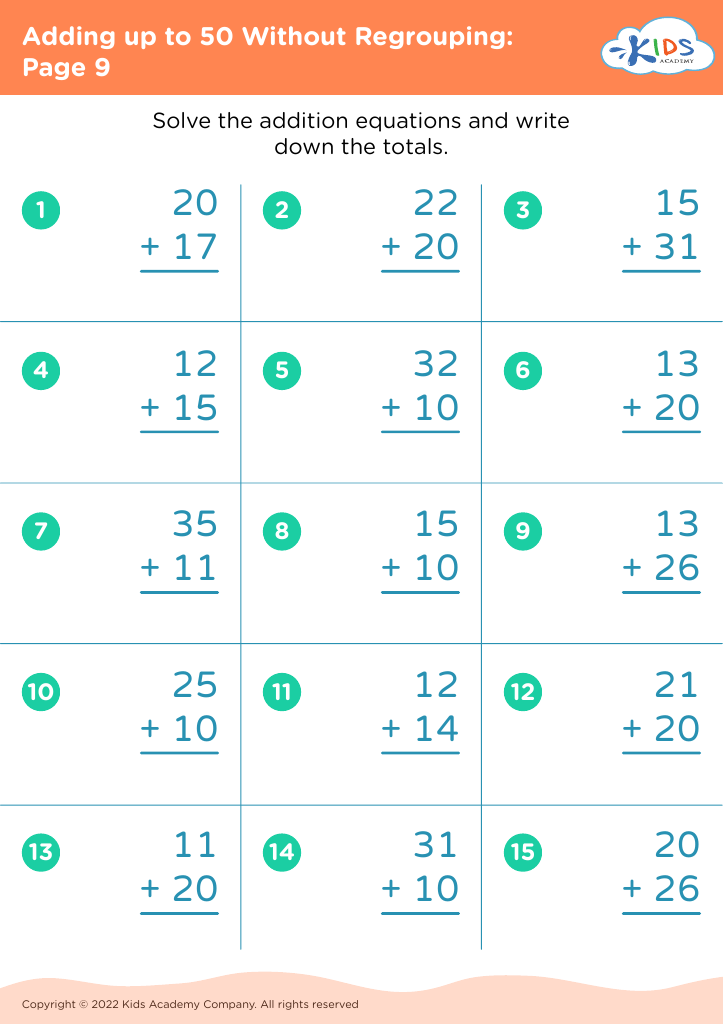
Adding up to 50 Without Regrouping: Page 9
Worksheet
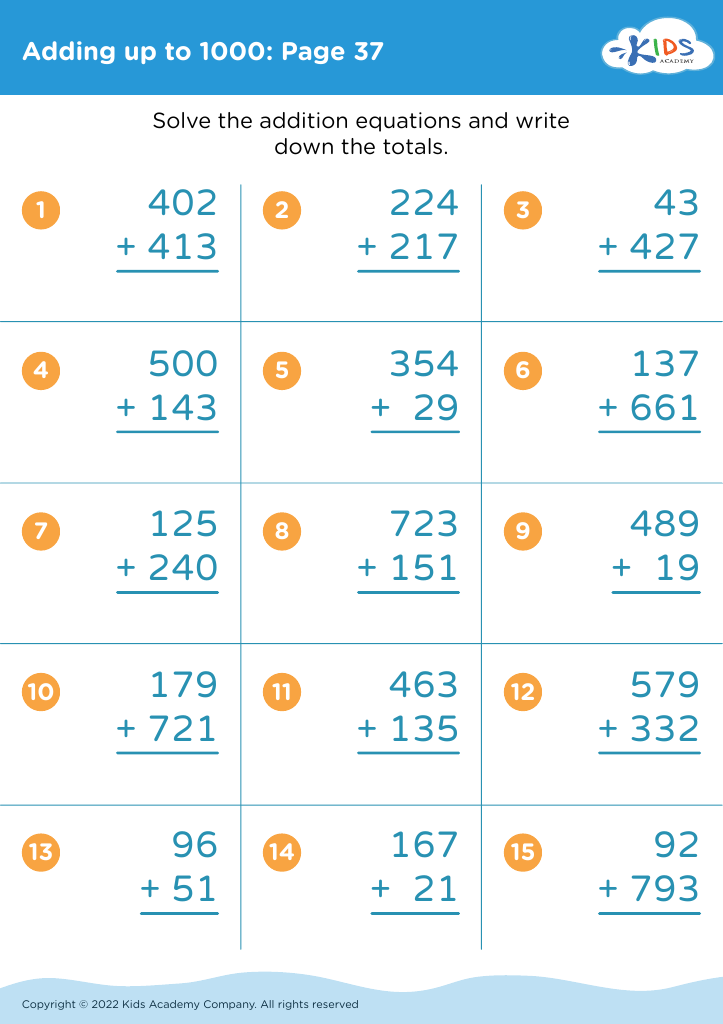
Adding up to 1000: Page 37

Adding up to 1000: Page 37

Adding up to 1000: Page 37
Worksheet
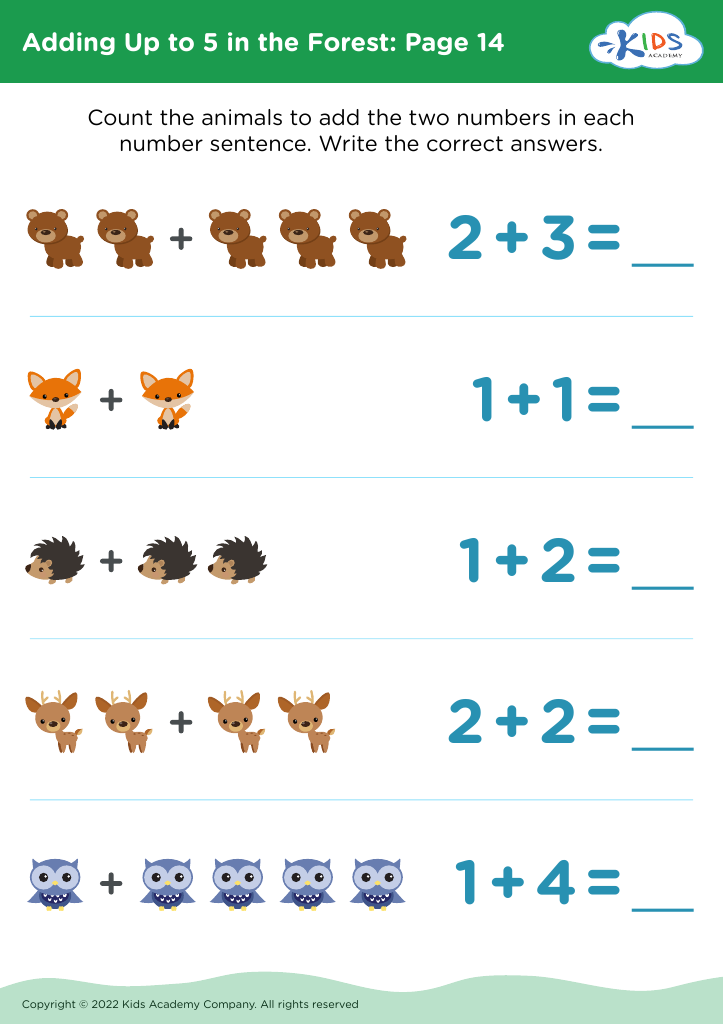
Adding Up to 5 in the Forest: Page 14
Worksheet
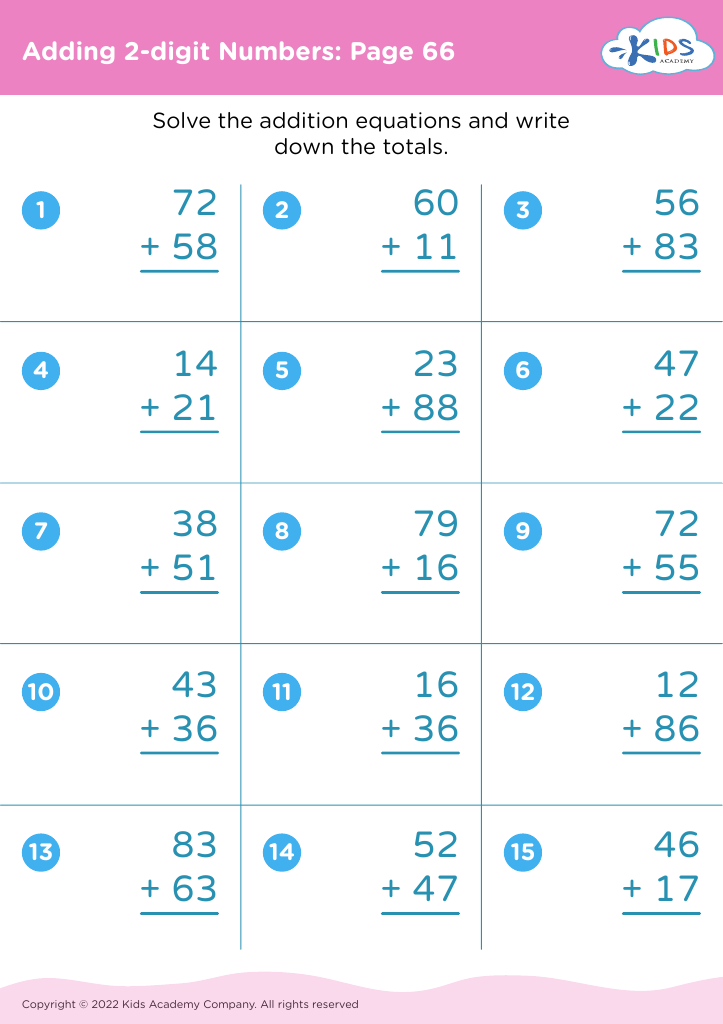
Adding 2-digit Numbers: Page 66

Adding 2-digit Numbers: Page 66

Adding 2-digit Numbers: Page 66
Worksheet
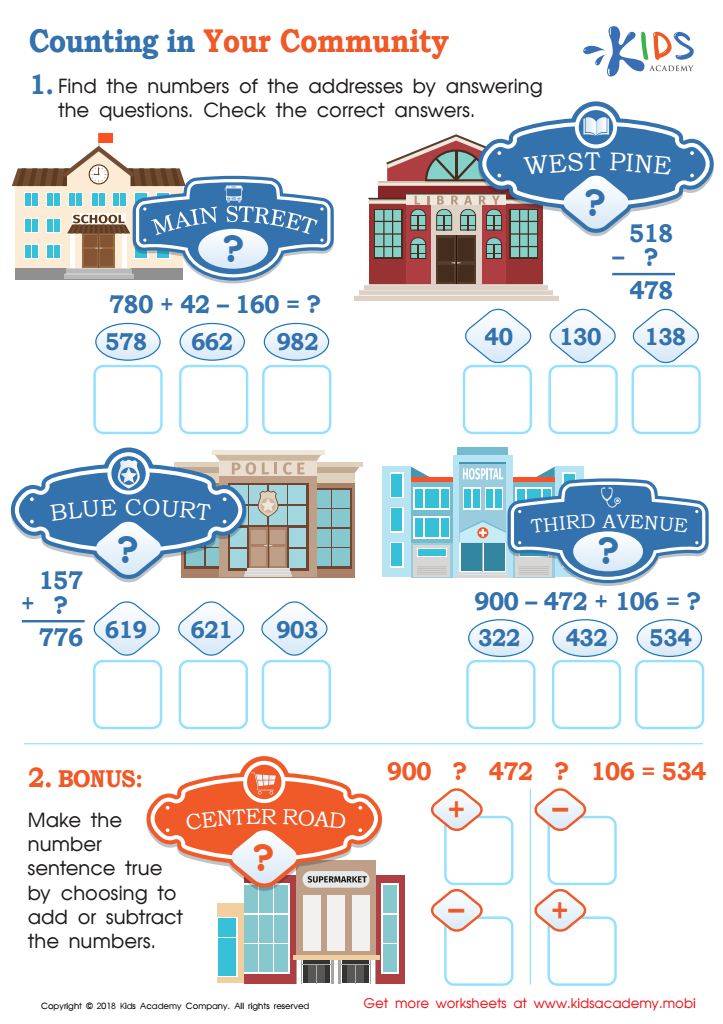
Counting in Your Community Worksheet
Counting in Your Community Worksheet
Introduce your kids to the idea of a community, where different people and buildings co-exist, each playing their part for the community's progress. Ask them to name the buildings they see in their community. Then work through this worksheet to find the numbers of the addresses by answering the questions. Check the answers once they've solved the equations.
Counting in Your Community Worksheet
Worksheet
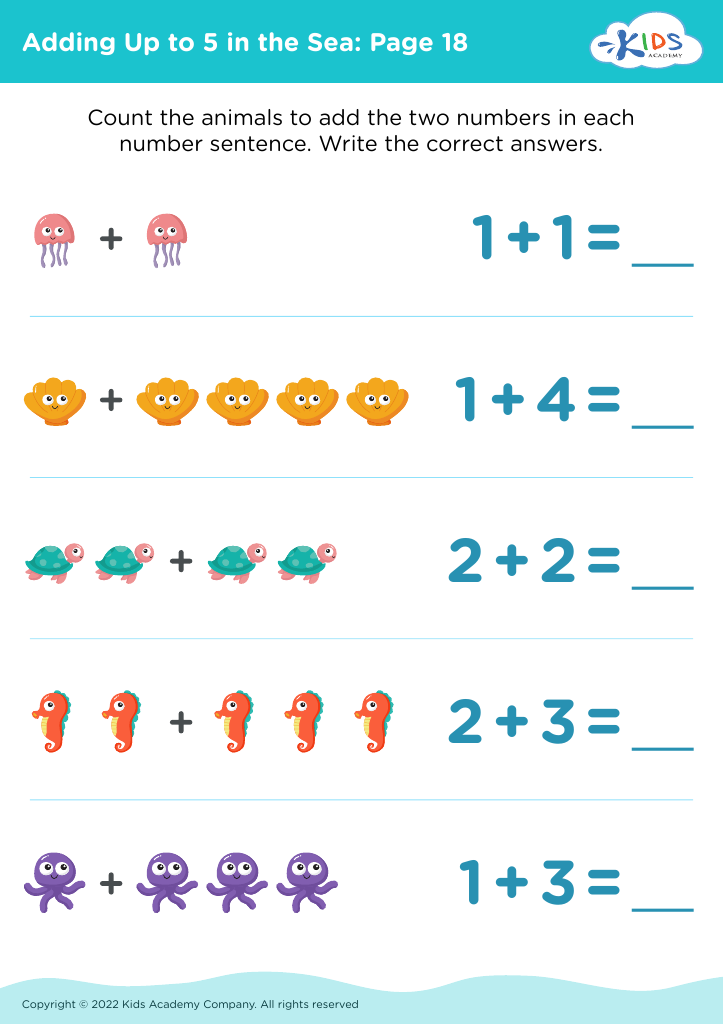
Adding Up to 5 in the Sea: Page 18
Worksheet
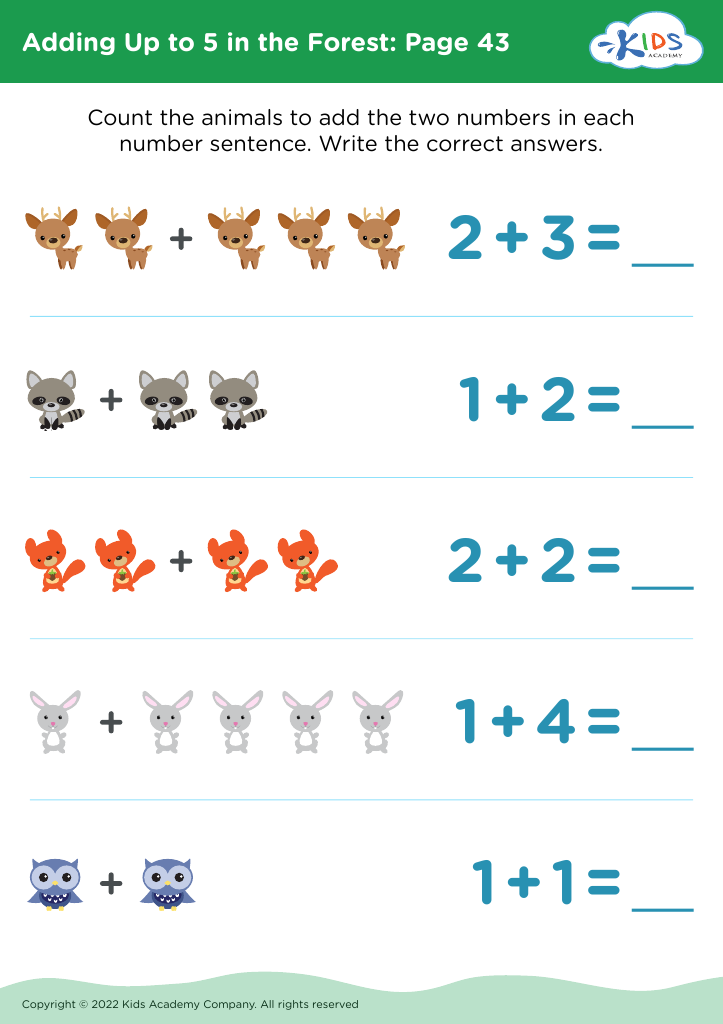
Adding Up to 5 in the Forest: Page 43
Worksheet
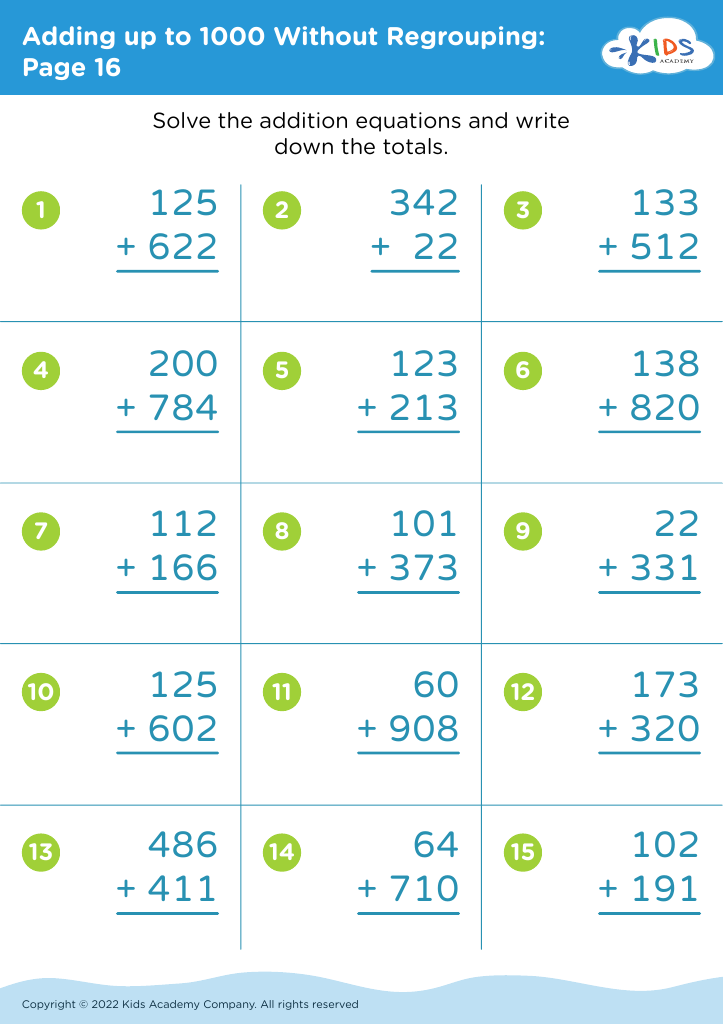
Adding up to 1000 Without Regrouping: Page 16
Worksheet
Add it Up Worksheet

Add it Up Worksheet

Add it Up Worksheet

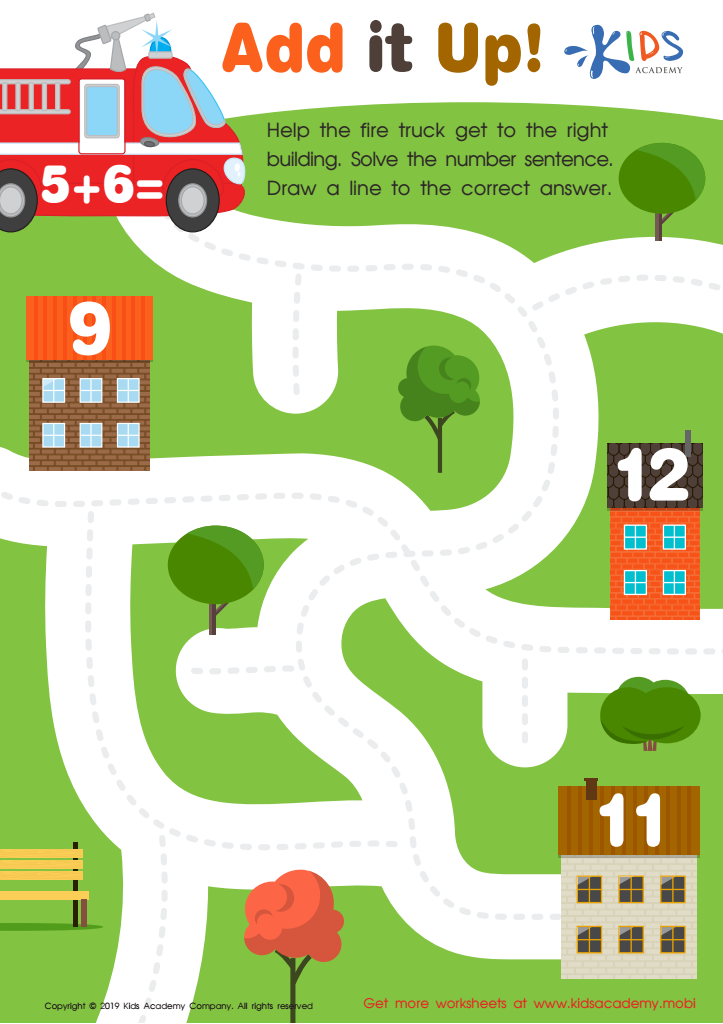
The fire service is the right number to call in case of a fire. Test your children's safety knowledge by asking them other emergency numbers. Have them identify the fire truck in the worksheet and solve the number sentences. Guide them in drawing a line to the right answer.
Add it Up Worksheet
Worksheet
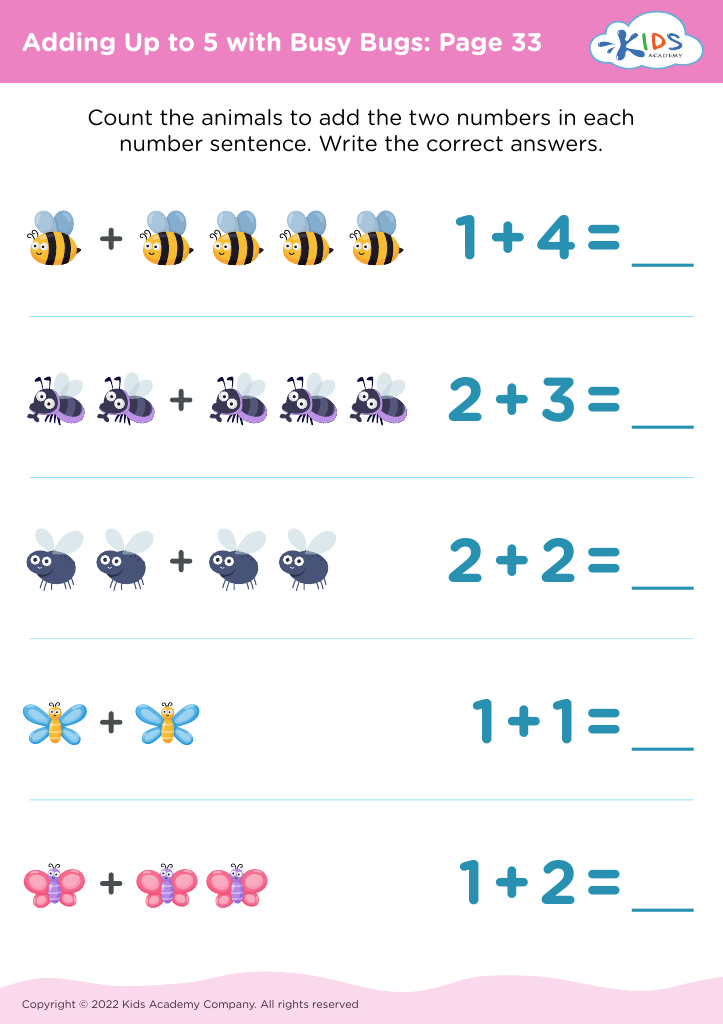
Adding Up to 5 with Busy Bugs: Page 33
Worksheet
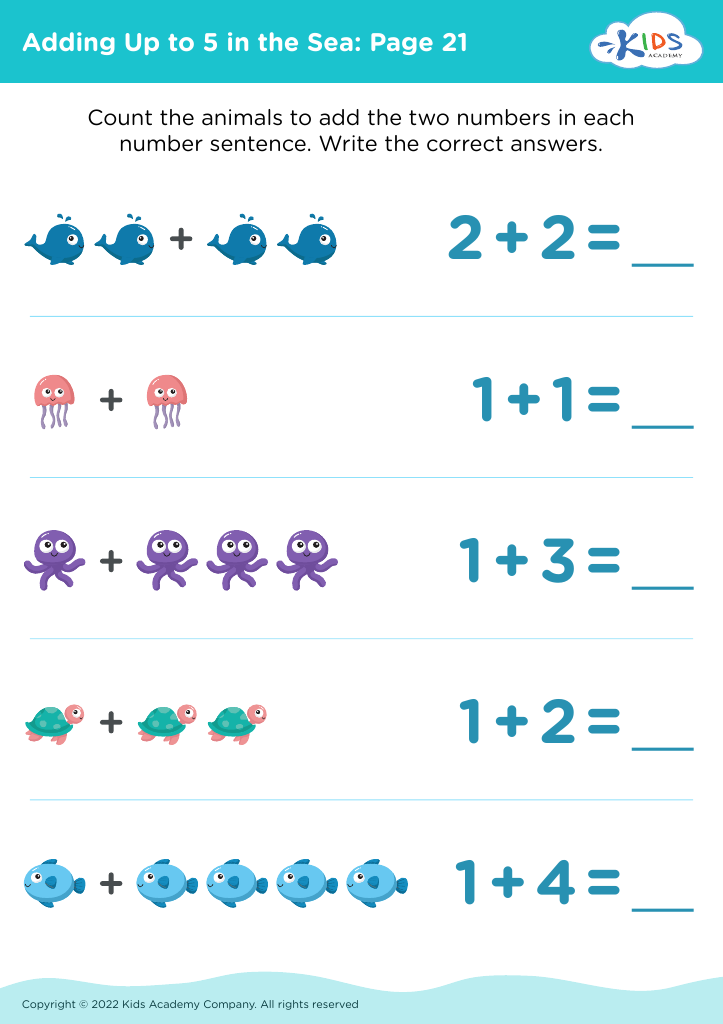
Adding Up to 5 in the Sea: Page 21
Worksheet
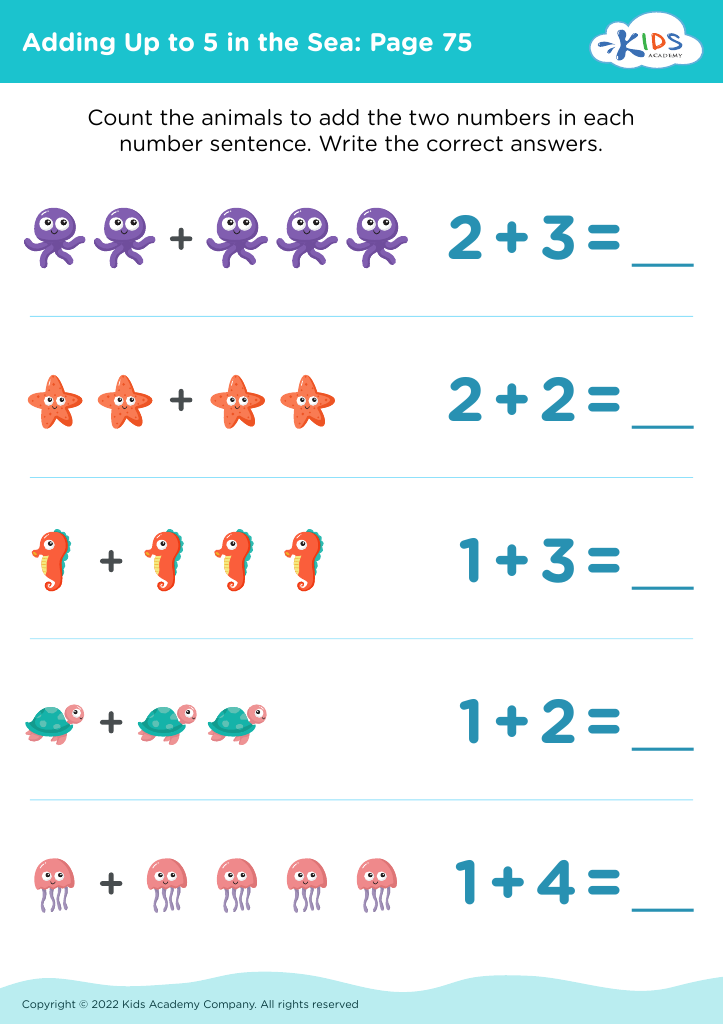
Adding Up to 5 in the Sea: Page 75
Worksheet


Understanding number recognition, addition, and subtraction by ages 5-8 is crucial for early childhood development, which sets the foundation for later success in mathematics and everyday problem-solving. This period is often referred to as a critical window for cognitive development, where children’s brains are highly receptive to learning basic concepts that will be continuously built upon.

Number recognition helps children make sense of the world around them by allowing them to identify and understand the meaning of numbers, which is a fundamental proficiency for more advanced mathematical operations. When children start recognizing numbers, they can begin counting, sequencing, and comprehending the relationship between numbers, which is the bedrock of their arithmetic skills.

Addition and subtraction, or basic arithmetic operations, introduce young children to the concept of combining and separating, which are critical life skills. These early math experiences improve their logical thinking and problem-solving abilities. When these competencies are developed at an early age, children are more likely to find mathematics engaging and rewarding, rather than intimidating.

Parents and teachers play a vital role by providing positive and supportive learning environments, engaging activities, and manipulative tools such as blocks or counters to make abstract concepts tangible. Prioritizing these early math skills fosters confidence, keen interest, and long-term achievement in mathematics and other related disciplines.