Problem-solving development Addition & Subtraction Worksheets for Ages 5-8
3 filtered results
-
From - To
Enhance your child's problem-solving skills with our engaging Addition and Subtraction Worksheets designed specifically for ages 5-8. These worksheets provide a fun and interactive way for young learners to grasp essential math concepts while developing critical thinking abilities. Each worksheet incorporates real-life scenarios and challenging puzzles that encourage kids to apply their addition and subtraction skills creatively and effectively. With clear instructions and appealing visuals, our resources make learning math enjoyable. Ideal for both classroom and home use, these worksheets help build a strong foundation in mathematics, preparing children for future success. Start fostering problem-solving development today!
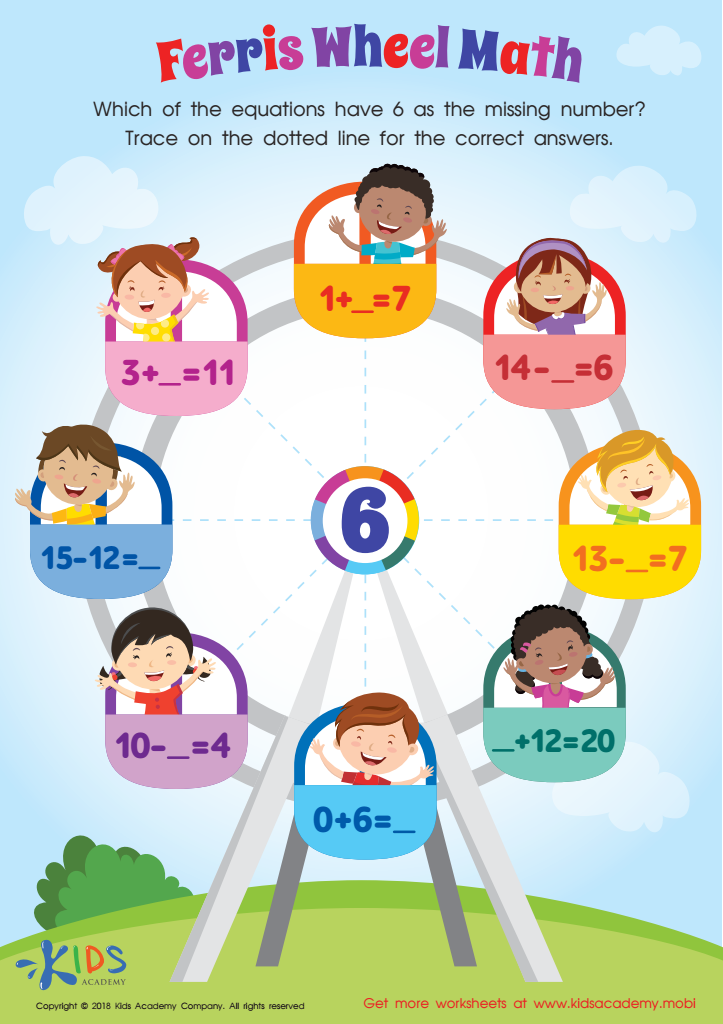
Missing Number: Ferris Wheel Math Worksheet
 Assign to My Students
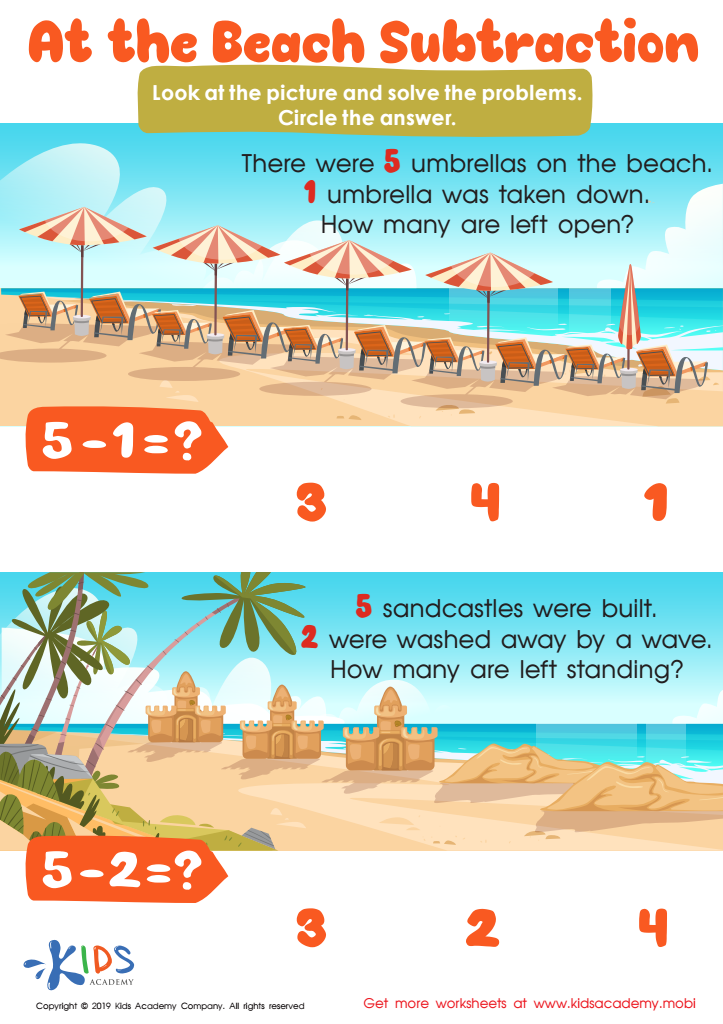
At the Beach Subtraction Worksheet
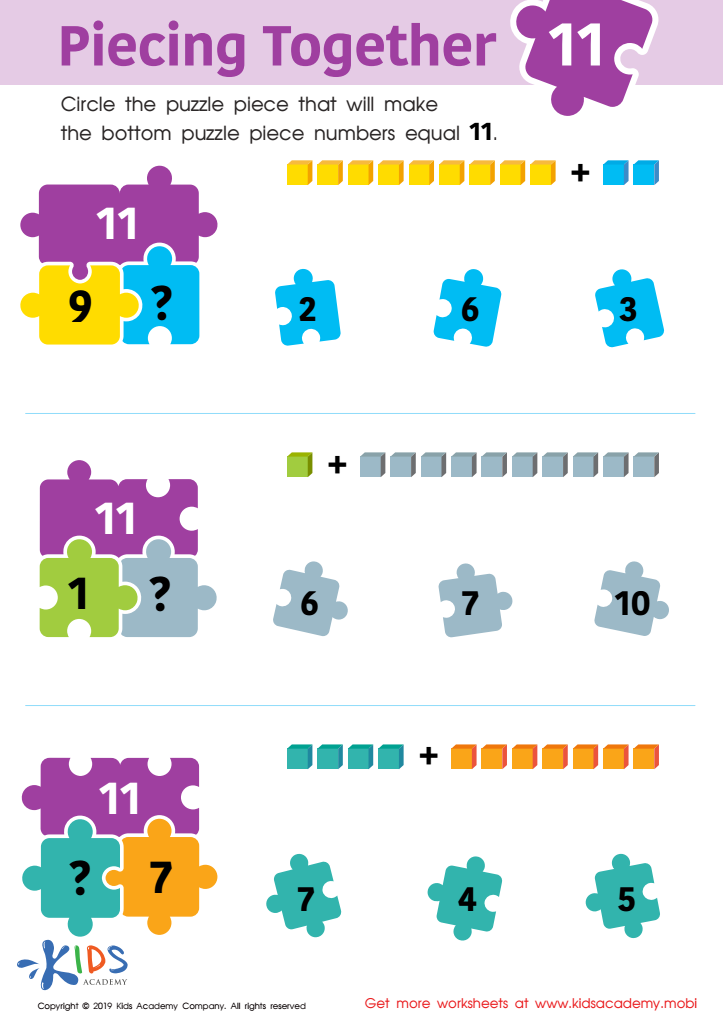
Piecing Together 11 Worksheet








Problem-solving development in addition and subtraction is crucial for children ages 5-8, as it lays the groundwork for their mathematical understanding and critical thinking skills. At this stage, children are not just learning to compute; they are developing strategies to tackle real-world problems. This cognitive process enhances their ability to think logically and apply concepts in various contexts.
For parents and teachers, fostering strong problem-solving skills equips children with the confidence to face challenges, promoting resilience and independence. These skills are essential not only in mathematics but in everyday life, where problem-solving is a primary tool for navigating decisions, resource management, and planning.
Additionally, a focus on problem-solving in addition and subtraction prepares children for future learning. Mathematics is cumulative, and a strong foundation in basic operations forms a pathway to more advanced concepts, such as multiplication, division, and fractions. Encouraging children to think critically encourages them to persevere when difficulties arise, fostering a growth mindset.
In summary, understanding and supporting problem-solving development in early math education influences children's academic success and overall cognitive growth, making it a vital concern for both parents and educators.








