Understanding number relationships Addition & Subtraction Worksheets for Ages 5-8
8 filtered results
-
From - To
Explore our "Understanding Number Relationships: Addition & Subtraction Worksheets for Ages 5-8" and watch your child's math skills flourish! These expertly designed worksheets help young learners master number relationships through engaging addition and subtraction exercises. Tailored for children ages 5 to 8, each worksheet reinforces critical thinking, problem-solving, and foundational math skills. Featuring fun themes and colorful illustrations, these resources encourage kids to grasp complex concepts with ease. Perfect for classroom use or homeschooling, they provide a solid mathematical foundation for future success. Start building your child’s confidence and proficiency in math today with our comprehensive collection!
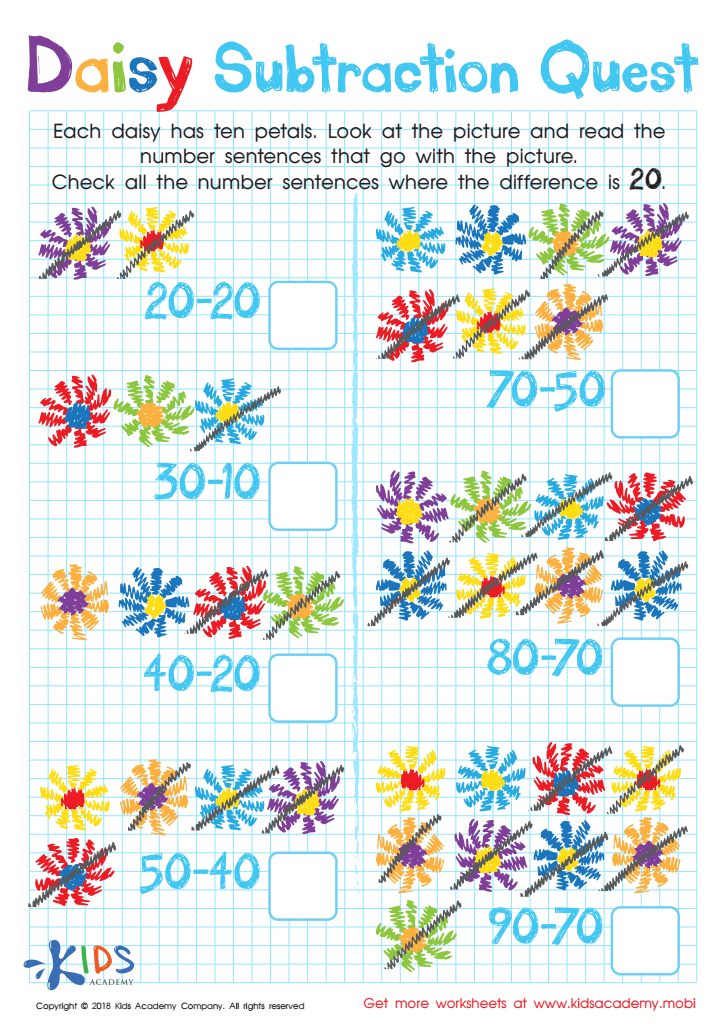
Daisy Subtraction Quest Worksheet
 Assign to My Students
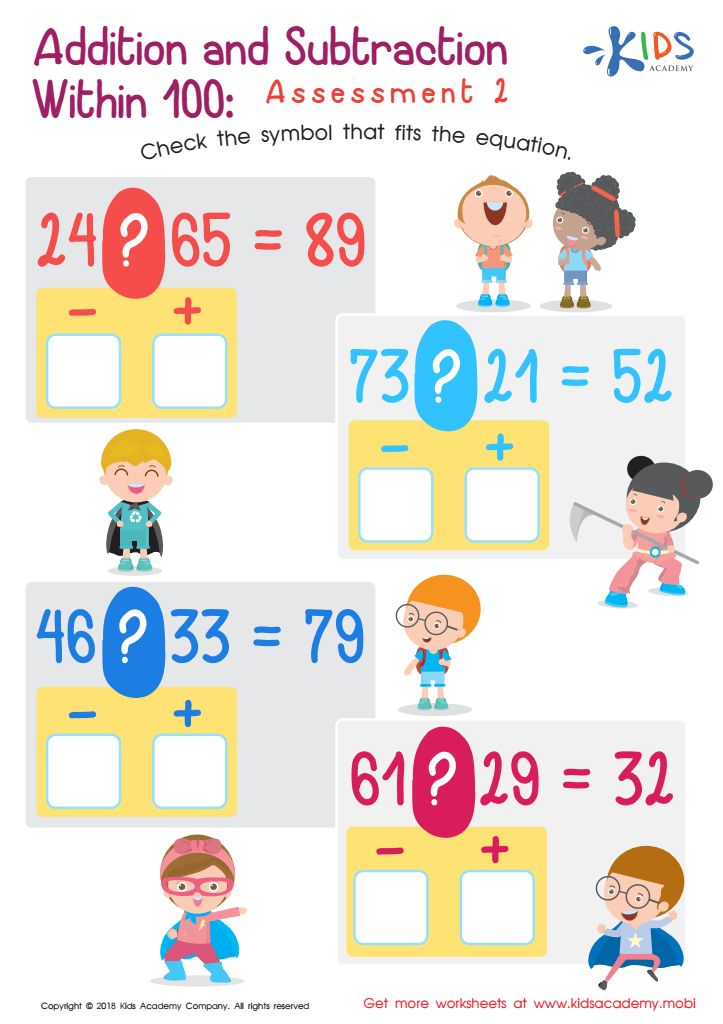
Addition and Subtraction Within 1: Assessment 2 Worksheet
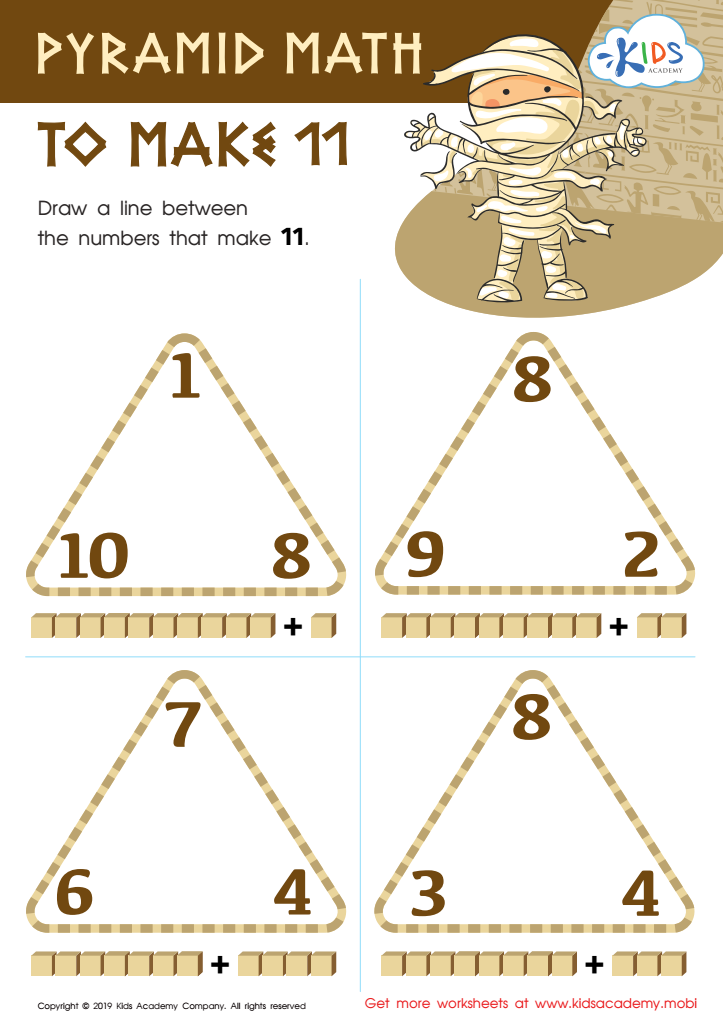
Pyramid Math to Make 11 Worksheet








Understanding number relationships, addition, and subtraction is fundamental for children aged 5-8 because it forms the building blocks of their mathematical development and everyday problem-solving skills. At this age, children are in the crucial early stages of cognitive development where acquiring fluency in basic arithmetic establishes a strong foundation for more advanced mathematical concepts.
For parents and teachers, emphasizing the importance of addition and subtraction helps children recognize patterns, understand the value of numbers, and develop logical thinking. By mastering these skills, children also enhance their ability to approach tasks methodically, which is not just vital for math but for other academic subjects and real-life situations.
Moreover, understanding number relationships through addition and subtraction aids in boosting a child’s confidence. When kids see their progress in everyday contexts—like sharing toys or counting items—they gain a sense of accomplishment and resilience, making them more enthusiastic learners. Early proficiency in these skills can mitigate future learning difficulties, fostering a positive attitude toward mathematics that can persist throughout the child's educational journey.
Parents and teachers play a key role by providing supportive, engaging, and hands-on learning experiences. Games, manipulatives, and real-world examples can make abstract ideas tangible, transforming math into a subject that is not only understandable but enjoyable. Ultimately, these early investments in arithmetic proficiency pave the way for a child's academic success and practical life skills.








