Understanding number sequence Addition & Subtraction Worksheets for Ages 5-8
4 filtered results
-
From - To
Unlock your child's math potential with our "Understanding Number Sequence Addition & Subtraction Worksheets for Ages 5-8". Designed to build a solid foundation in arithmetic, these worksheets help young learners grasp essential concepts like numerical order, basic addition, and subtraction through engaging activities tailored for early grade students. With colorful designs and interactive problems, children are encouraged to practice and master skills at their own pace. Perfect for classroom use or as supplemental practice at home, our worksheets make learning fun, fostering confidence and competence as your child navigates the exciting world of numbers.
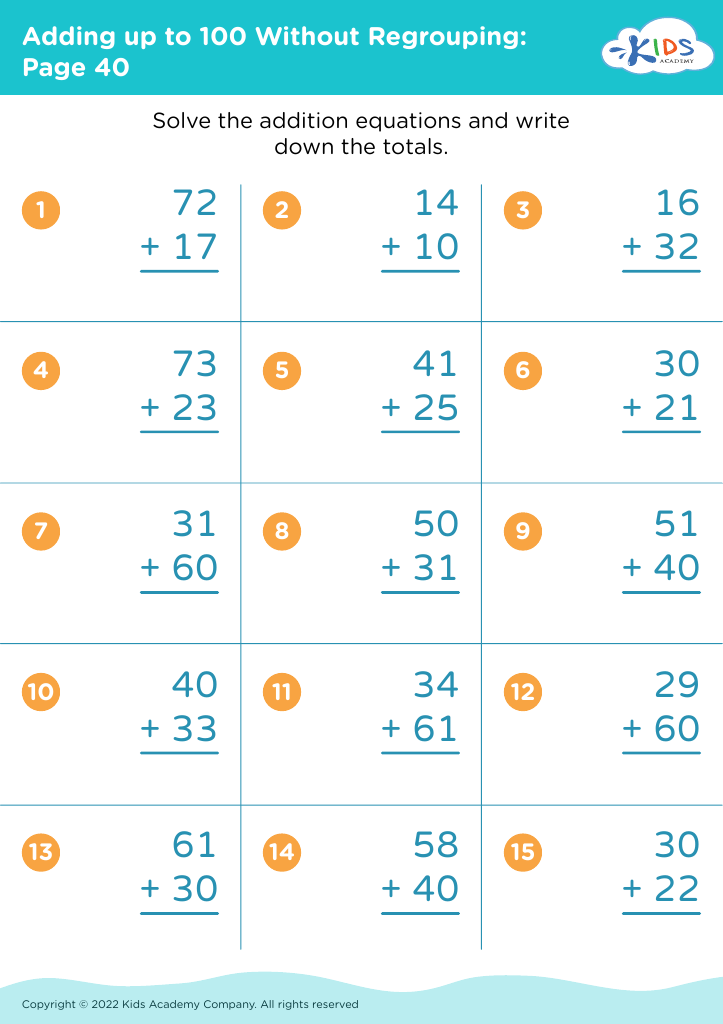
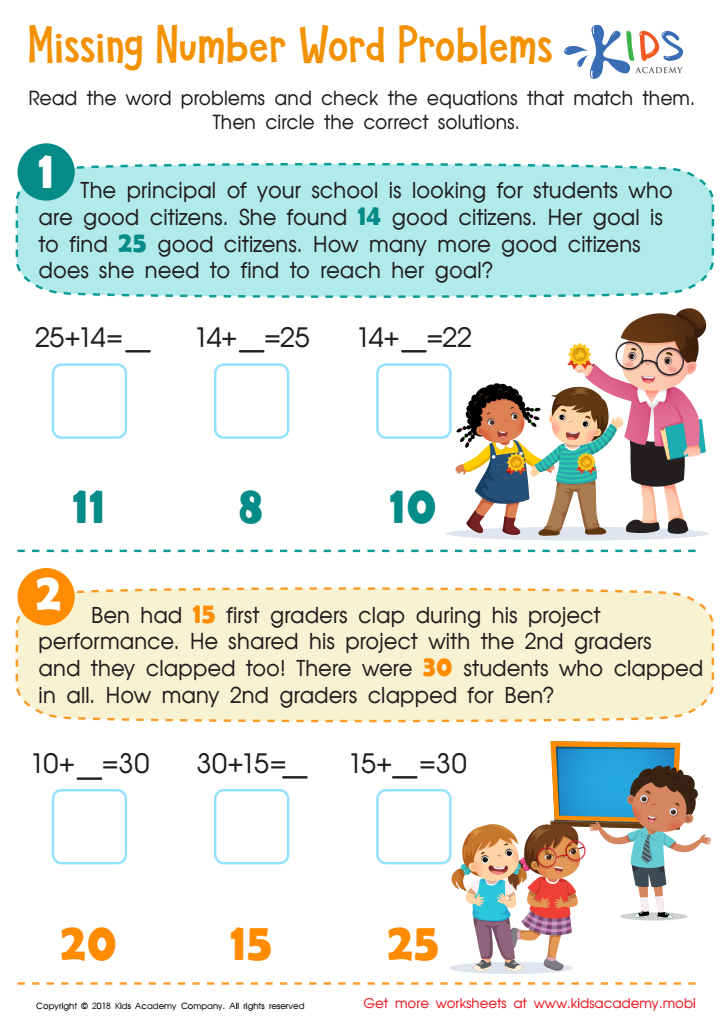
Missing Number Word Problems Worksheet
 Assign to My Students
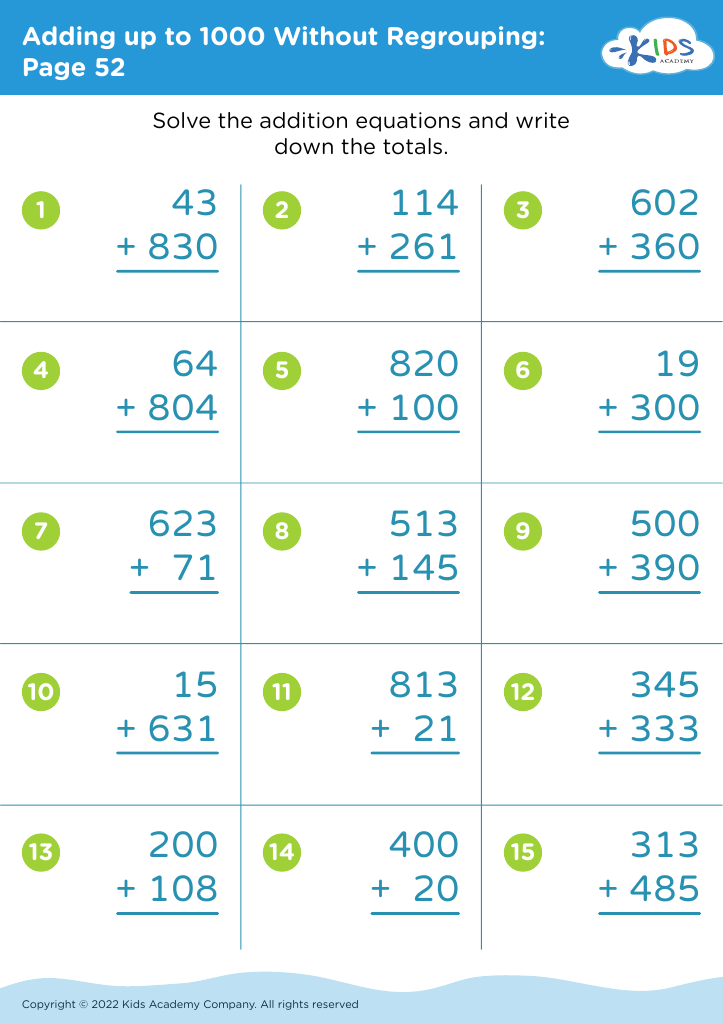
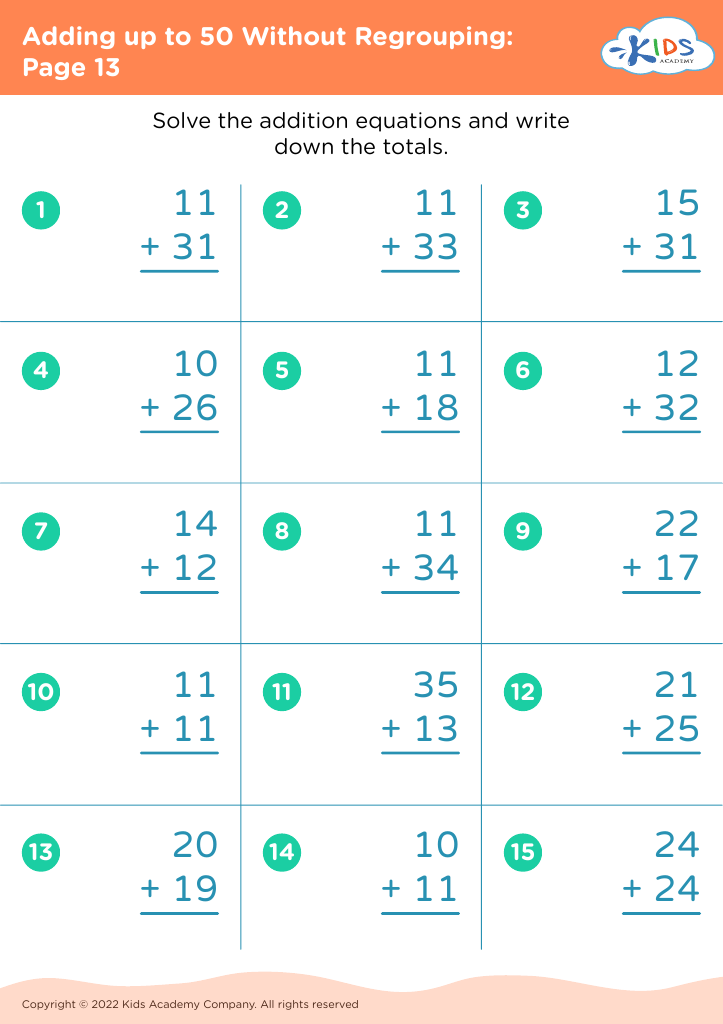








Understanding number sequence, addition, and subtraction for ages 5-8 forms the foundation for future mathematical learning and everyday problem-solving. At this developmental stage, children are beginning to grasp the concept of numbers, counting, and basic operations. Mastery of these skills supports cognitive development by enhancing logical thinking and pattern recognition. By learning number sequences, children understand numerical order and the relationships between numbers, which is critical for more advanced math topics such as multiplication and division.
Addition and subtraction are essential life skills. They are used in a myriad of daily activities, such as counting objects, telling time, handling money, and more. A solid grasp of these basics ensures children can tackle practical tasks with confidence, fostering independence.
Moreover, early success in mathematics has a domino effect: children who feel competent in math are more likely to develop a positive attitude toward education and learning in general. This builds self-esteem and encourages persistence in facing academic challenges. Engaging children in fun, interactive math activities also enhances their enjoyment and curiosity, creating an optimal learning environment both at home and in school. Therefore, parents and teachers should prioritize these critical skills to lay a strong educational foundation for future success.








