
Visual discrimination Addition & Subtraction Worksheets for Ages 5-8
6 filtered results
Difficulty Level
Grade
Age
-
From - To
Subject
Activity
Standards
Discover our engaging Visual Discrimination Addition & Subtraction Worksheets designed for children ages 5-8! These helpful resources enhance visual perception skills essential for solving math problems. By focusing on differentiating shapes and numbers, kids sharpen their ability to compare quantities and identify patterns, thereby boosting their confidence in addition and subtraction. Ideal for both classroom use and at-home learning, our worksheets promote fun interactive learning while developing math proficiency. With colorful graphics and engaging exercises, students will improve their skills in a supportive environment. Explore our collection today and pave the way for your child’s math success!
Favorites
With answer key
Interactive
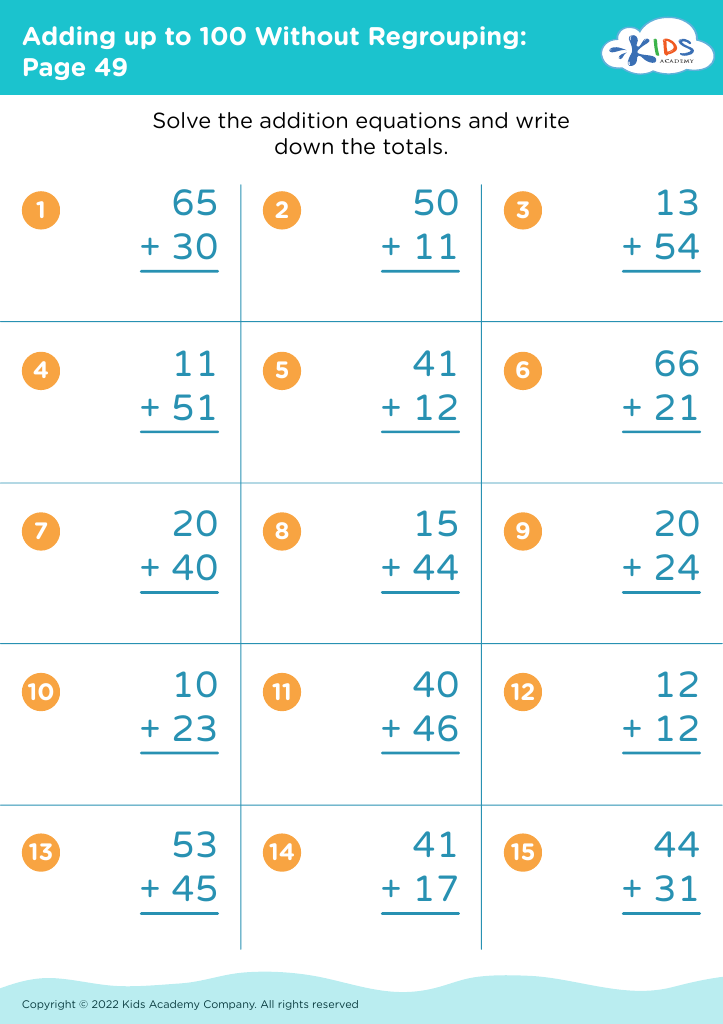
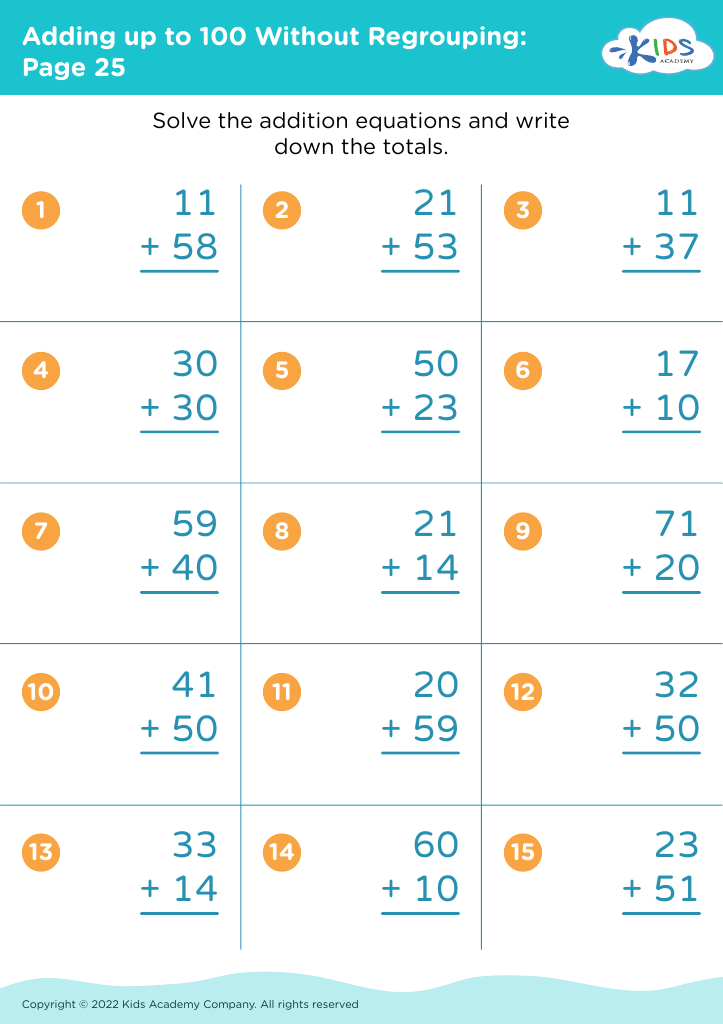
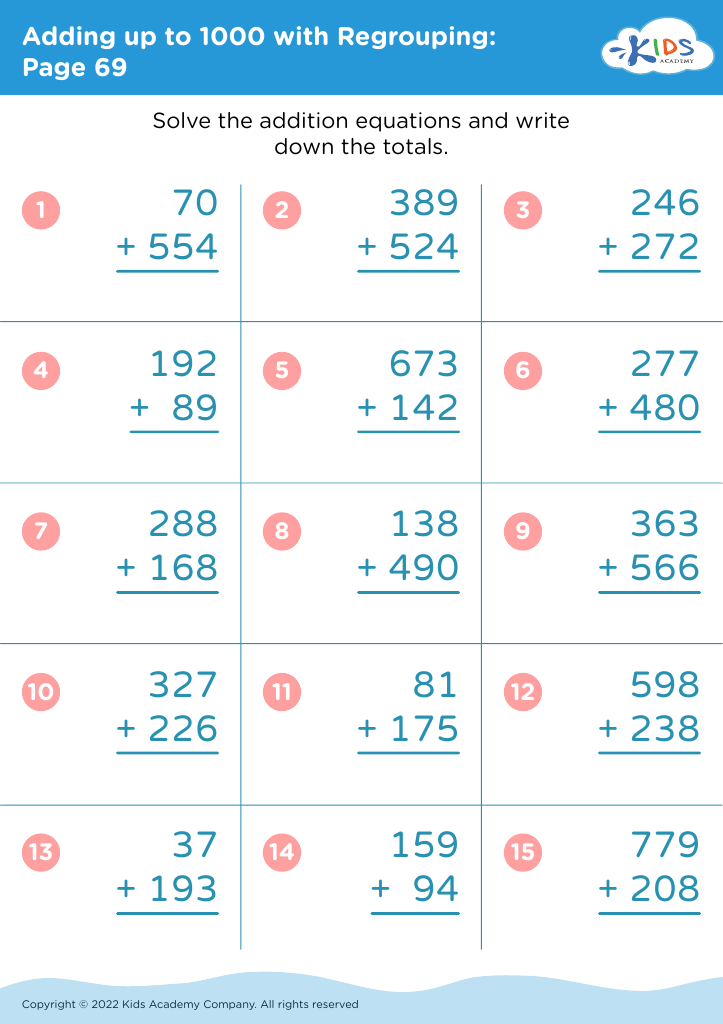
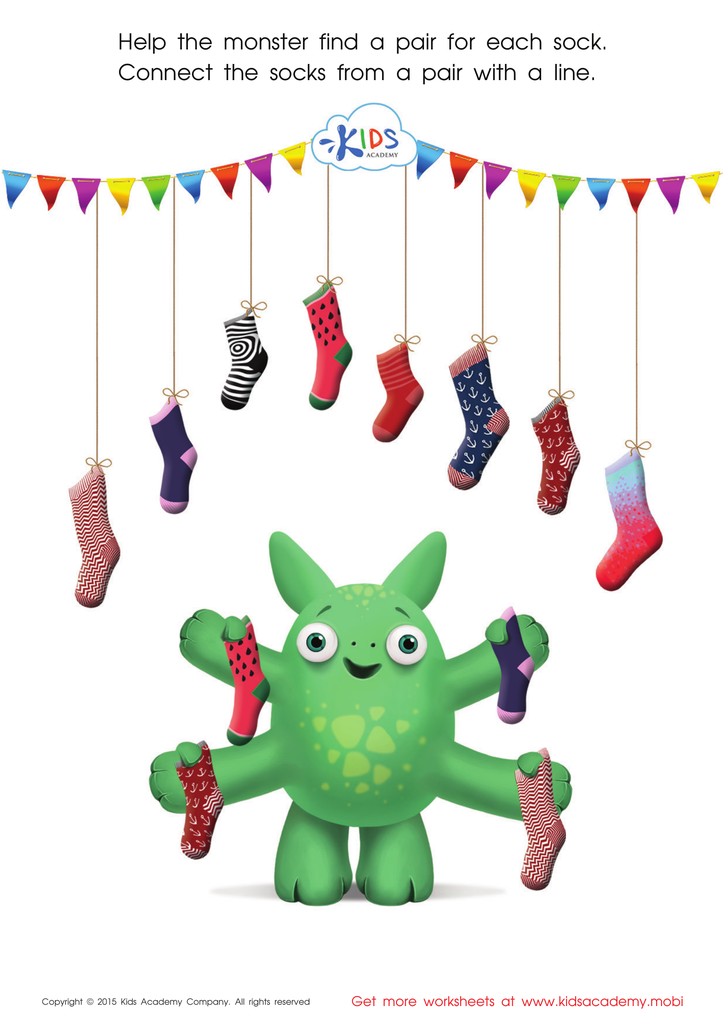
Math Matching Game: Monsterв's Socks Worksheet
Help the Monster put pairs of socks back together after a big storm! Kids draw lines to match the socks and develop cognitive and fine motor skills. Download and print the worksheet from Kids Academy. More preschool and kindergarten activities available.
Math Matching Game: Monsterв's Socks Worksheet
Worksheet
Join Kids Academy for Free
Who is primarily going to use this learning content?








Visual discrimination is a critical skill for children ages 5-8, as it forms the foundation for understanding addition and subtraction. This ability enables children to perceive differences and similarities in shapes, colors, and quantities, which are essential for mathematical concepts. When children can accurately distinguish between various numerals and grouping, they become proficient in recognizing patterns and solving problems.
Teachers and parents should prioritize developing visual discrimination skills because it directly impacts a child's math comprehension. For example, when children can visually differentiate between "5" and "6," they establish a clearer understanding of numerical relationships, leading to better addition and subtraction skills. Furthermore, strong visual discrimination contributes to faster identification of quantities, making mental math processes smoother and more intuitive.
In addition, activities that promote visual discrimination—like sorting objects, engaging in matching games, or working with visual aids—can also foster critical thinking and enhance cognitive development. By focusing on these early skills, parents and teachers set children up for long-term academic success, boosting their confidence and eagerness to tackle more complex math concepts in the future. Prioritizing visual discrimination in early education lays the groundwork for a fruitful journey in learning math and other subjects.








