Visual representation comprehension Addition & Subtraction Worksheets for Ages 5-8
5 filtered results
-
From - To
Enhance your child's math skills with our Visual Representation Comprehension Addition and Subtraction Worksheets, specially designed for ages 5-8. These engaging resources utilize colorful images and interactive visuals to make understanding addition and subtraction concepts fun and accessible. By utilizing visual aids, children can grasp problem-solving strategies more effectively, boosting their confidence and comprehension. Our thoughtfully crafted worksheets cater to varying skill levels, fostering independent learning and progression. Perfect for home or classroom use, these worksheets provide an excellent way to reinforce essential math concepts through playful learning. Help your child build a strong foundation in mathematics today!
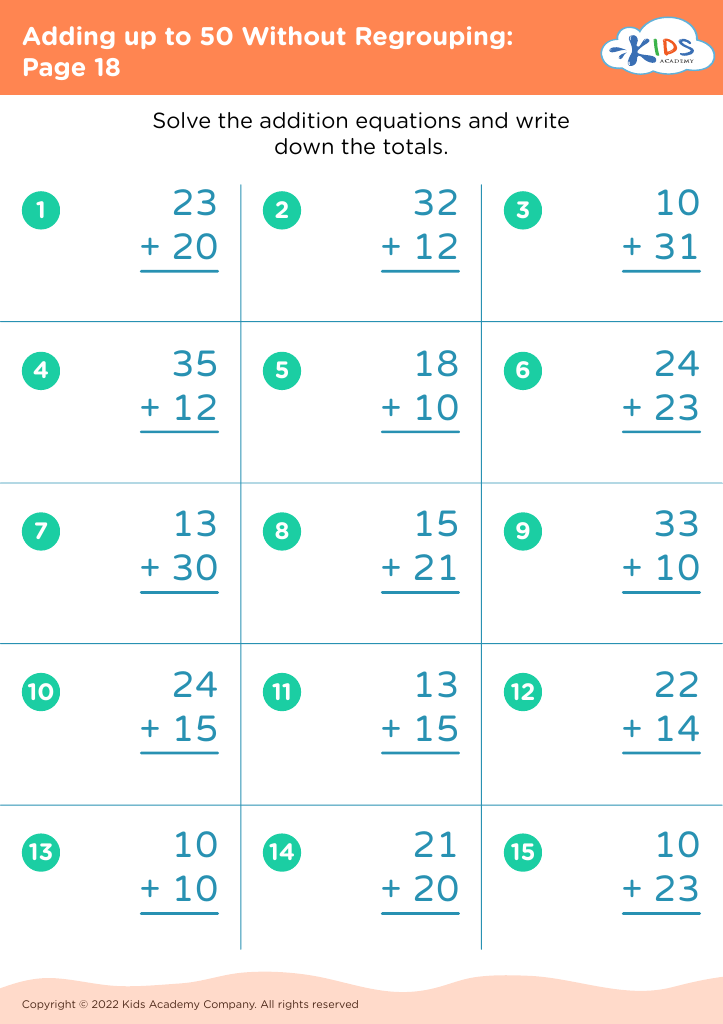
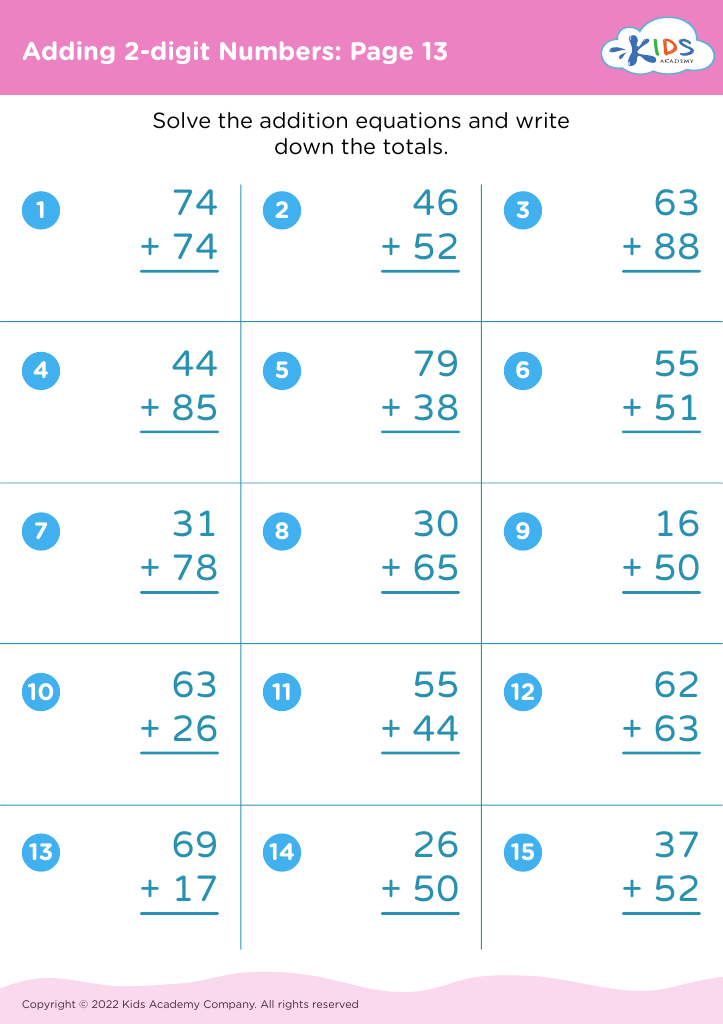
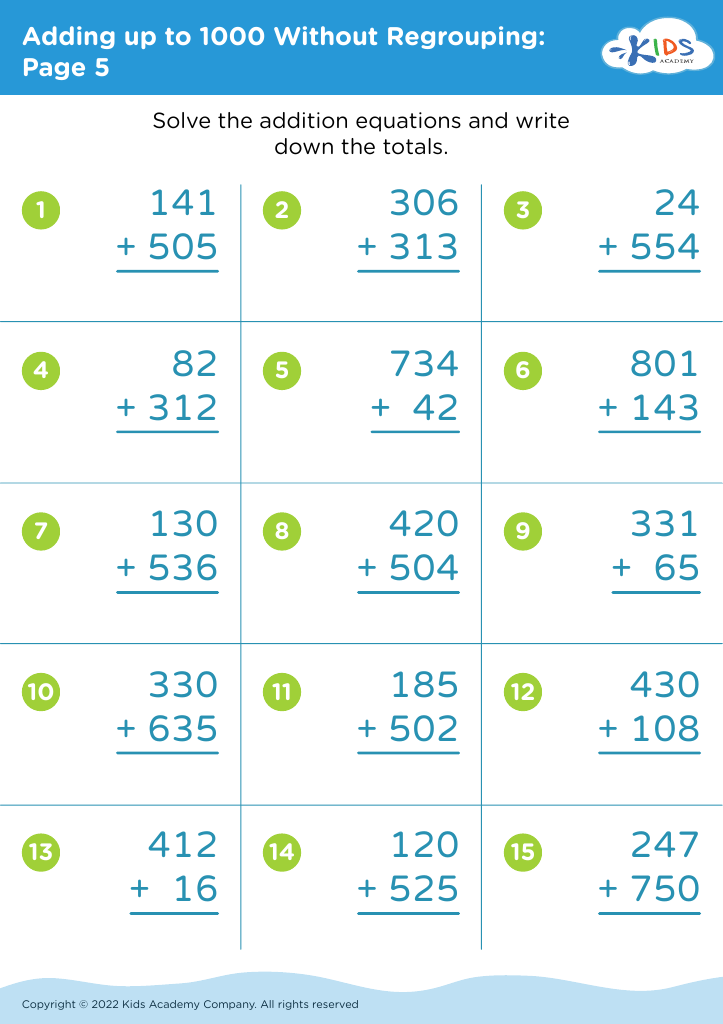
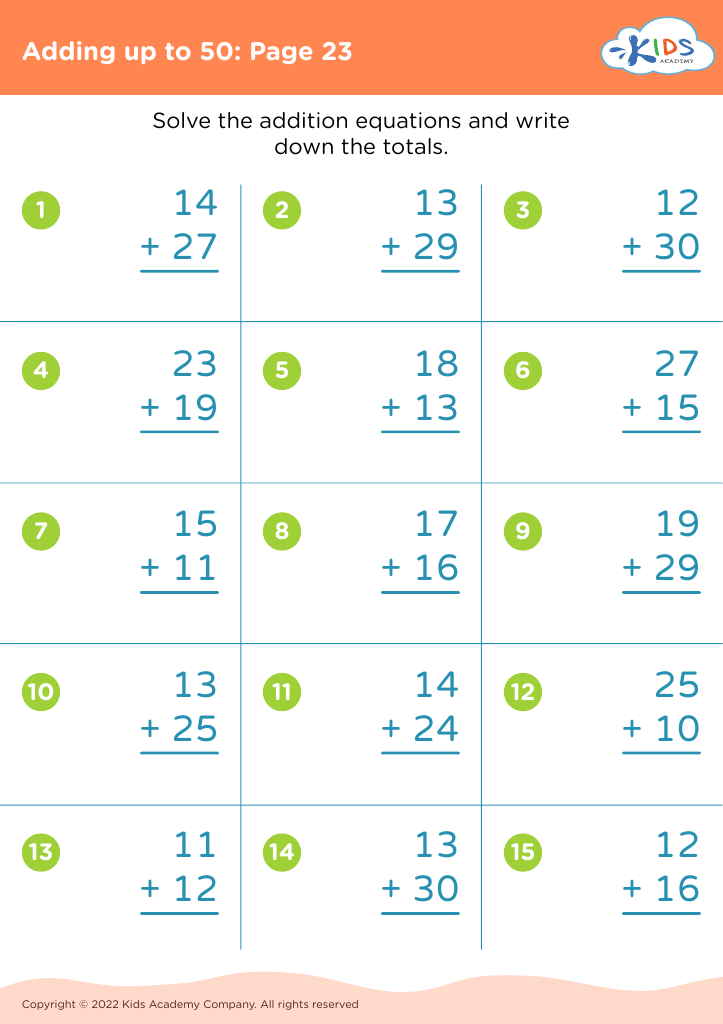
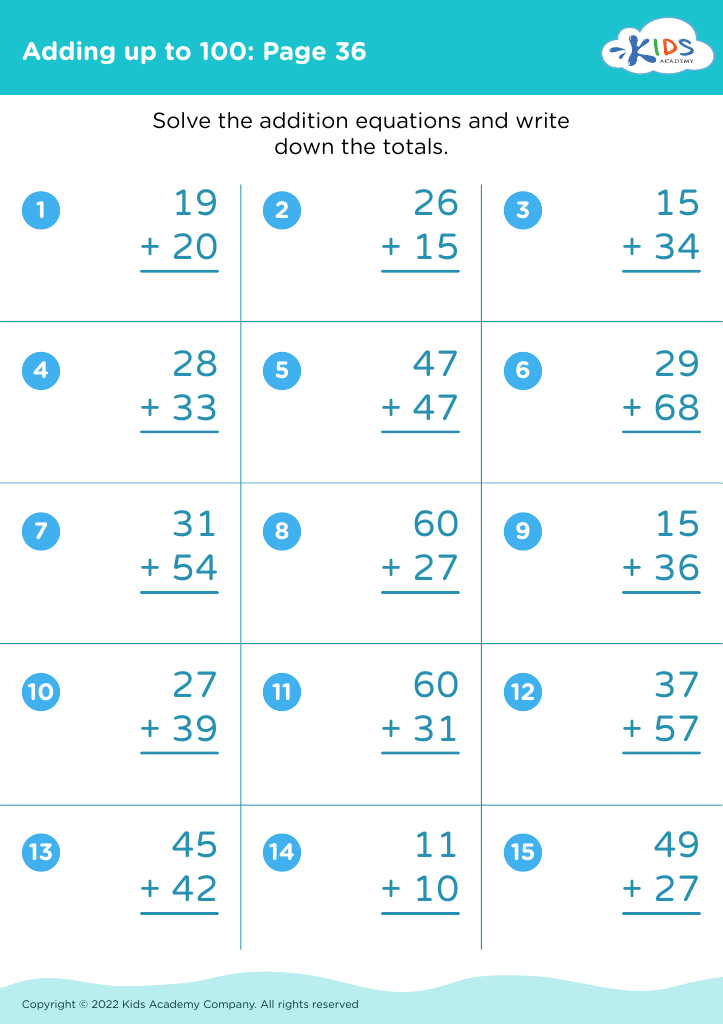








Visual representation comprehension of addition and subtraction is crucial for children ages 5-8, as it lays the foundation for their mathematical understanding. Here are several reasons why parents and teachers should prioritize this skill:
-
Concrete Understanding: Young learners often grasp abstract concepts better when they can visualize them. Using visual aids, such as drawings, number lines, and manipulatives, enables children to see the meaning behind addition and subtraction.
-
Problem-Solving Skills: Visual representation fosters critical thinking and problem-solving. By representing math problems visually, children learn to break down complex concepts into manageable parts, enhancing their overall cognitive skills.
-
Engagement and Motivation: Incorporating visuals makes learning more engaging. Children are naturally drawn to colors and illustrations, which can ignite their interest and motivation to learn.
-
Support for Diverse Learning Styles: Not all children learn the same way. Visual representations cater to various learning styles, ensuring that each child can find an approach that resonates with them.
-
Foundational Skills: Mastering visual methods for addition and subtraction in these formative years is crucial for future success in math. It sets the stage for more advanced concepts, ultimately contributing to a strong mathematical foundation for lifelong learning.
In summary, visual representation comprehension is essential as it supports understanding, enhances engagement, and accommodates diverse learners.








