Animal identification Addition Worksheets for Ages 5-8 - Page 2
27 filtered results
-
From - To





.jpg)


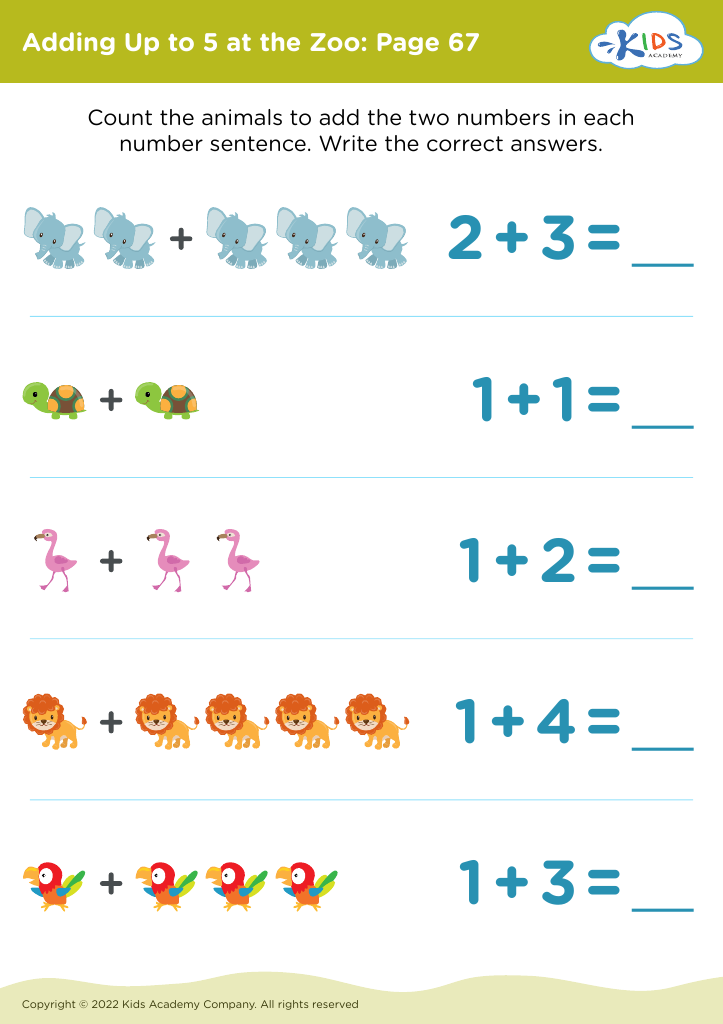
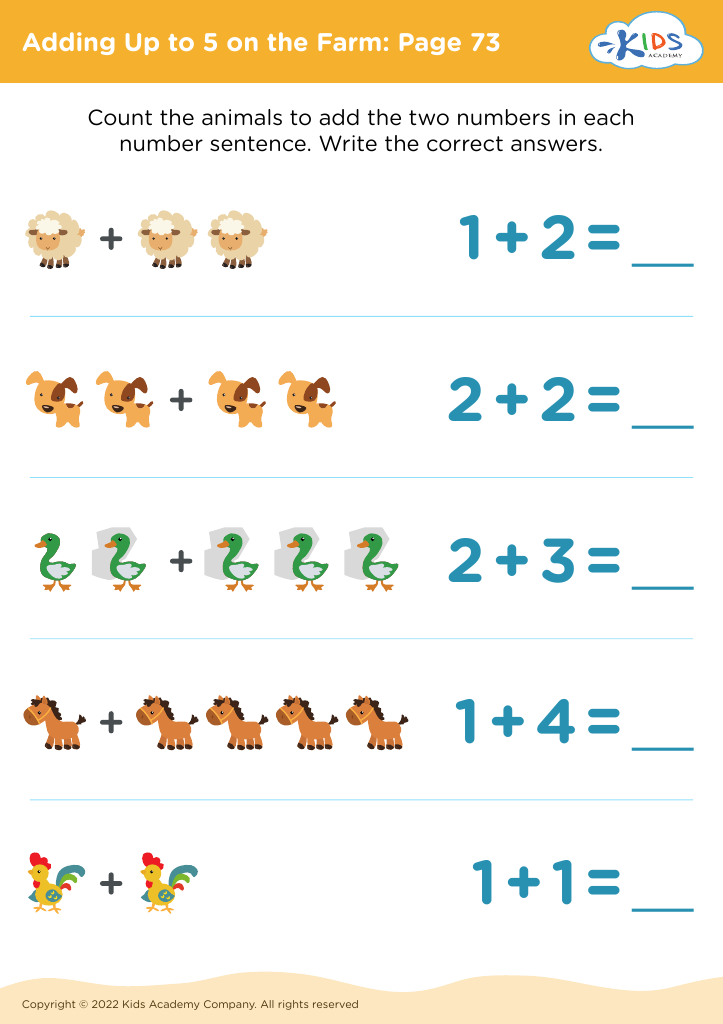
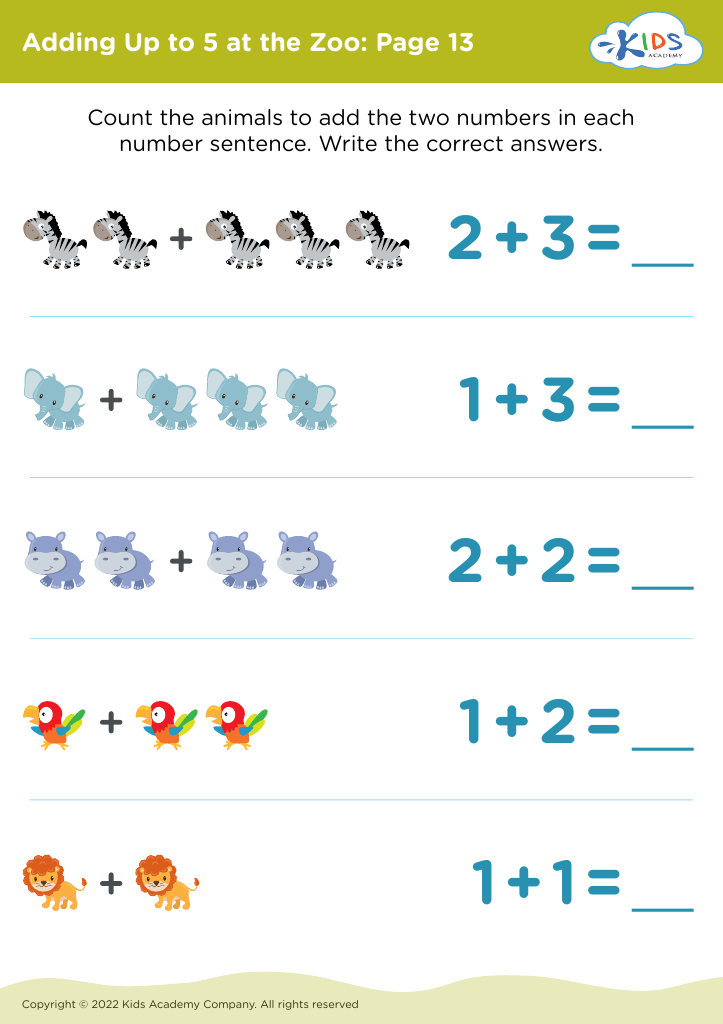
Animal identification addition is critical for young learners, particularly ages 5-8, as it combines fundamental math skills with engaging, thematic content. This educational approach not only introduces basic addition concepts but also sparks curiosity about the animal kingdom, nurturing a love for learning in multiple regard.
Firstly, incorporating animals into math lessons captures children's attention. Young learners are naturally drawn to animals, making the learning experience more enjoyable and memorable. This engagement fosters a positive attitude toward mathematics, often viewed as a challenging subject.
Moreover, animal identification addition teaches children essential cognitive skills. As they identify different animals and quantify them in various scenarios, they enhance their observation and critical thinking skills, laying a solid foundation for more complex problem-solving.
Additionally, this teaching method encourages collaborative learning. Students can work in groups or with their parents to identify animals and solve addition problems together, promoting social skills and teamwork.
Ultimately, parents and teachers should care about animal identification addition because it addresses academic growth while instilling a sense of wonder. It enables children to develop both mathematical skills and an appreciation for the world around them—a vital part of holistic education.








