
Basic math learning Addition Worksheets for Ages 5-8
3 filtered results
Difficulty Level
Grade
Age
-
From - To
Subject
Activity
Standards
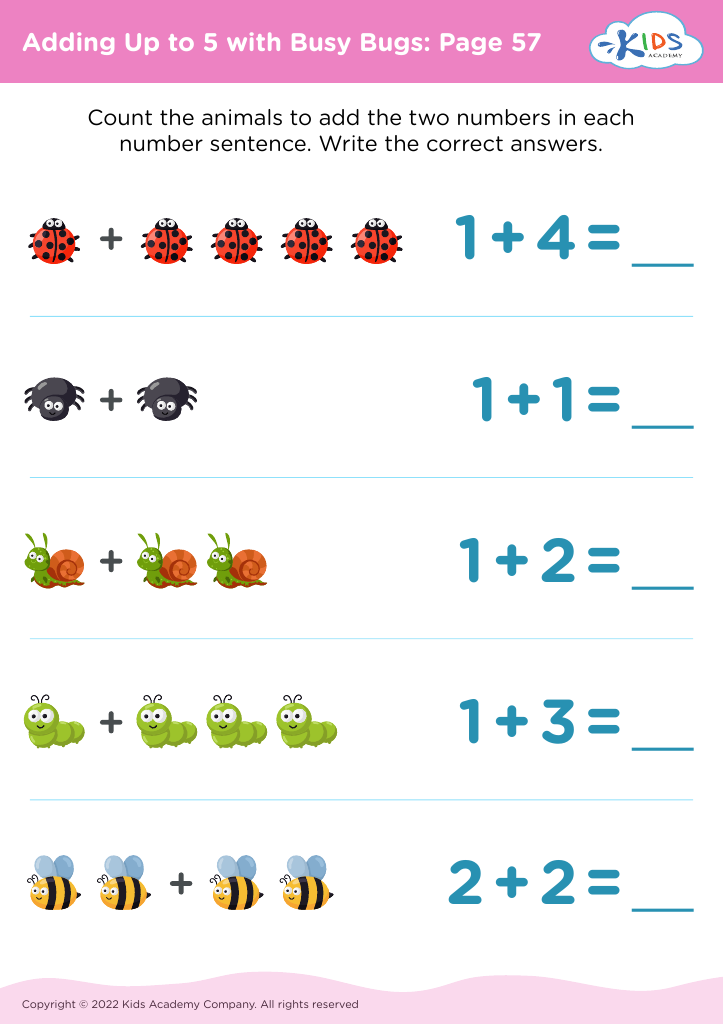
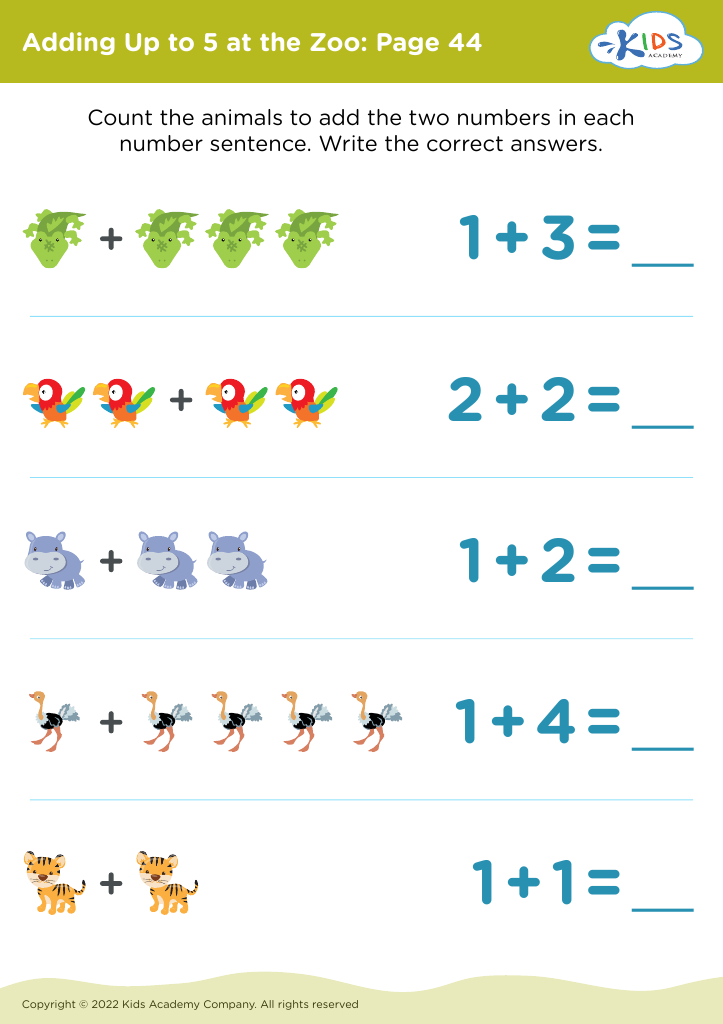
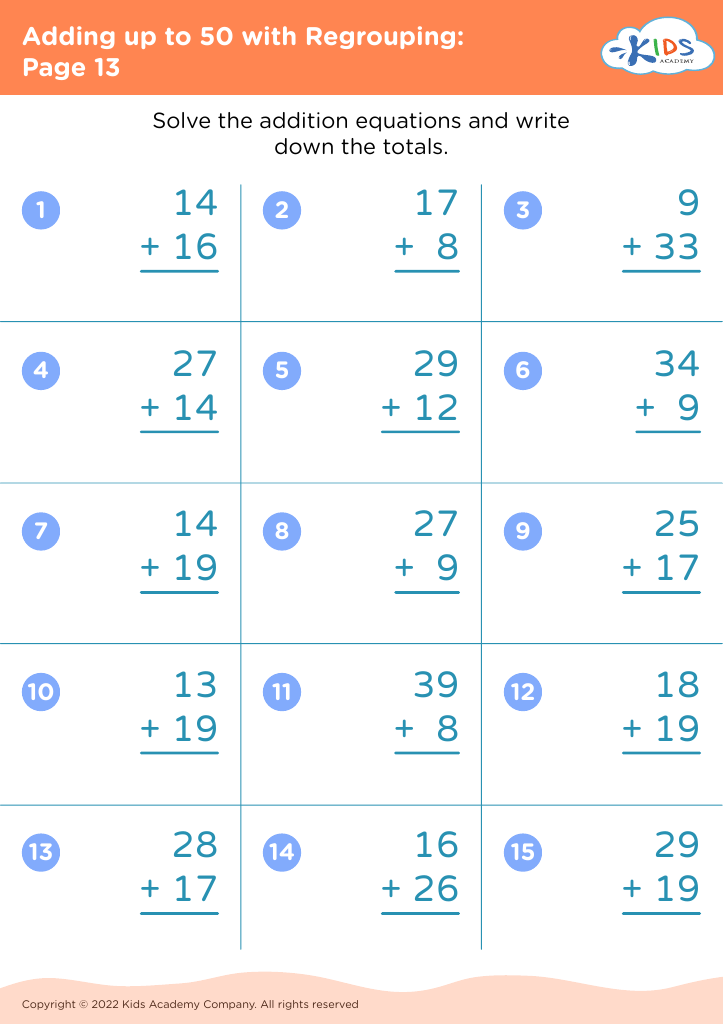
Welcome to our "Basic Math Learning Addition Worksheets" designed specifically for children aged 5-8! These engaging printables provide an enjoyable way to introduce young learners to the world of addition. Featuring colorful illustrations and creative exercises, our worksheets cater to various learning styles to ensure your child grasps fundamental addition skills effectively. Each worksheet is crafted to promote number recognition, enhance early math skills, and boost confidence through practice. With a variety of difficulty levels, you can customize your child's learning experience. Empower your child’s mathematical journey today – download our addition worksheets and watch their skills grow!
Favorites
With answer key
Interactive
Join Kids Academy for Free
Who is primarily going to use this learning content?








Basic math learning, particularly addition, is crucial for children aged 5-8 as it lays the foundational skills for their future academic success and daily life. During these formative years, children's brains are highly receptive to new concepts, and mastering basic addition helps develop their cognitive abilities and problem-solving skills. Understanding addition enables children to make connections with related math concepts such as subtraction, multiplication, and division, creating a solid framework for their future learning in mathematics.
Moreover, addition skills have practical applications in everyday situations—whether it’s counting items, understanding money, or measuring ingredients while cooking. This real-world relevance enhances children’s engagement with math and fosters a positive attitude towards learning.
For parents and teachers, fostering a child’s ability in addition serves not only to boost their confidence but also to prepare them for more complex concepts they'll encounter later. Engaging children through playful activities, games, and storytelling can reinforce these skills in a fun and meaningful way. Ultimately, investing time and resources in teaching basic addition empowers children with essential tools they will use throughout their lives, promoting their independence and critical thinking from an early age.








