Color matching Addition Worksheets for Ages 5-8
3 filtered results
-
From - To
Welcome to our engaging Color Matching Addition Worksheets designed for children aged 5-8! These interactive worksheets provide a fun way for young learners to strengthen their addition skills while exploring vibrant colors. As kids match colors with the correct sums, they enhance their mathematical understanding and boost their visual perception. Perfect for classroom use or at-home practice, our worksheets cater to various learning styles, making math enjoyable and accessible. Watch your child's confidence grow as they master addition in a colorful and imaginative way! Download and start exploring these exciting resources today!
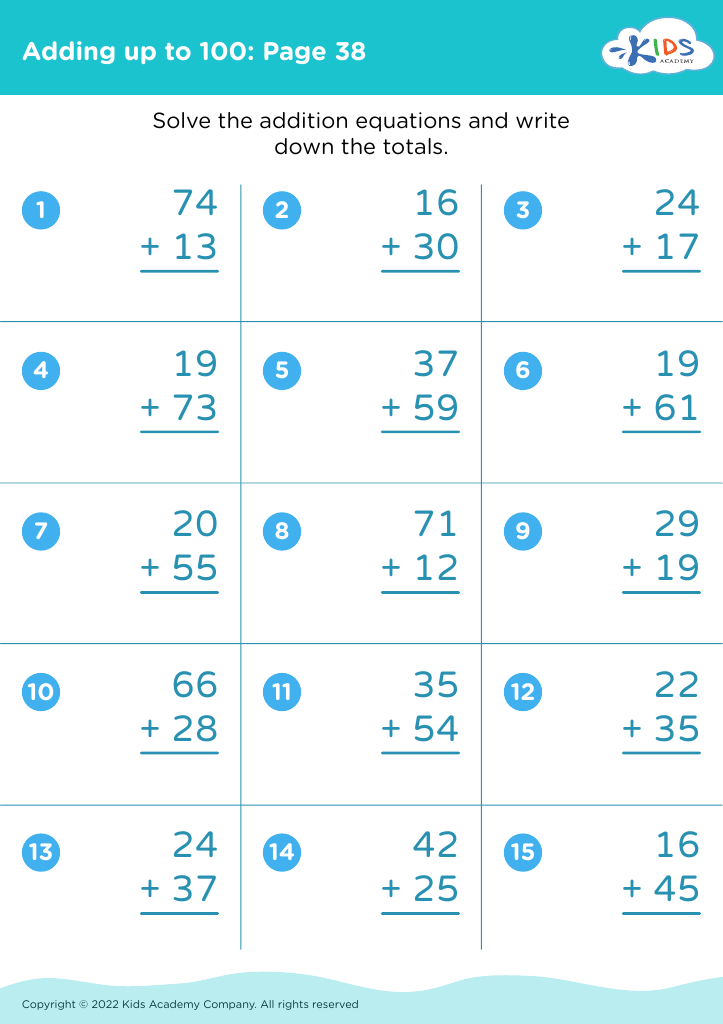
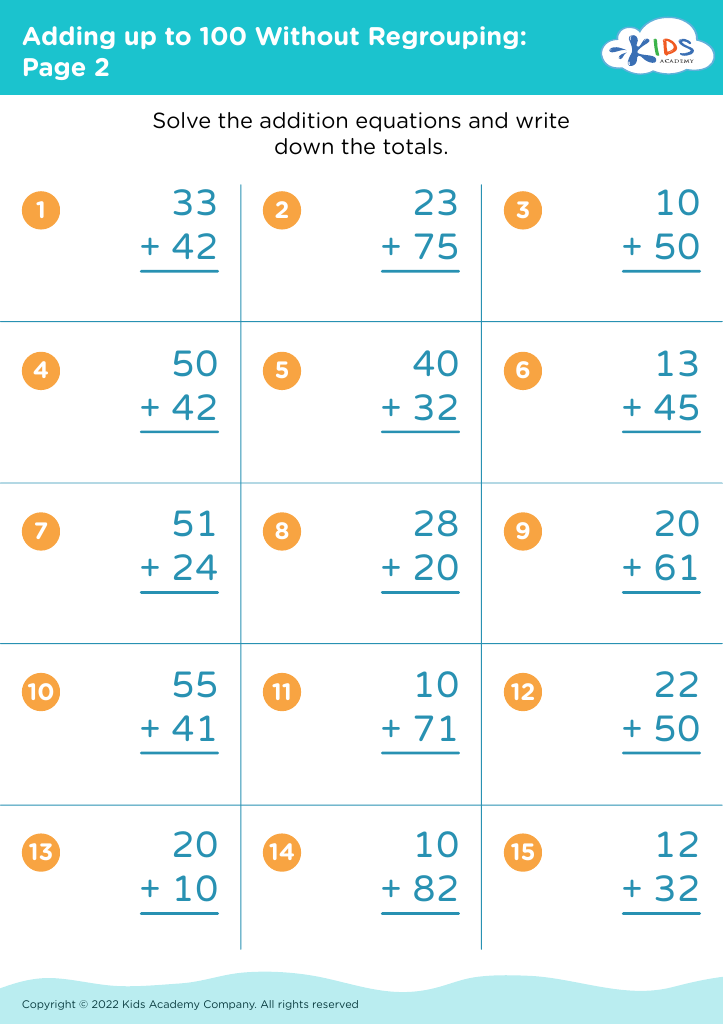
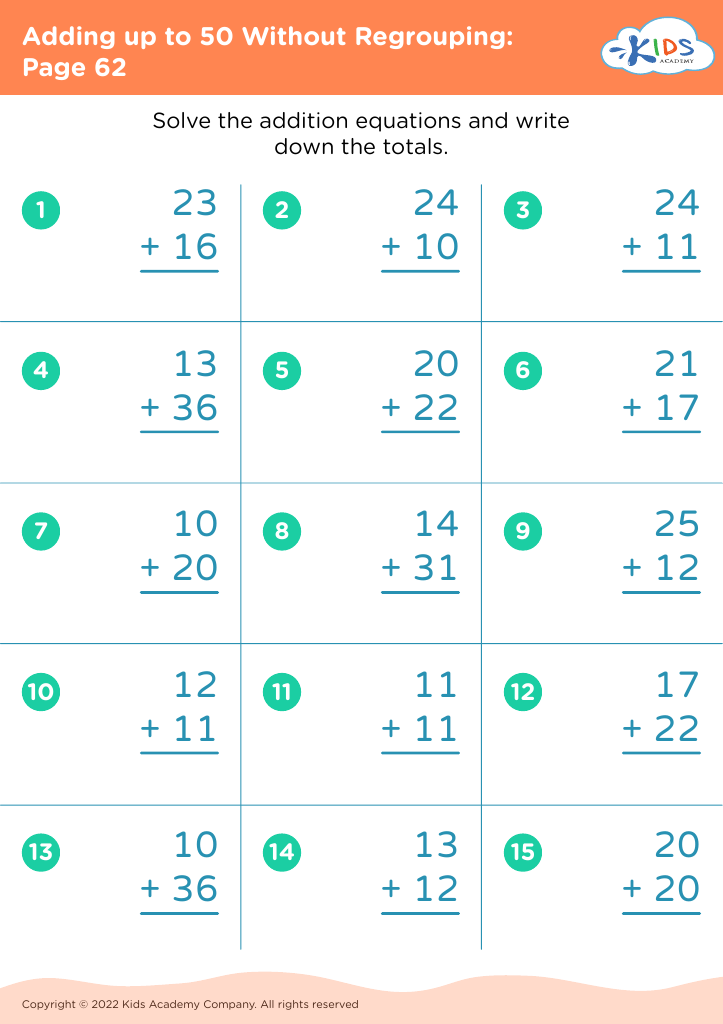







Color matching addition is a valuable educational tool for children aged 5-8, offering multiple benefits that make it worthwhile for parents and teachers to prioritize. First and foremost, this activity engages young learners through the use of vibrant colors, which naturally capture children’s attention and interest, making learning enjoyable and effective. By associating colors with numbers, children not only enhance their understanding of addition but also develop their visual discrimination skills.
Moreover, color matching addition promotes hand-eye coordination and fine motor skills as children manipulate colored objects or cards. This interactive learning method also aids in developing critical thinking and problem-solving abilities, as children learn to identify patterns and make connections between colors and numbers.
Additionally, it fosters crucial social skills during group activities, as children collaborate, communicate, and assist each other in solving math problems. Parents and teachers can use this approach to create a more inclusive learning environment that accommodates various learning styles. Ultimately, color matching addition serves as a foundation for elementary math comprehension while nurturing a love for learning, making it crucial for early education settings. Investing time in this activity can lead to more confident and capable young mathematicians.








